
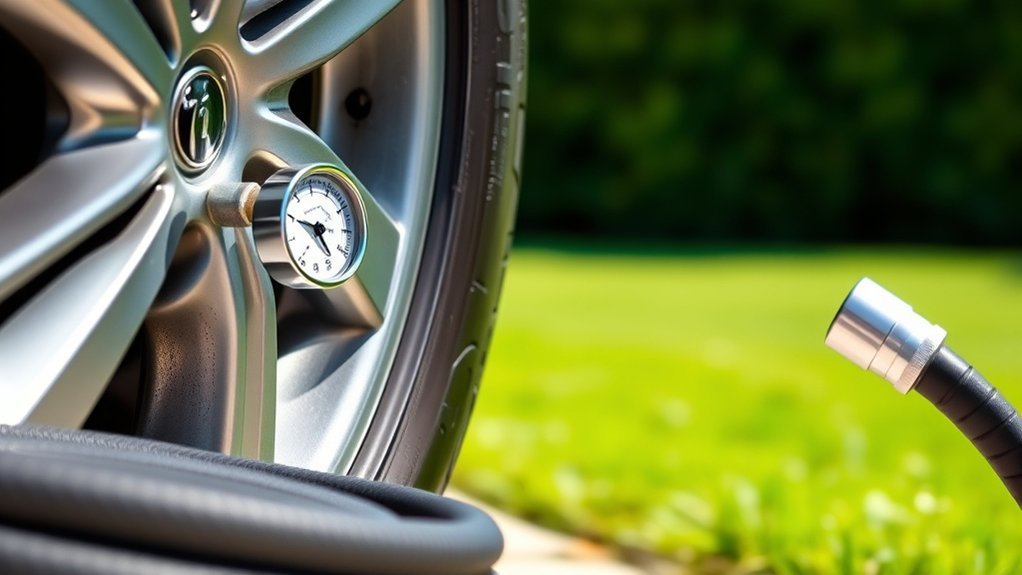
Set your tires to the vehicle-maker’s recommended PSI and check them cold with a calibrated gauge to avoid overinflation. Use short bursts when adding air, re-measure after each burst, and stop at the target. If a tire’s over, press the valve pin briefly to release small amounts and recheck. Account for temperature, load, and altitude changes, and rely on monthly checks plus TPMS alerts for catches — keep going for practical steps and troubleshooting.
Find the Right Tire Pressure for Your Vehicle
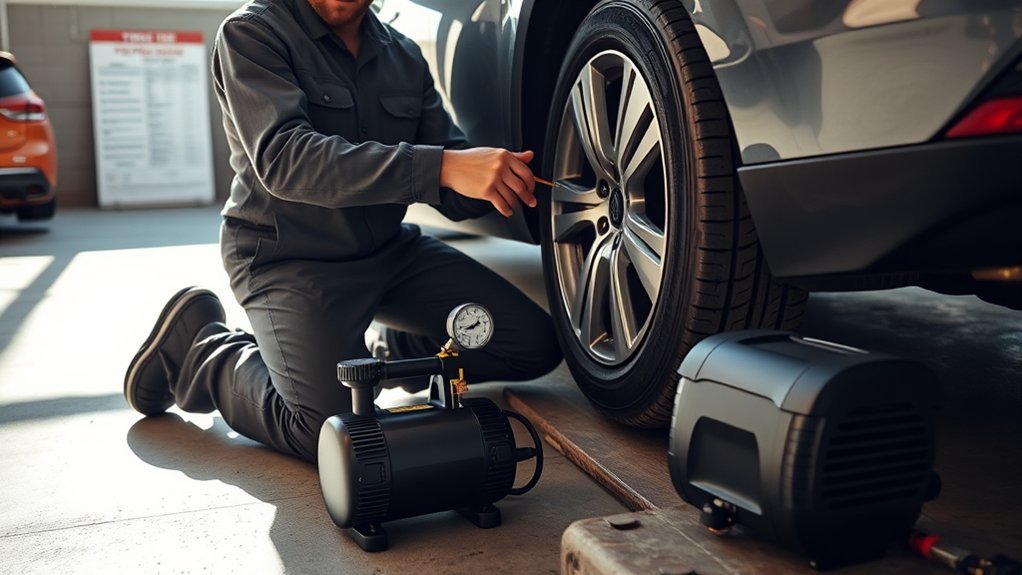
If you want accurate pressure, start by using the vehicle’s recommended PSI—usually on a sticker inside the driver’s door or in the owner’s manual—and follow it precisely, since manufacturers set that value for load, handling, and tire wear. You’ll note PSI is a calibrated target; stick to it. Don’t guess based on tire sidewall numbers. Check when tires are cold to avoid thermal expansion skewing readings. Use a calibrated tire pressure gauge—preferably digital—for repeatable accuracy, and record values so you can spot trends. Remember most vehicles tolerate up to about 10% over recommended tire pressure before you reach unsafe over-inflation, but you shouldn’t aim for that ceiling. Maintain a schedule—monthly checks—to keep tires properly inflated and to extend tread life, fuel economy, and control. Treat this routine as self-liberation: precise pressure reduces constraints, prevents premature wear, and keeps you confidently in command of your vehicle’s performance.
Measure Tire Pressure Correctly (Tools & Timing)
Start with a reliable gauge and the right timing: use a calibrated digital pressure gauge (or a well-maintained analog one) and check pressures when the tires are cold—ideally before driving—since heat raises PSI (about 1 psi per 10°F), which would skew readings; also compare values to the manufacturer’s spec on the door sticker or owner’s manual and recalibrate or replace gauges that show inconsistent results. You’ll gain control by measuring correctly: use a consistent pressure gauge, test each tire cold, log readings, and act on deviations from manufacturer’s recommendations. Consider TPMS for continuous alerts, but don’t skip manual checks. Calibrate or swap a suspect gauge immediately. Exact timing and tools free you from guesswork and prevent overinflation.
| Tire | Cold PSI | Action |
|---|---|---|
| Front L | 32 | Inflate/deflate to spec |
| Front R | 31 | Calibrate gauge if off |
| Rear L | 33 | Inspect TPMS if mismatch |
| Rear R | 32 | Recheck after 10 min |
[Products Worth Considering]

Enhanced Visibility in Low Light: Features a green backlit LCD screen and integrated flashlight, allowing for clear reading of tire pressure even in dark or dimly light conditions.

PROCESS LEVEL ACCURACY: Each ETENWOLF’s digital tire pressure gauge is calibrated manually to ANSI B40.7 Grade 2A(plus-minus 1 PSI).Presta valve adapter not included, if used for bicycles, it must be purchased separately

EXPERT-GRADE CALIBRATION: Each AstroAI Tire Pressure Gauge is calibrated with professional-grade tools, ensuring quick and accurate measurement results within plus-minus 1PSI. Stay prepared for any roadside emergency and travel with peace of mind.
Inflate Tires Safely Without Overfilling
Wondering how to top off your tires without pushing them past their limit? You’ll act deliberately: always check tire pressure when tires are cold to avoid heat-induced spikes. Use a commercial-grade gauge and compare readings to the manufacturer PSI on the door sticker or manual — that’s your target, not the tire’s maximum printed on the sidewall. When you inflate your tires, add air in short bursts, then re-measure; don’t rely on feel. Remember temperature effects: expect roughly +1 PSI per 10°F rise and compensate when ambient temps change. Watch for uneven wear during inspections — it flags chronic misinflation. If you’re unsure, set the compressor to the exact target PSI and use the gauge as the control, not the compressor’s built-in indicator. This method gives you control and freedom from guesswork, so you can maintain ideal handling, fuel efficiency, and safety without overfilling.
[Products Worth Considering]
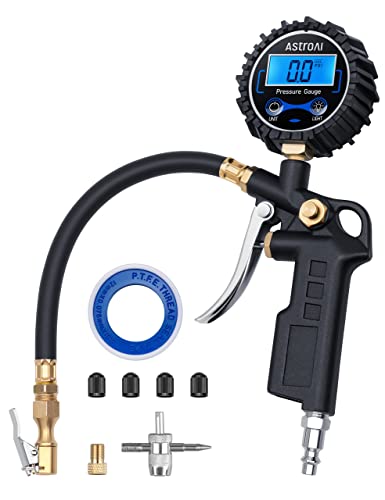
COMPATIBLE WITH both ¼” and ½” NPT air compressors outputs. COMPATIBLE WITH Standard Schrader Valves.
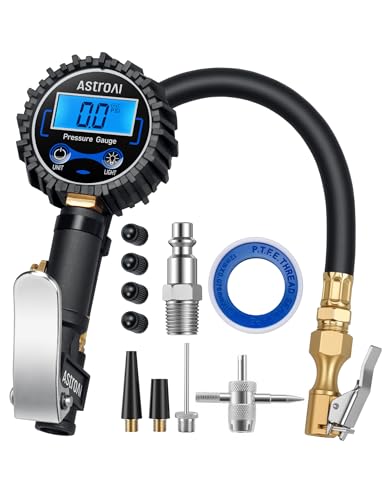
ADVANCED ACCURACY: Professionally calibrated to always return an accurate reading within 1% of the exact pressure of your tire. Accurately measures FOUR DIFFERENT UNITS in a range from 3-250 PSI (0.2-17.2 Bar; 0.21-1724 Kpa; 0.2-17.5 kg/cm^2). Stocking Stuffers for Men

【Accurate Digital Tire Gauge】The digital pressure gauge always returns a stable reading within 1% of the exact pressure of your tire by incredible 0.1 display resolution. No more guessing!
Safely Release Air If a Tire Is Overinflated
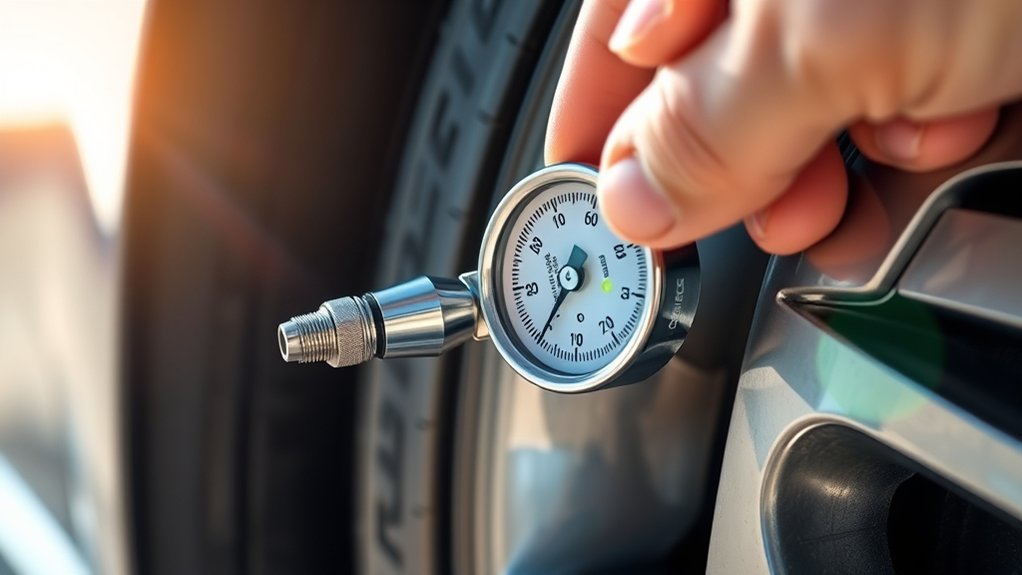
Before releasing air, check the tire pressure with a reliable gauge so you know how much to remove. Remove the valve cap and press the valve stem pin with a valve-tool or small flat-head screwdriver, letting air escape slowly. Monitor the PSI frequently and stop when you reach the vehicle’s recommended pressure, then replace the valve cap.
Check Tire Pressure First
1 simple check can save you from driving on overinflated tires: use a reliable tire pressure gauge to read the current PSI and compare it to the recommended value in your owner’s manual or on the sticker inside the driver’s door. You’ll check each tire cold, note deviations, and decide if controlled release is needed. Liberate yourself from guesswork by measuring, not assuming.
- Inspect tires before trips or when temperature shifts affect tire pressure.
- If PSI exceeds recommended, remove the valve cap and press the valve pin briefly to let air escape; monitor the gauge as you work.
- Release air gradually, recheck frequently, and stop once pressure meets the recommended specification to maintain handling and wear.
Use Valve Stem Tool
When a tire reads above the recommended PSI, remove the valve cap, use a valve stem tool or a small flat-head screwdriver to press the metal pin inside the stem, and let air escape in short bursts while watching your gauge. You’ll first twist the valve cap counterclockwise to expose the valve stem, then apply the tool straight to avoid damaging the core. Check tire pressure with an accurate gauge between bursts; aim for the PSI in your owner’s manual or door sticker. Don’t release air from hot tires—thermal expansion skews readings—so work with cold tires for reliable tire inflation control. After you hit target tire pressure, reseal the valve cap tightly to keep dirt and moisture out and preserve your autonomy.
Release Air Gradually
A steady, controlled bleed of air keeps you from overshooting the target PSI: remove the valve cap, press the valve core gently with a flat-head screwdriver or valve tool, and watch your gauge as you let out short bursts until you reach the pressure listed on the door sticker or in the owner’s manual. You’ll release air gradually to avoid sudden deflation; monitor tire pressure with a reliable gauge and work in small intervals. If you used an air compressor earlier, counterbalance by bleeding slowly rather than dumping air. Reattach the valve cap securely when done to protect the stem. Check pressures again after a short drive and when temperatures change. Follow routine checks so your tires serve your freedom without risk.
- Use a proper valve tool
- Monitor with a calibrated gauge
- Refit valve cap tightly
Adjust Pressure for Temperature, Load, and Altitude
Because temperature, load, and altitude each change the air pressure inside your tires, check and adjust PSI before seasonal shifts, heavy loads, or mountain drives to keep inflation within manufacturer specifications. You’ll account for tire pressure rising roughly 1 PSI per 10°F increase—so when temperature changes, set cold PSI per the placard and anticipate gains during warm travel. For load-specific inflation, follow your vehicle manual: increase pressure only as recommended to carry heavier payloads, distributing weight evenly and rechecking after loading. At higher altitudes, expect a slight drop in measured PSI from lower ambient pressure; verify and top off to the specified cold PSI at your starting elevation. Use a reliable gauge before long trips and after major temperature shifts or loading changes. These adjustments keep handling predictable, reduce uneven wear, and limit the risk of overinflation caused by environmental or loading factors. Stay deliberate, follow specs, and free yourself from guesswork.
Prevent Overinflation: Routine Checks, TPMS, and Tools
Check tire pressure at least once a month with the tires cold, and use a reliable gauge or your vehicle’s TPMS to catch deviations before they turn into overinflation problems. You’ll maintain control and reduce risk by making routine checks part of your freedom-focused maintenance. Use the manufacturer’s recommended PSI from the door sticker or manual, and remember temperature swings change pressure (~1 PSI per 10°F).
Equip yourself with the right tools and habits:
- Carry a calibrated tire pressure gauge and verify an accurate reading before inflating.
- Rely on your Tire Pressure Monitoring System (TPMS) for real-time alerts, but confirm with a manual gauge.
- Use a quality air compressor with a pressure regulator to set target PSI precisely.
Check more often during seasonal shifts or after long trips. By monitoring tire pressure regularly and using calibrated tools plus TPMS, you’ll avoid overinflation, extend tire life, and keep mobility uncompromised.
[Products Worth Considering]

PROCESS LEVEL ACCURACY: Each ETENWOLF’s digital tire pressure gauge is calibrated manually to ANSI B40.7 Grade 2A(plus-minus 1 PSI).Presta valve adapter not included, if used for bicycles, it must be purchased separately
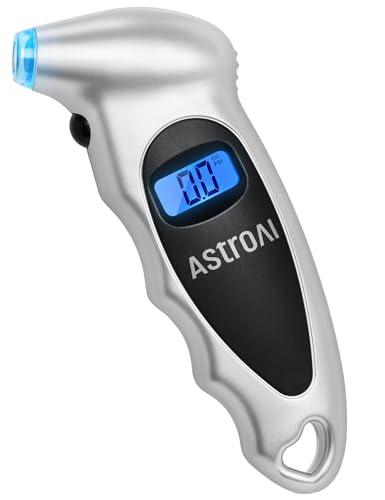
EXPERT-GRADE CALIBRATION: Each AstroAI Tire Pressure Gauge is calibrated with professional-grade tools, ensuring quick and accurate measurement results within plus-minus 1PSI. Stay prepared for any roadside emergency and travel with peace of mind.

Digital Tire Pressure Gauge 2 Pack, Industrial Tire Gauge 3-200 PSI, Calibrated to ANSI B40.7 Grade 2A(plus-minus 0.5%), Air Pressure Gauge with Replaceable AAA Batteries
Frequently Asked Questions
How to Reduce Overinflated Tires?
Release air gradually using the valve pin, check with a reliable gauge until you reach manufacturer’s PSI, perform safety inspections, use tire pressure monitoring and proper inflation techniques, and don’t hesitate to retest to regain confident, liberated control.
What Is the 7 7 Rule for Tires?
Ye olde tip: the 7 7 Rule says you check tire pressure every seven days and adjust when it’s off by seven PSI, accounting for air temperature and inflation frequency so you’ll reclaim control and safety.
What Is the 5 PSI Rule?
The 5 PSI rule means you shouldn’t exceed the manufacturer’s tire pressure by more than five PSI. You’ll use an inflation gauge, follow safety tips, and routinely check pressures to protect handling, wear, and your freedom on the road.
Is It Okay to Overinflate Tires by 3 PSI?
No — think of a cyclist who popped a tire racing; even +3 PSI risks center wear and safety concerns. You should follow tire pressure specs, use a reliable gauge, and adopt steady inflation tips for freedom.
Conclusion
You’ve got the methods down: check the placard, use a calibrated gauge, inflate slowly, and adjust for load and temperature. But here’s the part most people skip — the tiny hiss you ignore can become a blowout. Stay disciplined with routine checks, trust TPMS as a backup only, and keep a proper gauge on hand. Do that, and you won’t just avoid overinflation—you’ll stop problems before they start.







Leave a Reply