How to Avoid Overinflating Tires
What’s in This Article
- Before You Begin: Tools and Safety Checks
- Step-by-Step Method to Avoid Overinflating Tires
- Find the Right Tire Pressure for Your Vehicle
- Measure Tire Pressure Correctly
- Inflate Tires Safely Without Overfilling
- Safely Release Air If a Tire Is Overinflated
- Adjust Pressure for Temperature, Load, and Altitude
- Prevent Overinflation: Routine Checks, TPMS, and Tools
- Frequently Asked Questions
- Conclusion
A few extra pounds of air can make your tires wear faster and feel harsher on the road. The safest way to avoid overinflation is simple: use your vehicle’s recommended cold tire pressure, not the number printed on the tire sidewall. This guide shows you how to find the right pressure, check it at the right time, add air slowly, and release air safely when a tire reads too high.
Quick Answer
Set each tire to the vehicle maker’s recommended cold pounds per square inch (PSI). You can find that number on the driver’s door placard or in the owner’s manual. Add air in short bursts, recheck with a reliable gauge, and release air slowly if the tire goes above the target.
Key Takeaways
- Use the PSI listed on your vehicle placard, not the tire sidewall maximum.
- Check tire pressure when tires are cold for the most accurate reading.
- Add air in short bursts and recheck after each burst.
- Release air slowly through the valve stem if a tire reads too high.
- Check pressure monthly, before long trips, and during big temperature changes.
Estimated total time: 10 to 15 minutes for all four tires.
Before You Begin: Tools and Safety Checks
Gather the right tools before you add or release air. You need a reliable tire pressure gauge, access to an air compressor, and your vehicle’s recommended PSI from the door placard or owner’s manual.
- Use a digital, dial, or pencil tire pressure gauge that gives repeatable readings.
- Check tires after the vehicle has sat for at least three hours.
- Inspect each tire for cuts, bulges, nails, or uneven tread wear.
- Keep valve caps clean and reinstall them after each pressure check.
Warning: Do not use the tire sidewall pressure as your target, because that number shows a maximum tire limit, not your vehicle’s recommended pressure.
Step-by-Step Method to Avoid Overinflating Tires
- Find the recommended PSI. Read the Tire and Loading Information label on the driver’s door area or check your owner’s manual.
- Check each tire cold. Press the gauge straight onto the valve stem and record the reading for each tire.
- Add air slowly. Use short compressor bursts instead of holding the trigger for a long time.
- Recheck the pressure. Measure again after each burst so you stop at the target PSI.
- Release extra air carefully. Press the valve pin for a second or two, then recheck the pressure.
- Replace each valve cap. Tighten the cap by hand to help keep dirt and moisture out.
Find the Right Tire Pressure for Your Vehicle
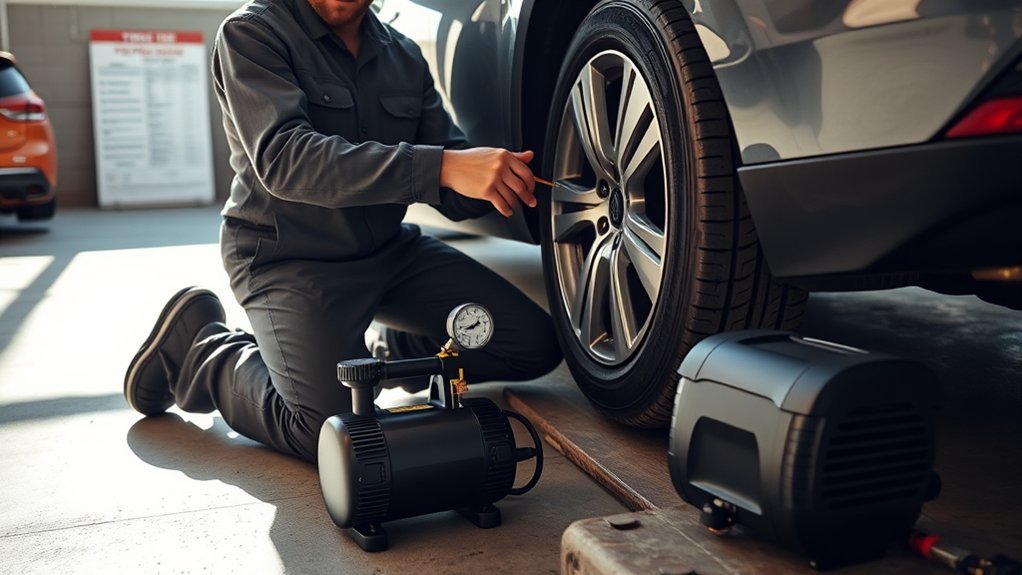
Start with your vehicle’s recommended PSI. You can usually find it on the Tire and Loading Information label inside the driver’s door area or in the owner’s manual. According to the National Highway Traffic Safety Administration (NHTSA), the correct pressure comes from the vehicle maker, not the tire sidewall.
Check this number before you use an air pump. Many passenger vehicles use different front and rear pressures, so read the placard closely. Don’t guess, because the right PSI supports load, handling, braking, fuel use, and tread wear.
Use the recommended pressure as a target, not a rough range. A few PSI over the target may not cause instant damage, but you should not aim above the placard value. Regular checks help you catch small changes before they affect tire wear or road feel.
Measure Tire Pressure Correctly (Tools & Timing)
Use a reliable tire pressure gauge and check the tires when they are cold. NHTSA defines cold tires as tires that have not been driven on for at least three hours. Heat from driving raises pressure and can give you a higher reading.
Press the gauge firmly and straight onto the valve stem. If you hear a long hiss, reset the gauge and try again. Record the pressure for all four tires so you can spot a slow leak or a repeated mismatch.
Pro tip: Keep one gauge in your glove box and use the same gauge each time for more consistent readings.
| Tire | Cold PSI | Action |
|---|---|---|
| Front L | 32 | Inflate or release air to spec |
| Front R | 31 | Recheck if it differs from the matching tire |
| Rear L | 33 | Compare with rear tire placard spec |
| Rear R | 32 | Recheck after adjustment |
Inflate Tires Safely Without Overfilling
Inflate your tires with control instead of speed. Set the compressor close to the target PSI if it has a preset feature, but still confirm the final pressure with your own gauge. Built-in pump gauges can read differently from a handheld gauge.
Add air in short bursts. Remove the air chuck, check the pressure, and repeat until the tire reaches the placard PSI. This slow method helps you avoid overshooting the target.
Temperature can change tire pressure. AAA notes that tire pressure can rise or fall about 1 to 2 PSI for every 10°F change. For most standard passenger tires, Tire Rack explains that a 10°F change often equals about 1 PSI.
Don’t bleed air from a hot tire just because the warm reading looks slightly high. Let the tires cool when you can, then check again. If you must adjust during a trip, recheck the tires later when they are cold.
Safely Release Air If a Tire Is Overinflated
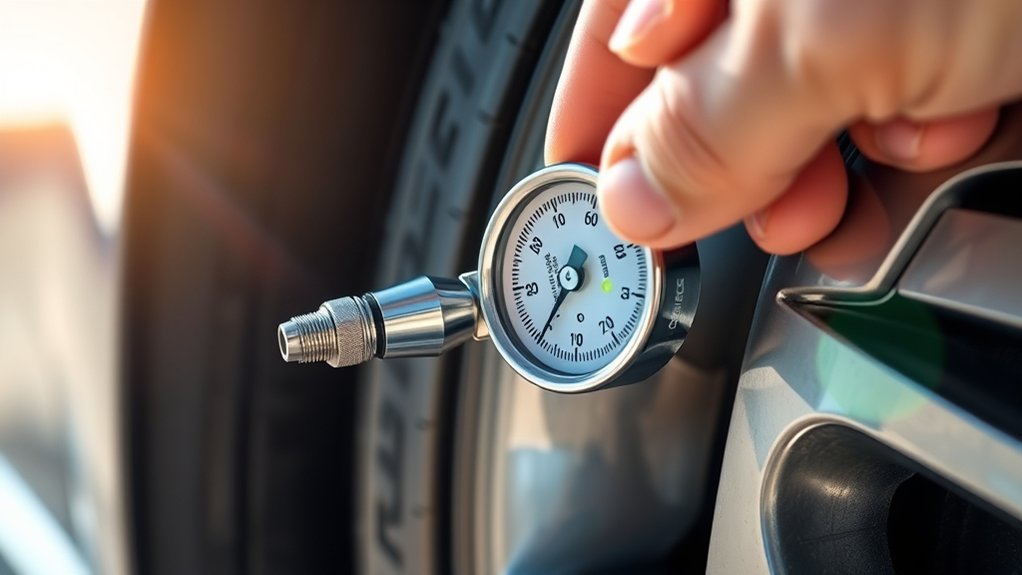
Before you release air, check the tire pressure with a reliable gauge so you know how far above the target it sits. Remove the valve cap and press the valve stem pin with the edge of your gauge, a valve tool, or a small flat-head screwdriver. Let air escape slowly, then recheck the PSI.
Check Tire Pressure First
One simple check can keep you from driving on overinflated tires. Read the current PSI and compare it with the recommended value on the driver’s door placard or in the owner’s manual. Measure first, then decide if you need to release air.
- Check pressure before long trips or after major temperature changes.
- Release air only when the reading sits above the recommended PSI.
- Recheck often so you do not drop below the target pressure.
Use Valve Stem Tool
When a tire reads above the recommended PSI, remove the valve cap and press the metal pin inside the stem. Use a valve stem tool, the edge of your gauge, or a small flat-head screwdriver. Press straight into the valve so you do not damage the valve core.
Release air in one or two second bursts. Check the pressure between bursts and stop when the tire reaches the placard PSI. Reinstall the valve cap tightly by hand after you finish.
Release Air Gradually
A slow, controlled release helps you avoid dropping too much pressure. If you used an air compressor and went over the target, do not dump air quickly. Bleed a little air, check the gauge, and repeat.
Check the pressure again after a short drive or after the tires cool. This second check helps confirm that the pressure settled near the recommended cold PSI.
- Use a proper valve tool or the edge of your gauge.
- Monitor the pressure with a reliable gauge.
- Refit the valve cap tightly after adjustment.
Adjust Pressure for Temperature, Load, and Altitude
Temperature, load, and altitude can all affect tire pressure readings. Use the cold PSI on your vehicle placard as your base setting. Then check more often before seasonal changes, long trips, heavy loads, or mountain drives.
For heavy loads, follow your owner’s manual. Some vehicles list different pressures for normal and loaded driving. Do not raise tire pressure beyond the vehicle maker’s guidance just because you carry more cargo.
Altitude can also change gauge readings because outside air pressure changes. If you drive between low and high elevations, check your tires again after the vehicle sits. Adjust back to the recommended cold PSI when needed.
Note: If your vehicle uses different front and rear pressures, adjust each tire to the correct axle value.
Prevent Overinflation: Routine Checks, TPMS, and Tools
Check tire pressure at least once a month with the tires cold. NHTSA also recommends monthly tire checks and says Tire Pressure Monitoring Systems (TPMS) do not replace regular maintenance. TPMS can warn you about low pressure, but you still need a manual gauge.
Use the manufacturer’s recommended PSI from the door placard or owner’s manual. Check more often during large temperature swings or before long trips. Small habits help you avoid overinflation, uneven wear, poor ride quality, and handling changes.
Equip yourself with the right tools and habits:
- Carry a reliable tire pressure gauge in your vehicle.
- Use your TPMS as a backup alert, not your only pressure check.
- Use an air compressor with a pressure regulator when possible.
- Recheck tires after adding or releasing air.
Common Mistakes That Cause Overinflation
Most overinflation problems start with a simple mistake. Drivers often use the tire sidewall number, check tires while hot, or trust a gas station pump gauge without rechecking. Each mistake can push the tire above the vehicle maker’s target.
- Using the tire sidewall maximum instead of the vehicle placard PSI.
- Adding air without checking pressure after each short burst.
- Bleeding air from hot tires without checking again when cold.
- Ignoring different front and rear pressure values.
- Assuming TPMS gives you a full maintenance check.
Frequently Asked Questions
How do you reduce overinflated tires safely?
Check the tire with a reliable gauge first. Press the valve pin briefly to release a small amount of air, then recheck the pressure. Repeat until the tire reaches the vehicle’s recommended cold PSI.
How often should you check tire pressure?
Check tire pressure at least once a month and before long trips. You should also check after big temperature changes, because tire pressure can rise or fall with the weather.
Should you use the PSI on the tire sidewall?
No. The sidewall pressure shows the tire’s maximum limit, not the correct pressure for your vehicle. Use the Tire and Loading Information label on the vehicle or the owner’s manual.
Is it okay to overinflate tires by 3 PSI?
You should aim for the placard PSI instead of driving above it on purpose. A small difference may happen from heat or gauge variation, but steady overinflation can affect ride comfort, handling, and center tread wear.
Can TPMS prevent overinflation?
TPMS mainly warns you about significant underinflation or a system fault. It does not replace a monthly manual pressure check. Use TPMS as a backup and confirm pressure with a gauge.
Conclusion
The best way to avoid overinflating tires is to follow the vehicle’s recommended cold PSI every time. Check the placard, use a reliable gauge, add air slowly, and release extra air in small amounts. Treat TPMS as a helpful alert, not a replacement for manual checks. Keep this habit monthly, and your tires will give you safer handling, better wear, and more predictable performance.
References
- Tire Safety Ratings and Awareness, TireWise — National Highway Traffic Safety Administration, accessed 2026.
- Understanding Tire Pressure and Temperature Change — AAA, 2025.
- How Does Temperature Change Affect Tire Air Pressure? — Tire Rack, accessed 2026.
- Federal Motor Vehicle Safety Standards, Tire Pressure Monitoring Systems — Federal Register, 2005.