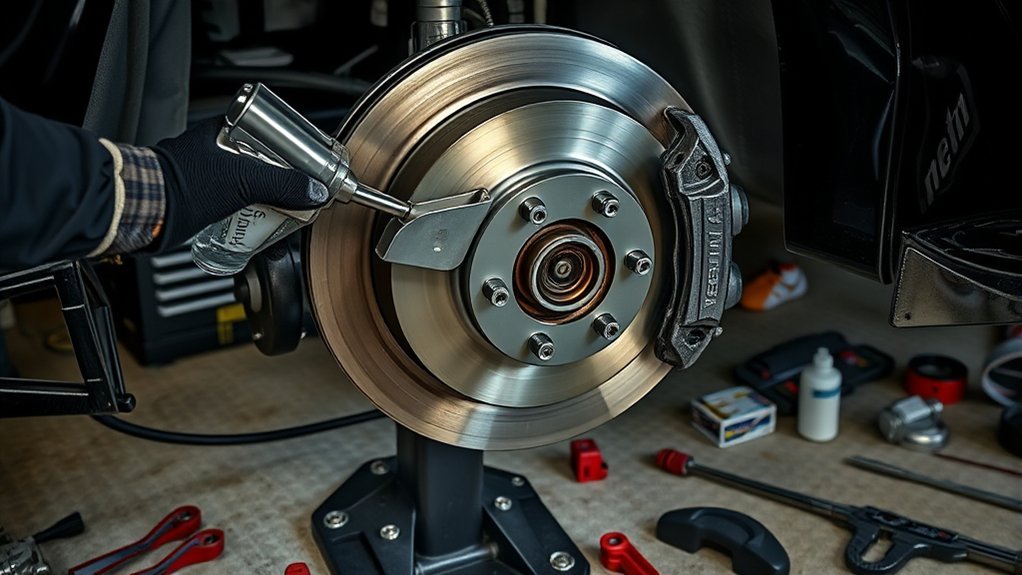
To maintain Toyota Supra brakes for track use, measure pad thickness and check rotor condition before and after every event, keep fresh brake fluid in the system, make sure the brakes get enough cooling air, and bed in new pads as the pad maker instructs. Use the factory service manual for torque figures and procedures for your generation. Related: best brake pads for track use on the Mk5 Toyota Supra and how to maintain Toyota Supra tires.
Inspecting Your Toyota Supra Brake Pads and Rotors for Track Readiness
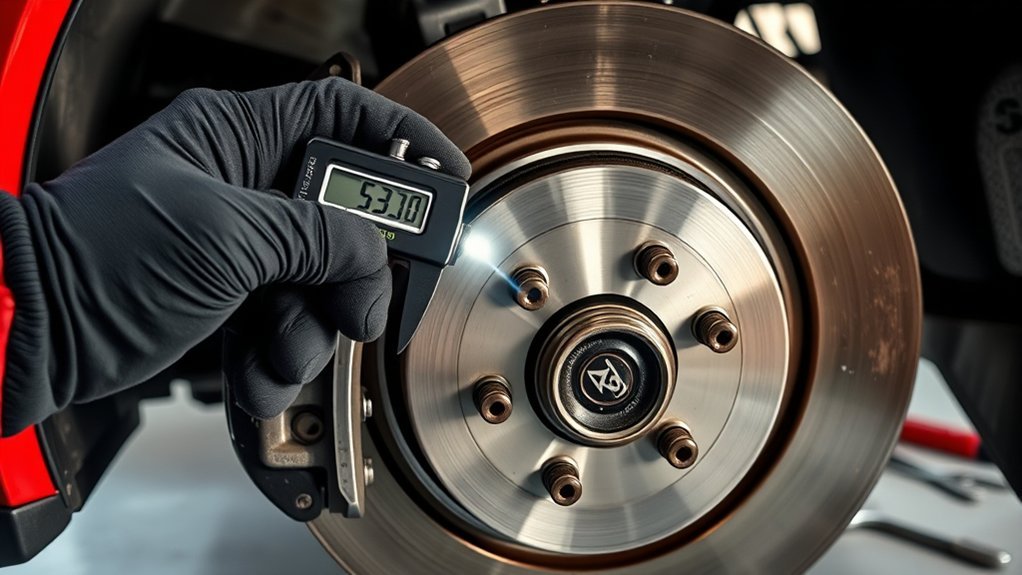
Check the pad thickness and the rotor surface before and after each track day. Look for cracks, heavy grooves, a raised lip at the rotor edge, glazed pads and uneven pad wear. Replace pads and rotors according to the maker’s wear limits. Track pads wear much faster than street pads, so do not assume they will last as long.
Why Upgrading Toyota Supra Brakes With High-Performance Pads Matters
Street pads can overheat and fade under repeated hard braking. Track-oriented pads are made to work at higher temperatures, but they have trade-offs, including more dust and noise, more rotor wear and less bite when cold. Choose a pad that matches how you drive, and check the pad maker’s notes for compatibility with your rotors.
Improved Heat Management
| Track-oriented pads | Street pads | |
|---|---|---|
| Heat tolerance | Higher | Lower |
| Cold bite | Often weaker | Usually better |
| Dust and noise | Often more | Usually less |
| Rotor wear | Often higher | Usually lower |
How Regular Brake Fluid Changes Prevent Brake Failure
Brake fluid absorbs moisture over time, which lowers its boiling point and can cause a soft pedal when the brakes get hot. Many track drivers replace the fluid before the season or before an event and at least once a year. Use the fluid grade your manual and pad maker allow, bleed the system properly, and check the pedal feel before driving.
How to Tackle Common Brake Problems: Overheating and Pulsation
- Fade or a soft pedal: let the brakes cool with a cool-down lap, replace old fluid, and check the pads.
- Pulsation: often caused by uneven pad material deposits or rotor thickness variation. Inspect the rotors and bed in the pads correctly.
- Noise: check for glazed pads, loose hardware and rotor damage.
Let’s Talk About Cooling: Why Ducts Matter for Your Brakes
Brakes need airflow to shed heat. Keep any ducts and air paths free of debris and do not block them. If you add aftermarket ducting, make sure it does not interfere with the wheels, suspension or steering.
Proper Installation of Your Brake Components for Safety and Functionality
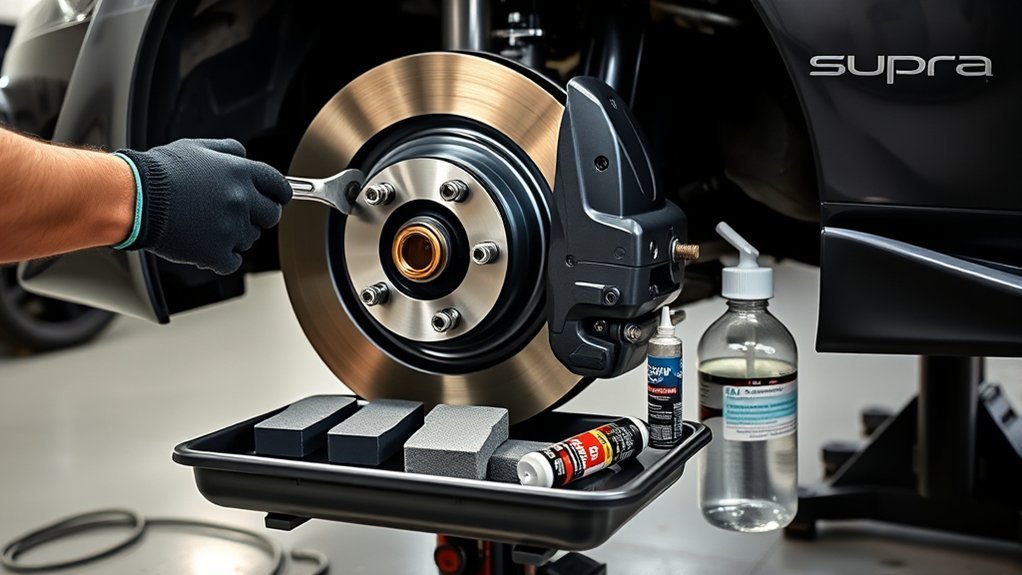
Clean the mating surfaces, fit the parts correctly, and tighten the bolts to the torque figures in the factory service manual. Check that the wheels turn freely, and pump the pedal before moving the car.
Maintain Toyota Supra Brakes for Track Use: Temperature
An infrared thermometer after a session, or temperature-sensitive paint on the rotors, can show how hot the brakes get. Compare the readings with the working range of your pad. Repeated overheating means you should improve the cooling, change the pad compound, or change how you brake.
Tips for Routine Brake Inspections Before Track Days
- Check the pad thickness and rotor condition.
- Check the fluid level and condition.
- Look at the hoses and lines for chafing or leaks.
- Check the wheel nuts and caliper bolts.
- Check that the pedal feels firm.
Installing Your New Brake Pads: A Step-by-Step Guide
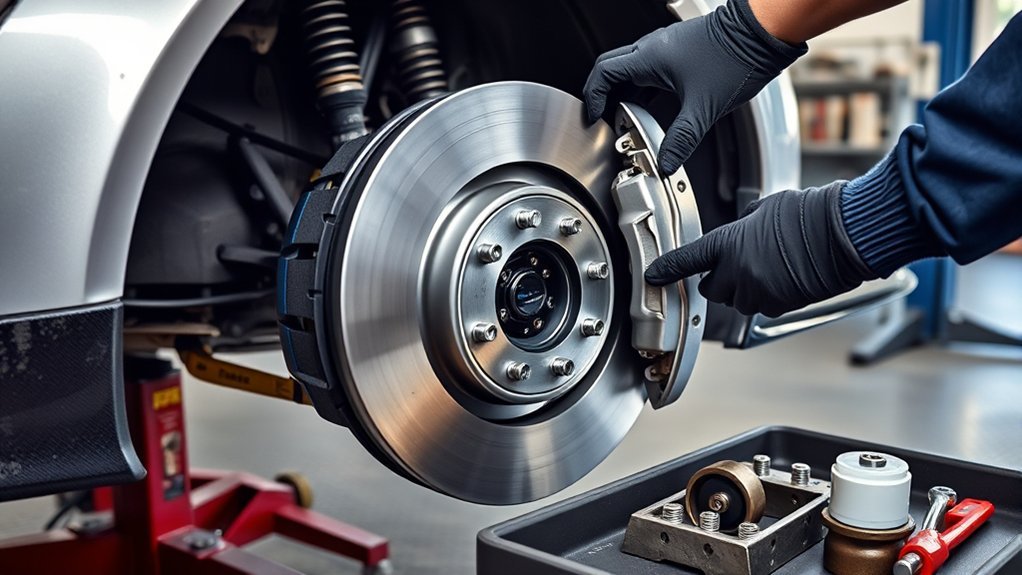
- Park on level ground, loosen the wheel nuts, then lift and support the car on jack stands rated for its weight.
- Remove the wheel and caliper, and support the caliper so it does not hang from the brake hose.
- Remove the old pads and clean the caliper bracket and slides.
- Fit the new pads and hardware, and compress the piston carefully.
- Refit the caliper and torque the bolts to the manual’s figures.
- Pump the pedal until it is firm, then follow the pad maker’s bed-in procedure.
If you are not experienced with brake work, have a qualified shop do it.
Frequently Asked Questions
How Long Do Supra Brakes Last?
It depends on the car, the pads and how you drive. On the track, pads and rotors can wear out far faster than on the street, so measure them often.
What Are the Five Keys to Brake Maintenance?
Inspect the pads and rotors, replace the fluid on schedule, check for leaks, keep the brakes cool, and use the right parts for your driving.
What Are the Common Problems With Supras?
It depends on the generation and the individual car. Check recalls at nhtsa.gov/recalls and follow the maintenance schedule.
How Do You Maintain Your Brakes?
Inspect the pads, rotors, fluid and lines regularly, and replace worn parts before they reach the limit.
Conclusion
For Toyota Supra brakes for track use, inspect often, keep the fluid fresh, manage heat and follow the factory procedures for the work.