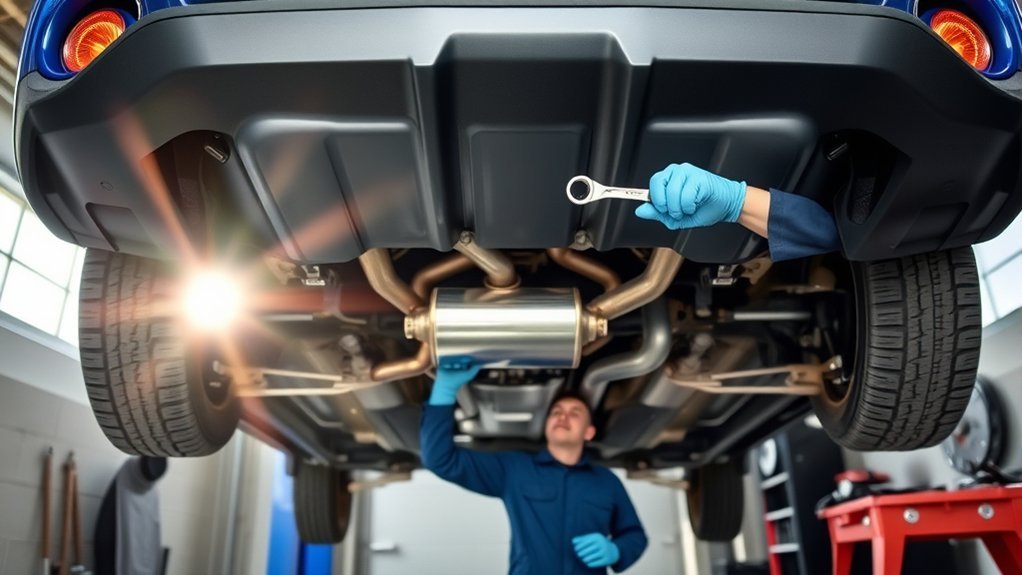
You cannot repair a failed catalytic converter on a Toyota RAV4. The honeycomb catalyst inside is either working or it is not, and a converter that is truly worn out or blocked must be replaced. The real job is to find out why the converter failed, because a misfire, oil burning or a faulty oxygen sensor will destroy a new one too, and to check whether the emissions warranty covers the replacement.
What the catalytic converter does
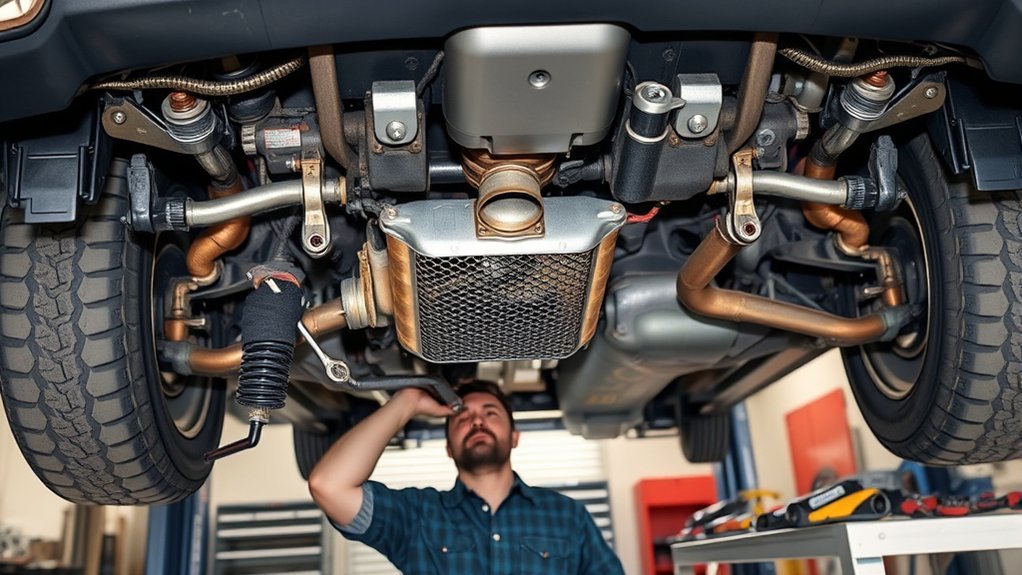
The converter sits in the exhaust and uses precious metals on a ceramic honeycomb, typically platinum, palladium and rhodium, to turn carbon monoxide, unburned hydrocarbons and nitrogen oxides into less harmful gases. The engine computer watches it with oxygen or air-fuel sensors before and after the converter. When the readings after the converter stop looking cleaner than the readings before it, the computer stores a catalyst efficiency code and turns on the check engine light.
Symptoms of a failing converter
- Check engine light, often with code P0420 (catalyst system efficiency below threshold, bank 1). Some engines with two banks can also show P0430.
- Reduced power, especially at highway speed or uphill, and poor fuel economy, if the converter is partly blocked.
- A rattling sound from underneath when the broken ceramic inside moves.
- A sulfur or rotten egg smell from the exhaust.
- A failed emissions test.
These signs overlap with other faults. A P0420 code alone does not prove the converter is bad.
Diagnose before you replace
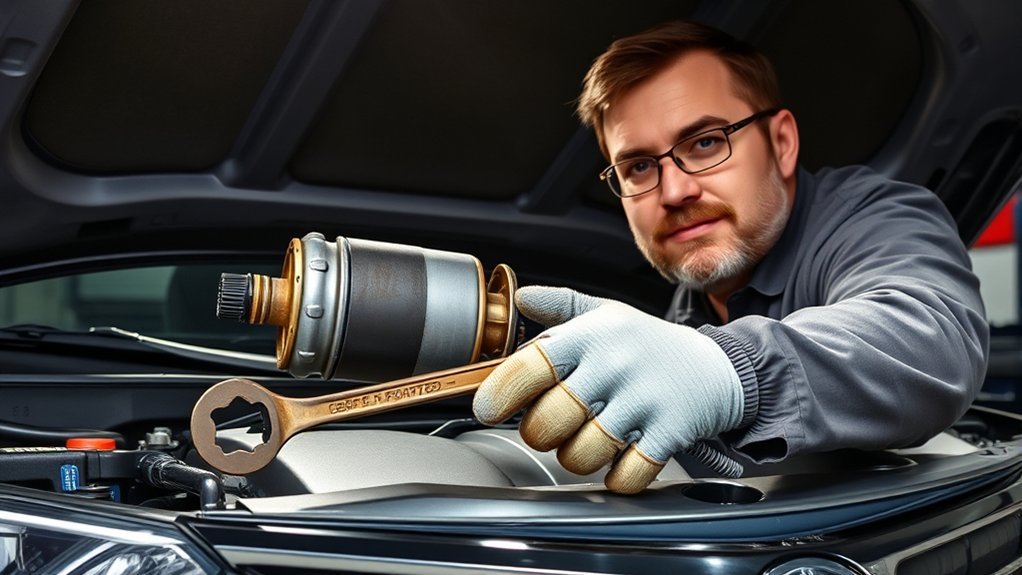
- Read the codes with a scan tool. Look for misfire codes (P0300 to P0304) or fuel trim and sensor codes stored along with the catalyst code. Fix those first.
- Check for exhaust leaks ahead of or near the sensors. A leak can skew the readings and set the same code.
- Look at live sensor data. On a healthy system the upstream sensor reading changes quickly while the downstream sensor stays steadier. If the downstream sensor follows the upstream pattern closely, the converter is not storing oxygen well, which points to the converter.
- Check for causes of contamination: oil consumption, coolant entering the engine, or rich running. If the engine burns oil or leaks coolant, the new converter will fail again.
- Test for a restriction if you suspect blockage. A mechanic can measure exhaust back pressure, or compare pressure readings, before the converter.
- Consider the sensor. A faulty downstream oxygen sensor can also set P0420. A shop can verify the sensor response before you buy a converter.
Does the emissions warranty cover it?
Check this before you spend money. According to the EPA, catalytic converters are classified as specified major emission control components, covered for the first 8 years or 80,000 miles of use, whichever comes first. Most other emission parts are covered for 2 years or 24,000 miles. The manufacturer can only refuse if it shows you failed to maintain the vehicle or misused it. If the claim is denied, the EPA’s guidance says to ask for the reason in writing, appeal to the manufacturer’s regional office, and file a complaint with the EPA if needed. Ask your dealer, and check your warranty booklet, because California and other CARB states can have different terms.
Legal rules for replacement
- Removing or bypassing the converter (a “cat delete” or “test pipe”) is tampering with an emission control and is prohibited on road vehicles. It will also fail an emissions test.
- Colorado’s health department, as one example, says aftermarket converters may be installed once the vehicle is beyond its emissions warranty period, must be CARB certified or original equipment, and used or salvaged converters are not allowed.
- In California and other CARB states, use only a converter with a CARB Executive Order number for your vehicle. Check the CARB aftermarket parts database.
- Shops must document why a converter was replaced. Expect paperwork.
Replacement options
| Option | Pros | Cons |
|---|---|---|
| Toyota original equipment converter | Exact fit and certification; in Colorado, for example, required inside the warranty period. | Usually the highest price. |
| Certified aftermarket converter | Lower cost; legal if certified for your state and vehicle. | Must match your model year, engine and state rules. Quality varies by brand. |
| Direct-fit versus universal | Direct-fit is designed for your vehicle. | Universal units may need welding and are not legal in some states. |
Costs depend on model year, engine, state rules and labor rates. Get written quotes that itemize the part, sensors and gaskets, instead of relying on a general price range.
What replacement involves
This is not a beginner job. It involves rusty exhaust fasteners, heavy parts and a hot system. If you decide to do it yourself, follow the factory service manual for your model year and engine, because converter position, number of oxygen sensors and fastener sizes differ between RAV4 generations and between 2.4L, 2.5L and hybrid versions.
- Let the exhaust cool fully. Lift the vehicle on a proper lift or jack stands on level ground.
- Soak rusty nuts and bolts with penetrating oil the day before.
- Disconnect the oxygen sensor connectors and remove the sensors if they are in the way. Use an oxygen sensor socket to avoid damaging them.
- Support the converter, remove the flange fasteners, and lower it out.
- Compare the new unit with the old one: same flanges, sensor bungs and heat shield.
- Fit new gaskets, clean the mating surfaces, and install the converter. Tighten to the torque in the service manual.
- Reconnect sensors, lower the vehicle, start the engine and check for exhaust leaks.
- Clear the codes and drive through a full drive cycle so the monitors can run.
Do additives or cleaners work?
Fuel additives sold as converter cleaners may help with light carbon buildup in some cases, but they cannot fix melted or broken catalyst material. Treat them as a cheap attempt before a replacement only if the diagnosis points to deposits, and do not expect a cure for a converter that has physically failed.
Protecting the new converter
- Fix misfires, oil leaks into the engine and coolant leaks promptly.
- Keep up with spark plug and air filter service intervals from your owner’s manual.
- Avoid repeatedly driving short trips when the engine never warms up fully.
- Do not ignore a flashing check engine light, which signals a misfire that can overheat the converter.
Note: Warranty terms and legal requirements depend on your state and model year. Check them with your Toyota dealer or state emissions agency before buying parts.
Frequently asked questions
Can you fix a catalytic converter without replacing it?
Not if it is broken, melted or plugged. You can only fix the causes: misfires, leaks, oil or coolant burning, or a bad sensor. Cleaners may help with minor deposits.
How much does a RAV4 catalytic converter cost?
It varies widely with the year, engine, part type and state rules, so there is no single reliable number. Get itemized quotes for an original and a certified aftermarket part.
Is the catalytic converter under warranty?
Possibly. The EPA describes an 8 year or 80,000 mile warranty for catalytic converters, whichever comes first. Ask a Toyota dealer to check your vehicle.
Can I drive with a bad converter?
A failing one may only trigger a light and a failed test. A blocked one can cut power and cause overheating, so have it checked soon.
Does the RAV4 Hybrid have a converter?
Yes. Its gasoline engine still uses one, so the same diagnosis and warranty checks apply.
Sources
EPA, emission warranty guide. Colorado Department of Public Health and Environment, aftermarket catalytic converters.