
Look for the cold tire pressure (PSI) your vehicle maker specifies on the driver’s door jamb sticker or in the owner’s manual; some models list it on the fuel door or glove box. Don’t use the tire sidewall maximum—those are limits, not recommended settings. Measure pressures when tires have been parked at least three hours, using a calibrated gauge or TPMS, and adjust with short inflations and rechecks. Keep going to learn practical checking and inflation steps.
Quick Answer: Where to Find Your Recommended Tire Pressure (PSI)
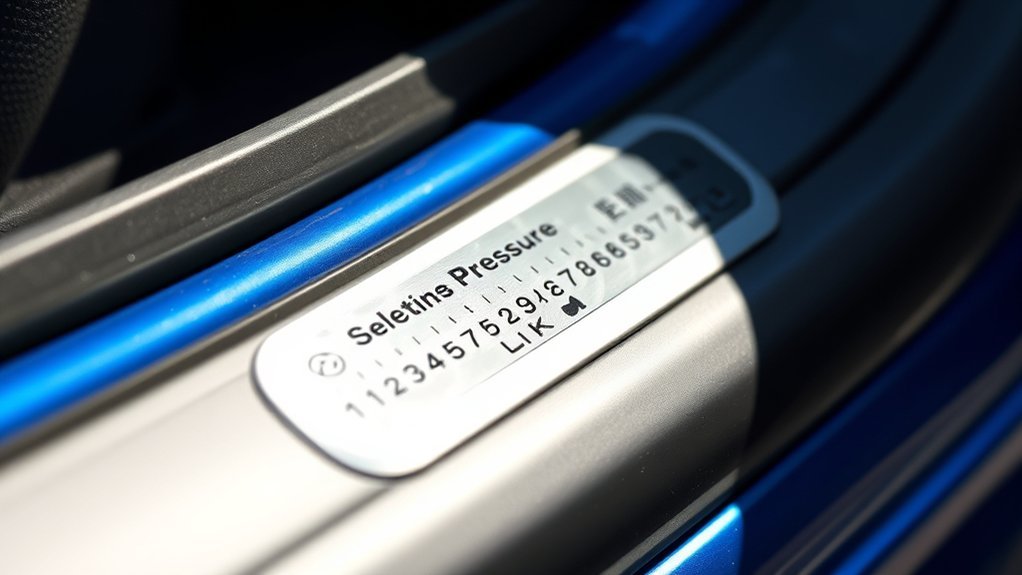
Where can you find the correct tire pressure for your vehicle? Look first at the sticker on the driver’s door jamb — it lists the recommended tire pressure in PSI for your stock tire and load conditions. If you don’t see it there, consult the owner’s manual; it repeats the tire pressure specifications and may note alternative pressures for different tire sizes. Some models also place the information on the fuel door or glove box door, but the vehicle manufacturer’s sticker and manual are authoritative. Remember to check pressures on cold tires: heat from driving raises PSI and yields inaccurate readings. Tire pressure specifications can change with tire size, load, or aftermarket wheels, so cross-reference the sticker, the manual, and manufacturer guidance before adjusting. You’ll gain control and safety by relying on these primary sources, avoiding guesswork, and keeping inflation aligned with the vehicle manufacturer’s exact requirements.
Who This Guide Is For and What It Covers
If you own a vehicle and want predictable handling, even tire wear, and safer stopping distances, this guide shows where to find and how to use the correct tire pressure. You’re the driver who wants control and freedom from avoidable breakdowns; this guide is for you. It’s aimed at owners who’ll check recommended tire pressure routinely, measure when tires are cold, and act on clear data.
You’ll get step‑by‑step methods to locate PSI without guesswork — including using the owner’s manual and the sticker inside the driver’s door — plus guidance on front vs. rear PSI and why the spare matters. You’ll learn how to use TPMS alerts correctly and when a manual gauge is necessary. The focus is practical: how to achieve proper tire inflation for safety, fuel efficiency, and longer tire life. Read this, act, and reclaim autonomy over your vehicle’s performance.
Find the PSI on Your Car: Doorjamb Sticker and Owner’s Manual
Check the driver’s doorjamb (or sometimes the fuel door/glove box) for the factory label that lists the recommended PSI for your vehicle. Consult your owner’s manual for specific notes and any front/rear pressure differences. Always use the cold-tire PSI shown on the label/manual, since driving heats the tires and raises pressure.
Doorjamb Label Location
Although it’s easy to overlook, your car’s recommended tire pressure is usually printed on a sticker inside the driver’s side door jamb, and you should consult it whenever you’re checking or inflating tires. You’ll find the PSI listed with load and speed ratings; it’s the authoritative number for cold tires. Check this door jamb sticker first, then confirm with the owner’s manual when changing tire specifications or loads.
| Location | Info Shown | When to Use |
|---|---|---|
| Door jamb (driver’s side) | Recommended tire pressure (PSI) | Routine checks, cold tires |
| Owner’s manual | Full tire specifications | Tires change, technical details |
| Tire sidewall | Max PSI | Reference only, not recommended pressure |
Use these sources to free yourself from guesswork and drive safer.
Owner’s Manual Guide
When you’re looking for the exact PSI your car needs, consult the owner’s manual—it’s the authoritative source that explains recommended pressures for front and rear tires and notes any variations for different loads or tire sizes. You’ll find model-specific recommended tire pressure tables and procedures; follow them. Also check the sticker on the driver’s side door for quick reference; it lists the same PSI values measured when tires are cold. Tire manufacturers’ websites can supplement guidance for particular tire types, but prioritize the owner’s manual for vehicle load and suspension specifics. Regularly verify pressures to prevent uneven wear, extend tire life, and support safe driving. Treat tire care as routine maintenance that preserves your mobility and autonomy.
Cold Tire Pressure
Because accurate readings depend on tire temperature, measure cold tire pressure after the car’s been parked at least three hours or driven less than a mile; consult the sticker inside the driver’s door jamb or the owner’s manual for the vehicle-specific PSI values for front and rear tires. You’ll rely on the recommended tire pressure, not the tire sidewall maximum. Use a calibrated gauge or your tire pressure monitoring system for verification. Inflate tires to the specified PSI when cold, and avoid adjustments after driving. Regular checking frees you from avoidable risks, improves fuel use and tire life, and keeps control sharp.
- Locate sticker on driver’s side door.
- Verify PSI in owner’s manual.
- Measure cold tire pressure.
- Inflate tires to recommended PSI.
Tire Sidewall vs. Recommended PSI : What Each Number Means
Check the sticker in your driver’s door jamb or owner’s manual for the vehicle recommended PSI — that’s the pressure you should use for everyday driving, load distribution, and handling. The number stamped on the tire sidewall is the tire’s maximum pressure, a manufacturer-set limit for the tire itself, not a target for regular use. Use the vehicle recommended PSI for routine inflation and never exceed the sidewall maximum to avoid increased wear or risk of tire failure.
Sidewall Maximum Pressure
A tire’s sidewall maximum pressure is the highest inflation the manufacturer rates the tire to withstand, but it isn’t the pressure you should use for daily driving. You’ll see that number on the tire sidewall; it’s a limit, not a target. Using it as your tire pressure sacrifices handling, traction, and safety because it ignores vehicle load, suspension tuning, and road conditions. For liberation from guesswork, follow the vehicle’s recommended tire pressure from the door sticker or manual for proper tire inflation and longevity.
- Know the distinction: sidewall maximum pressure vs recommended PSI.
- Don’t inflate to the sidewall number for daily use.
- Use vehicle’s recommended tire pressure for handling and safety.
- Check pressure cold and adjust per load.
Vehicle Recommended PSI
Having noted that the sidewall shows only the tire’s maximum rated PSI, look to your vehicle’s door-jamb sticker or owner’s manual for the recommended PSI—the pressure the manufacturer specifies for ideal handling, safety, and wear. You’ll use the vehicle’s recommended tire pressure value, measured when tires are cold, not the tire sidewall maximum. Different tire sizes or loads can change the recommended tire pressure, so rely on manufacturers recommendations for your specific model. To maintain the correct inflation, check the pressure regularly with a calibrated gauge and adjust to the PSI (pounds per square inch) listed by the manufacturer. Staying within those limits avoids uneven wear, improves fuel efficiency, and prevents risking blowouts or compromised handling.
What “Cold” Tire Pressure Means and When to Measure
Tire pressure “cold” means the reading you get after the tires have sat for at least three hours and cooled to ambient temperature, and you should measure then because driving heats the tires and raises pressure by several PSI. You’ll check cold tire pressure to get an accurate reading that matches the recommended tire pressure listed in your owner’s manual or the driver’s-door sticker. Measure when the car’s been idle and the tires haven’t been driven; this prevents heat-induced overestimates that can hide under-inflated tires.
- Check your tire pressure before driving after long idle periods or temperature shifts to secure accurate reading and reliable tire inflation.
- Use the cold value as your reference for matching recommended tire pressure for peak performance and fuel efficiency.
- Recheck after weather changes; ambient drops reduce pressure and can create safety risks if ignored.
- Treat cold measurements as the baseline for maintenance to prevent uneven wear, preserve control, and support your vehicle freedom.
Tools You Need: Gauges, Compressors, and Common Mistakes
Tools like a pressure gauge and an air compressor let you measure and correct PSI quickly and accurately, so you’ll want reliable, calibrated equipment on hand. You’ll use a tire pressure gauge—digital for speed, analog for durability—to read PSI (pounds per square inch) against the vehicle’s recommended pressure. Keep an air compressor with a regulated output and a shutoff so you add air in controlled bursts.
Avoid common mistakes: don’t test tires hot, don’t rely on visual inspection, and don’t leave the valve cap off. Heat expands air and skews readings; measure cold for consistent results. After adjusting, screw the valve cap back on to prevent leaks and contamination.
Maintain accuracy by calibrating your tire pressure gauge periodically or replacing it if readings drift. With the right tools and routine checks you reclaim control over safety, efficiency, and tire life—practical steps toward independence on the road.
[Products Worth Considering]

Digital Tire Pressure Gauge 2 Pack, Industrial Tire Gauge 3-200 PSI, Calibrated to ANSI B40.7 Grade 2A(plus-minus 0.5%), Air Pressure Gauge with Replaceable AAA Batteries

Enhanced Visibility in Low Light: Features a green backlit LCD screen and integrated flashlight, allowing for clear reading of tire pressure even in dark or dimly light conditions.

PROCESS LEVEL ACCURACY: Each ETENWOLF’s digital tire pressure gauge is calibrated manually to ANSI B40.7 Grade 2A(plus-minus 1 PSI).Presta valve adapter not included, if used for bicycles, it must be purchased separately
How to Check Tire Pressure Step-by-Step (Cold Tires)
Check tire pressure when the tires are cold—before driving or at least three hours after use—to get an accurate PSI reading. Remove the valve cap, press a reliable gauge firmly onto the valve stem, and note the reading. If it’s low, add air with a compressor and recheck until the pressure matches the manufacturer’s recommendation, then replace the valve cap.
Check When Tires Are Cold
Anyone who wants an accurate PSI reading should measure pressure when the tires are cold — ideally after the car’s been parked for at least three hours or driven less than a mile at low speed. You’ll get truer tire pressure figures because heat raises PSI and masks underinflation. Use a tire pressure gauge and follow a clear routine so you stay free from guesswork.
- Remove valve cap, press gauge firmly to avoid hissing, read PSI.
- Compare reading to the recommended tire pressure on the sticker inside the driver’s door or owner’s manual.
- Repeat for all four tires plus the spare to guarantee balanced inflation.
- Adjust to recommended tire pressure; cold checks support peak vehicle performance and safer, liberated driving.
Use A Reliable Gauge
Now that you know to measure when tires are cold, pick a reliable tire pressure gauge to get accurate readings. Choose a sturdy, calibrated gauge from a service station or auto parts store so you can check tire pressure confidently and on your own terms. Remove the valve cap, press the gauge firmly onto the valve stem, and avoid hissing air that skews PSI. Hold steady until the reading stabilizes, then note the value and compare it to the recommended PSI on the door jamb or in the owner’s manual. This tool frees you from dependence on inconsistent pumps; it lets you verify pressure precisely before you inflate, maintaining safety, efficiency, and autonomy over your vehicle’s performance.
Inflate And Recheck Pressure
Inflate the tire with a compressor and monitor the pressure with your gauge, stopping frequently to avoid overinflation. You’ll first remove the valve cap, press the pressure gauge onto the valve stem, and check the cold tire PSI against the manufacturer’s recommended tire pressure. If it’s low, attach an air compressor and inflate in short bursts.
- Remove valve cap, press pressure gauge, read PSI.
- Compare reading to sticker or manual; decide how much to inflate.
- Use air compressor, add air, pause and check pressure gauge frequently.
- When correct PSI is reached, recheck once more and replace valve cap.
Take control: accurate checks and disciplined inflation free you from needless risk and inefficiency.
How to Inflate or Release Air Safely : PSI Adjustment Tips
If you’re adjusting tire pressure, do it with the tires cold and an air compressor plus a reliable gauge, checking pressure after each small change so you hit the recommended PSI without overshooting the sidewall’s maximum. Work methodically: remove the valve cap, attach your gauge, and check tire pressure. If you need to inflate tires, use the air compressor in short bursts, recheck PSI adjustment after each burst, and stop when you reach the vehicle’s recommended number. To release air, press the small pin on the gauge or valve core gently while monitoring the gauge to avoid rapid loss. Never rely on hot readings—driving raises pressure and skews values. After every adjustment, recheck tire pressure to confirm accuracy and replace valve caps to protect stems. Prioritize safety: respect sidewall limits, use proper tools, and proceed incrementally so you maintain control and keep your vehicle free and ready for the road.
[Products Worth Considering]
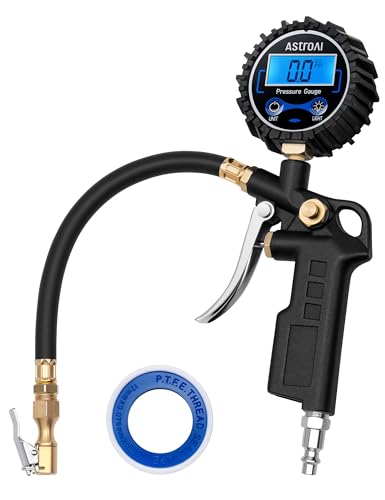
COMPATIBLE WITH both ¼” and ½” NPT air compressors outputs. COMPATIBLE WITH Standard Schrader Valves.

Advanced accuracy: Professionally calibrated tire pressure gauges for cars. Accurately measures from 0-100 PSI with a resolution of +/-1 PSI.
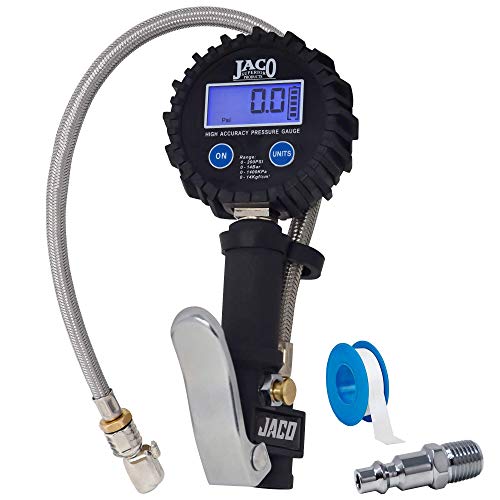
ANSI 1A ACCURACY: Performance tested & calibrated accurate to ±1% full scale with 0.5 PSI resolution for precise tire inflation. Bright 200 PSI LCD display & auto-off feature conserve battery life.
When to Change Recommended Pressure for Towing or Heavy Loads
After you’ve finished adjusting tire pressure for everyday driving, you’ll need a different approach when towing or hauling heavy loads: increase the PSI per your vehicle manufacturer’s recommendations so the tires can carry the extra weight without overheating or deforming. You’ll consult the owner manual or door jamb sticker for the recommended tire pressure when towing; it’s often higher than normal and varies with load. Under-inflated tires under load cause heat buildup, increased rolling resistance, and higher blowout risk, so adjust pressure before you depart and check during long trips.
- Identify towing pressure from vehicle manufacturer sources and set accordingly.
- For moderate loads, consider a 3–5 PSI increase only if the manual allows.
- Recheck pressures cold, and after the first towing segment, to confirm stability.
- Prioritize safety and tire longevity: don’t overload, and correct under-inflated tires immediately.
Be decisive, follow specs, and free yourself from avoidable roadside hazards.
TPMS Alerts and Troubleshooting Common PSI Discrepancies
Because TPMS alerts signal safety risks or sensor faults, you should treat them as actionable diagnostics rather than annoyances. When the TPMS alerts, check tire pressure immediately with a gauge — a solid light usually means low tire pressure; a blinking light indicates a system malfunction requiring troubleshooting. Remember the system triggers when pressure falls about 25% below recommended PSI, so confirm each tire against the placard value.
Practice regular monitoring: check PSI when tires are cold and after temperature shifts (≈1 PSI per 10°F change). If readings match the placard but alerts persist, inspect for slow leaks, damaged valve stems, or corroded valve cores. Swap tires or sensors if isolation diagnostics point to one corner. For persistent blinking, consult a scanner or dealer to verify sensor battery or signal issues.
Treat TPMS alerts as part of vehicle safety maintenance. Timely troubleshooting restores control, prevents roadside vulnerability, and keeps you liberated from avoidable breakdowns.
[Products Worth Considering]

PROCESS LEVEL ACCURACY: Each ETENWOLF’s digital tire pressure gauge is calibrated manually to ANSI B40.7 Grade 2A(plus-minus 1 PSI).Presta valve adapter not included, if used for bicycles, it must be purchased separately
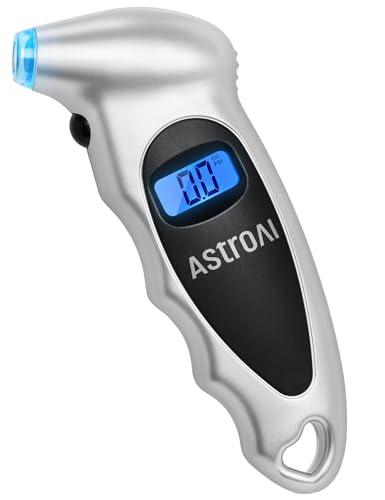
EXPERT-GRADE CALIBRATION: Each AstroAI Tire Pressure Gauge is calibrated with professional-grade tools, ensuring quick and accurate measurement results within plus-minus 1PSI. Stay prepared for any roadside emergency and travel with peace of mind.

PROCESS LEVEL ACCURACY: This heavy duty tire pressure gauge is calibrated manually to ANSI B40.1 Grade A (plus-minus 1% of span)
Frequently Asked Questions
Where Can I Find My Tire Psi Recommendation?
Check the driver’s door jamb sticker or owner’s manual for tire pressure; you’ll boost vehicle safety, tire maintenance, inflation tips, pressure monitoring, driving performance and fuel efficiency — empowering you to drive free and confidently.
How to Find Out What Psi Your Tires Need?
Check your vehicle sticker or manual for recommended PSI, then use tire pressure gauges when cold; follow tire pressure basics and tire inflation tips, checking tire pressure regularly, maintaining tire health, dismissing tire pressure myths, making seasonal tire adjustments.
How Do You Figure Out Your Tire Pressure?
Imagine you check your cold tires before a long trip: you read the door-jamb label, use a pressure gauge, and adjust to ideal inflation. For tire maintenance, follow safety tips, checking tires with seasonal changes in mind.
Is 40 Psi Too High for Car Tires?
No — 40 PSI is often excessive; you’ll challenge ideal tire inflation, risk excessive tire pressure effects like uneven tire wear patterns and safety effects. Use tire pressure gauges, ignore tire pressure myths, and balance fuel efficiency for liberation.
Conclusion
By checking the doorjamb sticker or owner’s manual and measuring cold tire pressure with a gauge, you’ll keep your tires at the manufacturer’s recommended PSI—think of it as following the vehicle’s blueprint like a pilot uses an instrument panel. Adjust only for towing/heavy loads per the manual, use proper inflation tools, and heed TPMS warnings. Regular, precise checks improve safety, handling, fuel economy, and tire life—so make it part of your routine.







Leave a Reply