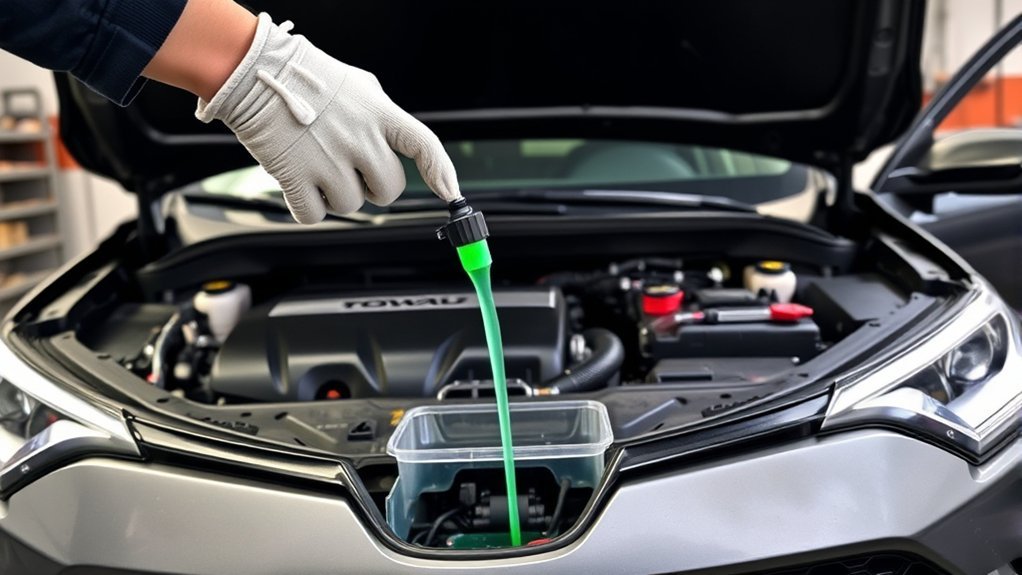
Old coolant can raise engine temperature, leave deposits, and make your Toyota RAV4 harder to protect from heat damage. You can drain the coolant at home if you work on a cold engine, use the right tools, and collect every drop safely. This guide shows you what to prepare, how to drain the radiator and reservoir, how to refill the system, and when to get professional help.
What’s in This Article
- Quick Answer
- Why Regular Coolant Changes Matter
- What You’ll Need Before Draining Coolant
- Before You Begin: Safety Checks
- How to Properly Drain Coolant From Your RAV4
- Tips for Cleaning the Coolant Reservoir
- Best Practices for Refilling Coolant in Your RAV4
- How to Monitor Coolant Levels After Replacement?
- Proper Disposal of Used Coolant: What You Need to Know
- Common Mistakes to Avoid When Changing RAV4 Coolant
- Frequently Asked Questions
- Vehicle Safety Disclaimer
- Conclusion
Quick Answer
To drain coolant from a Toyota RAV4, park on level ground, let the engine cool fully, remove the coolant filler cap, and open the radiator drain petcock over a drain pan. Use clear tubing if possible to control the flow. Refill with Toyota Super Long Life Coolant or the coolant type listed in your owner’s manual.
Key Takeaways
- Let the engine cool fully before you open any coolant cap or drain plug.
- Use a drain pan and sealed container because used coolant is toxic.
- Check your owner’s manual for the correct coolant type and service interval.
- Bleed trapped air after refilling so the cooling system works correctly.
- Inspect for leaks for several days after the coolant change.
Why Regular Coolant Changes Matter
Regular coolant changes help your engine control heat and resist corrosion inside the cooling system. Over time, coolant can lose strength and carry rust, scale, or old seal material through the radiator and passages.
Many Toyota RAV4 models use Toyota Super Long Life Coolant, but service intervals can vary by model year and engine. Check your owner’s manual before you choose a mileage or time interval. A common schedule lists the first coolant change at 100,000 miles or 120 months, then shorter follow-up intervals after that.
Old coolant also needs careful handling. It can harm people, pets, and the environment, so you should store it in a sealed container and recycle it through an approved collection site.
What You’ll Need Before Draining Coolant
Gather every tool before you open the cooling system. This keeps the job clean, safe, and easier to finish without rushing.
Required Tools Overview
Use these basic tools to drain coolant from your Toyota RAV4:
- 10mm socket and ratchet: Remove small bolts, splash shield fasteners, or reservoir bolts if needed.
- Small flat blade screwdriver: Release plastic clips without breaking them.
- Pliers: Move hose clamps when you clean or remove the reservoir.
- Clear vinyl tubing: Direct coolant from the drain petcock into your drain pan.
- Drain pan: Catch old coolant before it reaches the floor.
- Shop towels: Wipe spills and keep your work area clean.
A 5/16 inch inner diameter tube often fits many radiator drain nipples, but fit can vary. Test the tubing before you start draining.
Safety Equipment Necessities
Wear gloves to protect your skin from coolant. Use safety goggles because coolant can splash when you loosen a hose, cap, or drain plug.
Keep children and pets away from your work area. Coolant has a sweet smell, but it can cause serious harm if someone drinks it.
Warning: Never remove the coolant cap on a hot engine because pressurized coolant can spray out and burn you.
Drainage Supplies Checklist
Prepare these supplies before you open the drain petcock:
- Toyota Super Long Life Coolant or the coolant type listed in your owner’s manual
- Clean funnel for refilling
- Clear vinyl tubing for cleaner draining
- Large drain pan for old coolant
- Sealed, labeled container for used coolant
Many RAV4 coolant changes need about 1.25 to 1.5 gallons during a radiator drain and refill. Full system capacity can be higher, so check your manual before buying coolant.
Before You Begin: Safety Checks
Plan on about 45 to 90 minutes for a careful drain and refill. Work on level ground, set the parking brake, and let the engine cool fully.
Open the hood and identify the coolant reservoir, coolant filler cap, radiator drain area, and lower splash shield. Some RAV4 models may hide the drain petcock behind a cover or underbody panel.
Required Tools And Supplies
Before you begin, place these items within reach:
- 10mm socket, ratchet, and short extension
- Pliers for hose clamps
- Flat blade screwdriver for plastic clips
- Drain pan and sealed storage container
- Gloves, goggles, shop towels, and funnel
- Correct premixed coolant for your RAV4
Premixed coolant usually works best for simple drain-and-fill jobs. It helps you avoid the wrong water ratio.
Safety Precautions
Confirm the engine feels cool before you touch the coolant cap. Hot coolant can stay under pressure even after you shut the engine off.
| Task | Safety Precaution |
|---|---|
| Check engine temperature | Wait until the engine is cool to the touch |
| Locate drain points | Confirm the radiator drain before loosening anything |
| Collect old coolant | Use a clean drain pan and sealed container |
Remove the filler cap only after the system cools. This lets air enter the system and helps coolant drain smoothly.
How to Properly Drain Coolant From Your RAV4
Proper draining helps remove old coolant without making a mess. Follow the steps in order and avoid forcing any plastic drain parts.
Draining coolant from your RAV4 helps control engine heat and protects the cooling system from old fluid buildup.
- Park your RAV4 on level ground and let the engine cool fully.
- Set the parking brake and place a drain pan under the radiator drain area.
- Remove the coolant filler cap slowly after you confirm the engine is cold.
- Attach clear vinyl tubing to the radiator drain nipple if your model allows it.
- Open the radiator drain petcock by hand or with the correct tool, depending on your model.
- Let the coolant drain into the pan until the flow slows to a drip.
- Close the drain petcock gently, and do not overtighten plastic parts.
- Transfer the used coolant to a sealed, labeled container for recycling.
Some engines also have a block drain plug, but access and location vary. Skip the block drain if you can’t identify it with confidence, or ask a mechanic to perform a full coolant exchange.
Pro tip: Take a photo before removing panels or hoses so you can reinstall each part in the correct position.
Tips for Cleaning the Coolant Reservoir
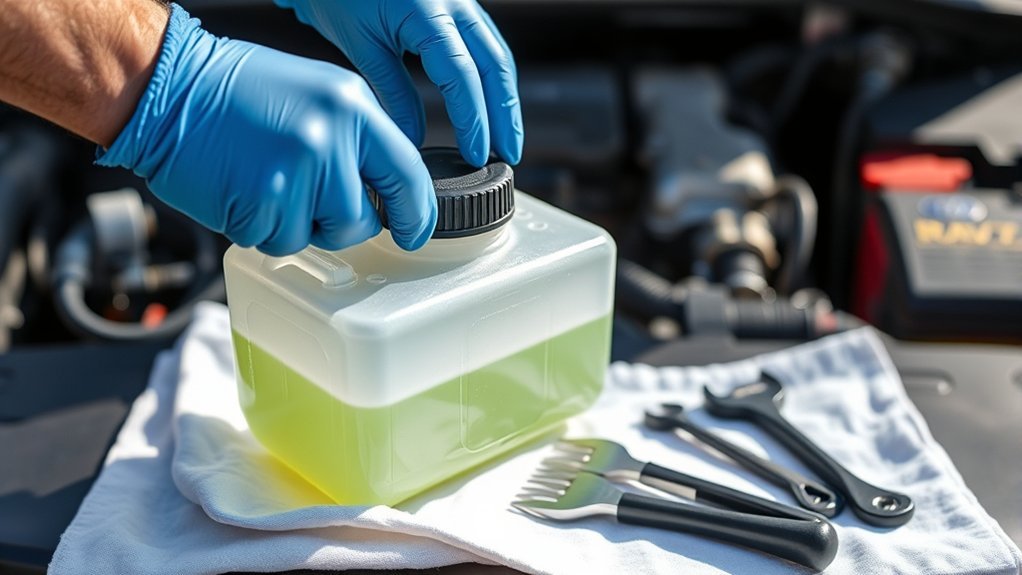
Cleaning the coolant reservoir helps you see the fluid level clearly after refilling. Remove the reservoir only if you can reach the hose clamps and bolts without stretching or cracking the hoses.
Use pliers to move the hose clamps, then pull the hoses off carefully. Remove the reservoir bolts with a 10mm socket if your RAV4 uses that setup.
Rinse the reservoir with clean water until loose residue comes out. Let it dry fully before reinstalling it, because leftover water can dilute the new coolant.
| Step | Tools Needed | Notes |
|---|---|---|
| Remove hose clamps | Pliers | Avoid damaging connections |
| Unbolt reservoir | 10mm socket wrench | Handle bracket gently |
| Clean reservoir | Soft cloth | Make sure no water remains |
| Reconnect hoses | Pliers | Tighten clamps to prevent leaks |
Best Practices for Refilling Coolant in Your RAV4
After you drain the old coolant, refill the system with the coolant type listed in your owner’s manual. Toyota Super Long Life Coolant comes premixed, so you usually should not add water to it.
- Insert a clean funnel into the coolant filler opening.
- Pour coolant slowly so air can escape as the system fills.
- Fill the reservoir to the full line, or just below it if the engine is cold.
- Squeeze the upper radiator hose gently to help release trapped air.
- Start the engine and let it reach normal operating temperature.
- Set the heater to hot so coolant can move through the heater core.
- Watch the level and top off only when it drops safely.
- Reinstall the cap once the level stays stable.
Let the engine cool again, then check the reservoir level. Add coolant only when the engine is cold.
Note: Some RAV4 models use a specific air bleeding process, so check your manual if the heater stays cold or the temperature gauge rises.
How to Monitor Coolant Levels After Replacement?
Check the coolant level daily for the first few days after replacement. Air pockets can move through the system and lower the reservoir level after a few heat cycles.
Always check and add coolant when the engine is cold. If the level keeps dropping, inspect the radiator, reservoir, hoses, drain petcock, and water pump area for leaks.
Record the date, mileage, coolant type, and amount added. This gives you a clear service history for your next maintenance check.
Proper Disposal of Used Coolant: What You Need to Know
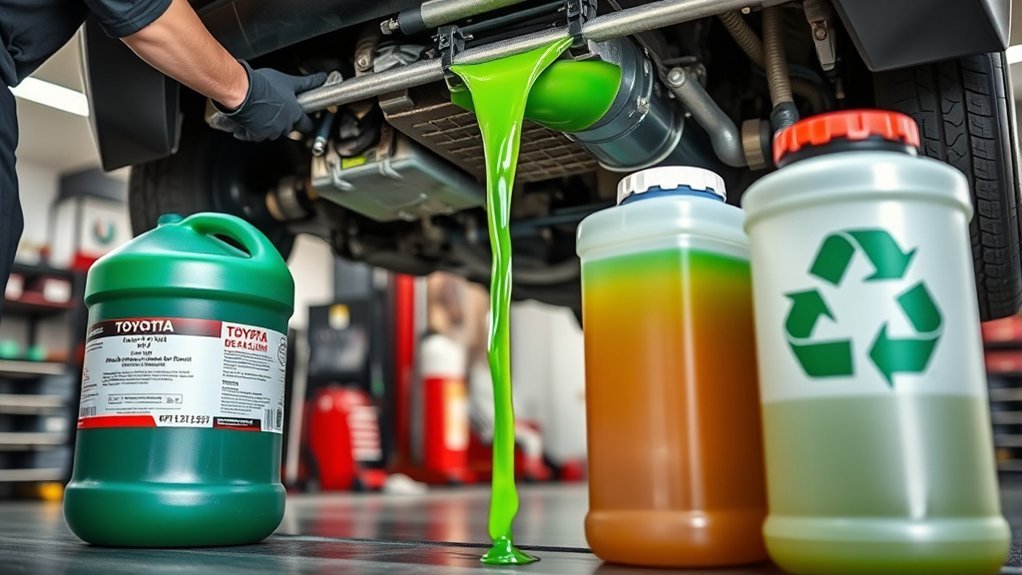
Used coolant is toxic, so you should never pour it into a drain, storm sewer, yard, or trash can. Put it in a sealed, labeled container right after draining.
- Keep used coolant away from children and pets.
- Use a clean container that will not leak.
- Call local waste services for approved disposal rules.
- Ask auto parts stores or repair shops if they accept used coolant.
- Use hazardous waste collection events when local rules require them.
Do not mix coolant with oil, brake fluid, or other chemicals. Mixed fluids can make recycling harder or impossible.
Common Mistakes to Avoid When Changing RAV4 Coolant
Small mistakes can cause leaks, trapped air, or overheating after a coolant change. Avoid these common errors before you drive:
- Opening the coolant cap before the engine cools fully
- Using a coolant type that does not match your manual
- Overtightening a plastic radiator drain petcock
- Leaving air trapped inside the cooling system
- Forgetting to check for leaks after the first drive
If the temperature gauge climbs, the heater blows cold, or you smell coolant after the job, stop driving and inspect the system. Get professional help if you can’t find the cause.
Frequently Asked Questions
Where Is the Radiator Drain Plug on a Toyota RAV4?
The radiator drain plug, also called the drain petcock, often sits near the lower part of the radiator. On many RAV4 models, you reach it from below or behind a lower cover. Check your owner’s manual or repair guide because the exact location can change by model year.
Can I Drain My Coolant Myself?
Yes, you can drain your coolant yourself if you have basic tools and follow safety steps. Work only on a cold engine, collect all used coolant, and refill with the correct fluid. If you see rust, oil in the coolant, or heavy leaks, use a professional service.
How Do You Drain Toyota Coolant Safely?
Let the engine cool, remove the coolant cap slowly, attach tubing to the drain petcock if possible, and drain the fluid into a pan. Close the drain petcock gently, then refill and bleed air from the system. Never let used coolant spill onto the ground.
Where Is the Coolant Drain Plug Located?
The main coolant drain point usually sits at the bottom area of the radiator. Some engines may also have an engine block drain plug, but it can be harder to access. Use a model-specific repair manual before opening any block drain plug.
What Happens If I Use the Wrong Coolant in a RAV4?
The wrong coolant can reduce corrosion protection and may not match Toyota’s cooling system requirements. Mixing incompatible coolants can also create deposits or shorten service life. Drain and correct the fluid if you think you used the wrong type.
Vehicle Safety Disclaimer: This article is for general information only and does not replace your Toyota owner’s manual or a qualified mechanic’s advice. If you feel unsure, see leaks, or notice overheating, stop the job and get professional help.
Conclusion
Draining and refilling coolant helps your Toyota RAV4 control heat and protect the engine from corrosion. Start with a cold engine, use the correct coolant, and collect the old fluid safely. After refilling, watch the coolant level and check for leaks over the next few drives. A careful coolant change can keep your RAV4 running cooler and more reliably.