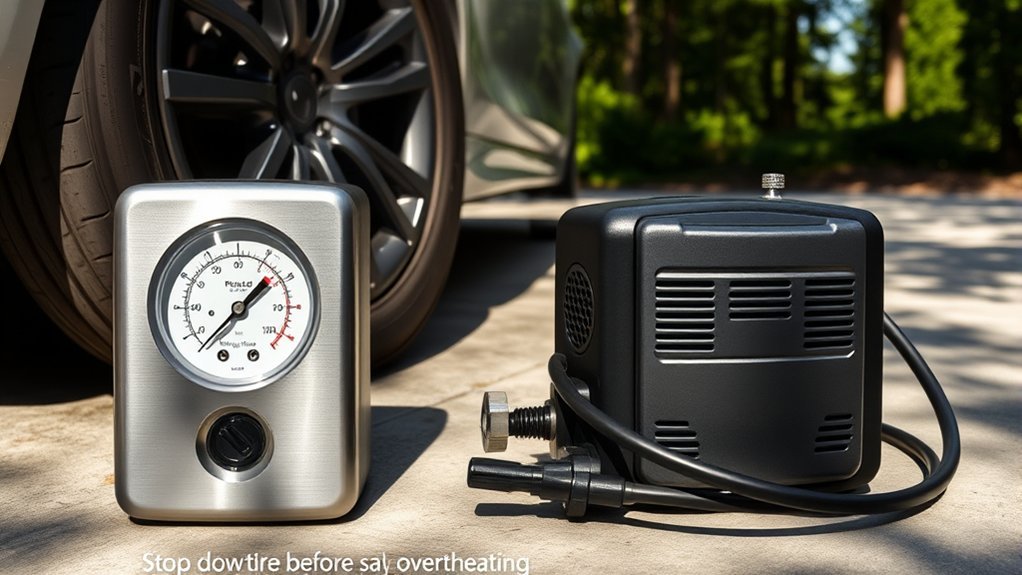
How Long Can a Tire Inflator Safely Run?
What’s in This Article
- Quick Answer
- Key Takeaways
- How Long Can a Tire Inflator Safely Run?
- Recommended Tire Inflator Runtimes by Vehicle and Tire Size
- How Duty Cycle, Power and Cooling Affect Runtime
- Check the Vehicle Placard Before You Inflate
- How to Use an Inflator Without Overheating
- Troubleshooting Long Inflation Times and Failure Signs
- Choose a Tire Inflator for Longer Runtime: Specs to Prioritize
A small tire inflator can save your trip, but it can also overheat fast if you run it too long. Most portable units need rest breaks because the motor and hose heat up while they compress air. This guide explains safe runtime, duty cycle, cool-down breaks, and warning signs so you can inflate tires without damaging the tool or risking tire safety.
Quick Answer
Most portable tire inflators can safely run for about 10 to 15 minutes at a time, but the real limit comes from your model’s duty cycle. Heavy-duty units may handle 20 to 30 minutes or more if the manual allows it. Work in short bursts, keep vents clear, and let the unit cool before you start the next tire.
Key Takeaways
Key Takeaways
- Check the duty cycle before you run any tire inflator for more than a quick top-off.
- Use shorter bursts in hot weather because heat lowers safe continuous runtime.
- Match the inflator to your tire size, not just the maximum psi number on the box.
- Use the vehicle placard or owner’s manual for the correct tire pressure target.
- Stop and inspect the tire, hose, and valve if pressure rises slowly or the unit gets very hot.
How Long Can a Tire Inflator Safely Run?
Specs vary, but many portable tire inflators use short duty cycles, often around 10 to 15 minutes for common consumer models. Don’t run your inflator past the manual’s limit without a cool-down. Treat duty cycle as a hard safety limit because it protects the motor, hose, seals, and wiring from excess heat.
Match continuous runtime to the job. Use short bursts for motorcycles and bikes, plan several short cycles for passenger cars, and choose a longer-rated unit for larger tires. Monitor air pressure as you work so you don’t overshoot your target pressure.
If you need extended inflation for SUVs, light trucks, or off-road tires, use a model with a higher duty cycle instead of pushing a small unit beyond its rating. Follow the manual, watch motor temperature, and plan rest periods before the unit gets too hot. These habits keep your equipment reliable when you need it.
Recommended Tire Inflator Runtimes by Vehicle and Tire Size
When you choose a runtime, match it to the vehicle and tire size. Passenger cars and motorcycles may need about 5 to 15 minutes to top off one or two low tires. SUVs and light trucks often need longer because larger tires hold more air.
Use these ranges for planning, not as a replacement for your manual. A low tire, a weak compressor, a hot day, or a loose fitting can change fill time. When you run longer, add cool-downs between bursts to reduce overheating risk.
Passenger Cars and Motorcycles
Passenger-car tires usually hold more air than motorcycle tires, so they often need more runtime. Plan on running a portable inflator in short cycles when you top off two car tires. Stop if the unit feels too hot to touch safely.
Motorcycles often take less time because their tires hold less air. Still, you should respect the duty cycle, monitor tire pressure, and pause when heat builds up.
- Follow duty cycle limits to reduce overheating risk.
- Check tire pressure mid-run to avoid overinflation.
- Use short bursts if tires start colder, larger, or lower than expected.
You’ll extend tool life and avoid damage by pacing each fill. Don’t guess based on time alone. Watch pressure, heat, and the inflator’s sound.
SUVs, Trucks and Off-Road
SUV and light-truck tires usually need more air volume than small car tires. Plan on a longer session, but split that session into safe run and rest cycles. Larger tires need a higher duty cycle if you want to inflate several tires back-to-back.
Off-road and heavy-duty users should look for units rated for longer continuous runtime. Confirm that the inflator can handle your vehicle’s air volume before you need it on the trail or roadside.
| Vehicle Type | Planning Runtime | Notes |
|---|---|---|
| Passenger car | 5 to 15 min | Best for top-offs and small pressure corrections |
| Motorcycle | 5 to 10 min | Smaller tires usually fill faster |
| Compact SUV | 15 to 20 min | Use breaks if pressure starts very low |
| SUV/Light Truck | 20 to 30 min | Choose a higher duty cycle for repeated fills |
| Heavy/Off-Road | 30+ min | Use a heavy-duty or onboard air system |
How Duty Cycle, Power and Cooling Affect Runtime
Check the inflator’s duty cycle before you use it for a long fill. According to VIAIR, duty cycle tells you how long a compressor can run in a full cycle that includes both run time and rest time. Quincy Compressor explains the same idea as run time divided by total cycle time.
Some manuals list duty cycle as a percentage. Others state it as “minutes on” and “minutes off” under set test conditions. Match motor power to your tire size and pressure needs because a stronger motor can move more air with less strain.
Note: Duty cycle often depends on test pressure and ambient temperature, so hot weather can reduce your safe working window.
Ambient Temperature Affects Runtime
Heat limits continuous use, and outdoor conditions matter. Brands often measure performance specs at moderate ambient temperatures. In hot weather or direct sun, use shorter bursts and longer cool-downs to stay within the same duty cycle.
Duty Cycle Explained
Understanding duty cycle helps you match an inflator’s limits to the job. A 50% duty cycle usually means the compressor needs about as much rest time as run time during the stated cycle. A 25% duty cycle means you need a much longer cool-down period.
Higher duty cycles and stronger motors generally support longer continuous operation and repeated fills. Still, a thermal shut-off does not give you permission to ignore the rating. Respect the limit to prevent motor strain and premature wear.
- Know your duty cycle because it sets your safe work window.
- Match motor power to the task so the pump works with less strain.
- Stop when the rating says to stop because rest prevents overheating.
Cooling and Ventilation
Because heat limits continuous use, choose an inflator with the right duty cycle for the job. Look for cooling features like built-in fans, vents, heat sinks, and open airflow. Keep the unit on a firm surface so the vents stay open.
Higher-power motors can sustain longer runs, but they also create more heat. Cordless models add battery limits, so they may need stricter rest breaks during long fills. Keep vents clear, avoid covering the unit, and stop if the hose or case becomes too hot.
Check the Vehicle Placard Before You Inflate
Before you start the inflator, confirm the correct tire pressure for your vehicle. Michelin advises drivers to use the pressure listed by the vehicle maker, usually on the driver’s door sticker, fuel door, or owner’s manual. Don’t use the maximum psi on the tire sidewall as your normal fill target.
Use a separate tire gauge if your inflator gauge seems slow, jumpy, or hard to read. Check pressure when the tires are cold when you can. A tire that keeps losing pressure after you inflate it may have a leak, damaged valve stem, or bead problem.
How to Use an Inflator Without Overheating
When you’re inflating tires, follow the manufacturer’s duty cycle to avoid overheating. Many portable units need short runs followed by cooling breaks. Give the inflator time to cool between longer bursts, and stop if it becomes too hot to handle safely.
If your model has an automatic shut-off function or thermal protection, use it as a backup only. Don’t use it as a reason to push past the rating. Keep vents clear, clean filters if your unit has them, and check hoses for kinks or blockages.
- Read the duty cycle before you start.
- Set the target pressure from the vehicle placard or owner’s manual.
- Run the inflator in short bursts and monitor pressure during the fill.
- Let the unit cool between longer bursts.
- Stop if the hose, plug, cord, or case gets very hot.
Troubleshooting Long Inflation Times and Failure Signs
If your inflator starts taking much longer than normal, troubleshoot before you keep running it. Long fill times often point to leaks, clogged hoses, worn seals, a loose chuck, or a compressor that lacks enough capacity. Check connections, listen for hissing, and inspect the valve stem.
If the compressor shuts off early or pressure rises very slowly, it may have reached thermal protection. Let the unit cool, then restart only if the manual allows it. If the same problem returns, stop using the inflator until you find the cause.
| Symptom | Likely Cause | What You Should Do |
|---|---|---|
| Slow pressure rise | Leak or weak compressor | Check the valve, hose, chuck, and tire tread |
| Hissing sound | Loose or damaged valve | Reseat the chuck or replace the valve part |
| Frequent cutoff | Thermal protection | Let the unit cool and shorten the next run |
| Won’t reach psi | Internal seal wear or active tire leak | Stop, inspect, and use roadside help if needed |
| Excess heat | Overheating or duty cycle breach | Turn it off and wait for a full cool-down |
When to Stop and Get Help
Stop using the inflator if the plug melts, the cord smells hot, the unit smokes, or the tire will not hold pressure. Don’t drive on a tire that looks flat, has sidewall damage, or loses air right after inflation. Call roadside assistance or a tire shop if you can’t reach the correct pressure safely.
Warning: NHTSA warns that a tire pressure warning means at least one tire may need pressure checked as soon as possible.
Choose a Tire Inflator for Longer Runtime: Specs to Prioritize
To get reliable, longer runtime from a tire inflator, focus on a few core specs. Check continuous runtime, duty cycle, airflow rating, power draw, cooling design, and recommended tire type. Don’t choose by maximum psi alone.
You want a portable tire inflator that can handle your real tire size. A 100 psi rating may sound strong, but airflow and duty cycle matter more during long fills. VIAIR also notes that some portable compressors need a 15 amp or 180 watt outlet, so you should confirm your vehicle outlet rating before use.
- Choose a unit with enough continuous runtime for your largest tire.
- Select a higher duty cycle if you plan to inflate multiple tires in one session.
- Check airflow, power draw, cord length, hose length, and cooling features.
- Confirm the unit works with your vehicle outlet, battery, or clamp connection.
- Choose a heavier-duty inflator for SUVs, trucks, trailers, and off-road tires.
Pro tip: For larger tires, a lower maximum psi with better airflow and a higher duty cycle can beat a weak inflator with a big psi claim.
These specs help you avoid overheating, reduce downtime, and get more consistent performance when you air up multiple tires.
Frequently Asked Questions
How Long Do Tire Inflators Last?
No single lifespan fits every tire inflator. With normal use and basic care, many units can last for several years. Duty cycle, build quality, storage conditions, and how often you use the inflator make the biggest difference.
Can I Run My Car While Using a Tire Inflator?
Yes, you can run your car while using many 12-volt tire inflators, and some brands recommend it. VIAIR says the engine helps supply enough voltage and reduces battery drain for its compressors. Always follow your inflator manual and keep clear of hot or moving parts.
Can I Drive 30 Minutes With Low Tire Pressure?
Don’t plan to drive 30 minutes with low tire pressure. Stop when it’s safe, inflate to the vehicle’s recommended pressure, or call roadside assistance. See NHTSA’s tire safety guidance for basic tire safety reminders.
Do Portable Tire Inflators Drain the Battery?
Portable inflators can drain your car battery, especially with the engine off. Power draw varies by model, outlet type, and tire load. Check the label on your unit, match it to your vehicle’s fuse rating, and run the engine only when your manual says it’s safe.
How Long Should I Let a Tire Inflator Cool Down?
Use the cool-down time in your manual first. If the manual says 15 minutes on and 15 minutes off, follow that limit. If the manual gives no clear rest time, use shorter bursts and wait until the case and hose feel safe to touch.
Safety Disclaimer: This article is for informational purposes only and does not replace your vehicle manual, inflator manual, roadside assistance, or a qualified mechanic. If a tire looks damaged, will not hold pressure, or feels unsafe to drive on, stop and get professional help.
Conclusion
You can safely run a tire inflator only as long as you respect its duty cycle, cool-down needs, and real tire capacity. Short bursts with planned pauses protect the motor and help you avoid overheating. Use a heavier-duty unit for larger tires, and watch pressure changes so you catch leaks early. Before each fill, check your manual, keep vents clear, and stop when heat or slow inflation warns you something is wrong.
References
- FAQ, VIAIR Corporation, accessed 2026
- Tire Safety Ratings and Awareness, National Highway Traffic Safety Administration, accessed 2026
- What Tire Pressure for My Car?, Michelin, accessed 2026
- Air Compressor Duty Cycles Explained, Quincy Compressor, accessed 2026