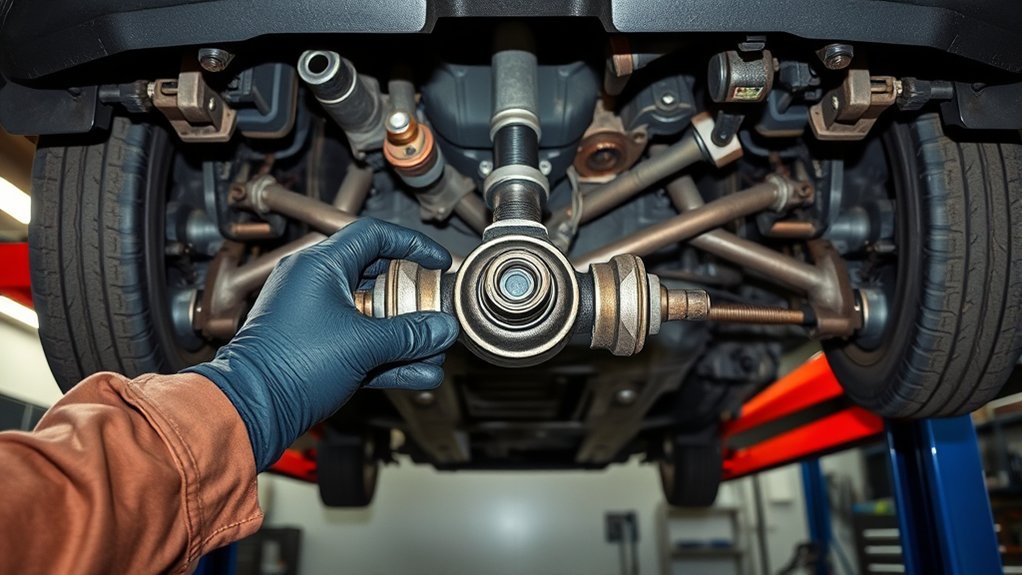
To check the ball joints on your Toyota RAV4, lift the vehicle securely and remove the wheel. Wiggle the wheel at the 12 and 6 o’clock positions to check for play. Visually inspect the rubber boots for any damage and use a pry bar to test for excessive movement between the steering knuckle and control arm. Listen for clunking sounds when weight is applied back onto the wheel. Continuing on will offer you essential maintenance tips and inspection techniques.
Understanding the Importance of Ball Joints in Your RAV4
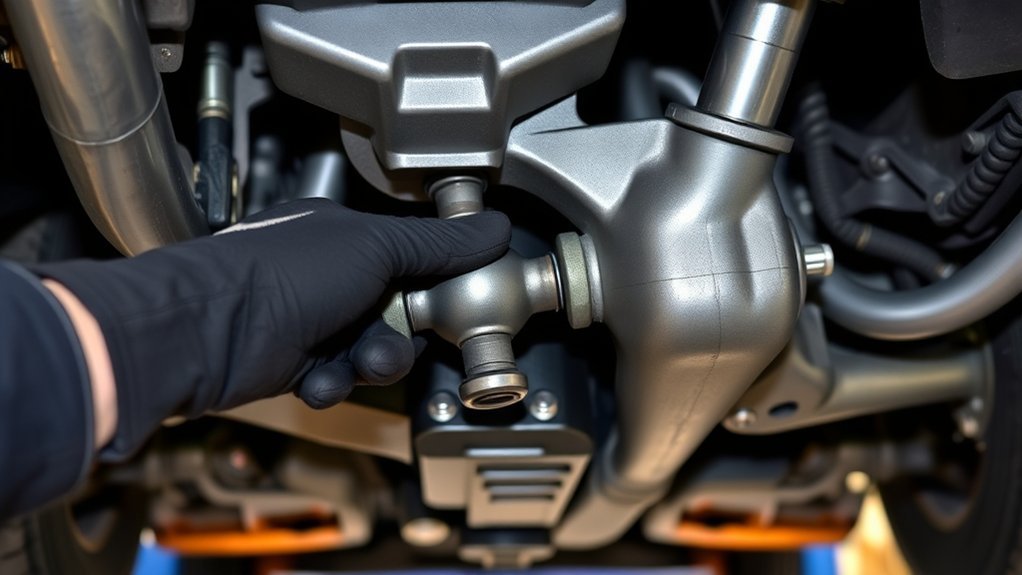
Ball joints play an essential role in the performance and safety of your Toyota RAV4. These important components connect the control arm to the steering knuckle, facilitating smooth steering and suspension movement. Over time, ball joints can experience wear, typically necessitating replacement between 70,000 to 150,000 miles. Regular inspection is crucial to guarantee they remain in ideal condition and prevent potential failure.
Worn ball joints can lead to serious consequences, such as loss of steering control and increased accident risk. This makes maintaining their condition essential for your vehicle’s safety and performance. By keeping an eye on your suspension components, you not only enhance the driving experience but also extend your RAV4’s longevity. Understanding the importance of ball joints will empower you to take proactive measures in maintaining your vehicle, securing a safer and more reliable ride. Don’t underestimate their significance; they’re key to your RAV4’s overall functionality.
Recognizing Critical Signs of Worn Ball Joints
As you drive your RAV4, it’s important to stay alert to signs that may indicate worn ball joints, as these symptoms can directly impact your vehicle’s safety and handling. Look for the following indicators:
| Sign | Description |
|---|---|
| Clunking or rattling noise | Sounds from the front suspension over bumps |
| Uneven tire wear | Irregular tread patterns on the inner or outer edges |
| Loose or wandering steering | Vehicle drifts off a straight path, feels disconnected |
Vibrations in the cabin or steering wheel, especially at higher speeds, may also suggest worn ball joints. Regularly inspect the rubber boots for tears or grease loss, as damage can accelerate wear. By recognizing these critical signs, you can maintain your RAV4’s performance and promote safer driving conditions.
Understanding the Impact of Worn Ball Joints on Safety
Worn ball joints greatly increase your risk of accidents by compromising vehicle control and handling stability. When these components fail, you may experience excessive play in the steering, leading to unpredictable maneuvers. Regular inspections are essential to guarantee your ball joints remain in good condition and maintain safe driving performance.
Increased Accident Risk
When you drive with compromised ball joints, you’re not just risking your vehicle’s performance; you’re also endangering your safety on the road. Worn-out ball joints greatly compromise vehicle handling, leading to a loss of steering control and an increased accident risk. If a ball joint fails, you could experience sudden separation, making it nearly impossible to maintain control. Symptoms like clunking noises, uneven tire wear, and a loose steering feel signal potential issues that shouldn’t be ignored. Regular inspection and maintenance are essential; neglecting wear can result in catastrophic failure, especially at high speeds or during critical maneuvers. Protect yourself and others by addressing ball joint problems before they escalate into dangerous situations.
Loss Of Vehicle Control
Compromised ball joints can greatly affect how your vehicle handles, leading to a dangerous loss of control. Worn ball joints introduce excessive play in the suspension system, making steering feel loose and unpredictable. This can escalate into severe safety risks, especially during emergency maneuvers.
- Your vehicle sways unexpectedly during turns.
- Uneven tire wear causes vibrations that distract you.
- Sudden steering failures lead to catastrophic accidents.
Regular inspections are crucial, as issues can develop before they’re visible. The typical lifespan of ball joints ranges from 70,000 to 150,000 miles, yet neglecting worn components can result in sudden failures. To guarantee safety for you and your passengers, proactively check your ball joints and maintain control of your vehicle.
Compromised Handling Stability
As ball joints deteriorate, they can greatly impact your vehicle’s handling stability, leading to a vague or wandering steering feel that compromises control. Worn ball joints contribute to uneven tire wear, particularly at the inner or outer edges, further diminishing stability. You might notice excessive play, resulting in vibrations in the steering wheel and cabin—clear signs of deterioration. If ball joints fail completely, you risk a sudden loss of steering control, which can cause accidents and endanger everyone on the road. Regular inspection of your Toyota’s ball joints is essential, as issues often develop silently yet substantially affect handling and overall safety. Stay proactive to guarantee your driving experience remains secure and enjoyable.
Step-by-Step Guide to Inspecting Ball Joints
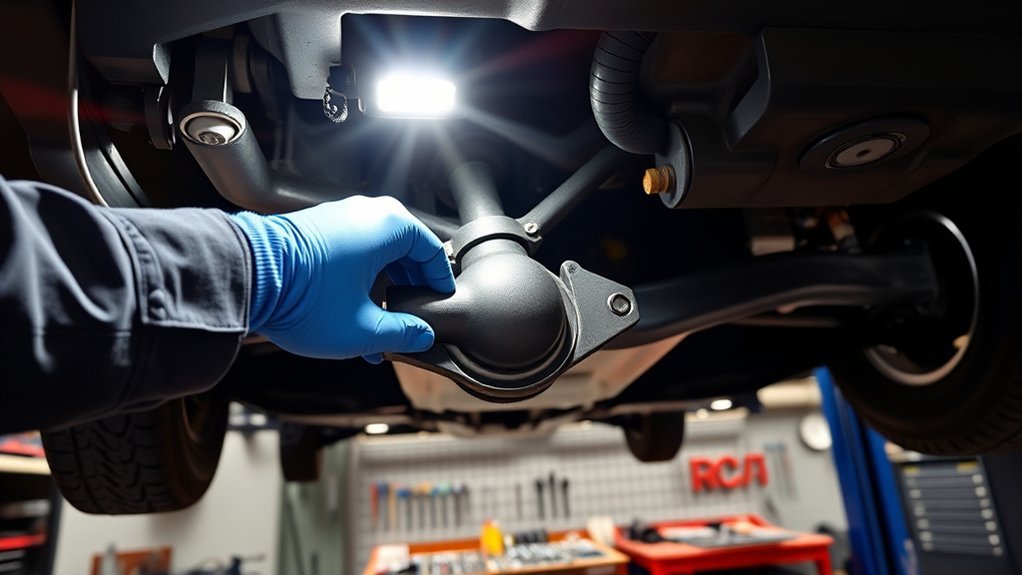
To effectively inspect the ball joints on your vehicle, start by ensuring it’s safely elevated on jack stands for stability. With the vehicle secure, grab the wheel at the 12 and 6 o’clock positions and wiggle it. Any significant play might indicate worn ball joints. Next, visually inspect the rubber boots for:
Ensure your vehicle is on jack stands, then check for play in the wheel and inspect the rubber boots for damage.
- Cracks or splits that could lead to contamination
- Grease loss indicating potential failure
- Overall integrity of the boot material
Finally, apply pressure between the steering knuckle and control arm using a prybar. Observe for excessive movement that signals wear on the ball joints. If you detect any play or wear, especially in vehicles with mileage between 70,000 to 150,000 miles, consider replacing the ball joints. Proper inspection is essential for maintaining your vehicle’s handling and safety on the road.
Using a Pry Bar to Inspect Ball Joint Movement
To inspect ball joint movement effectively, you’ll use a pry bar positioned between the steering knuckle and the control arm. By lifting the pry bar, you can assess for any excessive play that may indicate wear or failure. Pay attention not only to the movement but also to any unusual noises that could signal additional issues.
Proper Pry Bar Usage
Inspecting ball joint movement effectively requires the proper use of a pry bar. Start by lifting the vehicle frame and securing it with jack stands for safety. Position the pry bar between the steering knuckle and control arm, applying gentle leverage to assess movement.
- Wiggle the front wheel side to side while observing the ball joint’s response.
- Listen for any clunking sounds when lowering weight back onto the wheel.
- Check the rubber boot for tears or grease loss.
These steps help confirm if the ball joints can wear and require replacement. Proper pry bar usage is essential in identifying potential issues, ensuring your vehicle remains safe and reliable on the road.
Assessing Ball Joint Play
After properly utilizing a pry bar to assess ball joint movement, the next step is to evaluate ball joint play. Jack up your Toyota RAV4 by the frame, securely supporting it with jack stands for safety. Use the pry bar to apply pressure between the steering knuckle and control arm, watching for any excessive movement. Then, wiggle the wheel from side to side and up and down while observing the ball joint; noticeable play indicates wear. If you detect movement between the ball joint and lower arm, that’s a clear sign of wear needing further evaluation or replacement. For a thorough inspection, consider removing the wheel to check the rubber boot for splits or tears that could lead to grease loss.
Checking for Excessive Movement
A thorough check for excessive movement in your RAV4’s ball joints requires using a pry bar effectively. First, lift the vehicle securely by the frame with a jack and jack stands. Then, place the pry bar between the steering knuckle and control arm, applying pressure to detect any excessive movement or play in the ball joint.
- Wiggle the wheel back and forth to uncover looseness.
- Inspect the rubber boot around the ball joint for splits or tears.
- Consider removing the wheel for a detailed examination if initial checks are inconclusive.
When You Need Professional Help for Ball Joint Problems?
How can you tell when it’s time to seek professional help for ball joint problems? If you notice clunking or rattling noises from your suspension system, it’s crucial to consult a technician. Uneven tire wear, particularly on the edges, can also signal worn ball joints, demanding expert inspection. Additionally, if your steering feels loose or wanders, professional assistance guarantees accurate diagnosis and repair. Vibrations in the steering wheel or cabin during driving indicate progressing ball joint wear, and addressing this with a professional can prevent further damage. Finally, any visible splits or tears in the rubber boot require immediate attention to avoid grease loss and eventual joint failure.
| Symptoms | Action Needed |
|---|---|
| Clunking or rattling noises | Seek professional help |
| Uneven tire wear | Get an inspection |
| Loose or wandering steering | Consult a technician |
| Steering vibrations | Prevent further damage |
| Visible boot damage | Immediate expert attention |
How to Replace Worn Ball Joints: A Quick Overview
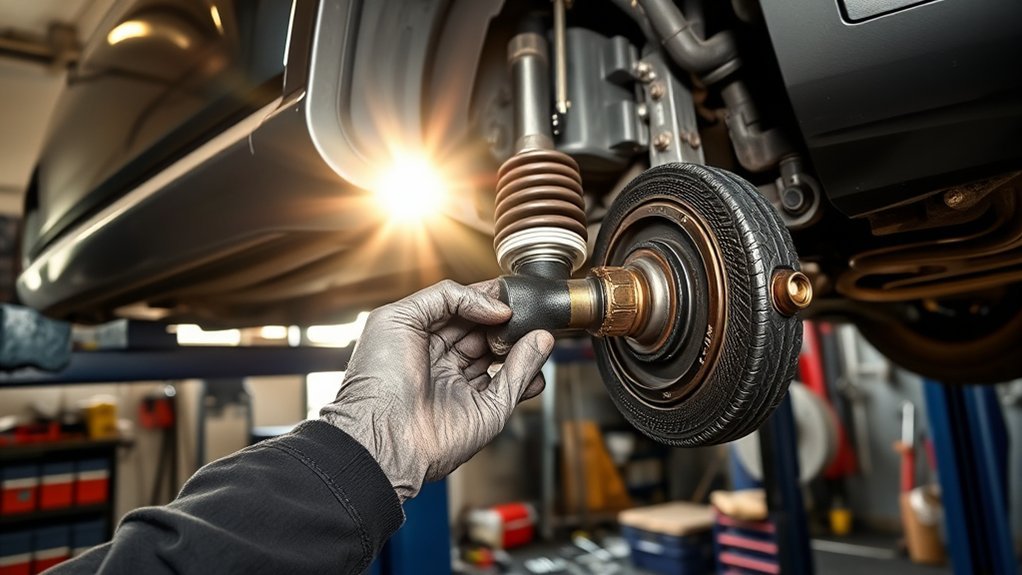
When you notice worn ball joints, replacing them promptly can prevent further suspension issues and guarantee safe driving. Follow these steps to efficiently replace worn ball joints on your Toyota RAV4:
- Securely lift the vehicle with a jack and jack stands, then remove the wheel for better access.
- Disconnect the ball joint from the steering knuckle using basic hand tools; a pry bar may be necessary for leverage.
- If it’s a pressed-in type, employ a ball joint press tool to remove and install the new joint. For bolt-in types, simply replace with new bolts.
After replacing the ball joint, check the alignment of the suspension system components. Don’t forget to take into account a wheel alignment to prevent uneven tire wear and inspect related parts like sway bar links and bushings for wear. Ensuring these components are in good condition will enhance the longevity of your new ball joints.
Frequently Asked Questions
How to Check Toyota Ball Joints?
To check your Toyota ball joints, lift the vehicle securely, wiggle the wheel, and inspect for play. Regular maintenance guarantees vehicle safety. Look for boot damage, as it can lead to joint failure.
How Much Does It Cost to Replace Ball Joints on a Toyota RAV4?
Ball joint replacement on your Toyota RAV4 typically costs between $300 to $800. Labor charges usually account for 50% to 70% of that total, depending on the repair shop and type of ball joints used.
How to Check if Your Ball Joints Are Bad?
To check if your ball joints are bad, listen for clunking sounds, inspect for uneven tire wear, and use testing methods like wiggling the wheel or applying pressure with a prybar. Maintenance tips guarantee longevity.
What Is the Most Common Issue With the Toyota RAV4?
The most common issue with the Toyota RAV4 involves suspension problems, particularly premature ball joint wear. This leads to engine performance decline, noticeable tire wear, and vibrations, ultimately compromising your vehicle’s safety and handling.
Conclusion
In summary, keeping an eye on your RAV4’s ball joints is essential for safe driving, much like a knight checking their armor before battle. By regularly inspecting for wear and knowing when to seek professional help, you can avoid costly repairs and guarantee your vehicle’s performance. If you do find worn ball joints, don’t hesitate to tackle the replacement process—after all, maintaining your trusty steed keeps you on the road and ready for adventure.