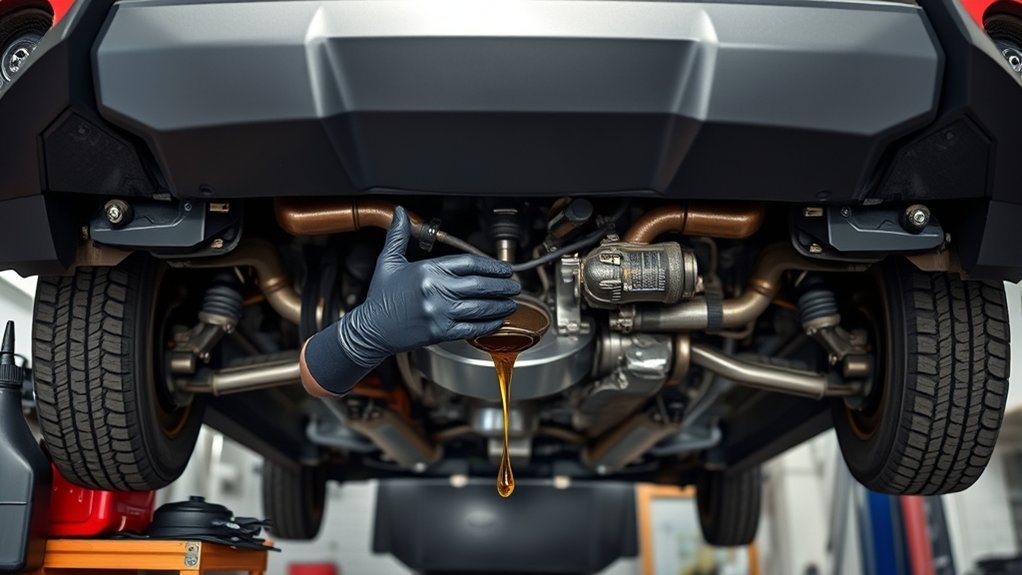
To change the gear oil in your Toyota RAV4, secure the vehicle and gather a T-55 socket, drain pan, and 75W-90 GL5 gear oil. Loosen the fill plug before draining to avoid vacuum formation. Drain the old oil completely, then clean the area. Use a pump to fill fresh oil until it drips from the fill port. Check and maintain levels regularly to avoid contamination and wear. Keep going to uncover more tips for the best results.
Preparing Your RAV4 for a Gear Oil Change
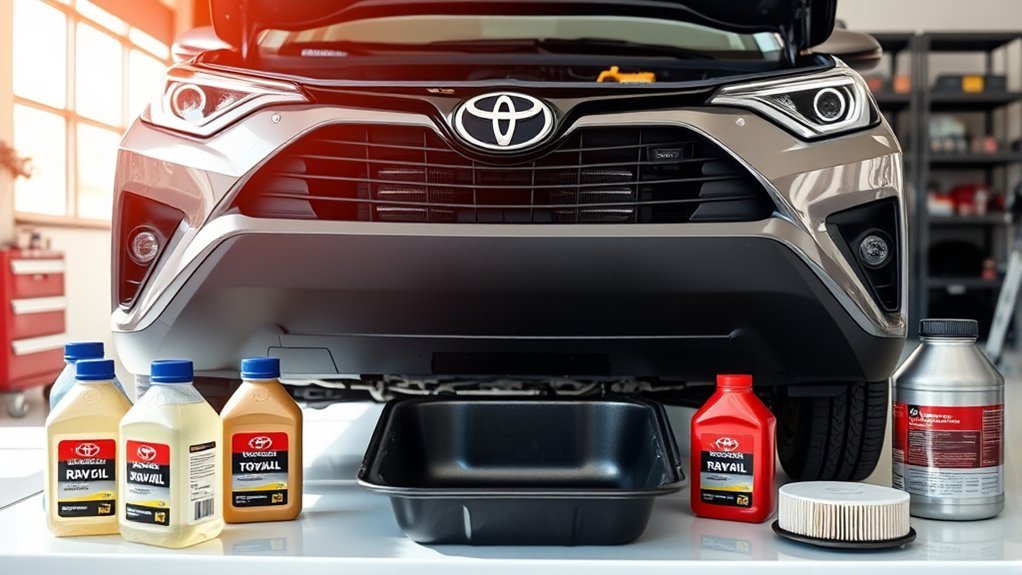
Before you start the gear oil change on your RAV4, it’s crucial to prepare your vehicle properly to guarantee safety and efficiency. Begin by securely jacking up the rear of your Toyota RAV4, then place jack stands under the frame to guarantee stability. Next, identify the location of the differential unit, as this is where you’ll be working. Gather the necessary tools, including a T-55 socket for the drain and fill plugs.
Before draining the differential fluid, loosen the fill plug. This step allows air to enter, preventing vacuum formation during the draining process. Set up a drain pan beneath the differential to collect the old gear oil, ensuring you minimize spills and mess. Finally, verify you have the recommended gear oil, typically 75W-90 GL5, ready for filling the differential once the old fluid has been completely drained. Your preparation will lead to a successful gear oil change.
Essential Tools and Materials for the Job
With your RAV4 securely prepared for the gear oil change, you’ll need to gather the right tools and materials to guarantee the process goes smoothly. Start with a T-55 socket for both the drain and fill plugs, a 10 mm hex key, and a ratchet for the transfer case fill plug. You’ll also need a drain pan to catch the old gear oil, minimizing any mess. Consider using flexible hoses or a hand pump to aid in transferring new gear oil into the differential and transfer case.
Here’s a quick overview of essential items:
| Tool/Material | Purpose |
|---|---|
| T-55 Socket | For drain and fill plugs |
| Drain Pan | Catch old gear oil |
| Gear Oil (e.g., Mobil 1) | Required amount for the change (1 quart) |
Don’t forget aluminum washers for fill plugs and steel washers for the drain plug to guarantee a proper seal.
How to Drain Old Gear Oil: A Simple Step-by-Step Guide
Before you start draining old gear oil, prioritize safety by securely lifting the rear of your vehicle with jack stands. You’ll need to access the drain plug, so make sure it’s easily reachable. Don’t forget to properly dispose of the old oil according to local regulations to protect the environment.
Safety Precautions First
Ensuring your safety is essential when changing gear oil, so start by securely jacking up the vehicle from the rear and supporting it with jack stands. Relying solely on the jack can be dangerous. Once elevated, locate the differential unit and use a T-55 socket to loosen the fill plug. This step allows air to enter, ensuring complete fluid drainage. When you’re ready to remove the drain plug, position a drain pan underneath to catch the old gear oil, preventing spills. Maintain proper orientation to extract the plug without dropping it. Allow the old gear oil to drain completely until minimal dripping occurs. After draining, wipe the area clean and snugly replace the drain plug to prevent leaks.
Accessing Drain Plug
To access the drain plug for your differential, start by securely jacking up the rear of your Toyota RAV4 and placing jack stands under the frame for safety. Follow these steps to effectively drain the old differential fluid:
- Use a T-55 socket to loosen the drain plug, but remember to first loosen the fill plug to allow air in for proper drainage.
- Position a drain pan beneath the drain plug to catch the old gear oil, which typically amounts to just under a quart.
- Allow the differential fluid to fully drain before reinstalling the drain plug.
- After replacing the drain plug, wipe any excess oil from surrounding areas and check for leaks before lowering your vehicle.
Proper Fluid Disposal
When you drain old gear oil, it’s essential to manage the disposal properly to protect the environment. Start by ensuring you have a suitable drain pan to catch the fluid and minimize spills. Loosen the fill plug before removing the drain plug to allow air to escape, aiding in complete drainage. Position your drain pan directly under the differential, and let the oil flow until minimal dripping occurs. Once drained, don’t just throw the old gear oil away. Instead, take it to a local recycling center or an automotive shop that accepts used oil, ensuring compliance with local hazardous waste regulations. Finally, clean any spills with paper towels immediately to maintain a tidy workspace and prevent environmental contamination.
Fill the Differential With Fresh Gear Oil
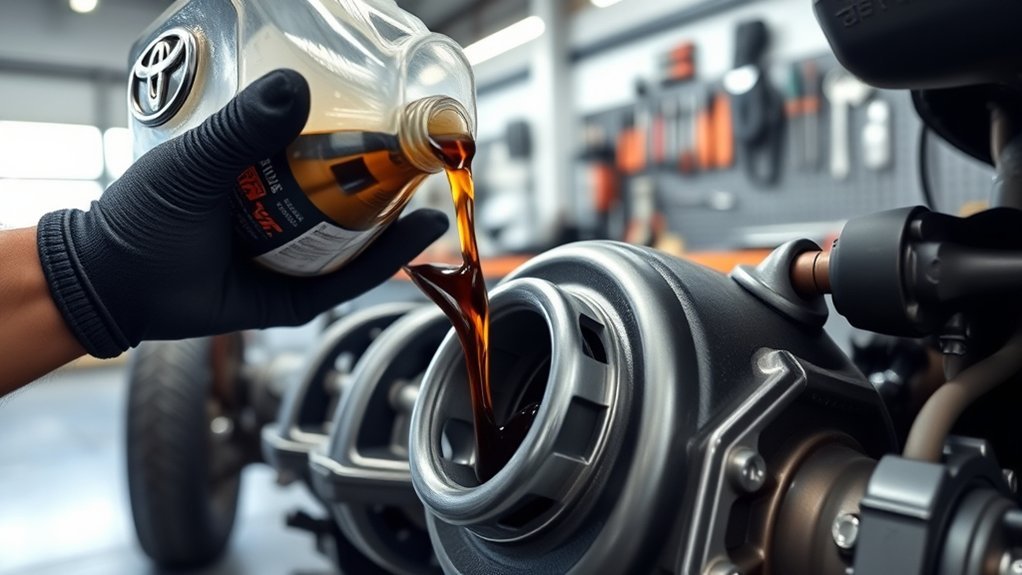
Before you fill the differential with fresh gear oil, it’s essential to position the gear oil container above the differential to allow gravity to assist in the filling process. Follow these steps to guarantee an efficient fill:
Position the gear oil container above the differential to leverage gravity for an efficient fill.
- Use a flexible hose or hand pump for transferring the new gear oil.
- Carefully insert the hose or pump into the differential’s fill port.
- Fill the differential until fresh gear oil begins to gently drip out of the fill port, indicating it’s at the correct level.
- Opt for gear oil that meets 75W-90 GL-5 specifications, like Mobil 1 or Amsoil, for peak performance.
Once you’ve filled the differential, securely replace the fill plug, ensuring it’s snug to prevent leaks or loss of fluid. By following these steps, you’ll maintain your RAV4’s performance and longevity, empowering your ride with fresh, efficient lubrication.
Top Tips for Maintaining Cleanliness and Safety During Gear Oil Changes
Maintaining cleanliness and safety during gear oil changes is essential for an efficient and hazard-free process. Start by using a drip pan to catch excess gear oil while draining; this minimizes spills and keeps your workspace tidy. Position jack stands under your vehicle’s frame for safety, rather than relying solely on the jack. When filling the differential, elevate your gear oil container a little bit above the differential to facilitate gravity-fed filling—this reduces the risk of spills. After completing the operation, clean any excess gear oil from surrounding areas and tools immediately to prevent slippage and maintain a tidy environment. Additionally, use aluminum washers for fill plugs and steel washers for drain plugs to guarantee secure fits and prevent leaks, maintaining the integrity of your fluid system. By taking these precautions, you’ll guarantee a clean, safe, and effective gear oil change.
How to Check and Maintain Proper Fluid Levels?
After guaranteeing a clean and safe workspace during your gear oil change, it’s important to check and maintain proper fluid levels in your differential. Here’s how to do it effectively:
Ensure a clean workspace and check your differential’s fluid levels for optimal performance during your gear oil change.
- Remove the fill plug: Use a T-55 tool to access the differential’s fill hole.
- Check fluid level: The gear oil should be level with the bottom of the fill hole. If it spills out, it’s full.
- Inspect fluid condition: Every 30,000 miles, guarantee the fluid is clean and free from contaminants.
- Add oil as needed: If the level is low, add approximately 0.8 quarts of the recommended gear oil, like Mobil 1 75W-90 GL5.
Regularly checking and maintaining proper fluid levels can prevent mechanical wear and extend your differential’s lifespan. By understanding how to check and maintain proper fluid levels, you’re going to guarantee your Toyota RAV4 operates smoothly.
Troubleshooting Common Issues During Gear Oil Changes
While changing gear oil is a straightforward process, several common issues can arise that may complicate the task. The tricky part often starts with ensuring the fill plug is loosened before draining; failing to do so can lead to vacuum lock, hindering fluid flow. Additionally, always inspect the old gear oil; dark, contaminated fluid suggests wear and may require more frequent changes.
| Issue | Solution | Precaution |
|---|---|---|
| Vacuum Lock | Loosen fill plug before draining | Avoid starting the drain without this step |
| Stripped Plugs | Use a torque T-55 socket for removal and installation | Prevents damage to the plugs |
| Fluid Spills | Use a flexible hose or funnel during filling | Keeps the area clean and manageable |
Remember to monitor for leaks after reinstalling the fill plug; a secure fit prevents future fluid loss.
Frequently Asked Questions
How Often Should I Change the Differential Fluid on My Toyota RAV4?
You should change your RAV4’s differential fluid every 20,000 miles, or every 15,000 miles if towing. Regular differential maintenance guarantees peak performance and longevity, so don’t overlook these scheduled changes for your vehicle’s health.
Can You Change Gear Oil Yourself?
Absolutely, you can change gear oil yourself! With some basic tools and a bit of DIY maintenance know-how, you’ll release your inner mechanic, ensuring your Toyota RAV4 runs smoothly while saving money and gaining confidence.
What Kind of Fluid Does a Toyota RAV4 Rear Differential Take?
Your Toyota RAV4 rear differential takes Mobil 1 75W-90 GL5 Synthetic gear lube, or alternatives like Amsoil Severe Gear 75W-90. For effective differential maintenance, verify you follow the recommended fluid specifications for peak performance.
How Often Should the Transmission Fluid Be Changed in a Toyota RAV4?
You should change the transmission fluid in your Toyota RAV4 every 30,000 miles for best performance. If you’re towing or driving under heavy loads, consider more frequent transmission maintenance, around every 15,000 miles.
Conclusion
Changing your Toyota RAV4’s gear oil isn’t just a maintenance task; it’s like giving your vehicle a rejuvenating spa day! By following the steps outlined, you guarantee peak performance and longevity of your differential. Regular checks and timely oil changes will keep your RAV4 running smoother than a freshly paved highway. Remember, a well-maintained vehicle is a happy vehicle, so stay proactive and keep that gear oil fresh for the best driving experience!