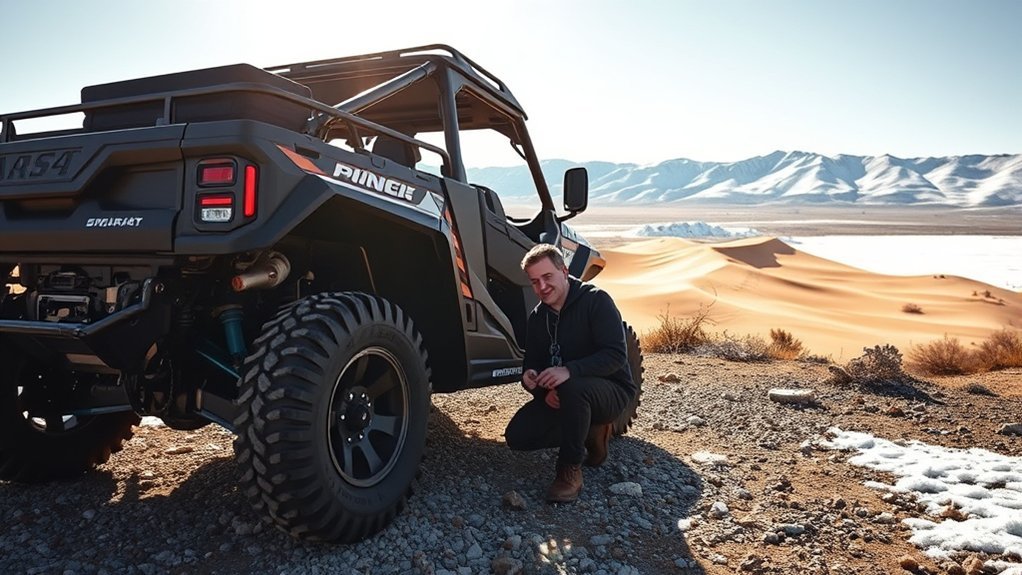
Match tire pressure to the surface. On pavement, run your vehicle’s recommended cold PSI (door-jamb placard or owner’s manual) for safe handling, braking, and fuel economy. For slow off-road driving, many drivers air down in steps to widen the footprint and soften impacts—then reinflate to spec before highway speeds.
Key takeaways
- Road/highway: use the door-placard PSI and check tires monthly (cold).
- Off-road starting points (low speed): gravel/hardpack ~20–25 PSI; soft sand ~10–15 PSI; deep snow ~15–20 PSI (exact limits depend on wheels, tires, load, and speed).
- Don’t guess: use a calibrated gauge/deflator and bring a reliable way to air back up.
Quick PSI Cheat Sheet: Manufacturer vs. Terrain
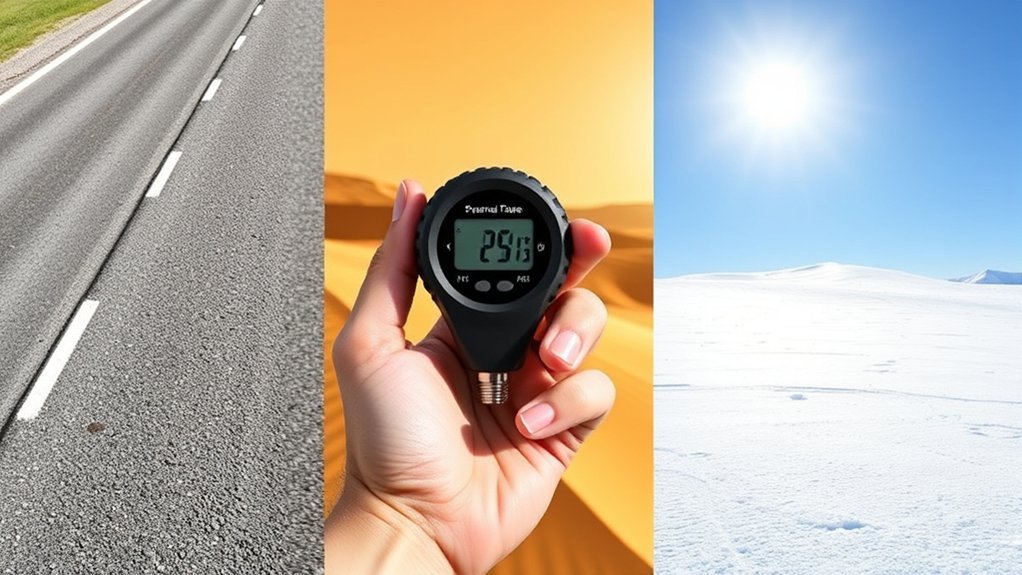
Your vehicle’s placard is the safe baseline for paved driving. For low-speed off-road conditions, you can often gain traction by airing down within safe limits:
- Hard-packed surfaces / gravel / dirt: about 20–25 PSI
- Mud (low speed): about 15–20 PSI
- Soft sand: about 10–15 PSI (lower only with appropriate wheel/tire setups)
- Deep snow (off-road): about 15–20 PSI
Important: these are starting ranges used in off-road practice—not universal specs. Vehicle weight, tire size/construction, wheel type (standard vs. beadlock/bead-grip), and speed all change what’s safe.
How to Air Down and Reinflate Safely
Airing down works best when you’re precise. Use a calibrated tire gauge and a deflator (manual or preset) so you can hit a target PSI on all four tires. Drop pressure in small steps, recheck often, and avoid very low PSI on standard wheels where de-beading risk rises.
Before you return to pavement, reinflate to the placard PSI with a portable compressor or CO2 system. Adjust only when tires are cold (not recently driven).
Road & Highway: Tire Pressure for Safety and Fuel Economy
For street driving, set tires to the recommended cold pressure. For many passenger vehicles it’s often around 30–35 PSI, but it varies by vehicle, tire size, and load. Check pressure at least monthly and before long trips. Federal guidance says proper tire pressure can improve fuel economy. In some cases it’s up to about 3% better than driving very underinflated.
| Item | Effect | Action |
|---|---|---|
| Placard PSI (cold) | Designed handling & braking | Set to spec |
| Underinflation | Higher rolling resistance & heat | Inflate promptly |
| Overinflation | Harsher ride, less contact | Reduce toward spec |
| Monthly check | Prevents surprises | Measure cold with a gauge |
| Long trips | Stability & economy | Verify PSI before departure |
Stay deliberate: use a gauge, follow the placard/owner’s manual, and match pressure to load.
Gravel & Dirt: Tire Pressure for Grip and Comfort
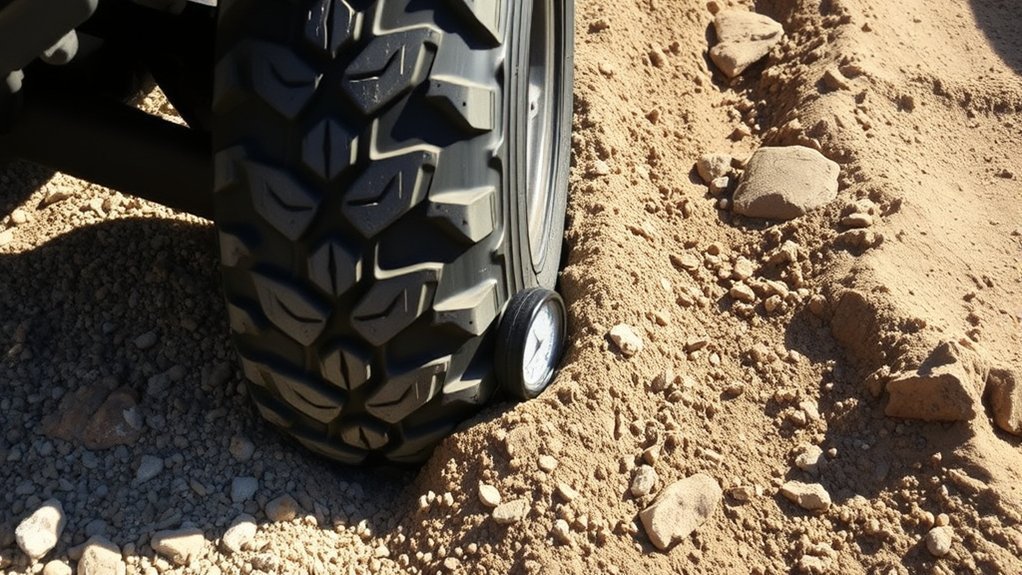
On gravel and hard-packed dirt, many drivers drop pressure to about 20–25 PSI at low speeds to widen the contact patch and reduce harsh impacts. Tune within that band: lower for rough, loose sections; higher for speed, load, or sharper rock. After the trail, reinflate to your placard PSI before you pick up speed.
Optimal PSI Range
Lower pressure helps the tire conform to ruts and rocks, which can increase grip and smooth washboard. Too low can increase rim damage risk or lead to a de-bead on standard wheels. Carry a gauge and adjust in small steps.
- Try 20–22 PSI for looser, rougher gravel (low speed).
- Try 23–25 PSI for firmer hardpack or heavier loads.
- Re-check often as conditions change.
Traction Versus Comfort
For predictable grip and comfort, stay in the 20–25 PSI band and adjust gradually. If steering gets vague or the sidewall feels “roll-y,” you’ve likely gone too low for your setup.
Post-Trail Reinflation
After gravel or dirt, bring pressures back to your vehicle’s road PSI. This restores handling and sidewall protection for pavement.
- Check cold pressure with a quality gauge; correct to placard spec.
- Use a compressor or CO2 system; inflate in small increments and recheck.
- Inspect for cuts or sidewall damage before highway speeds.
Sand & Beaches: Tire Pressure for Flotation
For soft sand, airing down is often the biggest traction upgrade. A common starting point is roughly 10–15 PSI at low speed so each tire spreads the load and resists digging in. Keep steering smooth, avoid sudden braking, and hold steady momentum.
If you run true beadlocks or other bead-retention systems, some rigs can go lower in deep sand. Safe minimum depends on wheel design, tire build, and vehicle weight. Go lower only if you understand the risks and you can air back up before leaving the beach.
Snow & Ice: Tire Pressure for Traction
For winter road driving, stick with placard PSI and check pressure more often as temperatures drop. Airing down is mainly for low-speed, off-road deep snow where flotation matters. As a starting point, many drivers use about 15–20 PSI off-road. Reinflate before you return to plowed roads or faster driving.
Frequently Asked Questions
What PSI should your tires be at to drive on sand?
For many vehicles at low speed, a common starting point is 10–15 PSI for soft sand. Heavier vehicles and standard wheels may need a higher minimum to avoid rim or bead issues. Air back up before pavement.
Should I air down my tires for gravel roads?
Sometimes. If you’re driving slowly on rough gravel, a moderate reduction (often into the 20–25 PSI range for many light trucks/SUVs) can improve comfort and traction. Keep speed and load conservative, and reinflate to placard PSI for pavement.
What PSI should I run my gravel tires at?
20–25 PSI is a common low-speed starting range for gravel and dirt. Start higher if you’re heavily loaded or seeing sharp rocks, then adjust down in small steps until traction and stability feel right.
What PSI should all-terrain tires be on road?
Use the vehicle’s recommended cold PSI on the door placard (not the tire sidewall “max PSI”). That setting is engineered for safe handling, braking, and tire wear on pavement.
Conclusion
Adjusting tire pressure for terrain is controlled tuning. Use the placard for street driving, then air down in steps for low-speed gravel, sand, or deep snow to increase the contact patch. Bring tires back to road pressure before high-speed travel, and use a gauge so you’re working from numbers—not feel.