
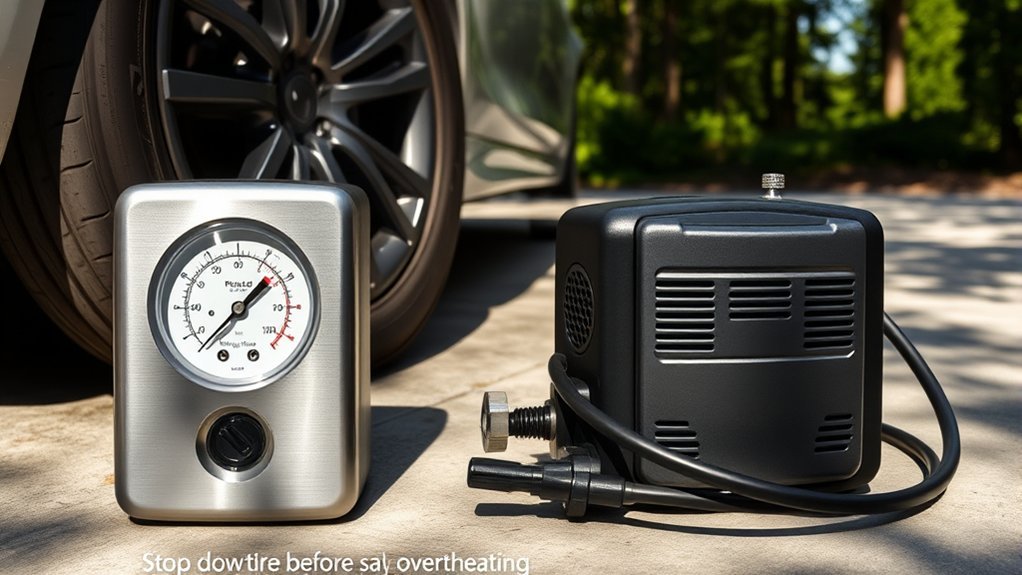
Most portable tire inflators can safely run for about 10–15 minutes continuously. Heavy-duty units may handle 20–30+ minutes. Don’t ignore the duty cycle. Work in short bursts and allow cool-downs to prevent motor overheating and damage. Match power to tire volume and keep vents or fans clear so the unit can cool properly. If inflation starts taking unusually long, check for leaks or worn components.
Quick Answer
- For many portable inflators, plan on 10–15 minutes max of continuous use before a cool-down.
- Heavy-duty units often handle 20–30+ minutes, but still follow the manufacturer’s duty cycle.
- Use short bursts and cooling breaks to prevent overheating and protect the motor.
- Keep vents clear and watch for heat buildup or slowing performance.
- If fill time suddenly jumps, check for leaks, loose fittings, or worn hoses/seals.
How Long Can a Tire Inflator Safely Run?
Specs vary, but most portable tire inflators are built for short duty cycles, often around 15 minutes. You shouldn’t run them continuously beyond that without a cool-down. Treat duty cycles as hard limits, not suggestions. They protect internal components from overheating and help the pump last longer. Match continuous runtime to the job. Use short bursts for motorcycles and bikes, plan up to about 15 minutes for most passenger cars, and choose longer-rated units for heavy-duty tasks. Monitor air pressure closely. Stopping periodically helps the compressor cool and reduces the chance of overshooting your target pressure. If you need extended inflation for SUVs, light trucks, or off-road tires, choose models engineered for longer continuous runtime rather than pushing a small unit past its limit. Follow manufacturer guidance, watch motor temperature, and plan intervals so you avoid overheating and downtime. Respecting these limits keeps equipment reliable when you need it.
Recommended Tire Inflator Runtimes by Vehicle and Tire Size
When you’re choosing a runtime, match it to the vehicle and tire size. Passenger cars and motorcycles often need about 5–15 minutes to top off two tires. SUVs and light trucks typically take 20–30 minutes for larger tires. Heavy-duty off-road rigs may need 30+ minutes or a professional-grade inflator that can run much longer. Use these ranges to plan your inflation session. When you’re running longer, add cool-downs between bursts to avoid overheating.
[Products Worth Considering]

[Fast & Efficient Inflation] The OlarHike tire inflator features a high-performance motor that delivers rapid airflow—inflate a standard car tire (195/65 R15) from 30 to 35 PSI(+5 PSI) in just 55 seconds, or a larger SUV tire (235/65 R17) from 30 to 35 PSI(+5 PSI) in only 2.2 minutes. Ideal for cars, SUVs, light Pickup(Within 51 PSI), motorcycles, bicycles, and sports balls. Important Note: The unit can only inflate car/pickup truck tires up to 51 PSI

Please Note: This product must be powered by a 12V DC Cigarette Lighter to function properly, and ensure the vehicle is in a running state. And it equipped with a 9.8-foot cord, which can meet the usage needs of most regular-sized vehicles.

ADVANCED TRUEGAUGE SCREEN: This battery tire inflator includes updated sensor technology, capable of collecting pressure data from tire inflators at a frequency of 200 times per second. Its valid data rate is higher than 80%, which is 60% better than the market average. Wherever you go, accurate readings help you drive safely.
Passenger Cars & Motorcycles
Passenger-car tires usually have more volume and higher pressure needs than motorcycles. Plan on running a portable inflator about 10–15 minutes to top off two car tires without risking overheating. Respect the duty cycle, monitor tire pressure, and stop if the unit feels excessively hot. Motorcycles often take about 5–10 minutes because their tires are smaller.
- Follow duty cycle limits to reduce overheating risk.
- Check tire pressure mid-run to avoid overinflation.
- Use short bursts if tires are colder or larger than expected.
You’ll extend tool life and avoid damage by pacing inflations, watching temperature, and matching runtime to tire size instead of guessing.
SUVs, Trucks & Off-Road
If you’re inflating SUV or light-truck tires, plan on running a portable inflator for about 20–30 minutes per session to handle the larger air volume without overheating the unit. Match tire inflators to tire size. Larger tires need longer safe runtime and a higher duty cycle if you want to inflate multiple tires back-to-back. Off-road and heavy-duty users should look for units rated for 30+ minutes of continuous runtime. Confirm your inflator can handle your vehicle’s air volume so you don’t waste time or strain the motor.
| Vehicle Type | Recommended Runtime | Notes |
|---|---|---|
| SUV/Light Truck | 20–30 min | Standard off-road prep |
| Heavy/Off-Road | 30+ min | Larger volumes require it |
| Compact SUV | 15–20 min | Smaller volume needs |
How Duty Cycle, Power and Cooling Affect Runtime
Check the inflator’s duty cycle to know how long you can run it before it needs a rest. Manufacturers often define duty cycle as the amount of time a compressor can run within a full cycle (commonly one hour), including run time and required rest time. Some manuals also spell it out clearly as “X minutes on, then Y minutes off” under specific test conditions. Match motor power to your tire size and pressure needs because higher-wattage motors can handle larger tires more efficiently. Make sure the unit has good cooling and ventilation (fans, vents, heat sinks, and open airflow) so you can stay within safe limits and reduce overheating.
[Products Worth Considering]

ULTIMATE HEAVY-DUTY TIRE INFLATOR: ETENWOLF Vortex S7 Cordless Air Compressor is brand's most powerful model, specifically for inflating heavy-duty vehicles quickly, such as pickups, trucks, off-road vehicles, not to mention regular cars, bicycles, balls, pool floats, and air mattresses (But Not for SUPs)

Fast and Efficient Inflation: ETENWOLF Vortex S6SE tire inflator portable air compressor features a durable dual-cylinder design, delivering an impressive 1.5 CFM@0 PSI (42 L/min) airflow, and can inflate a 31-inch tire from 0 to 35 PSI in just 1 minute. With a maximum pressure of 160 PSI and gauge accuracy within +/-1 PSI, it ensures fast and precise inflation. Additionally, the tire inflator is equipped with a built-in cooling system, allowing for continuous operation even during extended use.

ETENWOLF Vortex S6 cordless air compressor excels at inflating heavy-duty vehicles quickly, such as pickups, trucks, off-road vehicles, not to mention regular cars, bicycles, balls, pool floats, and air mattresses(Not for SUPs)
Ambient Temperature Affects Runtime
Heat is the main limiter on continuous use, and outdoor conditions matter. Many published performance specs are measured at standard ambient temperatures. In hot weather or direct sun, plan shorter bursts and longer cool-downs to stay within the same duty cycle and avoid thermal shutdown.
Duty Cycle Explained
Understanding duty cycle helps you match an inflator’s limits to the job. Duty cycle is the ratio of run time to total cycle time, and it’s commonly expressed as a percentage. Some brands describe it as a percentage of an hour, while others list it as minutes on and minutes off. Either way, the purpose is the same: it tells you how long you can run the compressor before it needs cooling time. Higher duty cycles and stronger motors generally support longer continuous operation and repeated fills. Respect the rating to prevent motor strain and premature wear.
- Know your duty cycle. It sets your safe work window.
- Match motor power to the task. More power usually means less strain.
- Stop when the rating says to stop. Rest prevents overheating.
Cooling And Ventilation
Because heat is the main limiter on continuous use, prioritize inflators with good cooling and the right duty cycle for the job. Choose models with effective cooling mechanisms like built-in fans, vents, and heat sinks so you can run closer to the rated continuous runtime without overheating. Match motor power to tire size. Higher-power motors can sustain longer runs, but they also generate more heat and need better ventilation. For portable inflators, balance battery capacity and cooling since cordless convenience often comes with stricter limits on sustained operation. Respect the duty cycle, plan work in bursts, and keep vents clear to reduce thermal stress.
How to Use an Inflator Without Overheating
When you’re inflating tires, follow the manufacturer’s duty cycle to avoid overheating. Many portable units are designed for short runs followed by a cooling break. Give the inflator time to cool between longer bursts, and stop immediately if it becomes too hot to handle safely. If your model has an automatic shut-off function or thermal protection, use it as a safety backstop, not a reason to push past the rating. Keep vents clear, clean filters if your unit has them, and check hoses for kinks or blockages so airflow stays strong and heat doesn’t build up.
- Use duty cycle guidance. Treat it as non-negotiable.
- Let it cool between longer bursts. Don’t rush the rest period.
- Prefer units with cooling fans and automatic shut-offs. They add a safety buffer.
Troubleshooting Long Inflation Times and Failure Signs
If your inflator starts taking noticeably longer than normal, it’s time to troubleshoot. Longer fill times often point to leaks, clogged hoses, worn seals, or a compressor that’s undersized or losing capacity. Check connections, listen for hissing, and swap hoses or fittings to isolate leaks. If the compressor cycles off early, or pressure rises very slowly, it may be hitting thermal protection or showing signs of internal wear. Watch duty cycle limits. Running past 15 minutes on a small unit can overheat it and shorten its life. If a tire won’t reach target pressure in a reasonable time, stop, let the unit cool, and inspect fittings, valves, and the motor.
| Symptom | Likely Cause |
|---|---|
| Slow pressure rise | Leak or weak compressor |
| Hissing sound | Loose or damaged valve |
| Frequent cutoff | Thermal protection |
| Won’t reach PSI | Internal seal wear |
| Excess heat | Overheating/duty cycle breach |
Choose a Tire Inflator for Longer Runtime: Specs to Prioritize
To get reliable, longer runtime from a tire inflator, focus on a few core specs: continuous runtime (aim for at least 10–15 minutes), a high duty cycle (50% or more), motor power and cooling design, and a minimum pressure capacity of 6.89 bar (100 psi). You want a portable tire inflator that won’t quit when you need it. Prioritize models that clearly state continuous runtime and recommended pressure, and check cooling features and motor wattage.
- Choose a unit with at least 10–15 minutes continuous runtime to inflate multiple tires without rushing.
- Select a duty cycle of 50%+ so the motor spends less time resting and handles repeated use better.
- Look for at least 6.89 bar (100 psi) capacity and clear recommended pressure guidance.
These specs help you avoid overheating, reduce downtime, and get more consistent performance when you’re airing up multiple tires.
[Products Worth Considering]

ETENWOLF Vortex S6 cordless air compressor excels at inflating heavy-duty vehicles quickly, such as pickups, trucks, off-road vehicles, not to mention regular cars, bicycles, balls, pool floats, and air mattresses(Not for SUPs)

High-pressure inflation mode with automatic shutoff

This Analog Tire Inflator is a lean, mean inflating machine and has all the essentials, without any added bulk. It may be compact, but the tire inflator packs one heck of a punch.Fit Type: Universal Fit
Frequently Asked Questions
How Long Do Tire Inflators Last?
Tire inflator lifespan varies a lot. With normal use and basic care, many last for several years. Duty cycle, build quality, storage conditions, and how often you use the inflator make the biggest difference. Follow the manufacturer’s limits and keep the unit clean and ventilated to extend service life.
Can I Run My Car While Using a Tire Inflator?
Yes. You can run your car while using a tire inflator, and it often helps reduce battery drain. Still, follow the inflator’s duty cycle and your vehicle manual. Use common sense around heat and moving parts, and don’t leave the car unattended while the compressor is running.
Can I Drive 30 Minutes With Low Tire Pressure?
No. You shouldn’t drive 30 minutes with low tire pressure. Prioritize tire safety and treat it as an emergency. Stop when it’s safe, inflate to the vehicle’s recommended pressure, or call roadside assistance. See NHTSA’s tire safety guidance for basic safety reminders.
Do Portable Tire Inflators Drain the Battery?
Portable inflators can drain your car’s battery, especially with the engine off. Power draw varies by model. Many cigarette-lighter inflators draw around 10–15 amps, and higher-output compressors can draw significantly more. Check the label on your unit, match it to your vehicle’s fuse rating, and consider running the engine if you’re inflating for more than a quick top-off.
Conclusion
You can safely run a tire inflator only as long as you respect its duty cycle, let it cool, and match its capacity to the job. Short bursts with pauses prevent overheating and help the motor last longer. Use a heavier-duty unit for larger tires, and pay attention to temperature and pressure so you catch problems early. Follow the manufacturer’s limits, keep vents clear, and you’ll avoid damage, delays, and unnecessary replacements.







Leave a Reply