
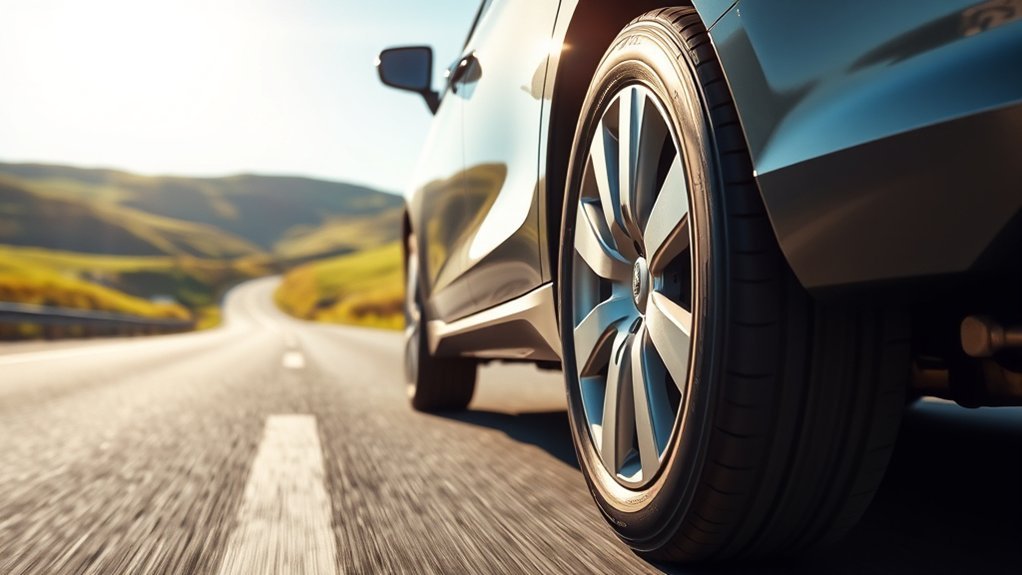
For highway driving, set tire pressure to the placard cold PSI for your vehicle. You’ll find it on the door-jamb label or in the owner’s manual. Most passenger cars and crossovers list something in the 28–36 PSI range, but your exact front and rear numbers can differ.
Key takeaways
- Use the door-jamb placard, not the tire sidewall, for your target PSI.
- Check tires cold (parked about 3 hours or driven less than 1 mile), then recheck monthly.
- Temperature swings change PSI by about 1–2 PSI per 10°F. Top up after cold snaps.
Recommended Highway PSI and Where to Find It
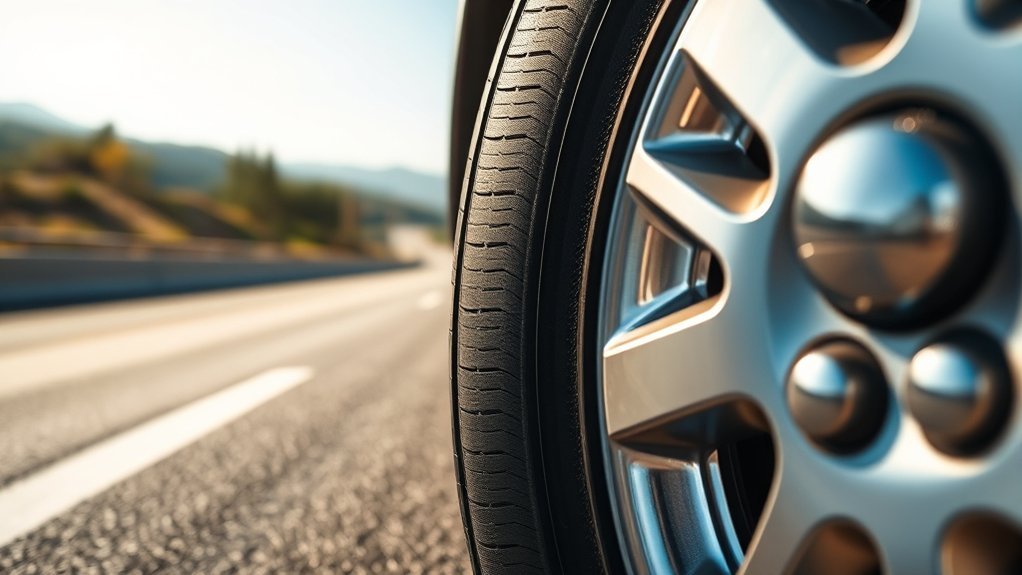
Your highway PSI is the same as your normal target: the placard cold pressure.
Do not use the maximum PSI molded into the tire sidewall. The sidewall number is a limit for the tire, not the right setting for your vehicle. Tire Rack’s tire pressure guide explains this important distinction in detail. For official safety steps, see NHTSA’s tire safety guidance.
Check pressure before driving. Tire pressure rises after a few miles as the tires warm up. If you bleed a warm tire down to the placard number, it may end up low when it cools.
Why Highway Tire Pressure Matters for Safety, Wear, and Fuel Economy
Correct pressure helps the tire carry the load and keeps handling steady at speed. It also limits extra heat from sidewall flex.
Underinflation increases rolling resistance and can reduce fuel economy. FuelEconomy.gov says gas mileage can drop about 0.2% for every 1 PSI drop in the average pressure of all tires.
Optimal Inflation Range
Stick close to the placard pressure. Front and rear may be different.
Overinflation can make the ride harsh and wear the center tread faster. Underinflation can wear the shoulders faster and build more heat.
Effects On Fuel Economy
Inflating to the right PSI can help mileage. FuelEconomy.gov estimates properly inflated tires can improve gas mileage by about 0.6% on average and up to 3% in some cases.
Set Highway PSI for Cars, SUVs, and Light Trucks (Including Towing)
Cars, crossovers, and many SUVs often specify cold pressures in the high 20s to mid 30s. Some light trucks, especially with LT tires or heavy loads, can call for higher pressures.
Always follow the placard or owner’s manual for your exact tire size and load rating.
[Products Worth Considering]

RUGGED DESIGN: The stainless steel components prevent rust and corrosion while the precision-crafted nozzle seamlessly seals onto the valve stems for highly accurate readings (±2% span). We also provide 4 valve stem caps for convenient replacement.

HIGH ACCURACY: Every ETENWOLF's pencil tire gauge is calibrated to ANSI B40.1 Grade B, it is accurate to 2% of span in the middle 50% of range and 3% of span in the lower and upper 25% of range. Each of ETENWOLF pencil tire pressure gauge is manually calibrated and has its unique calibration number printed on the pencil

PROCESS LEVEL ACCURACY: This heavy duty tire pressure gauge is calibrated manually to ANSI B40.1 Grade A (plus-minus 1% of span)
Recommended PSI Ranges
| Vehicle Class | Typical Placard Range* | Key Benefit |
|---|---|---|
| Passenger car / crossover | 28–36 PSI | balanced handling & efficiency |
| SUV / light truck (many models) | 30–40 PSI | stable load support |
| Heavier-duty LT applications | Varies (often higher) | supports higher loads |
| *Note | Use your placard numbers | front/rear may differ |
Adjustments For Towing
If you tow or haul heavy cargo, check your placard and owner’s manual for a loaded or maximum load PSI. Some vehicles list separate values. Set that pressure when the tires are cold.
Never exceed the tire’s max cold pressure on the sidewall.
How to Check and Set Tire Pressure (Step-by-Step)
- Start cold: Check before driving, or after the car sits about 3 hours or is driven less than 1 mile.
- Find the target: Read the Tire and Loading Information label on the driver’s door edge or post.
- Measure: Press a calibrated gauge on the valve stem until it seals and the reading stabilizes.
- Adjust: Add air in short bursts, or bleed air in small amounts, then recheck.
- Repeat: Check monthly and before long highway trips.
[Products Worth Considering]

PROCESS LEVEL ACCURACY: Each ETENWOLF’s digital tire pressure gauge is calibrated manually to ANSI B40.7 Grade 2A(plus-minus 1 PSI).Presta valve adapter not included, if used for bicycles, it must be purchased separately
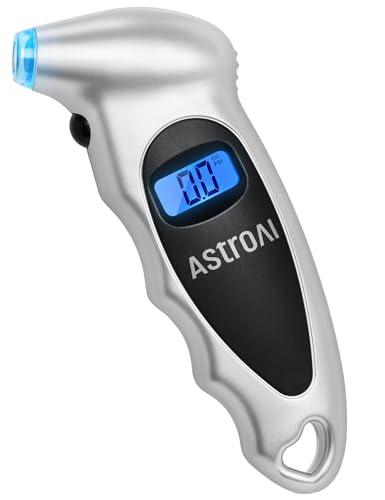
EXPERT-GRADE CALIBRATION: Each AstroAI Tire Pressure Gauge is calibrated with professional-grade tools, ensuring quick and accurate measurement results within plus-minus 1PSI. Stay prepared for any roadside emergency and travel with peace of mind.

Digital Tire Pressure Gauge 2 Pack, Industrial Tire Gauge 3-200 PSI, Calibrated to ANSI B40.7 Grade 2A(plus-minus 0.5%), Air Pressure Gauge with Replaceable AAA Batteries
Change PSI for Temperature, Altitude, and Seasonal Conditions
PSI changes with temperature. A good rule of thumb is 1–2 PSI per 10°F. When the air gets colder, PSI drops, so you may need to add air to stay at your placard number.
If you drive through big weather changes, recheck the next morning when tires are cold. Temperature is usually the biggest day-to-day factor. Altitude changes can also affect pressure slightly, though the effect is smaller than temperature swings for typical driving.
Common Pressure Mistakes and How to Spot Underinflation or Overinflation
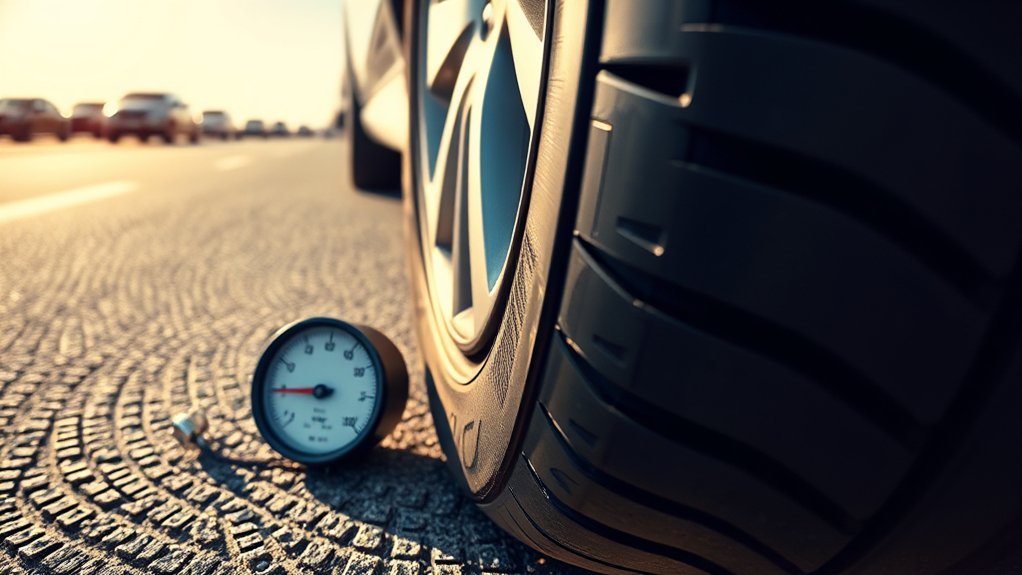
Common mistake: inflating to the sidewall max instead of the placard.
Another is relying only on the TPMS light. TPMS is meant to warn when pressure is significantly low, so you can still be a few PSI down without a warning.
Wear clues: shoulder wear can suggest low pressure, while center wear can suggest too much pressure. If wear looks uneven, have the tire and alignment checked.
Quick Reference: PSI Targets for Common Vehicles and Special Tires
Use the placard PSI as your baseline and keep pressures even across the same axle. Don’t forget the spare. Its PSI may be listed on a label or on the spare itself.
- Use the door placard or owner’s manual for the target PSI.
- Check and adjust when tires are cold.
- Top up after major temperature swings.
[Products Worth Considering]
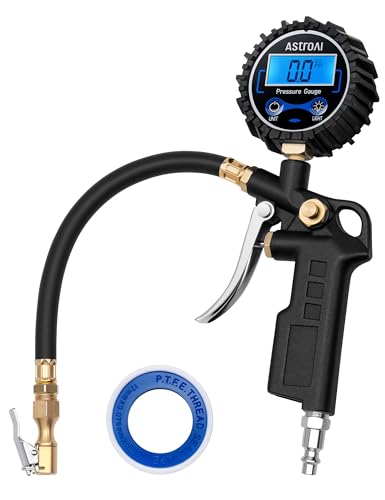
COMPATIBLE WITH both ¼” and ½” NPT air compressors outputs. COMPATIBLE WITH Standard Schrader Valves.

ADVANCED TRUEGAUGE SCREEN: This battery tire inflator includes updated sensor technology, capable of collecting pressure data from tire inflators at a frequency of 200 times per second. Its valid data rate is higher than 80%, which is 60% better than the market average. Wherever you go, accurate readings help you drive safely.

EASY TO USE & READ: It comes with a 1/4" quick-connect fitting for faster measurement. This mechanical tire pressure gauge offers effortless operation, integrating tire pressure measurement, inflation, and deflation in one compact tool. The indicator bar ensures clear readings while allowing you to effortlessly inflate and deflate your tires. Please Note:To inflate tires, an air pump must be connected to the gauge.
Frequently Asked Questions
What is the best tire pressure for highway driving?
Use the placard cold PSI on your door label or in the owner’s manual. That setting balances handling, braking, comfort, and tire life.
Should I use the max PSI printed on the tire sidewall?
No. The sidewall number is the tire’s max cold pressure. For normal driving, use the vehicle placard PSI instead.
How often should I check tire pressure?
At least once a month and before long trips. Check more often after sharp temperature changes or if the TPMS light comes on.
How should I adjust for cold weather?
Measure cold and add air as needed to stay at the placard PSI. Don’t intentionally run below the listed pressure.
Do I need different PSI when towing?
Sometimes. Many vehicles list a higher PSI for heavy loads or towing, often for the rear tires. Use the values shown for your load condition.
Conclusion
For highway driving, set tire pressure to the maker’s placard cold PSI on the door label. Check monthly, measure cold, and top up when temperatures drop. Correct inflation helps safety, tire life, and fuel economy.







Leave a Reply