The best dirt bike tires for trail riding match your wheel size and your trail surface. For most full-size trail bikes that means a 21-inch front and an 18-inch rear in an intermediate-terrain knobby. In this list, the IRC Volcanduro VE-35 and Kenda K760 are 21-inch fronts, one tire-and-tube set pairs a 21-inch front with an 18-inch rear, and the Tusk Dsport and Pirelli MT 21 are street-legal dual-sport options. Several others are youth, small-wheel or motocross sizes, so check your size first.
Disclosure: some links are Amazon affiliate links; we may earn a commission at no extra cost to you.
| Tusk Dsport Adventure Motorcycle Tire Set (Tube Type) | 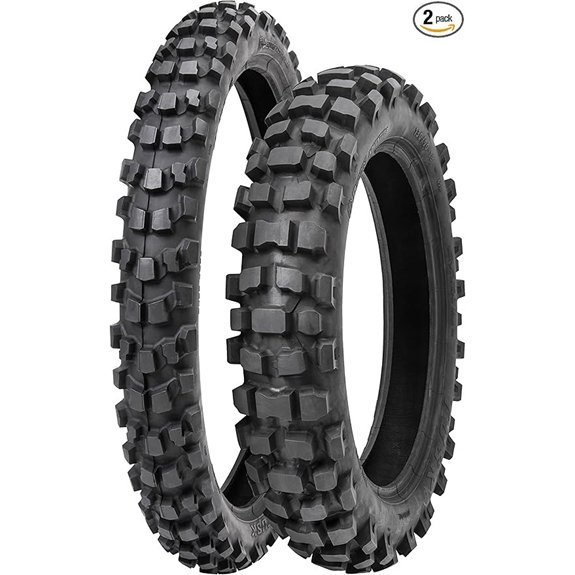 | Dual-Sport Set (21/18) | Tire Type: Tube type | Tire Size: 90/90-21 / 120/90-18 | Construction: Bias | VIEW LATEST PRICE | Read Our Analysis |
| Tusk EMEX T-35 Dirt Bike Tire Set | 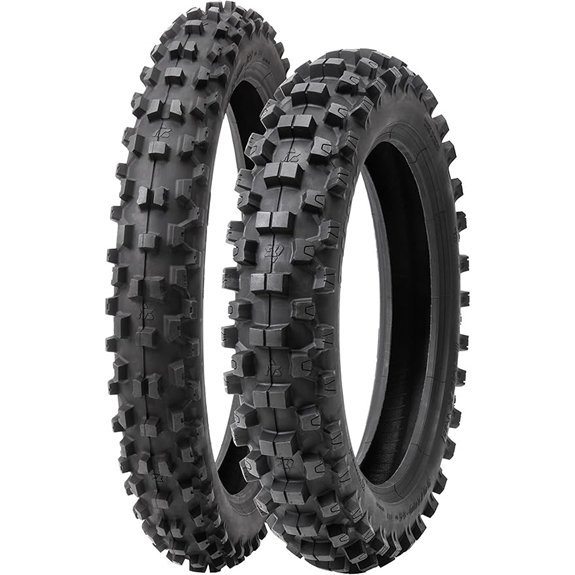 | Soft Terrain, 19/16 Wheels | Tire Type: Tube type | Tire Size: 70/100×19 / 90/100×16 | Construction: Tube-type | VIEW LATEST PRICE | Read Our Analysis |
| IRC Volcanduro VE-35 Enduro Front Tire 80/100-21 T10180 | 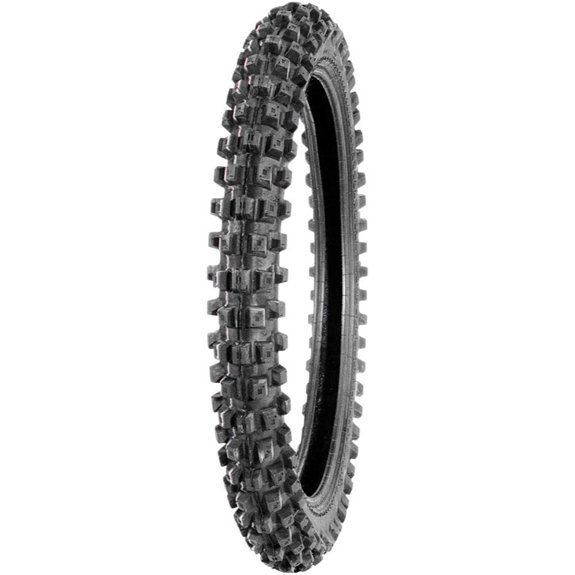 | Full-Size Front (21-Inch) | Tire Type: Tube type | Tire Size: 80/100-21 | Construction: Not listed | VIEW LATEST PRICE | Read Our Analysis |
| Dunlop Geomax MX53 Front Tire (60/100-14) | 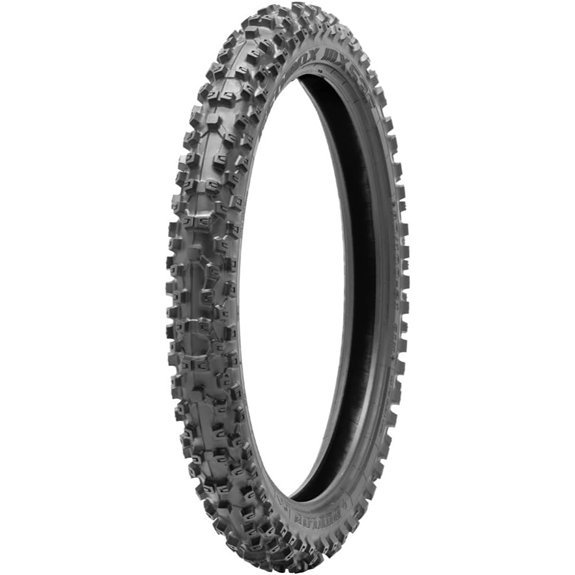 | Youth Bike Front (14-Inch) | Tire Type: Front tire | Tire Size: 60/100-14 | Construction: Bias | VIEW LATEST PRICE | Read Our Analysis |
| Pirelli MT 21 Rallycross Motorcycle Tires with Keychain | 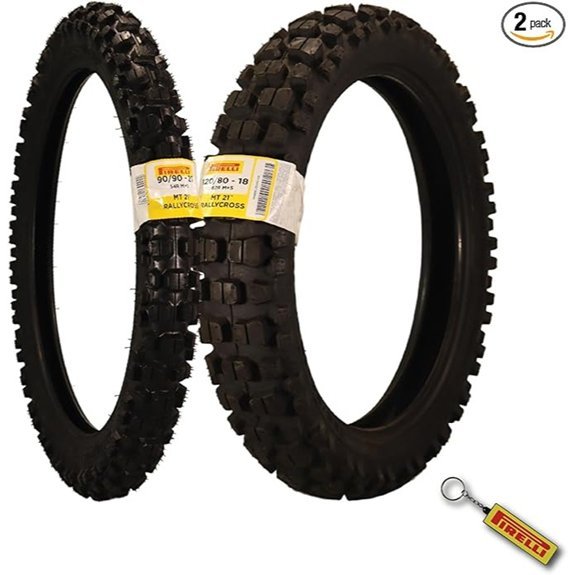 | Dual-Sport Pair (21/18) | Tire Type: Dual-sport/enduro | Tire Size: 90/90-21 / 120/80-18 | Construction: Bias | VIEW LATEST PRICE | Read Our Analysis |
| MAXXIS Maxxcross IT (M7305) Tire Blackwall Size 90/100-14 | 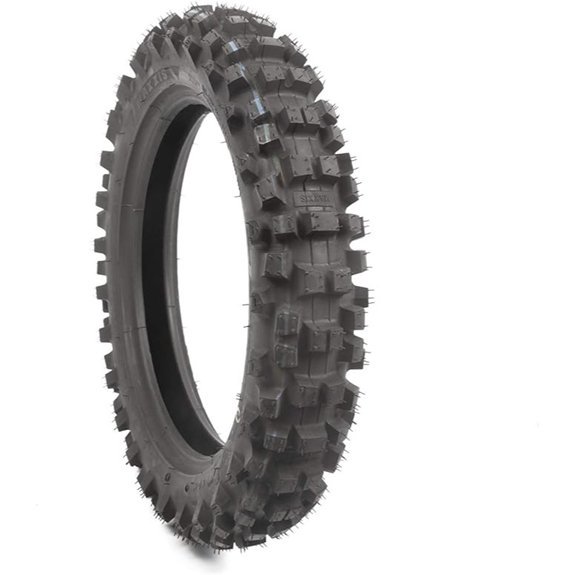 | Intermediate Rear (14-Inch) | Tire Type: Rear tire | Tire Size: 90/100-14 | Construction: Bias | VIEW LATEST PRICE | Read Our Analysis |
| ProTaper MXT 04 Rear Tire – 120/80-19 | 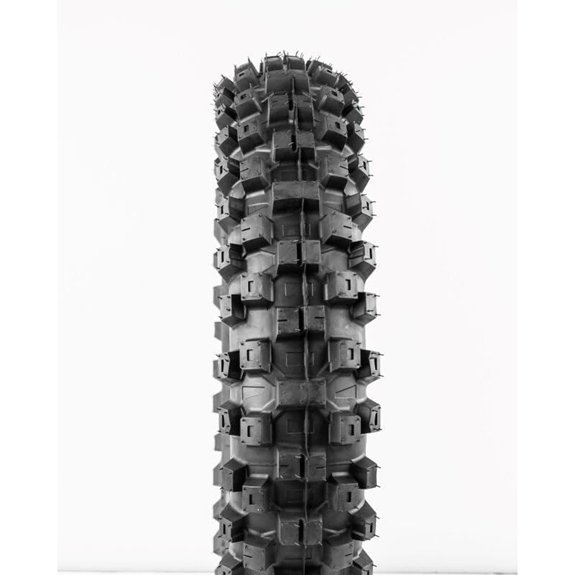 | MX-Style Rear (19-Inch) | Tire Type: Rear tire | Tire Size: 120/80-19 | Construction: Not specified | VIEW LATEST PRICE | Read Our Analysis |
| Kenda K760 Dual/Enduro Front Motorcycle Bias Tire – 80/100-21 51C | 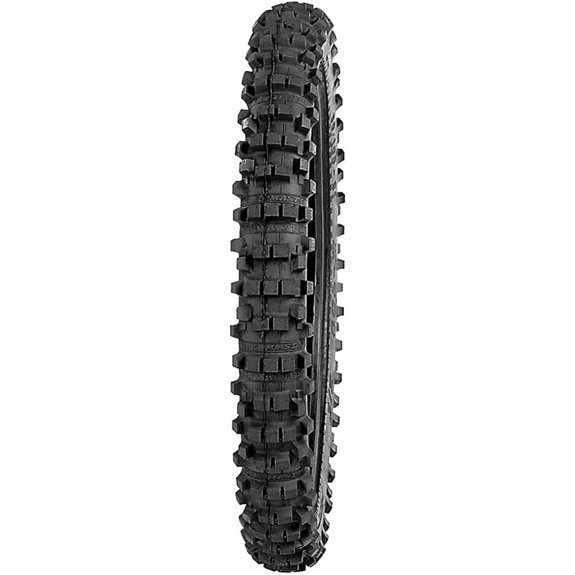 | Dual-Sport Front (21-Inch) | Tire Type: Front tire | Tire Size: 80/100-21 | Construction: Bias | VIEW LATEST PRICE | Read Our Analysis |
| 110/100-18 & 80/100-21 Dirt Bike Tires and Tubes | 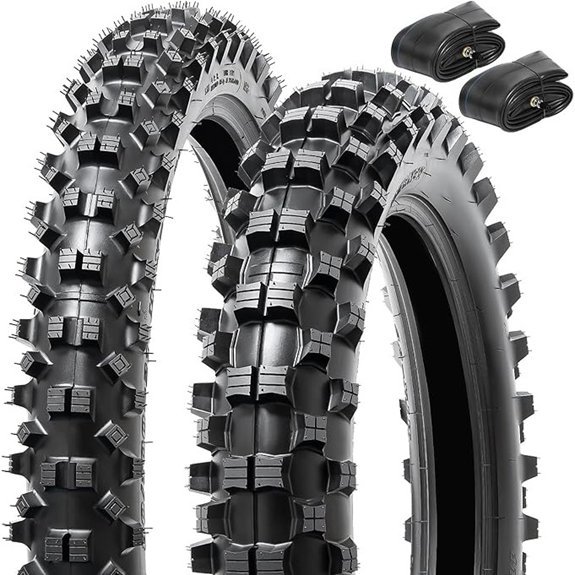 | Set With Tubes (21/18) | Tire Type: Tube type | Tire Size: 110/100-18 / 80/100-21 | Construction: TT | VIEW LATEST PRICE | Read Our Analysis |
| MMG Off Road Knobby Tire Set with Tubes | 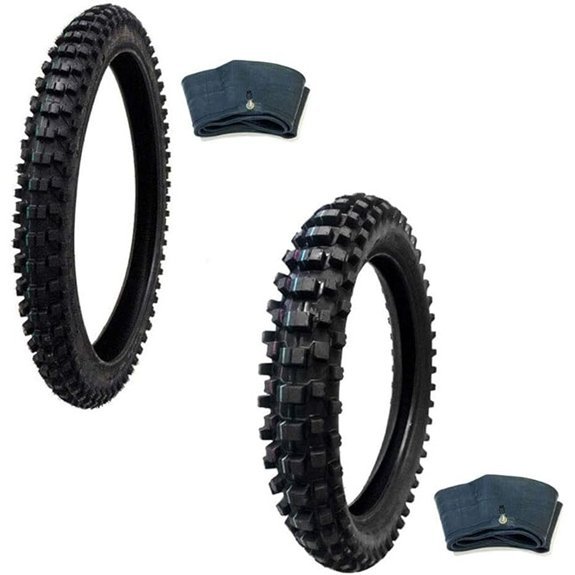 | Set With Tubes (21/19) | Tire Type: Tire set | Tire Size: 80/100-21 / 120/90-19 | Construction: Not specified | VIEW LATEST PRICE | Read Our Analysis |
More Details on Our Top Picks
Tusk Dsport Adventure Motorcycle Tire Set (Tube Type)
The Tusk Dsport set pairs a 90/90-21 front with a 120/90-18 rear for street-legal adventure and dual-sport bikes. A retailer listing for the related Dsport 130/90-17 shows bias, tube-type construction with 4 nylon tread plies and 4 nylon sidewall plies, so check this set’s own load and speed ratings on its listing. Pick it if you share trails and pavement on a plated bike. A dedicated dirt bike, or muddy and technical trails, calls for a true off-road knobby.
- Tire Type:Tube type
- Tire Size:90/90-21 front, 120/90-18 rear
- Construction:Bias (confirm on listing)
- Terrain:On-road and off-road
- Tread Style:Knobby, dual-purpose
- Approval:D.O.T. compliant (per listing)
Pros
- Matched 21/18 pair for dual-sport bikes
- D.O.T. compliant for street use
- Tube-type build is simple to repair
Cons
- Dual-purpose tread gives up grip in mud and rock
- Ratings for this exact set should be confirmed on the listing
Tusk EMEX T-35 Dirt Bike Tire Set
The Tusk EMEX T-35 is a soft/intermediate-terrain, tube-type tire for loose conditions that also works on firmer ground. Tusk describes deep, wide center lugs, an open self-cleaning pattern, reinforced side knobs and, on the rear, dual rubber compounds. This listing is a 70/100×19 front and 90/100×16 rear, the 19/16 wheel pair of smaller big-wheel bikes, not the 21/18 pair of full-size trail bikes. Confirm that matches your wheels.
- Tire Type:Tube type
- Tire Size:70/100×19 front, 90/100×16 rear
- Terrain:Soft / intermediate
- Tread Style:Deep, open, self-cleaning
- Construction:Reinforced side knobs; ply rating not listed
- Rear Compound:Dual compound (per maker)
Pros
- Soft/intermediate tread for loose and muddy trails
- Open pattern sheds mud
- Front and rear included
Cons
- Fits 19/16 wheels, not full-size 21/18 bikes
- Not the best choice for hard, rocky ground
IRC Volcanduro VE-35 Enduro Front Tire 80/100-21 T10180
The IRC Volcanduro VE-35 is an 80/100-21 front for the 21-inch front wheel used on full-size trail and enduro bikes. IRC says it was developed for cross-country enduro racing, with grip, braking and stability on dry, rocky and muddy ground. A retailer lists a 51M load and speed index, which means about 430 lb and 81 mph. Construction, ply rating and D.O.T. status are not stated, so confirm them if you ride on public roads.
- Tire Type:Front enduro tire
- Tire Size:80/100-21
- Terrain:Dry, rocky and muddy
- Index:51M (430 lb, 81 mph)
- Construction:Not listed
Pros
- 21-inch front for full-size trail bikes
- Developed for cross-country enduro
- Grip, braking and stability on varied ground
Cons
- Front only, so buy a matching rear
- Ply rating and D.O.T. status not stated
Dunlop Geomax MX53 Front Tire (60/100-14)
The 60/100-14 MX53 is a 14-inch front tire for youth bikes. A retailer set listing pairs it with the 80/100-12 rear for models in the KX65, YZ65, SX65, TC65, RM65, CRF110 and KLX110 class. Dunlop lists intermediate to hard terrain, a horseshoe block pattern to improve braking grip, Block-In-A-Block technology and an Advanced Apex sidewall. It is not a full-size trail tire, so skip it unless your front wheel is 14 inch.
- Tire Type:Front tire
- Tire Size:60/100-14 (replaces 2.50-14)
- Terrain:Intermediate / hard
- Tread Style:Horseshoe blocks, Block-In-A-Block
- Construction:Advanced Apex sidewall; ply rating not listed
Pros
- Block-In-A-Block design for cornering and slide control
- Horseshoe pattern for braking grip
- Fits 14-inch youth bike fronts
Cons
- Fits only small youth bikes
- Hard/intermediate focus, not for deep mud
Pirelli MT 21 Rallycross Motorcycle Tires with Keychain
Pirelli describes the MT 21 Rallycross as optimized for dirt and gravel roads, cross-country racing and desert touring, and it is street-homologated and D.O.T. approved. It lists a stiff carcass for stability and a compound meant to resist knob tearing. This listing is a set with a 90/90-21 front and 120/80-18 rear. It suits a plated dual-sport bike on trail and road mixes more than tight, muddy singletrack.
- Tire Type:Dual-sport / enduro set
- Tire Size:90/90-21 front, 120/80-18 rear
- Terrain:Dirt and gravel roads, cross-country, desert
- Tread Style:Off-road knobby pattern
- Approval:Street-legal, D.O.T. approved (per maker)
Pros
- Street-legal for dual-sport bikes
- Stiff carcass for stability
- Matched front and rear
Cons
- Dual-sport compromise in deep mud
- Check the construction and ratings on the listing
MAXXIS Maxxcross IT (M7305) Tire Blackwall Size 90/100-14
Maxxis describes the Maxxcross IT as a long-wearing intermediate motocross tire for hard-pack and intermediate terrain, aimed at motocross racers and recreational cross-country riders. The 90/100-14 rear is a small-wheel size. A retailer lists a 49M TT rating, bias construction, 32 psi maximum and 17/32 inch tread depth for this size. Buy it only if your rear wheel is 14 inch, and note that Maxxis does not list D.O.T. approval on its page.
- Tire Type:Rear tire
- Tire Size:90/100-14
- Terrain:Intermediate / hardpack
- Construction:Bias, tube type (49M TT)
- Max Pressure:32 psi
- Tread Depth:17/32 inch
Pros
- Intermediate design suits firm to mixed trails
- Knob design aims at precise steering
- Long-wearing, per Maxxis
Cons
- Fits 14-inch rear wheels only
- Less bite in soft terrain
- D.O.T. approval not listed
ProTaper MXT 04 Rear Tire – 120/80-19
The ProTaper MXT 04 is an intermediate-to-hard terrain tire with a knob-and-groove tread and asymmetrical molded blocks for braking and acceleration. The 120/80-19 is a 19-inch rear, the size used on motocross bikes. Most trail bikes run an 18-inch rear, and ProTaper lists separate 18-inch sizes. ProTaper’s launch coverage says the line is not D.O.T. approved, so it is for off-road use only. A retailer lists this size as 63M TT.
- Tire Type:Rear tire
- Tire Size:120/80-19 (63M TT per retailer)
- Terrain:Intermediate / hard
- Tread Style:Knob and groove with asymmetrical blocks
- Approval:Not D.O.T. approved
- Construction:Not specified
Pros
- Asymmetrical blocks aimed at braking and acceleration
- Intermediate/hard tread for firm trails
- Available in other 18-inch off-road sizes
Cons
- 19-inch rear fits motocross wheels, not most trail bikes
- Not street legal
- Rear only, so you need a matching front
Kenda K760 Dual/Enduro Front Motorcycle Bias Tire – 80/100-21 51C
The Kenda K760 Trakmaster II is a D.O.T.-approved knobby for serious dual-sport riders, with a 6-ply rated carcass, tall aggressive knobs and open tread blocks that clean efficiently. One tire guide gives it about an 80/20 dirt-to-road split. This listing is the 80/100-21 front, which has a 51 load index (about 430 lb). It is a sensible value front for a street-legal trail bike, but it is not a soft-terrain race tire.
- Tire Type:Front tire
- Tire Size:80/100-21
- Construction:Bias, 6-ply rated
- Terrain:Dirt and road
- Tread Style:Tall, aggressive, open knobs
- Index:51 (about 430 lb)
Pros
- D.O.T. approved for street use
- Open knobs clean efficiently
- Value-oriented front for dual-sport riding
Cons
- Dual-sport tread gives up grip in deep mud
- Front only, so you need a matching rear
110/100-18 & 80/100-21 Dirt Bike Tires and Tubes
This set pairs a 110/100-18 rear with an 80/100-21 front, the common 18/21 wheel pair of full-size trail bikes. Per the listing, the rear is rated 64M and the front 51M, both 4PR tube type, and the set includes 2 mm butyl tubes. The brand, compound and D.O.T. status are not stated, so treat it as a budget refit option and confirm the specs on the listing before you buy.
- Tire Type:Tube type
- Tire Size:110/100-18 rear, 80/100-21 front
- Construction:4PR, tube type (per listing)
- Ratings:Rear 64M, front 51M (per listing)
- Included:Two tubes, 2 mm butyl (per listing)
Pros
- Full-size 21/18 pair with tubes included
- 4PR tube-type construction
- Covers the most common trail bike wheel sizes
Cons
- Brand and compound details are limited
- D.O.T. status not stated
- Check the fit for your exact bike
MMG Off Road Knobby Tire Set with Tubes
Per the listing, this MMG set pairs an 80/100-21 front with a 120/90-19 rear and includes inner tubes, with an open knobby tread meant to clear mud. A 19-inch rear is the motocross-style rear size, while most trail bikes use an 18-inch rear, so confirm your rear wheel before ordering. Brand, construction and rating details are limited on the listing.
- Tire Type:Tire set with tubes
- Tire Size:80/100-21 front, 120/90-19 rear
- Terrain:Off-road, muddy
- Tread Style:Open knobby
- Included:Inner tubes
- Construction:Not specified
Pros
- Includes tubes for a complete refit
- Open knobby tread meant to clear mud
Cons
- 19-inch rear fits motocross-style wheels, not most trail bikes
- Limited brand and rating detail
Trail Tire Sizes and Terrain at a Glance
Pick by wheel size first, then by terrain rating. Sizes below are typical, so confirm yours in the owner’s manual or on your current tires.
| Pick | Position and size | Terrain | Bike type |
|---|---|---|---|
| IRC Volcanduro VE-35 | Front 80/100-21 | Dry, rocky, muddy | Full-size trail and enduro |
| Kenda K760 Trakmaster II | Front 80/100-21 | Dirt and road | Full-size, street-legal |
| 110/100-18 and 80/100-21 set | Rear and front | Mud, rock, sand, gravel (per listing) | Full-size trail |
| Tusk Dsport set | Front 90/90-21, rear 120/90-18 | On and off road | Dual-sport and adventure |
| Pirelli MT 21 Rallycross | Front 90/90-21, rear 120/80-18 | Dirt and gravel roads, desert | Dual-sport |
| Tusk EMEX T-35 set | Front 70/100×19, rear 90/100×16 | Soft / intermediate | 19/16 big-wheel bikes |
| ProTaper MXT 04 | Rear 120/80-19 | Intermediate / hard | Motocross-style 19-inch rear |
| MMG set | Front 80/100-21, rear 120/90-19 | Off-road, muddy | 21/19 wheel setups |
| Maxxis Maxxcross IT | Rear 90/100-14 | Intermediate / hardpack | Small-wheel bikes |
| Dunlop Geomax MX53 | Front 60/100-14 | Intermediate / hard | Youth bikes |
Before you buy trail tires
- Match the rim diameter and a width your swingarm and fork clear. A tire must match the rim exactly.
- Pick the terrain rating for your trails: soft or soft-intermediate for loam, sand and mud, and intermediate or hard for packed dirt and rock.
- Street-legal bikes need D.O.T.-approved tires. Competition tires such as the ProTaper MXT 04 are for off-road use only.
- Pair the front and rear for similar terrain, and mount directional tires with the rotation arrow facing the right way.
- Fit a fresh tube or mousse when you change tires, and use a rim lock if your bike has one.
- Set pressure from the tire maker and your manual. See our motorcycle tire pressure guide.
Riding mostly in the forest? Compare our picks for dirt bike tires for woods riding.
Factors to Consider When Choosing Dirt Bike Tires for Trail Riding
When you choose dirt bike tires for trail riding, start by matching the tire to your terrain, since mud, rocks, and hardpack each need a different setup. You’ll also want to look at tread pattern, tire construction, size, and fitment so the tires handle well and fit your bike properly. Don’t overlook load and speed ratings, because they help you pick tires that can safely support your riding style.
Terrain Type Match
Matching your dirt bike tires to the terrain you ride is one of the biggest performance factors on the trail. If you spend time in loose dirt, sand, or mud, choose tires built for soft to intermediate conditions with deeper tread for better bite. On hard-packed ground, pick a tire engineered for firmer surfaces so you keep control without wasting energy. For rocky or rugged trails, check the ply rating; higher ply counts help you resist punctures and damage. You should also think about aspect ratio, since lower profiles can improve stability and cornering on hard terrain. Terrain-specific tires may also use directional designs that support their intended conditions. When you match the tire to the ground, you’ll ride with more confidence and less fatigue.
Tire Tread Pattern
Tread pattern can make or break your trail ride because it directly affects how much grip, control, and confidence you get. If you ride loose dirt, mud, or loam, choose aggressive knobby lugs for stronger bite and better self-cleaning. On hard-packed trails, flatter patterns give you smoother tracking and steadier cornering. Pay attention to tread depth, too: deeper knobs dig in better and shed debris more effectively in soft terrain. Directional designs help you drive forward, brake harder, and hold lines more predictably when you accelerate or lean. Also, check knob spacing. Wider gaps clear mud fast, while tighter spacing boosts stability on firmer ground. For rugged trail use, reinforced knobs can help your tires last longer and resist wear.
Tire Construction Type
Beyond tread pattern, the tire’s construction type also plays a big role in how it performs on trail rides. If you want a softer, more compliant feel on roots and rocks, bias tires can help because their diagonal fabric layers flex more and bite into uneven ground. If you ride faster trails or long stretches, radial tires can give you steadier handling and better heat dissipation, which helps them stay consistent. You should also check ply rating, since a higher rating usually means better puncture resistance and durability for rough off-road use. Finally, choose between tube and tubeless setups. Tubes can make repairs simpler, while tubeless tires can save weight and reduce pinch flats when the terrain gets harsh and rocky.
Size And Fitment
When you choose dirt bike tires for trail riding, size and fitment matter just as much as tread or construction. You’ll usually see sizing like 90/90-21: the first number is section width in millimeters, the second is aspect ratio, and the last is rim diameter in inches. Make sure the tire matches your front and rear rim specs, because the right fit helps your bike track straight, corner predictably, and stay safe on rough trails. You should also check that the size works with your suspension and frame geometry. If you go too large or too small, you can create handling problems and reduce stability. Stick to the manufacturer’s recommended sizes, and you’ll get better control, cleaner suspension action, and a more confident ride in varied trail conditions.
Load And Speed Ratings
Load and speed ratings tell you how much weight a dirt bike tire can safely carry and how fast it can handle that load, so they’re key to trail safety and performance. Check the sidewall before you buy, because a load index of 65 supports about 639 pounds, helping you keep the bike stable under real trail demands. You should also match the speed rating to your riding; an R-rated tire safely handles up to 106 mph, which matters on fast sections. If you ride rougher terrain, a higher ply rating, like 10-ply, can give you more durability and load capacity. Always compare the tire’s ratings with your bike specs and your weight, then replace tires that no longer suit your trail conditions.
Tube Or Tubeless
Tube-type tires usually make sense if you’re riding rough trails with sharp rocks, roots, or debris, since they tend to offer better puncture resistance and are often easier to patch or swap out on the trail. You’ll appreciate that simplicity when you need a fast fix far from the truck. Tubeless tires, on the other hand, can save a bit of weight and let you run lower pressure for extra grip on uneven ground. They can also hold air longer after small punctures, which helps you keep riding before making repairs. Your best choice depends on how you ride, how much maintenance you’re willing to handle, and whether you value easy trail repairs or lower-pressure performance more.
Durability And Wear
Beyond the tube-versus-tubeless choice, durability should be high on your checklist because trail tires take a beating. You should look at ply rating first: a 10-ply tire usually handles rocks, roots, and heavier loads better than a 6-ply option. Next, check the rubber compound; abrasion-resistant formulas last longer without giving up too much grip. Tread depth matters too. Deeper knobs bite better in mud and loose dirt, while shallow patterns can wear quickly on hard-packed trails. You’ll also want to choose the right construction. Bias tires usually feel tougher off-road, while radial tires can shine on firmer ground. Finally, seasonal ratings help you pick a tire that resists wear and performs consistently as temperatures and trail conditions change.
Frequently Asked Questions
How often should trail riding tires be replaced?
Replace them when the knobs are worn down or rounded, the sidewalls are cut or cracked, or handling feels vague, even if some tread remains. Wear depends on terrain, compound and riding style, so inspect your tires before every ride.
Can I use tubeless tires on any dirt bike?
No. Tubeless tires need compatible rims that seal, and most dirt bike wheels are designed for tubes unless converted or built for tubeless. Check your wheels first, or you risk leaks and unsafe handling.
What tire pressure is best for muddy trails?
Start with your tire maker’s and bike manual’s recommendation. Many riders then drop a few psi in small steps for more traction in mud, but going too low raises the risk of rim damage, pinch flats and vague steering.
Do softer compounds wear faster on rocky trails?
Yes. Softer compounds usually grip better but wear and tear faster on sharp rock. Intermediate or hard compounds last longer on rocky or hardpack trails, while soft compounds help in loam and mud.
Should front and rear tires match brands?
No. You can mix brands, but choose a similar terrain rating front and rear so the bike turns and drives predictably. Many riders pick a grippy front and a durable rear for their trails.
What tire size does my trail bike need?
Full-size trail bikes commonly use a 21-inch front and an 18-inch rear, while youth and small-wheel bikes use smaller sizes. Check the size on your current tires or in your owner’s manual before ordering.
Can I ride motocross tires on a trail ride?
Yes, if the size fits your wheels, but competition tires like the ProTaper MXT 04 are not D.O.T. approved, so they are not legal for public roads. Use D.O.T.-approved dual-sport tires if you ride on the street.
Conclusion
Choose by wheel size and terrain first. For a full-size trail bike, the IRC VE-35 or Kenda K760 front and the 110/100-18 set cover the 21/18 wheel pair, while the Tusk Dsport and Pirelli MT 21 suit plated dual-sport bikes. The Tusk T-35, Maxxis, Dunlop and ProTaper listings are for specific wheel sizes, so confirm yours. For electric bikes, see our electric dirt bike tires guide.