The best dirt bike tires for woods riding are intermediate-to-soft knobbies in your bike’s exact wheel size, usually a 21-inch front and an 18-inch rear on a full-size bike. From this list, the IRC Volcanduro VE-35 (80/100-21 front) and Tusk EMEX T-45 (100/100-18 rear) are the most direct picks for full-size bikes, and the Pirelli MT 21 Rallycross suits street-legal dual-sport bikes. Several other listings are youth-bike or adventure-bike sizes, so match the size before you buy.
Disclosure: some links are Amazon affiliate links; we may earn a commission at no extra cost to you.
| Dunlop Geomax MX53 Rear Tire (80/100-12) | 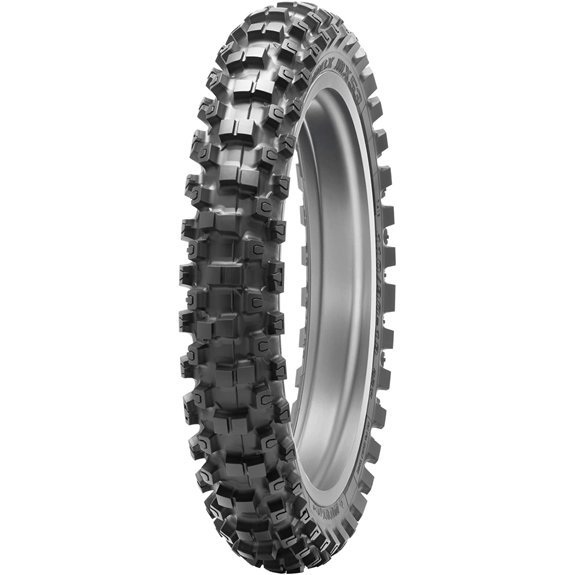 | Youth Bike Rear (12-Inch) | Tire Type: Rear off-road tire | Tire Size: 80/100-12 | Terrain Use: Hard / intermediate | VIEW LATEST PRICE | Read Our Analysis |
| Dunlop Geomax MX53 Front Tire (70/100-17) | 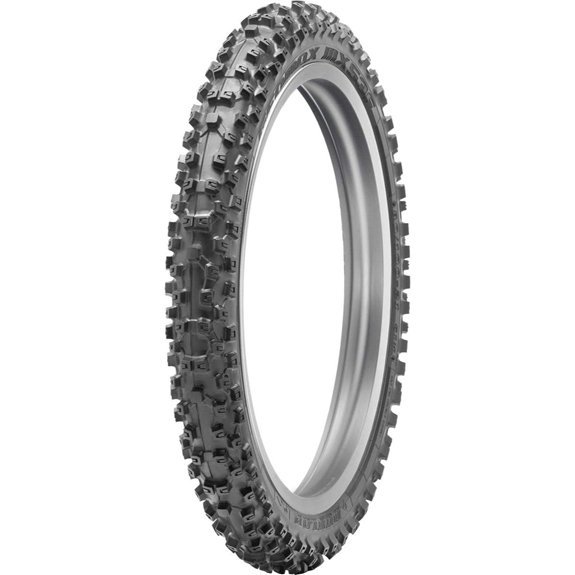 | Small-Wheel Front (17-Inch) | Tire Type: Front off-road tire | Tire Size: 70/100-17 | Terrain Use: Hard / intermediate | VIEW LATEST PRICE | Read Our Analysis |
| Tusk EMEX T-45® Intermediate/Hard Terrain Tire | 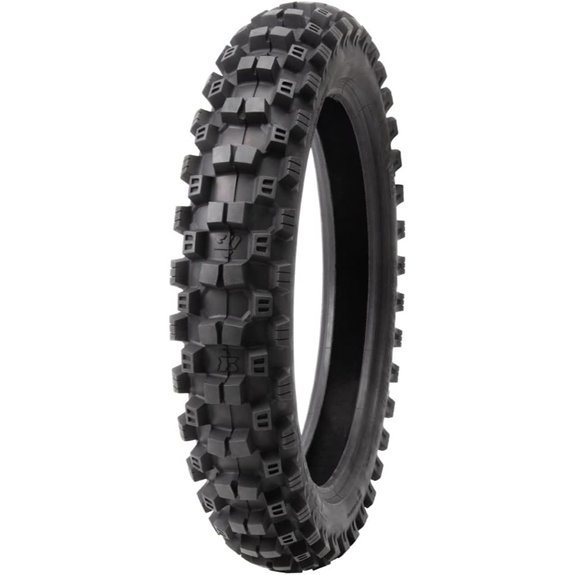 | Full-Size Rear (18-Inch) | Tire Type: Off-road motocross tire | Tire Size: 100/100×18 | Terrain Use: Intermediate / hard | VIEW LATEST PRICE | Read Our Analysis |
| Tusk Dsport Adventure Motorcycle Tire Set (90/90-21 120/90-18) | 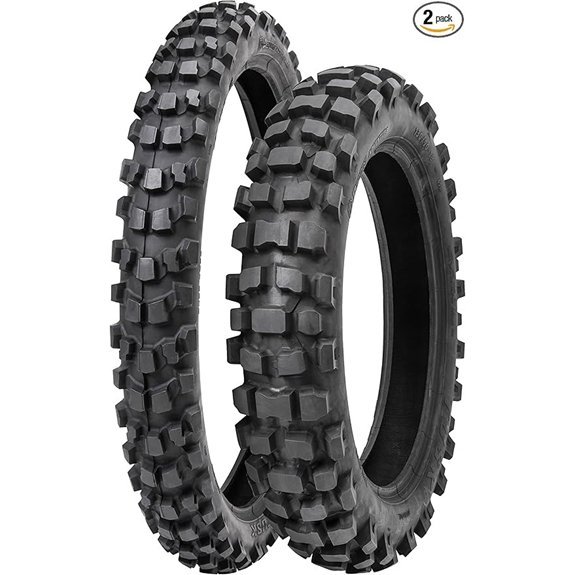 | Dual-Sport Set (21/18) | Tire Type: Adventure motorcycle tire set | Tire Size: 90/90-21 and 120/90-18 | Terrain Use: On-road / off-road | VIEW LATEST PRICE | Read Our Analysis |
| 140/80-18 Off Road Dirt Bike Motocross Tire | 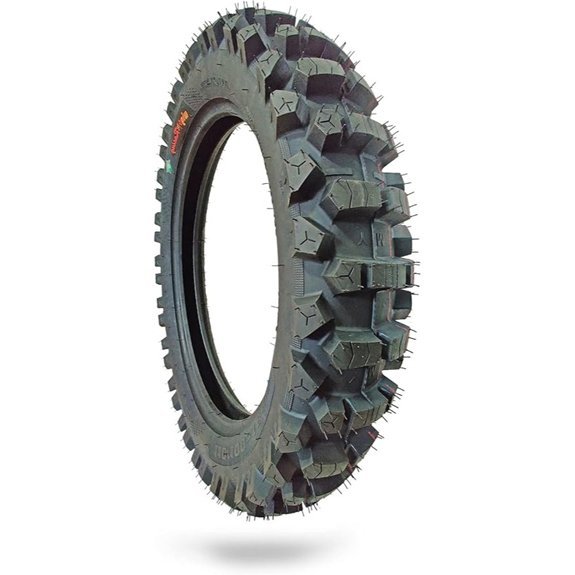 | Wide Rear (140/80-18) | Tire Type: Rear dirt bike motocross tire | Tire Size: 140/80-18 | Terrain Use: Mud / loose dirt / sand | VIEW LATEST PRICE | Read Our Analysis |
| Tusk Dsport® Adventure Tire 130/90-17 (68R) Tube Type | 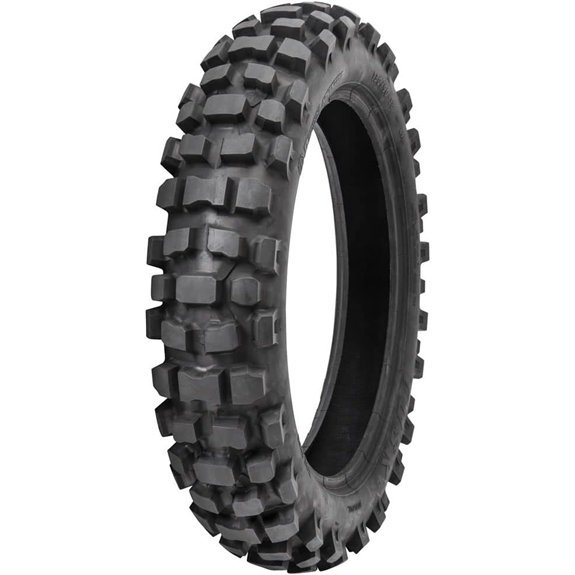 | Adventure Rear (17-Inch) | Tire Type: Adventure tube-type tire | Tire Size: 130/90-17 | Terrain Use: On-road / off-road | VIEW LATEST PRICE | Read Our Analysis |
| Pirelli MT 21 Rallycross Dual-Sport Motorcycle Tires | 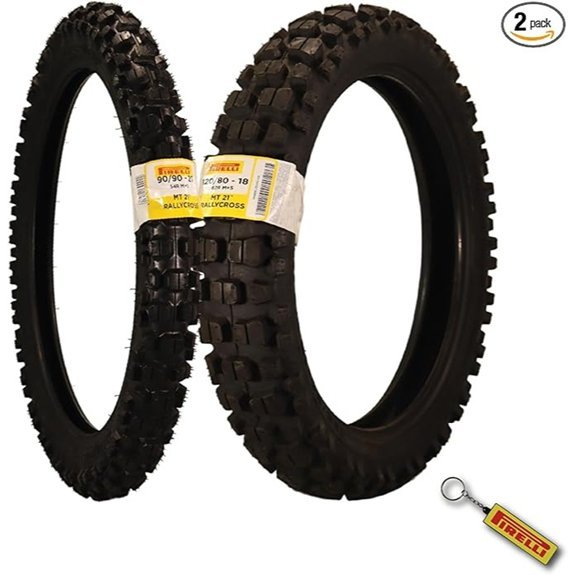 | Dual-Sport Pair (21/18) | Tire Type: Dual-sport/enduro tires | Tire Size: 90/90-21 and 120/80-18 | Terrain Use: Dirt / gravel / desert | VIEW LATEST PRICE | Read Our Analysis |
| Dunlop Geomax MX53 Front Tire (60/100-14) | 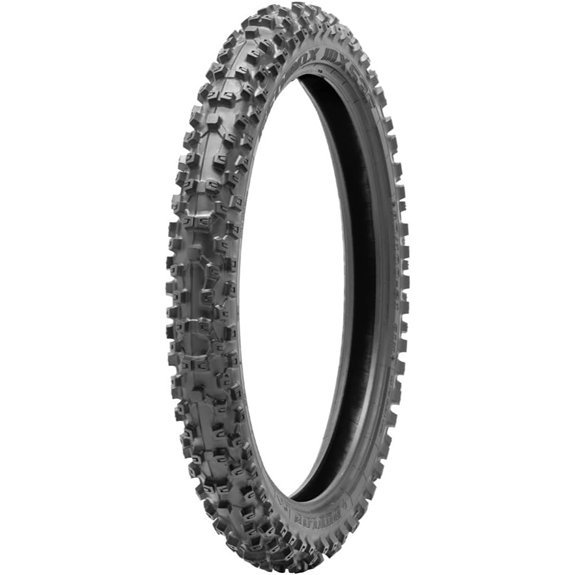 | Youth Bike Front (14-Inch) | Tire Type: Front off-road tire | Tire Size: 60/100-14 | Terrain Use: Hard / intermediate | VIEW LATEST PRICE | Read Our Analysis |
| IRC Enduro VE33 Rear Tire – 100/100-17 T10096 | 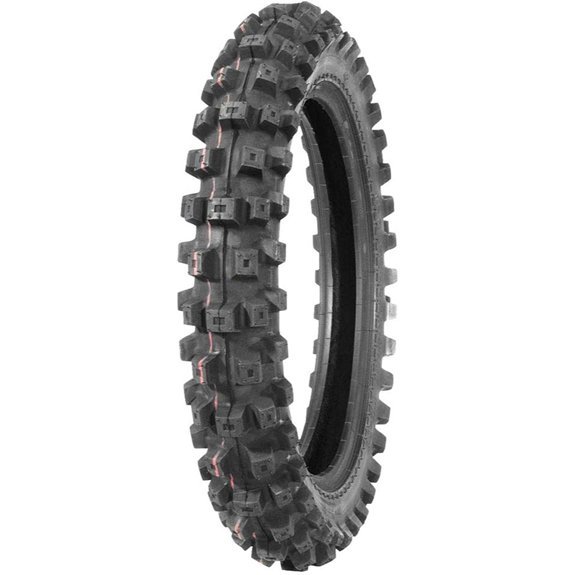 | Enduro Rear (17-Inch) | Tire Type: Rear enduro tire | Tire Size: 100/100-17 | Terrain Use: Enduro trails | VIEW LATEST PRICE | Read Our Analysis |
| IRC Volcanduro VE-35 Enduro Front Tire 80/100-21 T10180 | 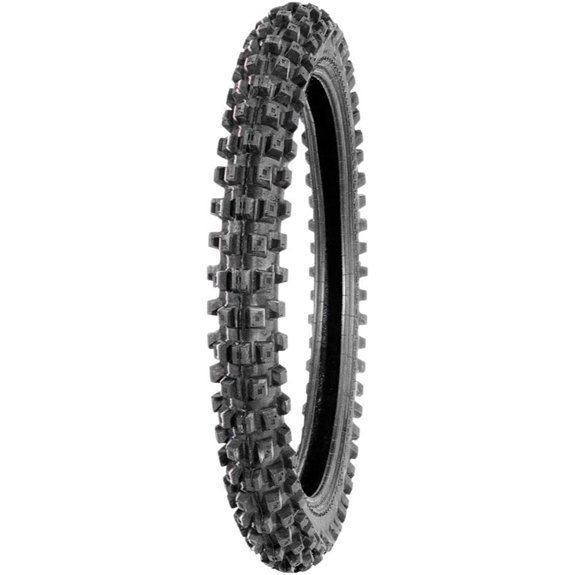 | Full-Size Front (21-Inch) | Tire Type: Front enduro tire | Tire Size: 80/100-21 | Terrain Use: Rocky / muddy / dry | VIEW LATEST PRICE | Read Our Analysis |
More Details on Our Top Picks
Dunlop Geomax MX53 Rear Tire (80/100-12)
This Dunlop Geomax MX53 rear is an 80/100-12, a size for the small 12-inch rear wheels on youth bikes. A retailer set listing for the 60/100-14 front and 80/100-12 rear names the KX65, YZ65, SX65, TC65, RM65, CRF110 and KLX110. Dunlop positions the MX53 for intermediate to hard terrain, with a Block-In-A-Block tread for cornering bite and slide control. It is not a full-size woods tire, so choose it only if your bike takes a 12-inch rear. One retailer lists the MX53 as discontinued in favor of the MX54, so stock may vary.
- Tire Type:Rear off-road tire
- Tire Size:80/100-12 (replaces 3.00-12)
- Terrain Use:Intermediate / hard
- Tread Style:Block-In-A-Block with tie bars
- Construction:Advanced Apex sidewall; ply rating not listed
Pros
- Block-In-A-Block tread for cornering and slide control
- Right size for 12-inch rear youth bikes
- Advanced Apex sidewall design
Cons
- Fits only small youth bikes
- Intermediate/hard focus, not for deep mud
- May be discontinued at some retailers
Dunlop Geomax MX53 Front Tire (70/100-17)
The 70/100-17 MX53 is a 17-inch front for small-wheel bikes, not the 21-inch front that full-size woods bikes use. Dunlop describes the MX53 as strongest on hard-packed to intermediate terrain, with a taller profile, an Advanced Apex sidewall and a Block-In-A-Block tread. Tires are sized to specific wheels, so confirm your front rim is 17 inch in your owner’s manual before ordering.
- Tire Type:Front off-road tire
- Tire Size:70/100-17
- Terrain Use:Hard / intermediate
- Tread Style:Block-In-A-Block
- Construction:Advanced Apex sidewall; ply rating not listed
Pros
- Block-In-A-Block tread helps cornering and slide control
- Taller profile for a larger contact patch
- Advanced Apex sidewall for shock absorption
Cons
- Fits only 17-inch front wheels
- Hard/intermediate focus, not a mud tire
Tusk EMEX T-45® Intermediate/Hard Terrain Tire
The Tusk EMEX T-45 is an intermediate/hard-terrain knobby sold in many sizes. This listing is the 100/100×18 rear for 18-inch rear wheels on full-size dirt bikes. Tusk describes wide lug spacing to shed mud and debris and reinforced side knobs for cornering. Because it is an intermediate/hard design, it suits firmer woods trails with roots and rocks and gives up bite in soft, deep mud, where a soft-terrain tire is better.
- Tire Type:Off-road motocross tire (rear)
- Tire Size:100/100×18
- Terrain Use:Intermediate / hard
- Tread Style:Knobby with wide lug spacing
- Construction:Reinforced side knobs
Pros
- Wide lug spacing helps shed mud and debris
- Reinforced side knobs for cornering
- Fits common 18-inch rear wheels
Cons
- Not ideal for soft, deep mud
- Rear only, so you need a matching 21-inch front
Tusk Dsport Adventure Motorcycle Tire Set (90/90-21 120/90-18)
This is a dual-sport and adventure tire set, 90/90-21 front and 120/90-18 rear, sized for street-legal bikes with 21 and 18 inch wheels. Tusk lists the related Dsport 130/90-17 as bias-ply and tube-type, so expect similar construction, but confirm the set’s ratings on the listing. It makes sense if you ride woods and pavement on a plated bike. On a dedicated dirt bike or in deep mud, a true off-road knobby grips better.
- Tire Type:Adventure motorcycle tire set
- Tire Size:90/90-21 front, 120/90-18 rear
- Terrain Use:On-road and off-road
- Tread Style:Knobby, dual-purpose
- Construction:Bias, tube type (confirm on listing)
Pros
- Matched front and rear for 21/18 wheels
- Meant for both pavement and dirt
- Tube-type construction is easy to repair on the trail
Cons
- Dual-purpose design compromises mud and rock grip
- Heavier than a dedicated off-road tire
- Check load and speed ratings on the listing
140/80-18 Off Road Dirt Bike Motocross Tire
This 140/80-18 is an off-road rear tire with a directional tread that the listing aims at mud, loose dirt and sand. A 140 mm section is wider than most 18-inch woods rears, which commonly run 100 to 120 mm wide, so check swingarm and chain clearance first. The listing describes a 6-ply build and a stiffer sidewall to resist pinch flats. Brand and compound details are limited, so treat it as a budget option and confirm the specs on the listing.
- Tire Type:Rear dirt bike motocross tire
- Tire Size:140/80-18
- Terrain Use:Mud / loose dirt / sand (per listing)
- Tread Style:Directional
- Construction:6-ply (per listing)
Pros
- Directional tread aimed at mud, loose dirt and sand
- Stiffer sidewall to resist pinch flats
- Low-cost option
Cons
- Wider than most woods rears, so check clearance
- Limited brand and compound detail
- Directional, so mount it in the right rotation
Tusk Dsport® Adventure Tire 130/90-17 (68R) Tube Type
The Tusk Dsport 130/90-17 is a rear tire for adventure and dual-sport bikes with 17-inch rear wheels, not for typical 18-inch dirt bike wheels. A retailer listing shows bias, tube-type construction, 4 nylon tread plies and 4 nylon sidewall plies (load range B), a load index of 68 (694 lb), an R speed rating and a 36 psi maximum. Listed fitments include the KLR650, Royal Enfield Himalayan, XL600 and DR250. It suits mixed pavement and trail use rather than technical woods.
- Tire Type:Adventure tube-type tire (rear)
- Tire Size:130/90-17 (68R)
- Terrain Use:On-road and off-road
- Construction:Bias, 4 tread plies and 4 sidewall plies
- Ratings:Load index 68 (694 lb), R speed rating
- Max Pressure:36 psi (retailer listing)
Pros
- Bias tube-type build is simple to repair
- Load index 68 and R speed rating for street use
- Fitment listed for several adventure bikes
Cons
- Fits 17-inch rear wheels only
- Not a dedicated woods knobby
- Tube type means carrying a spare tube on rides
Pirelli MT 21 Rallycross Dual-Sport Motorcycle Tires
Pirelli describes the MT 21 Rallycross as optimized for dirt and gravel roads, cross-country racing and desert touring, and it is street-homologated and DOT approved. The maker lists a stiff carcass for stability and cornering precision and a compound meant to resist knob tearing. This listing is a set in 90/90-21 front and 120/80-18 rear. It suits a plated dual-sport bike that spends time on woods roads and fire trails more than tight, muddy singletrack.
- Tire Type:Dual-sport / enduro set
- Tire Size:90/90-21 front, 120/80-18 rear
- Terrain Use:Dirt and gravel roads, cross-country, desert
- Tread Style:Off-road knobby pattern
- Approval:Street-legal, DOT approved (per maker)
Pros
- Street-legal for plated dual-sport bikes
- Stiff carcass for stability
- Matched front and rear set
Cons
- Dual-sport compromise in deep mud
- Check bias or radial construction and ratings on the listing
Dunlop Geomax MX53 Front Tire (60/100-14)
The 60/100-14 MX53 is a front tire for youth bikes with 14-inch front wheels. Retailers pair it with the 80/100-12 rear for the KX65, YZ65, SX65, TC65, RM65, CRF110 and KLX110 class. Dunlop lists intermediate to hard terrain, a horseshoe block pattern to improve braking grip and Block-In-A-Block technology. Ply rating, weight and maximum pressure vary by listing, so use your bike’s manual for pressure.
- Tire Type:Front off-road tire
- Tire Size:60/100-14 (replaces 2.50-14)
- Terrain Use:Intermediate / hard
- Tread Style:Horseshoe blocks with Block-In-A-Block
- Construction:Advanced Apex sidewall; ply rating not listed
Pros
- Horseshoe block pattern for braking grip in dirt
- Right size for 14-inch front youth bikes
- Advanced Apex sidewall design
Cons
- Fits only small youth bikes
- Intermediate/hard focus, not for deep mud
IRC Enduro VE33 Rear Tire – 100/100-17 T10096
The IRC VE-33 Enduro in 100/100-17 is a bias, tube-type rear for 17-inch rear wheels. A retailer lists a medium compound, a 58M load and speed index and off-road use on dry, rocky and muddy surfaces, including cross-country enduro. A 17-inch rear is common on older trail bikes, so confirm your rim size and check fitment in your manual before ordering. For a modern 18-inch rear wheel, choose a different size.
- Tire Type:Rear enduro tire
- Tire Size:100/100-17
- Terrain Use:Dry, rocky and muddy surfaces
- Construction:Bias, tube type
- Compound:Medium
- Index:58M
Pros
- Medium compound suits mixed woods terrain
- Tube-type bias build is easy to repair
- Enduro-focused tread
Cons
- Fits only 17-inch rear wheels
- Ply rating and DOT status are not listed
IRC Volcanduro VE-35 Enduro Front Tire 80/100-21 T10180
The IRC Volcanduro VE-35 in 80/100-21 is a front tire for 21-inch front wheels, the standard size on full-size woods and enduro bikes. IRC describes it as developed for cross-country enduro racing, with grip, braking and stability on dry, rocky and muddy ground. A retailer lists a 51M load and speed index. Ply rating and DOT status are not stated, so confirm them if you ride on public roads.
- Tire Type:Front enduro tire
- Tire Size:80/100-21
- Terrain Use:Dry, rocky and muddy
- Tread Style:Enduro tread
- Index:51M (430 lb, 81 mph)
Pros
- 21-inch front size for full-size woods bikes
- Developed for cross-country enduro
- Described as giving grip, braking and stability
Cons
- Ply rating and DOT status not stated
- Front only, so pair it with a matching rear
Which Woods Tire Size Fits Your Bike
Wheel sizes depend on the bike, not the trail. These are typical sizes, so confirm yours in the owner’s manual or on the tire sidewall.
| Bike type | Typical wheels (front / rear) | Listings in this guide |
|---|---|---|
| Youth bikes, about 65cc class | 14 in / 12 in | Dunlop MX53 60/100-14 front, Dunlop MX53 80/100-12 rear |
| Small-wheel bikes | 17 in front, rear varies | Dunlop MX53 70/100-17 front |
| Full-size dirt bikes | 21 in / 18 in | IRC VE-35 80/100-21 front, Tusk EMEX T-45 100/100×18 rear, 140/80-18 rear |
| Older trail bikes with a 17-inch rear | Varies | IRC VE-33 100/100-17 rear |
| Plated dual-sport and adventure bikes | Often 21 in / 17 or 18 in | Tusk Dsport set, Tusk Dsport 130/90-17, Pirelli MT 21 set |
How to choose for your woods
- Soft, muddy or loamy trails: look for a soft-to-intermediate terrain tread with wide knob spacing. Intermediate/hard tires such as the EMEX T-45 and MX53 last longer but give up mud bite.
- Rocky, rooty or hardpack trails: an intermediate/hard tread wears slower and resists tearing.
- Match the front and rear to the same terrain rating so the bike turns and drives predictably.
- Street-legal bikes need DOT-approved tires. Do not run non-DOT competition tires on public roads.
- Mount directional tires with the rotation arrow facing the correct way, use a rim lock if your bike has one, and fit a fresh tube or mousse when you change tires.
- Set pressure from the tire maker and your bike’s manual. See our motorcycle tire pressure guide, and change pressure in small steps.
Factors to Consider When Choosing a Dirt Bike Tire for Woods Riding
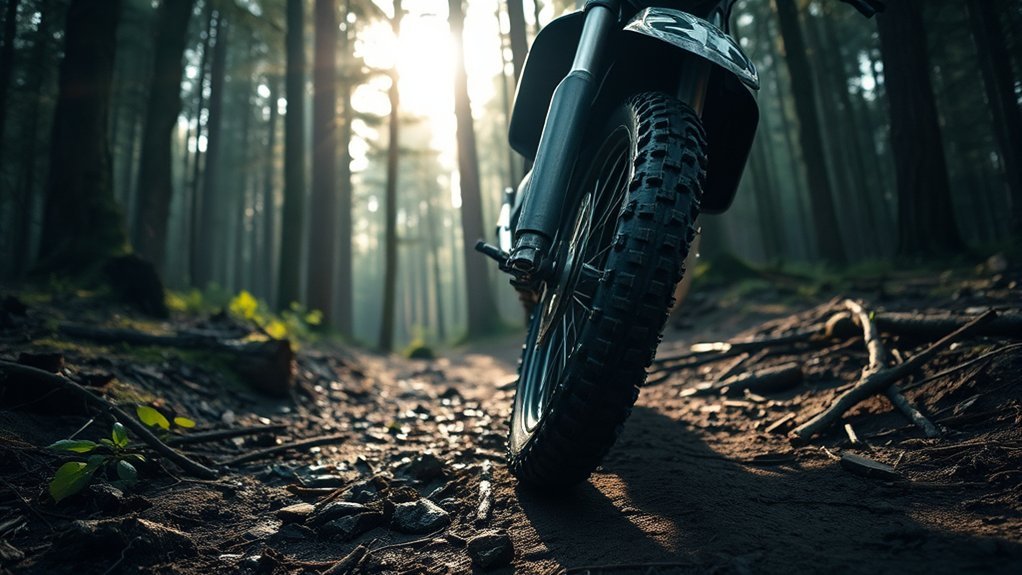
When you choose a dirt bike tire for woods riding, focus on terrain grip and tread pattern so you can handle roots, mud, and loose soil with control. You’ll also want to check tire durability and sidewall strength, since woods riding can be rough on your tires. Tire size matters too, because the right fit affects handling, traction, and overall confidence on tight trails.
Terrain Grip
Terrain grip is one of the biggest factors in woods riding because it determines how well your tire holds on hard-packed dirt, loose soil, mud, and rocky sections. You need enough bite to keep the bike planted when trails turn slick or uneven. Aggressive tires with deep lugs and wider spacing can dig in better, while softer rubber compounds help the tire conform to rocks and roots for added traction. Pick a tire built for the terrain you ride most, whether that’s intermediate or harder ground, so you get steadier control. Don’t ignore tire pressure either. Too much pressure cuts contact, and too little can make the bike feel vague and raise pinch-flat risk.
Tread Pattern
Tread pattern can make or break woods traction, especially once you move from general grip to how the tire actually bites, sheds mud, and holds a line. You’ll usually want aggressive knobbies if you ride loose dirt, roots, and muddy sections, because they dig in harder than flatter patterns. Wider spacing between knobs helps the tire self-clean, so mud and debris don’t pack up and kill traction. If your trails twist and reverse direction often, a non-directional tread can give you more versatility. Deeper tread usually grips better on uneven ground, while shallower tread can feel quicker on firmer sections. Pay attention to knob layout too; block-in-a-block patterns can help you corner cleaner and control slides through tight woods.
Tire Durability
Durability matters a lot in woods riding because rough roots, rocks, and hidden obstacles can chew through a tire fast. You’ll want a tire built with reinforced rubber compounds and a higher ply rating so it can handle repeated hits without wearing out early. If you ride intermediate or hard terrain, aggressive tread can give you better grip and extra resistance to punctures and chunking. Check the load index and speed rating too; higher numbers usually mean the tire can cope better under stress. Self-cleaning tread helps you keep traction when mud and debris pack in, so the tire stays useful longer. To stretch tire life, inspect it often for wear and keep inflation at the right pressure.
Sidewall Strength
When you’re picking a dirt bike tire for woods riding, sidewall strength is one of the biggest factors to evaluate because it helps prevent pinch flats on rocky, uneven trails. You want a tire with enough stiffness to resist impacts while still giving you grip in tight, technical sections. Reinforced sidewalls can take more abuse from roots, rocks, and trail debris, so they usually last longer in rough conditions. Pay attention to ply construction, since higher ply ratings often mean better resistance to cuts and punctures. You should also run proper air pressure, because underinflation can weaken support and overinflation can reduce traction. The right balance keeps the tire stable, durable, and responsive when you’re pushing hard through the woods.
Tire Size
Tire size is another key piece of the puzzle because the wrong fit can throw off your bike’s handling and confidence in the woods. You’ll usually see tire size listed as three numbers: width, aspect ratio, and rim diameter. The width matters because a wider tire can boost traction and stability in loose dirt or mud, while a narrower one can help you thread tighter trails with more agility. The aspect ratio affects sidewall height, which changes how the tire responds in corners and over bumps. You also need the rim diameter to match your bike’s specs exactly, or installation and performance can suffer. When you choose the right size, you keep your bike balanced, predictable, and ready for technical off-road terrain.
Puncture Resistance
Because woods trails are packed with sharp rocks, roots, and hidden debris, puncture resistance should be high on your list when choosing a dirt bike tire. You’ll want reinforced sidewalls and a higher ply rating, like 6-ply or 12-ply, because they give you better protection against cuts and pinch flats. If you ride in nasty terrain, look for self-sealing technology or puncture-resistant linings; they can close small punctures fast and keep you moving. Wider lug spacing also helps by shedding mud and trapped debris before it can damage the casing. Don’t forget basic upkeep, either: inspect your tires often for wear or damage, and keep air pressure where it should be. That combo boosts durability and keeps your bike tracking well.
Front And Rear Match
Along with puncture resistance, you also need to make sure your front and rear tires work well together. When you match size and tread pattern, you get balanced handling and better traction in woods terrain. Similar tread designs help your bike corner more predictably and keep grip steady on loose roots, rocks, and ruts. You should also keep the aspect ratio and profile consistent, because mismatched shapes can make the bike feel twitchy or vague. Check the load index and speed rating for both tires so they can handle aggressive riding safely. A cohesive setup doesn’t just improve control; it can also reduce uneven wear, so both tires last longer and perform better when the trail gets rough.
Frequently Asked Questions
How do I choose tire pressure for muddy woods trails?
Start with the pressure in your bike’s manual or from the tire maker, then lower it in small steps if you need more traction in mud. Too low raises the risk of pinch flats and rim damage, so recheck often with a low-pressure gauge.
Should I run a mousse or a tube in the woods?
A tube is cheaper and easier to fix or swap on the trail, but needs regular pressure checks. A mousse insert removes flats but costs more, cannot be adjusted and must be fitted correctly. Choose by how often you flat and how much you want to maintain.
How often should woods tires be replaced?
Replace them when the knobs are worn round, the sidewalls are cut or cracked, or traction drops, even if the tread looks usable. Wear depends on your terrain, compound and riding style, so inspect them before every ride.
Do softer compounds wear faster on rocky trails?
Yes, softer compounds usually grip better but wear and tear faster on sharp rock. An intermediate/hard compound lasts longer on rocky or hardpack woods, while a softer compound helps on roots and wet ground.
What size front and rear tires do I need?
Full-size dirt bikes commonly use a 21-inch front and an 18-inch rear, while youth bikes use smaller wheels. Check the size molded on your current tires or in your manual, because a tire must match the rim diameter exactly.
Can I use dual-sport tires on a dirt bike for woods riding?
Only if the size matches your wheels. Dual-sport tires like the Pirelli MT 21 and Tusk Dsport are made for plated bikes and usually give up grip in deep mud compared with a dedicated off-road knobby.
Conclusion
Start with wheel size, then terrain. For a full-size woods bike, the IRC VE-35 front and Tusk EMEX T-45 rear are the most direct matches in this list, with the 140/80-18 as a wide, budget rear to check carefully. Plated dual-sport bikes can look at the Pirelli MT 21 set or the Tusk Dsport options, and the Dunlop MX53 sizes are for youth and small-wheel bikes. For more options, see our dirt bike tires for trail riding and dual-sport tire guides.