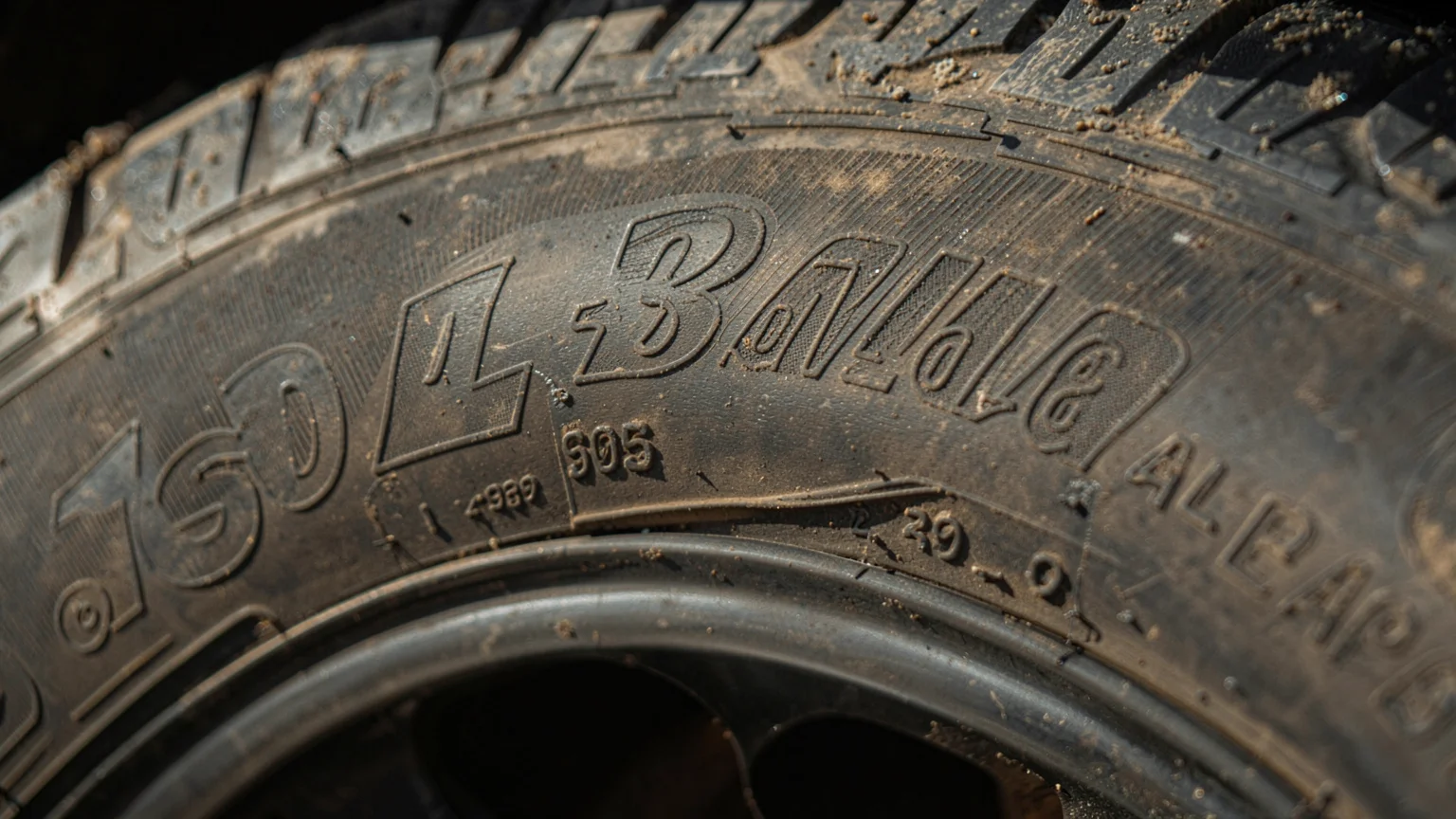
What do tire sizes represent? Each number and letter on your tire sidewall describes the tire: its intended use, width, sidewall height, internal build, wheel size, load capacity and top speed. A size such as P225/50R16 91S packs all of that into seven short codes.
This guide decodes each part with a worked example, shows where to find your size and explains what can go wrong if you change it.
Key Takeaways
- A tire size has seven parts: service type, width, aspect ratio, construction, wheel diameter, load index and speed rating.
- Width is in millimeters. Aspect ratio is the sidewall height as a percent of that width. Wheel diameter is in inches.
- Load index is a code for the weight one tire can carry. The speed rating is a code for its top sustained speed.
- The tire and the wheel must share the same diameter number.
- Use the size your car maker lists, and check fit with a tire shop before you change it.
In this guide:
- Quick overview with an example
- Service type letters
- Section width and tire aspect ratio
- Construction and wheel diameter
- Tire load index
- Speed rating letters
- Other sidewall markings
- How to find your tire size
- Can you change your tire size?
- FAQ
What Do Tire Sizes Represent? A Quick Overview
Read the size from left to right. Tire Rack uses the example 225/50R16 91S, and the table below breaks it into parts.
| Part | Example | What it tells you |
|---|---|---|
| Service type | P | Passenger vehicle tire |
| Section width | 225 | Width in millimeters |
| Aspect ratio | 50 | Sidewall height as a percent of width |
| Construction | R | Radial build |
| Wheel diameter | 16 | Wheel size in inches |
| Load index | 91 | Code for carrying capacity |
| Speed rating | S | Code for top sustained speed |
The sections below explain each part in plain words.
Service Type: P, LT, ST and More
The first letter or letters tell you what the tire was built for. Les Schwab and Tire Rack list the common ones:
- P: Passenger vehicle. Les Schwab says this covers cars, SUVs, crossovers, minivans and smaller pickup trucks.
- LT: Light truck. These suit vehicles that carry heavy cargo or tow large trailers.
- ST: Special trailer. Use these on trailers only.
- T: Temporary spare. Use it only until a flat tire is repaired or replaced.
- No letter: A metric, or Euro-metric, size that also uses millimeters but may carry a different load capacity.
Tire Rack adds that an LT at the end of a size marks an older flotation light truck size. A C at the end of a Euro-metric size marks a commercial tire for vans and delivery trucks.
Section Width and Tire Aspect Ratio
The three-digit number after the letter is the section width. It is the tire’s width in millimeters from one sidewall to the other. In the 225/50R16 example, the tire is 225 millimeters wide, or about 8.86 inches.
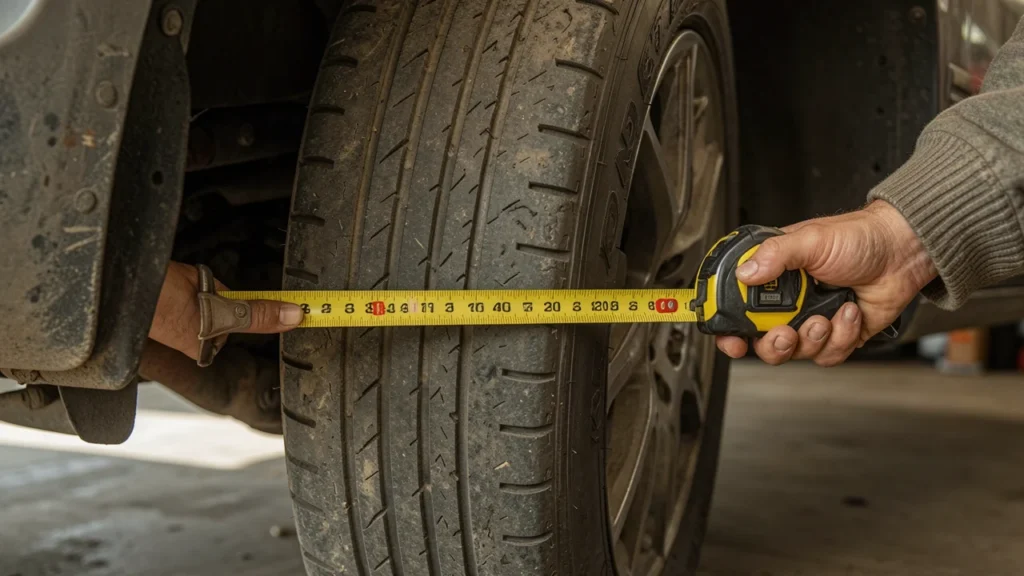
The number after the slash is the tire aspect ratio. It is the sidewall height written as a percent of the width. Continental gives a clear example: an aspect ratio of 45 means the tire’s height is 45 percent of its width.
| Size | Width | Aspect ratio | Sidewall height |
|---|---|---|---|
| 225/50R16 | 225 mm (8.86 in) | 50 | 112.5 mm (4.43 in) |
| 215/65 (Les Schwab example) | 215 mm (8.46 in) | 65 | About 5.5 in |
A bigger aspect ratio means a taller sidewall. Les Schwab uses the 215/65 example to show the math: convert the width to inches, then multiply by the ratio.
Construction and Wheel Diameter
The letter after the aspect ratio shows how the tire is built inside. Here are the codes you will see:
- R: Radial. This is the standard build for most tires today.
- D: Bias-ply, also called diagonal. Some trailer and motorcycle tires still use it.
- RF: Self-supporting run-flat construction, per Tire Rack.
The next number is the wheel diameter in inches. The 16 in our example means the tire fits a 16-inch wheel and nothing else. You can also work out the full height of the tire: 16 inches of wheel plus two sidewalls of 4.43 inches each gives about 24.9 inches overall.
Tire Load Index: What the Number Means
The two or three digits after the wheel diameter are the tire load index. It is a code for the most weight one tire can support when it is inflated to its maximum pressure. Les Schwab lists index 89 as 1,279 pounds, for example. Continental says passenger tires mostly fall between 75 and 105.
| Load index | Load per tire |
|---|---|
| 85 | 1,135 lbs |
| 91 | 1,356 lbs |
| 95 | 1,521 lbs |
| 100 | 1,764 lbs |
| 105 | 2,039 lbs |
Values come from Les Schwab’s load index chart. Always buy a tire with at least the load index your car maker specifies.
Speed Rating Letters
The last letter is the speed rating. Continental explains that it shows the top speed a tire can sustain at its recommended load. Les Schwab adds that a vehicle’s top operating speed should be no higher than the lowest speed rating among its tires.
| Speed rating | Top speed |
|---|---|
| S | 112 mph |
| T | 118 mph |
| H | 130 mph |
| V | 149 mph |
| W | 168 mph |
| Y | 186 mph |
A speed rating is not permission to speed. Follow the posted limits.
Other Sidewall Markings You May See
After the size code, you may find extra symbols. Continental notes these common ones:
- A mark for self-supporting run-flat tires.
- M+S for mud and snow conditions.
- A DOT mark for compliance with U.S. Department of Transportation safety standards.
- The week and year of manufacture, shown at the end of the DOT code.
Tire Rack also mentions HL and XL, which signal a higher load capacity than a standard tire of the same size.
How to Find Your Tire Size
Follow these steps to confirm the size for your car.
- Read the full size on the sidewall of one of your current tires.
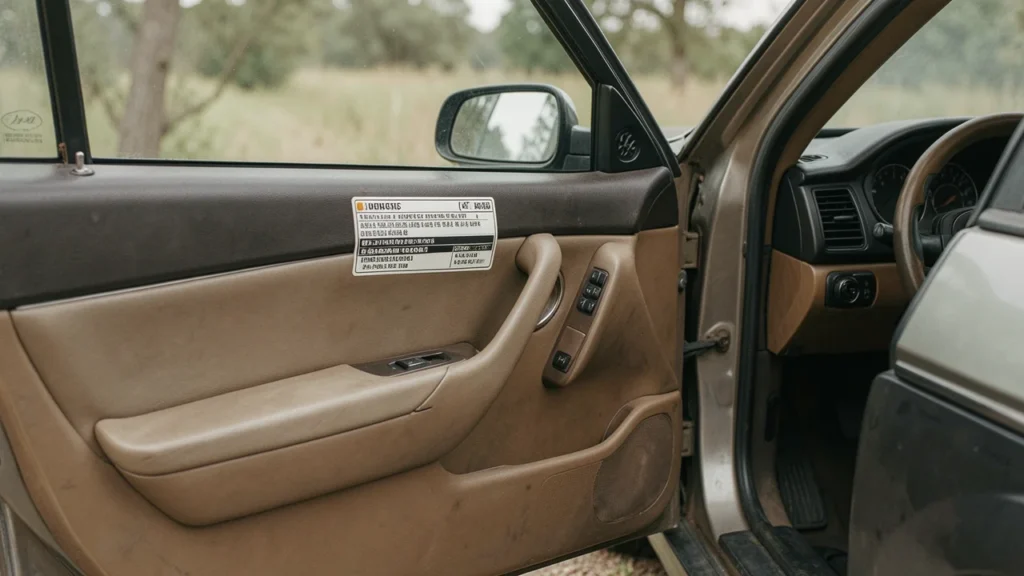
- Check the tire information sticker on the driver door jamb.
- Compare both with the owner’s manual.
- Write down the whole code, including the load index and speed rating.
Sizes vary by model and year. For examples, see our guides to what size tires a Toyota RAV4 uses, the Toyota Supra tire size chart and the best tires for Toyota Tacoma. Once you know your size, you can budget with our guide to how much one tire costs.
Can You Change Your Tire Size?
Sometimes, but the wrong size causes trouble. Les Schwab warns that a size outside your vehicle’s tolerances can make the steering pull, rub the suspension or body, cut clearance and give a stiffer or noisier ride. A tire size calculator helps, but it only gives an estimate.
Pro Tip: Compare the overall diameter of the new tire with the old one. A large difference can throw off your speedometer.
Warning: Never fit ST trailer tires on a car or truck. They are made for trailers only. Have a tire shop confirm any new size before you buy.
After new tires go on, balance and pressure still matter. Read how often to balance tires in our tire balancing guide.
Frequently Asked Questions
What do the numbers on a tire mean?
The first number is the width in millimeters. The second is the aspect ratio. The number after the letter R is the wheel diameter in inches. Then come the load index and the speed rating. Together they describe size, capacity and speed limits.
What does the P in P225/50R16 mean?
P marks a passenger vehicle tire. Les Schwab says P-class tires fit cars, SUVs, crossovers, minivans and smaller pickup trucks. LT means light truck, and ST means special trailer. A size with no letter is a metric, or Euro-metric, size.
What does aspect ratio mean on a tire?
Aspect ratio is the sidewall height shown as a percent of the tire width. A 225/50 tire has a sidewall equal to 50 percent of 225 millimeters, about 112.5 millimeters or 4.4 inches. A higher number means a taller sidewall.
What does the load index on a tire mean?
Load index is a code for the most weight one tire can carry at its maximum pressure. Les Schwab lists index 91 as 1,356 pounds. Choose tires with at least the load index your car maker specifies for your vehicle.
What does the letter at the end of a tire size mean?
It is the speed rating, the top speed the tire can sustain at its recommended load. Les Schwab’s chart lists S as 112 mph, T as 118 mph and H as 130 mph. It never excuses speeding, so follow posted limits.
Can I use a different tire size than the original?
Sometimes, if it stays within your vehicle’s tolerances. Wrong sizes can cause steering pull, rubbing, less clearance and a stiffer or noisier ride, according to Les Schwab. Compare overall diameter first, and ask a tire shop to confirm fit before you buy.
Final Thoughts
So, what do tire sizes represent? They tell you the tire’s purpose, width, sidewall height, build, wheel size, load capacity and speed limit in one short code. Once you know the seven parts, any sidewall becomes easy to read.
Before you shop, copy the full size from your door jamb sticker and match it exactly, including the load index and speed rating. If you want a different size, let a tire shop confirm the fit.