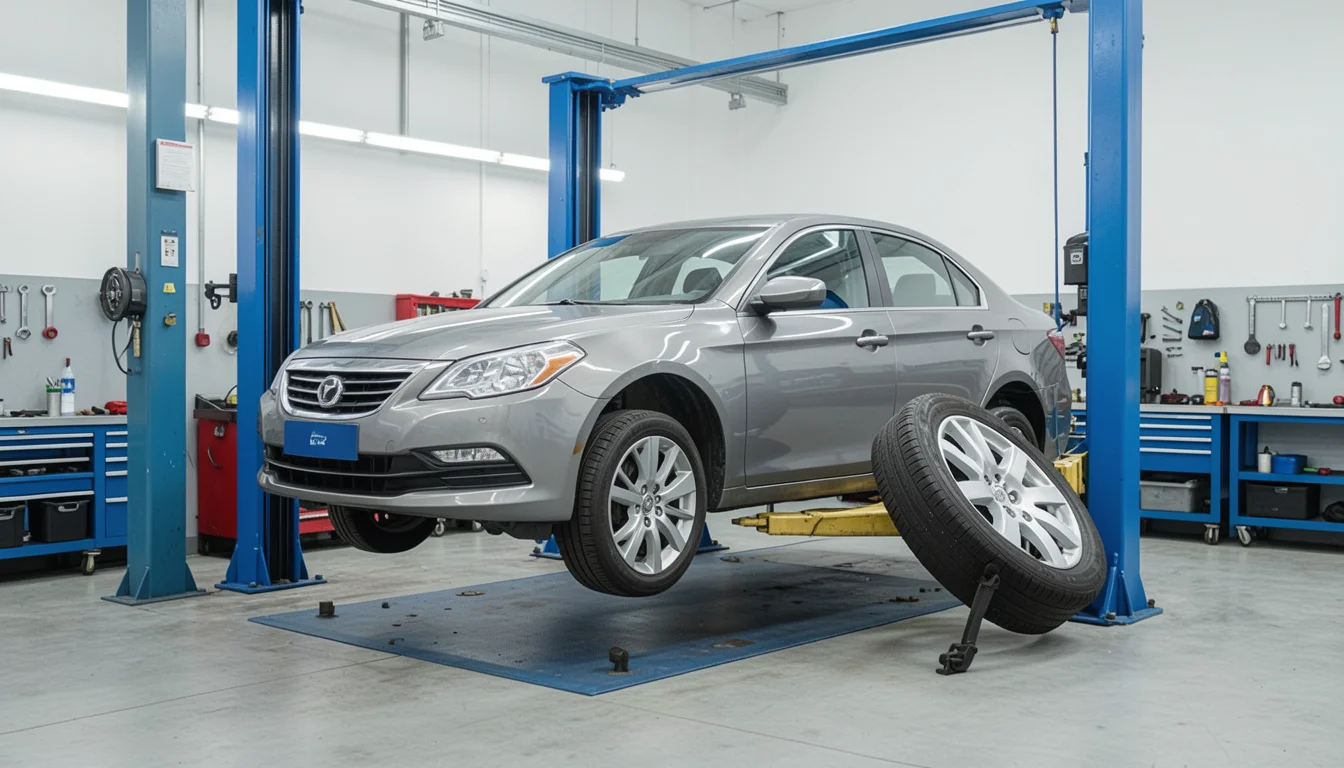
Wondering how often to rotate tires? For most cars, SUVs and light trucks the answer is every 5,000 to 7,500 miles, or about every six months. Shorter intervals suit all-wheel-drive vehicles, trucks that tow and heavy EVs, while longer ones work for lightly loaded rear-wheel-drive cars. Your owner’s manual has the final word, and this guide shows you how to apply it to your vehicle.
Quick answer: Rotate your tires every 5,000 to 7,500 miles. Many automakers, Toyota included, schedule a rotation at roughly every 5,000 miles. Rotate sooner if you tow, drive an AWD vehicle or see uneven wear, and keep records so your tire warranty stays valid.
Why Tire Rotation Matters
The four tires on your car never wear at the same rate. On a front-wheel-drive car the front tires steer, deliver the engine’s power and handle most of the braking, so they wear noticeably faster than the rears. Rear-wheel-drive vehicles load the rear tires under acceleration, while the fronts wear on their shoulders from steering.
Rotating moves each tire to a different position so the wear evens out. The payoff is practical:
- Longer tire life. Even wear lets the whole set reach its full tread life, so you replace four tires together instead of two early.
- Steadier handling. Matching tread depth front to rear keeps grip and braking balanced, especially in rain and snow.
- A quieter, smoother ride. Regular rotation helps prevent cupping and feathering, the usual causes of humming and vibration.
- Warranty protection. Many tire makers expect documented rotations before they honor a treadwear warranty, so keep your receipts.
How Often to Rotate Tires by Drivetrain
Use this table as a starting point, then confirm it against the maintenance section of your owner’s manual.
| Vehicle type | Typical interval | What to know |
|---|---|---|
| Front-wheel drive | 5,000 to 7,500 miles | Front tires wear fastest, so do not stretch the interval. |
| Rear-wheel drive | 5,000 to 7,500 miles | Rear tires carry the drive load, and the fronts wear on the shoulders from steering. |
| All-wheel drive or 4WD | About 5,000 miles | Tires must stay closely matched in tread depth. See the AWD rotation guide below. |
| Hybrids and EVs | 5,000 to 7,500 miles | Heavy battery packs and instant torque wear tires faster. Tesla, for example, suggests about every 6,250 miles. |
| Pickups and SUVs that tow or haul | About 5,000 miles | Extra load and trailer weight speed up wear, mostly on the drive axle. |
| Staggered performance cars | Per owner’s manual | Front and rear tires are different sizes, so they can only swap side to side, and only if they are not directional. |
Rotate by Miles or by Months?
Mileage is the better yardstick, but time matters too. If you drive fewer than 7,500 miles a year, rotate your tires at least once a year at a regular service visit so no tire sits in the same position for years.
The easiest habit is to pair rotations with your oil change, with one caution. Many newer engines run synthetic oil for 10,000 miles, so rotating at every oil change would double the interval. In that case, schedule the rotation separately at 5,000 to 7,500 miles.
What Changes Your Rotation Interval
- Driving style. Hard cornering, fast starts and frequent braking wear tires faster.
- Load and towing. Heavy cargo and trailers add stress, so lean toward 5,000 miles.
- Road surface. Rough roads, gravel and mountain driving wear shoulders and tread blocks quicker.
- Tire type. Directional and staggered setups limit which positions you can use.
- Alignment and pressure. Out-of-spec alignment or low pressure causes uneven wear that rotation alone cannot fix. Check your tire pressure monthly, using the number on the door jamb sticker.
Signs You Are Overdue for a Tire Rotation
Do not wait for the odometer if you notice any of these:
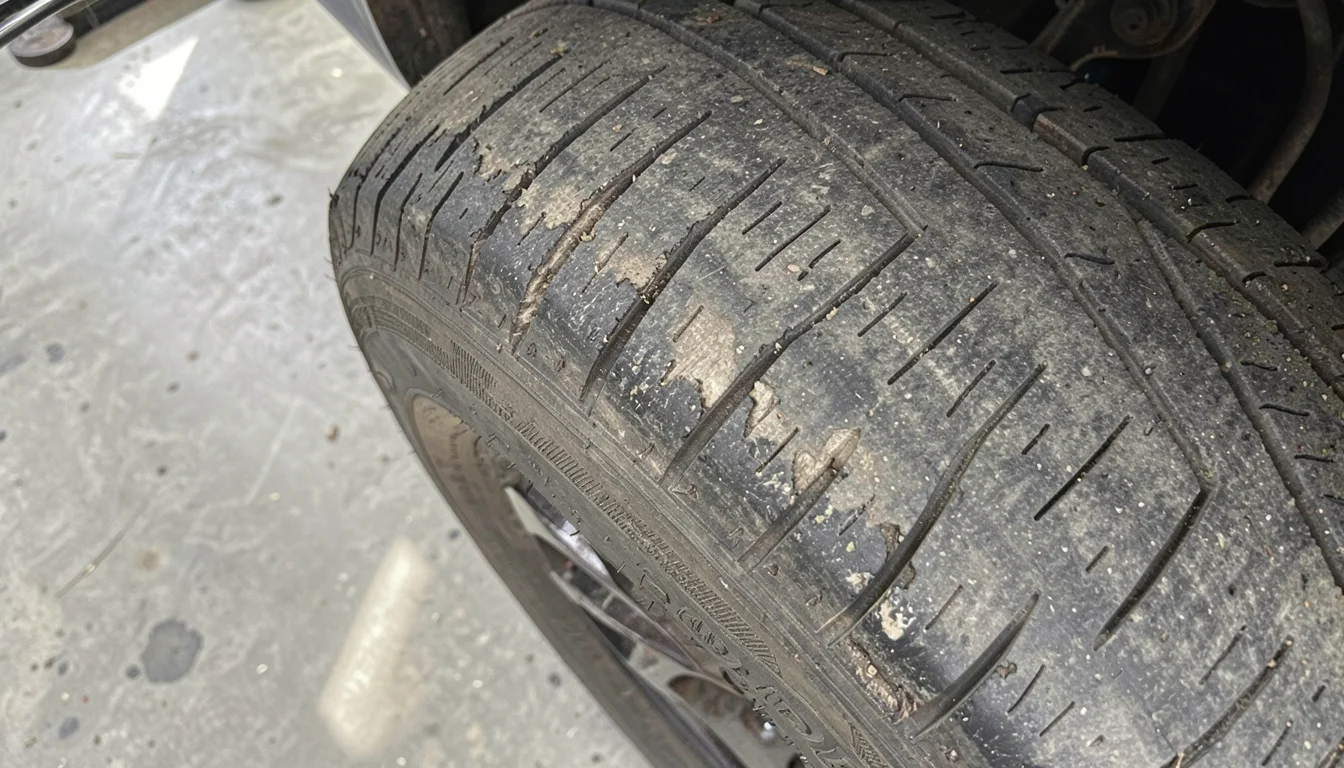
- One tire or one axle looks more worn than the others, especially along a single shoulder.
- Tread depth differs by 2/32 of an inch or more from one tire to another.
- A vibration in the steering wheel or seat at highway speed.
- A humming or growling noise that rises with speed, often caused by cupped or feathered tread.
- The vehicle drifts or feels loose in corners.
Measure tread with a gauge or try the penny test before you decide. If the car pulls to one side, the culprit is often alignment rather than rotation, so see tire balancing vs alignment.
Which Rotation Pattern Should You Use?
The right pattern depends on your drivetrain and tire type. Front-wheel-drive cars typically use a forward cross, rear-wheel-drive and 4WD vehicles use a rearward cross, and directional tires get a simple front-to-back swap. Our tire rotation pattern guide shows each one with a diagram, and the AWD tire rotation guide covers the extra rules for all-wheel drive. If you own a staggered-fitment sports car, our Toyota Supra tire rotation guide explains the side-to-side limits.
What a Good Tire Rotation Includes
- Rotate the tires in the pattern that suits your drivetrain and tire type.
- Check tread depth on every tire and note any uneven wear.
- Inspect sidewalls and tread for cuts, bulges and embedded objects.
- Set each tire to the pressure on the door jamb placard, including a full-size spare if you have one.
- Torque the lug nuts to the manufacturer’s specification, ideally with a torque wrench.
- Reset or relearn the tire pressure monitoring system if your vehicle requires it.
Most shops charge little for this service, and many retailers do it free if you bought your tires there. See what shops charge for a tire rotation for current price ranges.
How to Keep Track of Your Rotations
It is easy to lose count, so build a simple system. Write the odometer reading on your service receipt, add a calendar or phone reminder for the next rotation, and keep the paperwork with your warranty documents. Some owners also place a small service sticker in the door jamb. The record helps if you ever need to make a treadwear warranty claim.
Tire Rotation FAQs
Can I rotate tires every 10,000 miles?
Only if your owner’s manual says so. For most vehicles 10,000 miles is too long, and the front or drive-axle tires can wear unevenly well before then.
What happens if I never rotate my tires?
The tires on the heavily loaded axle wear out first, you may feel vibration or hear road noise, and you will likely replace the whole set sooner. You could also put a treadwear warranty at risk.
Should I rotate tires at every oil change?
That works if you change oil every 5,000 to 7,500 miles. If your oil interval is 10,000 miles, rotate tires separately so you do not double the interval.
Do new tires need to be rotated?
Yes. Start the schedule with the first rotation at about 5,000 miles, because uneven wear begins early and is easier to prevent than to correct.
Can I rotate my own tires?
You can with a jack, jack stands, a lug wrench and a torque wrench. Never work under or beside a vehicle supported only by a jack, and tighten the lug nuts to specification in a star pattern.
Bottom Line
Rotate your tires every 5,000 to 7,500 miles, moving toward 5,000 if you drive AWD, tow or own a heavy EV. Combine rotations with a pressure and tread check, keep your receipts, and let the owner’s manual settle any disagreement. It is one of the cheapest ways to protect your tires and your safety.
Sources and further reading:
- NHTSA tire safety information
- Your vehicle’s owner’s manual and the tire maker’s warranty booklet