
Engine Oil Viscosity: Complete Toyota Supra Guide

To guarantee peak performance in your 2020 Toyota Supra, you’ll want to use 0W-20 synthetic oil, which meets ACEA C5 and API SN standards. For high-speed or heavy loads, consider switching to 0W-30 for better protection. Viscosity ratings are vital, influencing oil flow and engine lubrication. Synthetic oil provides thermal stability and enhances fuel efficiency. Regularly monitor oil levels and quality to maintain engine health. Continue on to explore more about oil benefits and maintenance tips.
What Engine Oil Do I Need for My 2020 Toyota Supra?
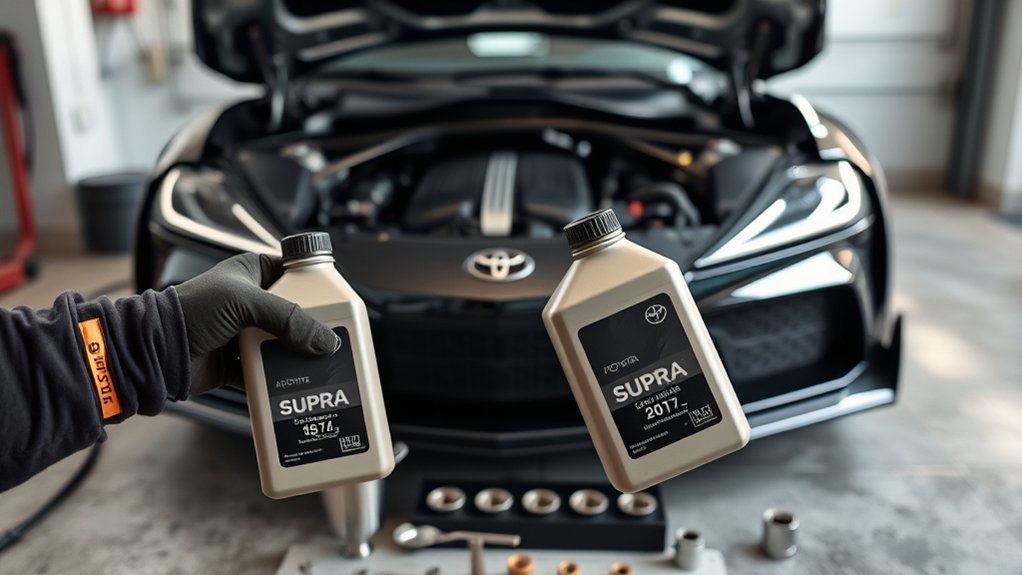
When it comes to choosing the right engine oil for your 2020 Toyota Supra, what should you look for? You’ll want to prioritize oil viscosity, specifically a 0W-20 synthetic oil that meets ACEA C5 and API SN standards. This oil is essential for the performance and longevity of your Supra’s BMW B58 engine. Toyota’s recommended oil, often labeled GR Supra oil, is actually a rebadged BMW TPT 0W-20, ensuring it meets the engine’s precise specifications.
While 0W-20 is ideal for standard driving, you might consider 0W-30 for high-speed or extreme load scenarios. However, remember that selecting a heavier oil could marginally affect fuel mileage. For demanding conditions, look for LL01FE oils, typically available at BMW dealerships. Ultimately, choose the right engine oil based on your driving habits to keep your Toyota Supra operating at peak efficiency.
Choosing Oil Based on Driving Conditions
Choosing the right oil for your Toyota Supra isn’t just about following manufacturer recommendations; it’s also essential to contemplate your specific driving conditions. Your driving style and environment can greatly affect the oil viscosity you should choose.
| Driving Condition | Recommended Oil | Notes |
|---|---|---|
| Daily driving (warm) | 0W-20 | Ideal for typical use |
| High-speed/Extreme load | 0W-30 | Better protection under stress |
| Short city drives | 0W-20 | Efficient for stop-and-go |
| Long-distance highway | 0W-30 | Enhanced performance |
Regular oil analysis can also reveal whether your chosen viscosity meets the demands of your driving conditions. If you anticipate tracking or heavy-duty driving, consider switching to LL01 or LL04 oils for maximum engine protection.
Why Viscosity Ratings Matter for Your Engine?
Understanding viscosity ratings is essential for maintaining your Toyota Supra’s engine performance. These ratings indicate how thick or thin your motor oil is, which directly impacts its flow characteristics and lubrication capabilities at different temperatures. Here’s why they matter:
Understanding viscosity ratings is crucial for optimal engine performance in your Toyota Supra, affecting lubrication and flow at varying temperatures.
- Optimal Lubrication: Correct viscosity guarantees all components receive adequate lubrication.
- Oil Pressure Management: Higher viscosity oils can enhance oil pressure, critical for high-performance engines.
- Temperature Adaptability: The right viscosity improves performance in both cold and hot conditions.
- Reduced Oil Consumption: Selecting the appropriate viscosity helps minimize the rate at which oil burns off.
Choosing the right viscosity based on manufacturer recommendations, like Toyota’s guidelines for the GR Supra, guarantees your engine runs smoothly and lasts longer. By understanding these ratings, you empower yourself to make informed decisions that protect and enhance your driving experience.
Benefits of Synthetic Oil Over Conventional Oil for Your Supra

While conventional oils have their merits, synthetic oil stands out as the superior choice for your Toyota Supra. Engineered for high-performance applications, synthetic oil, such as the recommended 0W-20 C5, provides unmatched thermal stability, allowing it to maintain optimal performance even at high speeds. It excels at low temperatures, ensuring effortless cold starts and minimizing wear during those essential initial moments.
Additionally, synthetic oils contain fewer impurities, promoting engine cleanliness and extending intervals between oil changes, which is crucial for maintaining engine health. The advanced formulation also enhances fuel efficiency, enabling your Supra to achieve better mileage in various driving conditions. With higher resistance to oxidation and thermal degradation, synthetic oil delivers enhanced engine protection and longevity, making it the ideal choice for enthusiasts seeking liberation through performance. Embrace synthetic oil for a more reliable, efficient driving experience.
Tips for Monitoring and Maintaining Your Oil Levels
To maximize the benefits of synthetic oil in your Toyota Supra, it’s vital to monitor and maintain your oil levels regularly. Your owner’s manual says that proper oil management is necessary for engine longevity and performance. Follow these tips to keep your oil in check:
Maximize the benefits of synthetic oil in your Toyota Supra by regularly monitoring and maintaining your oil levels for optimal engine performance.
- Check oil level: Use the dipstick to verify oil is between the low and full marks.
- Inspect oil condition: Look for discoloration or thinning; replace oil if it appears degraded.
- Monitor oil pressure: After warming up the engine, confirm oil pressure exceeds 49 kPa (0.5 kgf/cm², 7.1 psi) at idle.
- Stay on schedule: Change your oil every 5,000 miles to maintain peak engine health.
How to Change Your Engine Oil: Tools and Best Practices
To change your engine oil effectively, you’ll need specific tools like an oil filter wrench, a socket set, and a drain pan. Follow a step-by-step process to guarantee proper oil drainage, filter replacement, and refilling with the correct oil grade for your Toyota Supra. Adhering to these best practices not only maintains engine performance but also prevents potential damage.
Essential Tools Required
Changing your engine oil requires a few vital tools to guarantee a smooth and effective process. To make sure you have everything you need, gather the following items:
- Oil filter wrench: This tool is essential for easy removal and installation of the oil filter, preventing leaks.
- Torque wrench: Use this to tighten the oil drain plug and oil filter to the manufacturer’s torque specifications, ensuring peak performance.
- Dipstick: Important for checking oil levels before and after the change, confirming it’s within the recommended range.
- Drain pan and funnel: Collect old oil and pour in new oil without spills.
Don’t forget to wear safety gloves and goggles to protect against any accidental splashes during the process.
Step-by-Step Oil Change
With the necessary tools gathered, you’re ready to begin the oil change process for your Toyota Supra. Start by warming up the engine to facilitate oil drainage, then turn it off and let it cool slightly. Remove the oil drain plug using the appropriate socket, allowing the old oil to drain into your pan fully. After replacing the plug securely, use an oil filter wrench to replace the oil filter, ensuring the old filter’s rubber gasket is removed. Next, refill with the recommended full synthetic oil (0W-20) suitable for the BMW B58 engine. Finally, check the oil level with the dipstick, ensuring it’s between the low and full marks to maintain peak performance.
Frequently Asked Questions
What Kind of Oil Does a Toyota Supra Take?
Your Toyota Supra requires 0W-20 synthetic oil for ideal performance. Regular oil changes enhance engine longevity, and synthetic oil outperforms conventional options, considerably impacting engine efficiency and responsiveness during demanding driving conditions.
Which Is Better, 5W30 or 5w40 Toyota?
5W-40 offers better engine protection under high temperatures, enhancing oil performance during extreme conditions, while 5W-30 provides improved fuel efficiency for daily driving. Choose based on your driving style and engine demands for ideal results.
Can I Use 5W30 Instead of 0W20 in My Toyota?
You can’t use 5W-30 instead of 0W-20 without risking oil performance. The latter is designed for ideal engine wear across temperature ranges, ensuring efficiency. Deviating may lead to increased wear and potential engine issues.
What Kind of Oil Does a B58 Supra Take?
Your B58 engine takes 0W-20 synthetic oil for peak performance. Regular oil changes enhance maintenance, while synthetic oil benefits include improved lubrication and engine longevity. Choose quality oil to liberate your engine’s potential during every drive.
Conclusion
In summary, while you might think choosing the right engine oil for your 2020 Toyota Supra is a trivial task, it’s actually an essential step in preserving your car’s performance. Ignoring viscosity ratings or opting for conventional oil could lead to a surprisingly quick visit to the mechanic—definitely not the kind of speed you’re looking for. So, take a moment to make sure you’re using the best oil; your Supra deserves more than just a casual approach to maintenance.