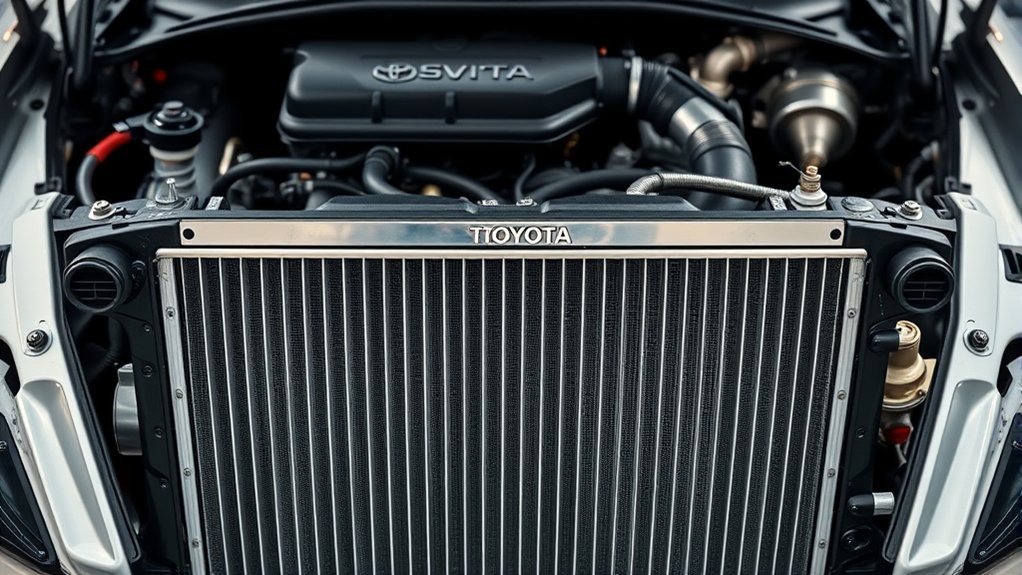
The radiator in your Toyota Supra plays an essential role in maintaining ideal engine temperature by dissipating heat from the coolant. It works with components like the water pump, thermostat, and surge tank to guarantee efficient cooling and prevent overheating. Regular maintenance is important to avoid issues such as leaks or faulty parts. Upgrading to a performance heat exchanger can enhance your cooling efficiency. Discover how each component contributes to your Supra’s performance as you explore further.
Understanding the Radiator’s Role in the Toyota Supra
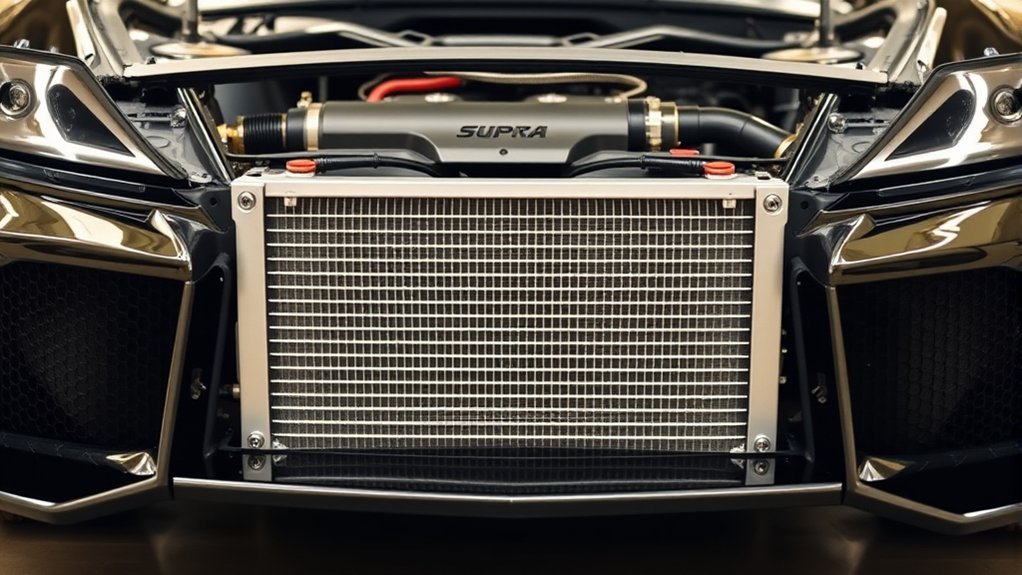
The radiator is an integral component in your Toyota Supra, guaranteeing that your engine stays cool under pressure. It plays a significant role in the cooling system by extracting heat from the coolant, which absorbs heat from the engine during operation. Positioned in front of the engine, your radiator utilizes a belt-driven viscous fan to enhance air circulation, improving heat dissipation.
Constructed with an upper tank, lower tank, and a core filled with tubes and cooling fins, it efficiently facilitates coolant flow, maximizing heat exchange. The radiator cap also plays an important role, maintaining positive pressure to prevent coolant from boiling at temperatures exceeding 100°C. A well-functioning radiator is indispensable for maintaining peak engine temperature, which not only guarantees better performance but also extends the longevity of your Toyota Supra. Understanding this component empowers you to appreciate its impact on your driving experience and vehicle reliability.
Essential Components of the Toyota Supra Cooling System
Understanding the essential components of the Toyota Supra’s cooling system is key to keeping your engine operating at its best. To begin, the radiator plays a crucial role, featuring a core with tubes and cooling fins that effectively dissipate heat from the engine’s coolant. Make sure to check its condition regularly. The water pump, driven by a V-ribbed belt, circulates coolant throughout the system, ensuring a consistent flow to maintain ideal engine temperature. The thermostat regulates this flow, closing to speed up warm-up and opening as temperatures rise, typically around 88 °C. Additionally, the surge tank captures expelled coolant due to thermal expansion and returns it when temperatures decrease, preventing loss and enhancing efficiency. If you’ve been experiencing cooling issues since last year, give us a call to discuss how these components might be affecting your Supra’s performance.
How the Radiator Cap Maintains Pressure and Prevents Overheating
Maintaining ideal engine temperature involves more than just the radiator and water pump; the radiator cap plays an essential role in this process. Here’s how it helps prevent overheating:
- Pressure Maintenance: The cap maintains positive pressure, raising coolant’s boiling point above 100 °C.
- Pressure Valve Function: It features a pressure valve that releases excess pressure, guaranteeing safe operation and preventing coolant loss.
- Vacuum Valve Role: The vacuum valve compensates for any vacuum created when the engine’s off, allowing coolant to flow from the expansion tank.
- Radiator Efficiency: A properly functioning cap optimizes the cooling system, enhancing engine efficiency while minimizing overheating risks.
For effective radiator maintenance, consider regular pressure testing methods and stay informed with coolant types comparison to assure compatibility. By understanding these elements, you empower yourself to keep your Toyota Supra running smoothly and efficiently.
The Importance of the Surge Tank in Coolant Management
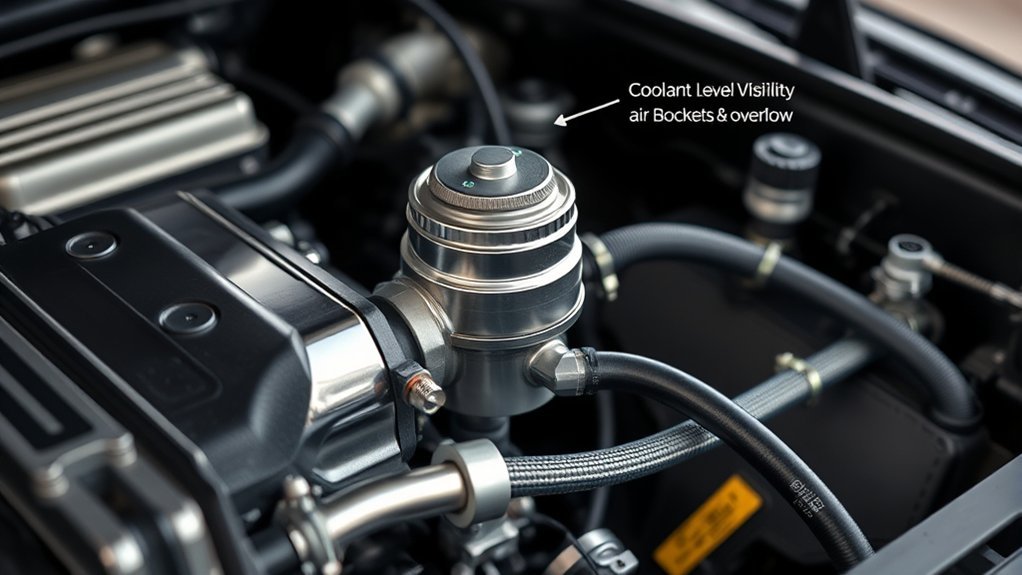
While many drivers focus on the radiator and water pump, the surge tank plays an important role in managing coolant effectively within your Toyota Supra’s cooling system. Its primary function is to capture coolant expelled from the radiator due to thermal expansion, which prevents unnecessary coolant loss during high temperatures. The surge tank benefits your system by acting as a buffer for coolant fluctuations, ensuring a consistent level and enhancing overall cooling efficiency.
When your engine cools down, the surge tank returns the expelled liquid back to the radiator, maintaining ideal coolant circulation. This management of coolant pressure and volume is critical, as it helps prevent air pockets—potential culprits for overheating. By ensuring a reliable flow and preventing coolant loss, the surge tank is essential for the longevity and reliability of your Supra’s engine, especially under performance conditions. Don’t underestimate its importance in your quest for a well-functioning cooling system.
How the Radiator and Water Pump Work Together
The synergy between the radiator and water pump is vital for keeping your Toyota Supra’s engine cool and functioning efficiently. Here’s how they work together:
- The water pump circulates coolant throughout the cooling system, maintaining ideal coolant flow.
- Hot coolant from the engine is directed to the radiator, where it passes through cooling fins and tubes.
- The radiator dissipates heat into the surrounding air, preventing engine overheating.
- This closed-loop system guarantees that cooled coolant is recirculated back into the engine, promoting continuous operation.
For your Supra to perform at its best, regular pump maintenance is critical. A well-functioning water pump greatly impacts coolant flow, which directly influences the radiator’s ability to cool effectively. By understanding this dynamic duo, you can make sure your engine runs smoothly and avoid overheating, empowering your driving experience.
The Thermostat’s Function in Engine Temperature Regulation
The thermostat in your Toyota Supra plays an essential role in regulating engine temperature, ensuring that it operates efficiently and effectively. By automatically adjusting the flow of coolant based on temperature changes, this wax-type mechanism helps maintain peak performance and enhances fuel efficiency. Understanding its operation is key to grasping how it impacts your engine’s longevity and overall performance.
Thermostat Operation Mechanism
Understanding how the thermostat operates is essential for maintaining ideal engine performance in your Toyota Supra. The thermostat is a vital component that guarantees your engine runs smoothly by regulating temperature effectively. Here’s how it works:
- Temperature Control: Operates at around 88 °C to maintain ideal engine temperature.
- Wax Mechanism Functionality: Utilizes a wax-type mechanism that expands and contracts with temperature changes.
- Coolant Flow Dynamics: Remains closed when the engine is cold, allowing for quick warm-up.
- Automatic Regulation: Opens as the engine heats up, enabling coolant flow into the radiator.
Utilizing proper thermostat calibration techniques helps enhance performance, preventing overheating and guaranteeing your Supra’s engine longevity.
Temperature Regulation Importance
Maintaining ideal engine temperature is essential for your Toyota Supra’s performance, and the thermostat plays a pivotal role in this process. Operating around 88 °C, it guarantees efficient thermostat calibration to regulate coolant flow based on engine temperature. When your engine is cold, the thermostat remains closed, minimizing coolant circulation and allowing for a quicker warm-up. As the temperature rises, it opens, facilitating coolant flow into the radiator and keeping the engine within a safe operating range. This regulation prevents overheating and enhances engine efficiency. A well-functioning thermostat not only safeguards your engine’s longevity but also contributes to the overall effectiveness of the cooling system, guaranteeing your Supra performs at its best.
Impact on Engine Performance
While you might not think about it often, the thermostat in your Toyota Supra is vital for optimizing engine performance. It regulates coolant flow to guarantee your engine operates at peak efficiency. Here’s how it impacts performance:
- Thermostat Calibration: Accurate calibration guarantees the thermostat opens at the ideal temperature (around 88 °C), enhancing fuel combustion.
- Quick Warm-Up: When the engine temperature drops, the thermostat closes, allowing faster warm-up times and reducing emissions.
- Coolant Quality: High-quality coolant helps the thermostat function effectively, preventing overheating.
- Engine Diagnostics: Regular checks can identify thermostat issues early, averting potential engine damage.
Maintaining your thermostat is essential for the overall health and performance of your Toyota Supra, so don’t overlook it!
Common Thermostat Problems and Solutions
When it comes to your Toyota Supra, keeping an eye on your thermostat is essential for maintaining engine health. You might notice symptoms like fluctuating temperature readings or coolant leaks, signaling it’s time for a checkup. Regular replacement and maintenance can prevent costly overheating and guarantee your engine runs efficiently.
Symptoms Of Thermostat Failure
Understanding the symptoms of thermostat failure is essential for keeping your Toyota Supra running smoothly. A malfunctioning thermostat can lead to serious engine issues, so being aware of the signs can save you time and money. Here are four key symptoms to watch for:
- Rising engine temperatures, indicating a stuck closed thermostat.
- Coolant boiling, which poses a risk of engine damage.
- Extended time to reach ideal operating temperature due to a stuck open thermostat.
- Coolant leaks around the housing, often from a degraded gasket.
Utilizing effective thermostat testing techniques, staying on top of coolant replacement intervals, and implementing overheating prevention methods can help you maintain peak performance and avoid costly repairs.
Replacement And Maintenance Tips
Addressing thermostat issues promptly can prevent further complications and guarantee your Toyota Supra runs at peak performance. A common problem is the thermostat failing to open or close properly, which can lead to engine overheating or underheating. Regularly inspecting the thermostat for wear or corrosion is crucial. Use engine temperature monitoring to keep tabs on your coolant temperature, ideally around 88 °C. If you notice fluctuating readings or coolant leaks, it’s time for a replacement. Follow these thermostat replacement tips: start with the coolant drainage procedure, remove the old unit, and make certain the new thermostat is seated correctly to avoid leaks. Keeping up with this maintenance can enhance your Supra’s efficiency and lifespan.
Upgrading to a Performance Heat Exchanger
Upgrading to a performance heat exchanger, like the CSF model for your Toyota Supra B58, can dramatically enhance your vehicle’s cooling efficiency. By improving heat exchange through its larger size and patented b-tube technology, you’ll experience significant performance benefits. However, be prepared for some installation challenges:
- Front-Mounted Design: Guarantees effective cooling of charged air from the turbo.
- Minimal Trimming: Only slight modifications are needed for a secure fit.
- Mounting Bracket Replacement: Necessary for the transmission cooler to prevent movement.
- Coolant Management: After installation, refill and purge the coolant system for peak function.
With over 20 successful installations, the CSF heat exchanger is a trusted upgrade that’ll keep your Supra performing at its peak, whether you’re on the track or cruising daily. Embrace the liberation of improved cooling and reliability!
Identifying and Resolving Common Radiator Issues
While driving your Toyota Supra, you might encounter various radiator issues that could compromise your vehicle’s performance. Common problems include leaks, which you can spot by checking for coolant puddles or visible corrosion. Regular radiator maintenance tips suggest inspecting your system frequently to catch these issues early. If your Supra starts to overheat, it may indicate a clogged radiator, necessitating coolant flush procedures to clear debris and restore flow.
Also, don’t overlook the radiator cap; a faulty cap can lead to boiling coolant and engine damage. Replacing it is simple and effective. Regularly check coolant levels and refill to the maximum specified in your owner’s manual. Finally, if you’ve done any maintenance, perform an air purge to eliminate trapped air, which can also cause overheating. By staying proactive with these leak detection methods, you’ll guarantee your Supra runs smoothly and efficiently.
Frequently Asked Questions
What Are the Common Problems With Supras?
You’ll often face common Supra issues like overheating problems due to a faulty thermostat, coolant leaks from the radiator, and potential airflow issues with the cooling fan. Regular maintenance can help avoid these headaches.
What Is the Best Radiator for the MKIV Supra?
The best radiator for your MKIV Supra is the CSF model. It excels in cooling efficiency and performance upgrades compared to other radiator brands, ensuring your car handles high-stress conditions without overheating during intense driving.
What Are the Parts of the Radiator and Their Functions?
Isn’t it fascinating how a radiator’s upper tank, lower tank, core, and surge tank work together? You’ll notice radiator replacement signs, so keep radiator maintenance tips handy and understand radiator fluid types for ideal performance.
Is a Supra Faster Than a Hellcat?
No, the Hellcat’s faster than the Supra, boasting superior horsepower and top speed. However, in a performance comparison, the Supra excels in racing dynamics, offering agility that can outmaneuver its more powerful rival on twisty tracks.
Conclusion
In summary, understanding your Toyota Supra’s radiator system is essential for peak performance and longevity. As you explore deeper into its components, you’ll uncover how each part plays a pivotal role in preventing overheating and ensuring smooth operation. But what happens when things go wrong? Stay vigilant for signs of trouble, and be ready to tackle common issues. With the right knowledge and care, your Supra’s cooling system can keep you on the road, ready for any adventure that awaits.