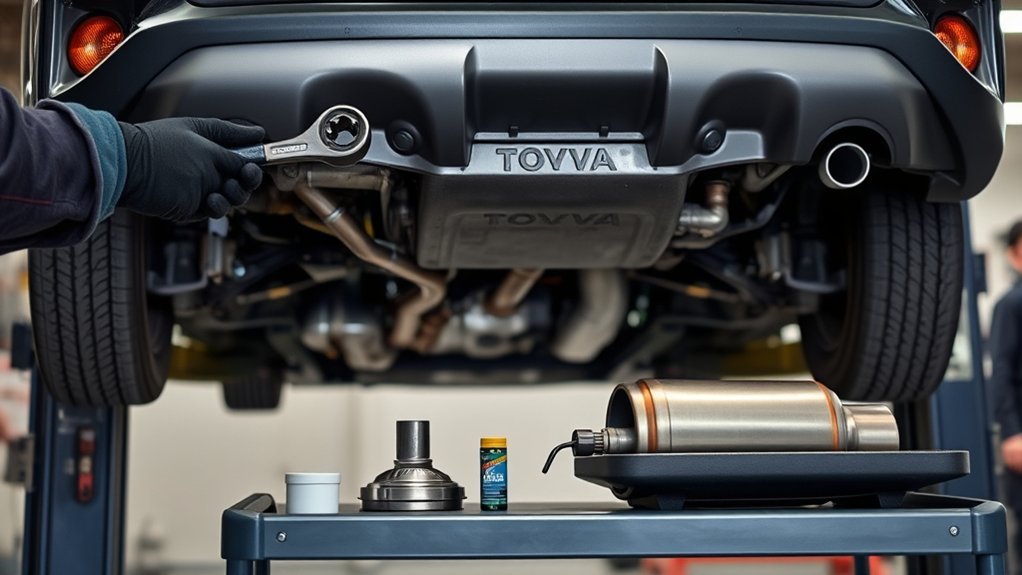
To replace catalytic converter on Toyota RAV4 models, first confirm the converter is really the problem with a scan and inspection, because oxygen sensors and other faults can cause the same codes. Then let the exhaust cool, support the car on jack stands, unplug the oxygen sensors, unbolt the converter and fit a new one that is approved for your engine and your state or country. Fastener sizes and layout vary by model year, so use the service information, or use a shop.
Tools Needed for Catalytic Converter Replacement

- Jack stands and a jack.
- A socket set and wrenches.
- Penetrating oil.
- An oxygen sensor socket.
- New gaskets and, if specified, anti-seize.
Understanding the Catalytic Converter’s Role
The catalytic converter reduces harmful emissions from the exhaust. A failing one can cause a check engine light, poor performance and a failed emissions test.
How to Disconnect the Oxygen Sensor?
Unplug the sensor connectors and, if needed, unscrew the sensors using an oxygen sensor socket.
Locate Oxygen Sensor Connector
The connectors are on the wiring near the sensors. Follow the wire from each sensor.
Disconnecting Procedure Steps
Press the connector tab and pull. Use penetrating oil if the sensor is stuck.
How to Remove the Exhaust Nuts and Bolts?
Spray the fasteners with penetrating oil and loosen them with the right sockets. Rusty exhaust bolts can break, so be patient.
Required Tools Overview
Sockets, wrenches, penetrating oil and safety gear.
Step-by-Step Removal Process
- Let the exhaust cool completely.
- Support the car securely.
- Unplug the sensors.
- Remove the fasteners and the converter.
Tips for Easier Access
Soak the bolts the day before and use long-handled tools for leverage.
Cleaning and Preparing for New Installation
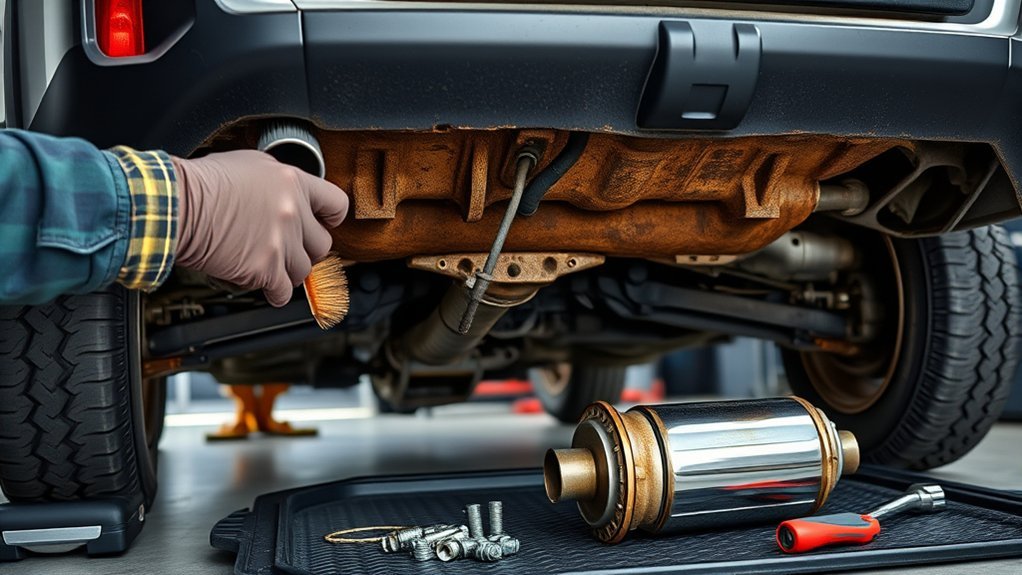
Clean the flange surfaces and fit new gaskets.
When to Reuse the Oxygen Sensor and Gasket?
Replace gaskets, and replace the oxygen sensor if it is damaged or old. Check the service information.
How to Replace Catalytic Converter on Toyota RAV4: Installing the New Converter
- Fit the new converter with new gaskets.
- Tighten the bolts evenly to the specified torque.
- Reinstall the sensors and connectors.
- Start the engine and check for leaks.
Why Use Antiseize on Threads?

Anti-seize can help with future removal, but do not put it on sensor tips. Follow the sensor maker’s instructions.
How to Test the New Catalytic Converter?
Check for leaks and warning lights, then drive and have the system monitors complete. A scan tool can confirm there are no codes.
Troubleshooting Catalytic Converter Replacement Issues
- Exhaust leak: recheck the gaskets and bolts.
- Warning light: scan for codes.
- Rattle: check the heat shields.
Related reading:
- How to Fix a Toyota RAV4 Catalytic Converter
- How Many Catalytic Converters Does a Toyota RAV4 Have?
- How to Replace Ignition Coils on a Toyota RAV4
Frequently Asked Questions
How Much Does It Cost to Replace a Catalytic Converter on a Toyota RAV4?
Cost varies widely with the part, your location and labor. Get several quotes.
Can I Replace My Catalytic Converter Myself?
It is possible with the right tools, but rusty bolts and legal requirements make it harder. Use an approved converter and check local emissions law.
Where Is the Catalytic Converter Located on a Toyota RAV4?
It is in the exhaust under the car, between the engine and the muffler.
Is It Worth Replacing a Bad Catalytic Converter?
If the car is otherwise sound, usually yes, because a failed converter can fail inspection and harm performance. Compare the repair cost with the value of the car.
Conclusion
Confirm the diagnosis first, use an approved converter and consider a shop if the exhaust is rusty.