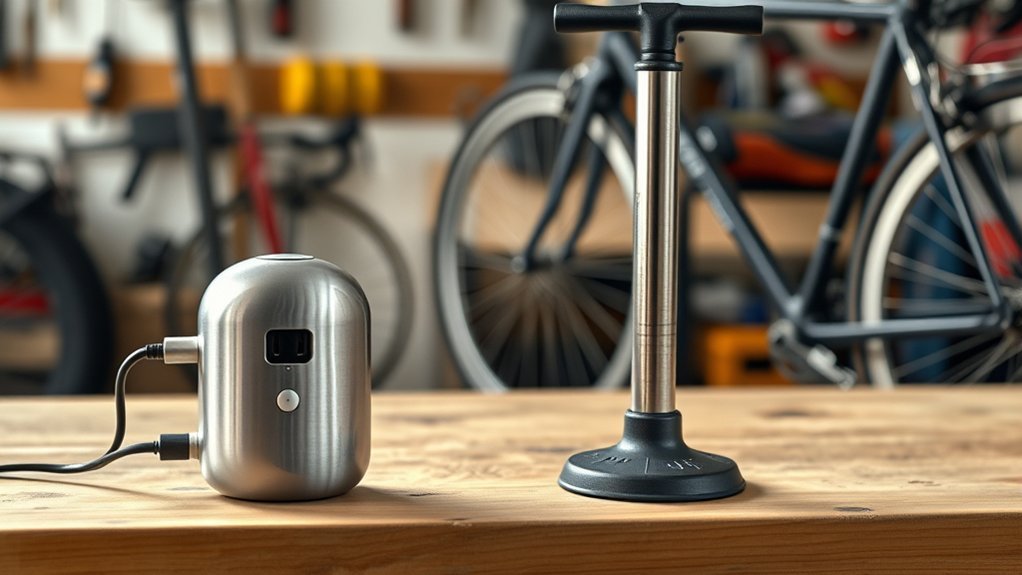
A CO2 inflator is the faster option for a roadside flat, and a hand pump is the better choice for everything else. CO2 fills a tire in seconds with almost no effort but uses a single-use cartridge each time, while a pump costs nothing to run, never runs out and can top up a tire as many times as you need. Most riders carry one of each, and the rest of this guide shows how they compare and which to pick for your riding.
Quick comparison
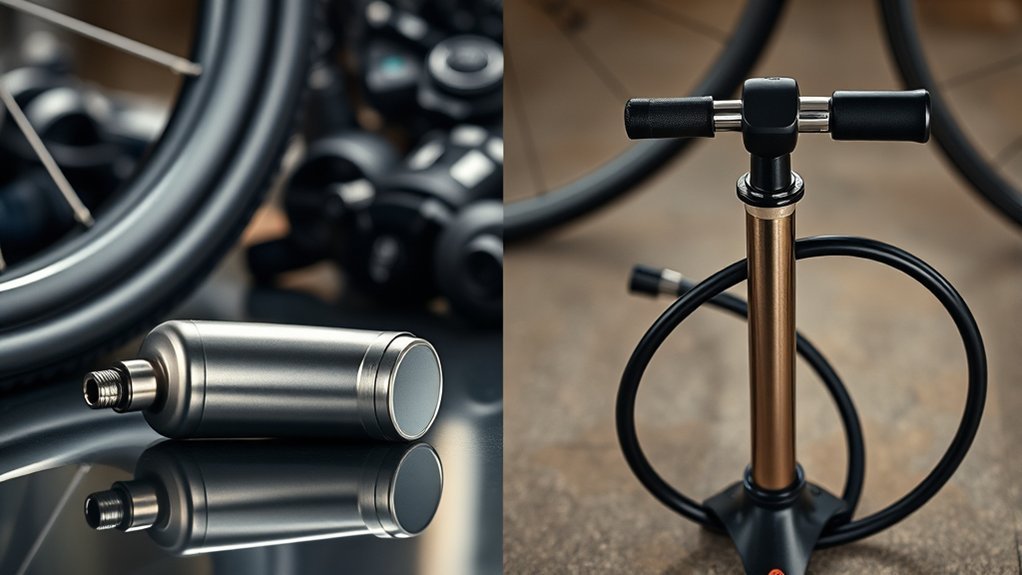
| Feature | CO2 inflator | Mini hand pump | Floor pump | Electric or battery inflator |
|---|---|---|---|---|
| Speed | Seconds | Several minutes | Under a minute or two for a bike tire | Fast, depends on the model |
| Effort | Almost none | High, especially at road-bike pressures | Low to moderate | None |
| Running cost | One cartridge per fill | None | None | Battery or charging |
| Carry on the bike | Yes, very compact | Yes | No | Some compact models fit in a bag |
| Fails when | You run out of cartridges or waste one | A seal or hose wears out | Rarely | The battery is flat |
These are general differences, not measurements. Actual speed depends on tire volume, target pressure and the specific tool.
How each tool works
CO2 inflators
A CO2 inflator is a head that holds a small metal cartridge of compressed carbon dioxide. Some cartridges are threaded and screw into the head, while others are unthreaded and sit in a separate style of head, so the two types are not interchangeable. When you open the valve on the head or push the cartridge onto a pin, the gas flows through the valve stem into the tube or tire. Most heads include a flow control so you can release gas gradually instead of all at once.
Cartridges come in different sizes, commonly 12 g, 16 g and 25 g. Riders report that a single 16 g cartridge typically brings a narrow road tire to roughly road-riding pressure, while larger mountain bike and gravel tires usually need a larger cartridge or more than one. Treat that as a rough guide: check the cartridge size and tire volume before relying on one cartridge.
Hand pumps
A hand pump uses a piston and cylinder. Each stroke draws in air and pushes it through the hose or head into the tire. A floor pump has a large barrel and a gauge, so it fills a tire in relatively few strokes and lets you set pressure accurately. A mini pump is small enough to carry on the frame or in a bag, but its small barrel means many more strokes, and reaching high road-bike pressure by hand is hard work.
Speed, effort and accuracy
CO2 wins clearly on speed and effort, which matters when you are stopped at the roadside in bad weather or in a race. The trade-off is control. The gas comes out fast, most cartridge heads have no gauge, and you only learn the pressure afterward with a separate gauge or by feel.
Pumps are slower but give you control. A floor pump with a gauge is the most accurate way to set pressure at home. Many mini pumps have no gauge, so you estimate pressure by squeezing the tire and correct it later with a floor pump.
One known drawback of CO2 is that it tends to escape through tube and tire walls faster than air does, so the tire can be noticeably softer the next day. BikeRadar notes that CO2 inflators tend to deflate overnight and are not a replacement for all your pumping needs. After a roadside CO2 fill, check the pressure at home and top it up with air, or replace the CO2 with air if you have time.
Valves: check compatibility first
Both tools must fit your valve. Presta valves are thin and have a small lockring you unscrew before inflating; you close it again afterward. They are standard on most performance bikes. Schrader valves are the same type used on car tires and need no unscrewing. Many pumps and CO2 heads handle both valve types, but some only fit one, and a few need an adapter. Look at your valve and your pump head before you need them on the road.
Tubeless setups use a rim-mounted valve, almost always Presta. A plain CO2 cartridge can help seat a tubeless tire bead because it delivers a burst of air, but a cartridge is not always enough and a floor pump or compressor is more reliable at home.
Cost and waste
A pump is a one-time purchase and has no recurring cost. CO2 is cheap per fill, but you pay every time you use it, and you must carry spare cartridges because a cartridge that has been pierced cannot be reused. Practice with an old tube once so you do not waste a cartridge on a flat you cannot fix because the head was misaligned. Used cartridges are steel or aluminum; check with your local recycling rules on whether empty cartridges are accepted before throwing them in the bin.
Safety and maintenance
- Cartridges and the head get very cold during discharge, so hold them with a glove or cloth to avoid cold injury to your hand.
- Keep cartridges dry and check for corrosion before a long ride.
- Open the valve on the head slowly so the gas flows steadily and the valve stem is not stressed.
- Check that the pump head seals on the valve and that the hose and seals are not cracked. A worn seal is the most common reason a pump seems to do nothing.
- Keep the tire within the minimum and maximum pressure marked on its sidewall.
Which one should you choose?

Commuters and errands
Keep a floor pump at home or work for regular top-ups and carry a mini pump for emergencies. Add one CO2 cartridge if you want a quick fix on a rainy day.
Road and race riding
CO2 is popular because a quick stop saves time. Carry at least two cartridges and a mini pump as backup, since a second puncture or a failed fill is common enough to plan for.
Gravel, mountain and tubeless riders
Larger tire volume uses more gas per fill, so carry larger or multiple cartridges, plus a pump. Many tubeless riders also carry plugs and a spare tube.
Touring and bikepacking
Choose a pump you can repair in the field and treat CO2 as a bonus. Cartridges run out on a long trip, while a pump can be used as many times as you need.
Home and garage
A floor pump with a gauge is the most useful single tool. A compact electric inflator is also convenient if you check pressure on several bikes or on a car.
Frequently asked questions
What are the disadvantages of a CO2 inflator?
Each cartridge is single-use, most heads have no pressure gauge, CO2 tends to leak out of the tire faster than air, and a cartridge can be wasted if the head is not aligned. The cold discharge can also irritate skin if you hold the cartridge bare-handed.
Is a CO2 inflator better than a pump?
It is better for speed and low effort, and worse for cost per use and control. A pump is better for reliability and unlimited refills. Carrying both covers almost every situation.
Can you inflate a car tire with a bike pump?
Technically yes if the pump head fits a Schrader valve, which is the car valve type. Car tires hold far more air than a bike tire, so it takes a great deal of effort and time, and a mini pump is impractical. A 12 V inflator, a battery inflator or a gas station air pump is a better choice. Always check your car’s recommended pressure on the driver-door placard.
Can you use a car tire inflator on a bike?
Yes, if it fits your valve. Many car inflators have a Schrader connector, so a Presta bike tire may need an adapter. A car inflator delivers a lot of air quickly, so watch the gauge and stop before you reach the pressure marked on the bike tire’s sidewall, which is usually far lower than a car tire.
Should I use CO2 for tubeless tires?
It can help seat a stubborn bead, but it is not a substitute for a floor pump or compressor at home, and the sealant can be exposed to gas that leaks faster than air. Check your tire and sealant manufacturer’s advice.
Bottom line
Carry CO2 when speed matters and a pump as backup, and keep a floor pump at home for pressure checks. If you only want one tool, a mini pump is the reliable choice because it never runs out. Practice with whichever you choose before you need it on the road.