
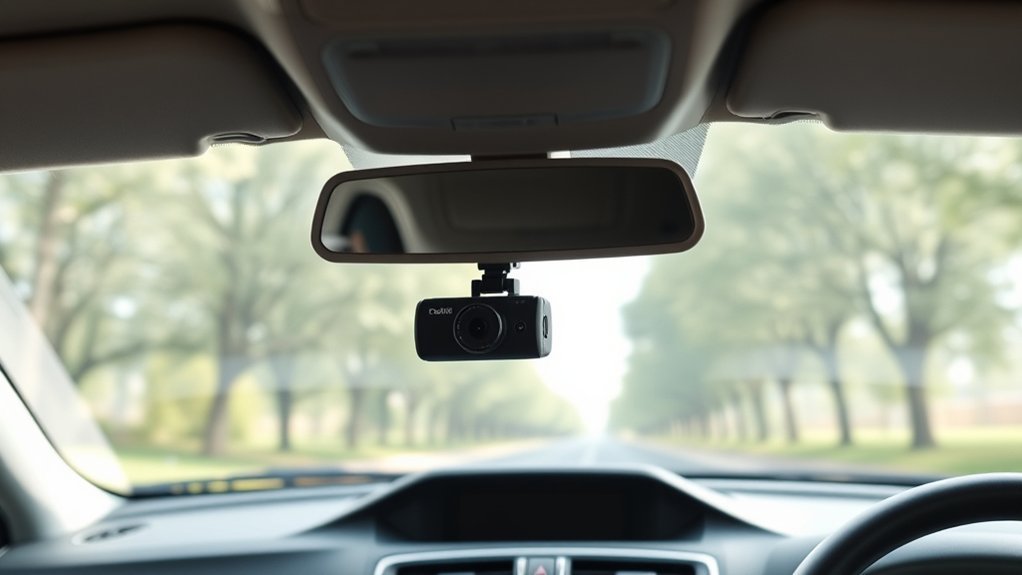
For the best visibility, position your dash cam just behind the rearview mirror. This placement guarantees a clear view of the road while avoiding obstructions that could interfere with your driving. Aim to capture about 60% road and 40% sky to enhance video quality. Make certain it doesn’t block any airbags or sensors, and regularly check the angle for peak performance. There are more important tips and techniques to take into account for effective dash cam use.
Why Proper Dash Cam Placement Is Essential for Safety
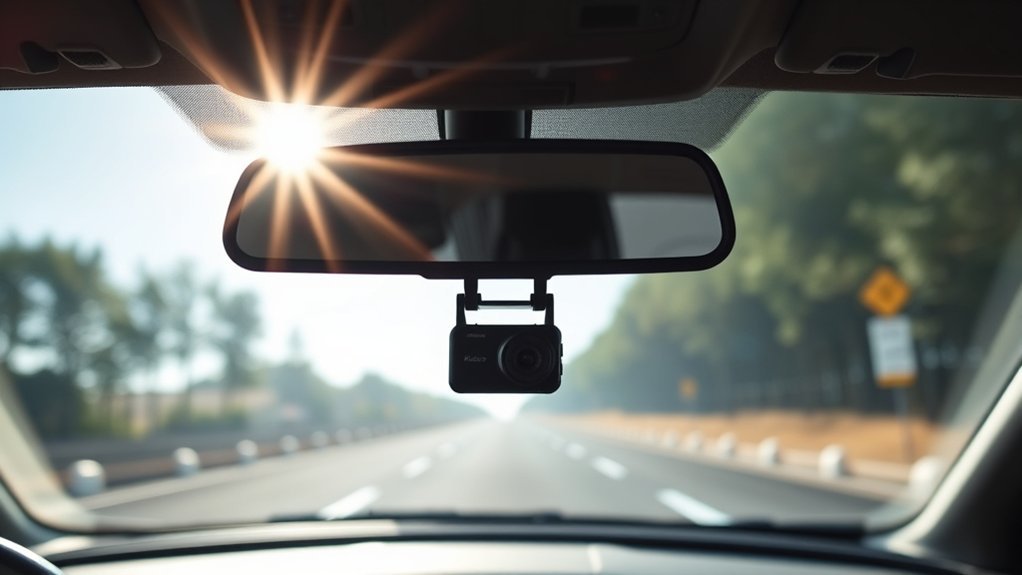
When you install a dash cam, ensuring its proper placement is essential for your safety and that of others on the road. The right dash cam placement helps secure a clear field of view, allowing you to capture important details like license plates and road events. This clarity can be critical for insurance claims and legal disputes.
Positioning your dash cam behind the rearview mirror strikes an ideal balance between visibility and safety, reducing obstructions that could lead to accidents. Incorrect placement, however, can create blind spots and shaky footage, compromising both safety and the camera’s effectiveness. Additionally, being aware of legal compliance is crucial; improper mounting might result in fines or penalties. By prioritizing dash cam placement, you not only enhance your driving experience but also protect yourself legally, ensuring you’re ready for any situation that arises on the road.
Step-by-Step Guide to Front Dash Cam Placement
Achieving the perfect placement for your front dash cam is key to maximizing its effectiveness. The best place to put your camera is just behind the rearview mirror for an unobstructed view. Follow these steps for ideal placement:
- Positioning: Mount the dash cam slightly below the rearview mirror. This helps achieve a clear view of about 60% road and 40% sky, essential for recording incidents effectively.
- Safety Check: Verify the camera doesn’t obstruct any vehicle features like airbags or sensors to maintain safety compliance.
- Testing: After installation, test the camera setup. Check the angle and visibility to confirm it captures critical events without blind spots.
Finally, manage the cables properly to avoid distractions while driving. With these steps, you’ll ensure your front dash cam is set up for maximum safety and clarity.
Optimal Rear Dash Cam Placement Techniques for Clear Footage
To capture clear footage of incidents behind your vehicle, placing your rear dash cam in the best position is crucial. The top center of the rear windshield is often the most suitable location, providing a wide view of following traffic while minimizing obstructions. Alternatively, you can mount the rear dash cam near the license plate, which not only offers clear footage but also helps keep it shielded from dirt and debris.
If you’re driving an SUV or van, consider a higher placement on the rear glass to capture a downward view of the road and surrounding vehicles. While interior mounting simplifies wiring and enhances safety, exterior options can reduce glare from rain or snow—just make sure you’re using a waterproof camera. Don’t forget to regularly test the camera angle and functionality after installation to maintain ideal recording coverage and clarity.
How to Place Dash Cams in Different Vehicle Types
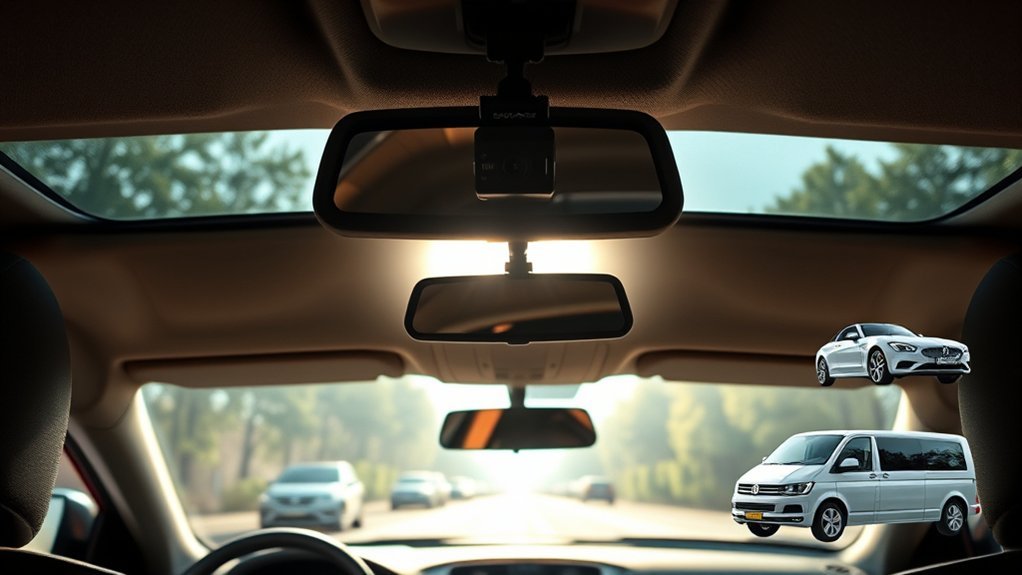
When it comes to placing dash cams in sedans and SUVs, you’ll want to take into account their unique shapes for ideal coverage. For sedans, mount the rear camera at the top center of the rear glass, while SUVs benefit from a higher position for a downward view. Vans and pickup trucks also have specific placement needs, ensuring you capture every angle for safe driving.
Sedans and SUVs Placement
Placing dash cams effectively in sedans and SUVs can greatly enhance your safety and security on the road. Here’s how to optimize your dash cam placement:
- Front Dash Cam: Position it just behind the rearview mirror on the front windshield for an unobstructed view, capturing about 60% road and 40% sky.
- Rear Camera in Sedans: Mount it at the top center of the rear glass to guarantee a clear view of traffic behind you.
- Rear Camera in SUVs: Place it higher on the back glass for a downward angle, capturing more of the road and surrounding vehicles.
Always verify your dash cam placement doesn’t obstruct sensors or important systems, and regularly test the camera angles for effective coverage.
Vans and Pickup Trucks
Understanding the ideal dash cam placement isn’t just limited to sedans and SUVs; vans and pickup trucks have their own unique requirements. For vans, mount the front dash cam high behind the rearview mirror to maximize visibility. Position the rear cam near the roof or center, which helps capture surrounding traffic effectively. In pickup trucks, consider an outside mounting position for the rear cam on the tailgate or bumper—it offers a clearer view of following vehicles and limits dirt exposure. Always make sure your dash cams don’t obstruct driver visibility or interfere with vehicle sensors and airbags. Regularly check the camera angles and functionality to maintain peak recording quality and coverage in both vehicle types.
What You Need to Know About Dash Cam Laws to Stay Compliant?
Before you install your dash cam, it’s essential to understand the laws in your state. Regulations can dictate where you can mount your camera and whether you need consent for audio recording. Staying informed not only helps you avoid fines but also keeps your footage legally valid when you need it most.
State-Specific Regulations Overview
While maneuvering through the often-confusing landscape of dash cam regulations, it’s essential to know that laws vary considerably from state to state. To guarantee compliance with local laws and avoid penalties, keep these points in mind:
- Mounting Restrictions: Some states, like Alabama, prohibit windshield mounts; use dashboards instead.
- Obstruction Rules: Dash cams shouldn’t obstruct a driver’s view, usually restricted to 40mm into the wiped area.
- Audio Recording Consent: In certain states, recording audio may require consent from all passengers, so check privacy laws.
Legal Mounting Restrictions Explained
When you install a dash cam, it’s crucial to be aware of the legal mounting restrictions that vary by state. Many states enforce legal requirements that prohibit any device from obstructing your view beyond 40mm into the wiped area of the windshield. In Alabama, for instance, it’s illegal to mount a dash cam on the windshield; you must place it on the dashboard instead. Additionally, some jurisdictions restrict suction cup mounts due to visibility concerns, which means you’ll need alternative solutions. Failing to comply with these traffic laws can lead to fines or citations for obstructing important driver visibility areas. Stay informed about your local regulations to guarantee your dash cam installation is both compliant and effective.
Common Dash Cam Installation Mistakes to Avoid
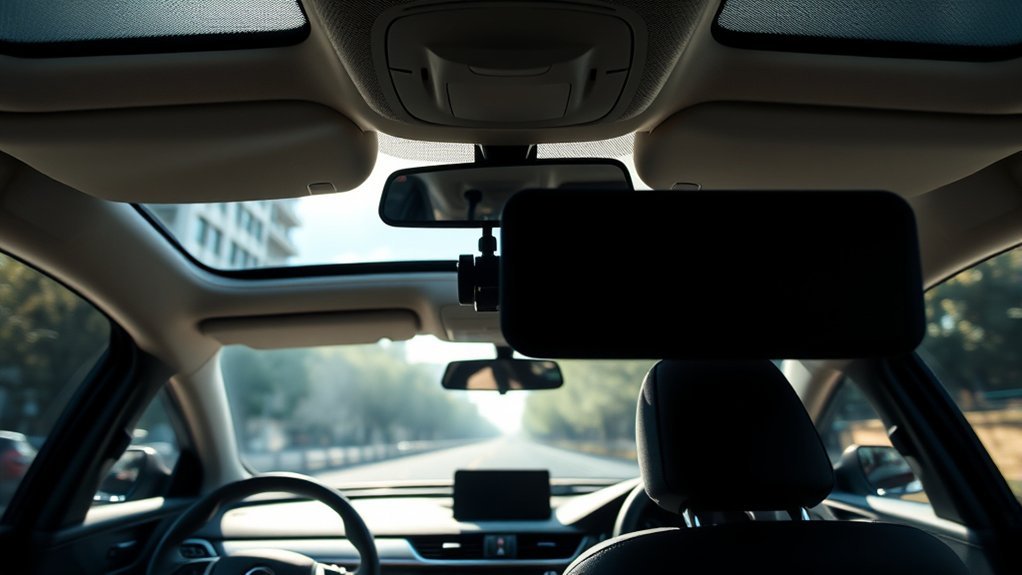
Installing a dash cam can be a straightforward process, but many make common mistakes that compromise safety and footage quality. To guarantee you’re set up for success, avoid these pitfalls:
Installing a dash cam is easy, but avoid common mistakes that can jeopardize safety and video quality.
- Mounting too low: This can obstruct your view of the road and create glare, leading to less clear video during critical moments.
- Incorrect angling: If your dash cam isn’t angled properly, you might miss important events, which could be essential for insurance claims.
- Poor cable management: This not only distracts you while driving but can also obstruct airbag deployment, posing serious safety risks in an accident.
How to Secure and Manage Dash Cam Wiring Effectively
Securing and managing your dash cam wiring effectively is crucial for both safety and functionality. Start by using adhesive cable clips or zip ties to secure the power cable along the edges of the windshield and roof lining. This keeps your setup neat and minimizes distractions while driving. Make certain to route the wires away from airbag deployment areas to prevent any interference during an accident. A clean installation can be achieved with hardwiring kits, which provide a continuous power supply without visible cables cluttering your dashcam placement. Regularly inspect your wiring to guarantee it remains securely mounted and free from obstructions. By keeping everything organized and hidden, you’ll not only enhance safety but also maintain a stylish interior. Remember, the less clutter, the more liberated your driving experience will feel.
Enhancing Dash Cam Performance Through Correct Placement
To enhance your dash cam’s performance, placing it correctly is important. The ideal spot is just behind the rearview mirror, as this positioning captures about 60% of the road and 40% of the sky, improving video quality for incident documentation. Here are three key tips to keep in mind for optimal placement:
- Mount Your Dash Cam clearly without blocking your view. Make sure it doesn’t obstruct your line of sight while driving.
- Regularly check and adjust the camera angle post-installation. Even slight misalignments can lead to missed critical footage.
- Keep the lens clean and free of obstructions. This prevents glare and guarantees your recordings are clear, which is essential for effective insurance claims.
Frequently Asked Questions About Dash Cam Installation?
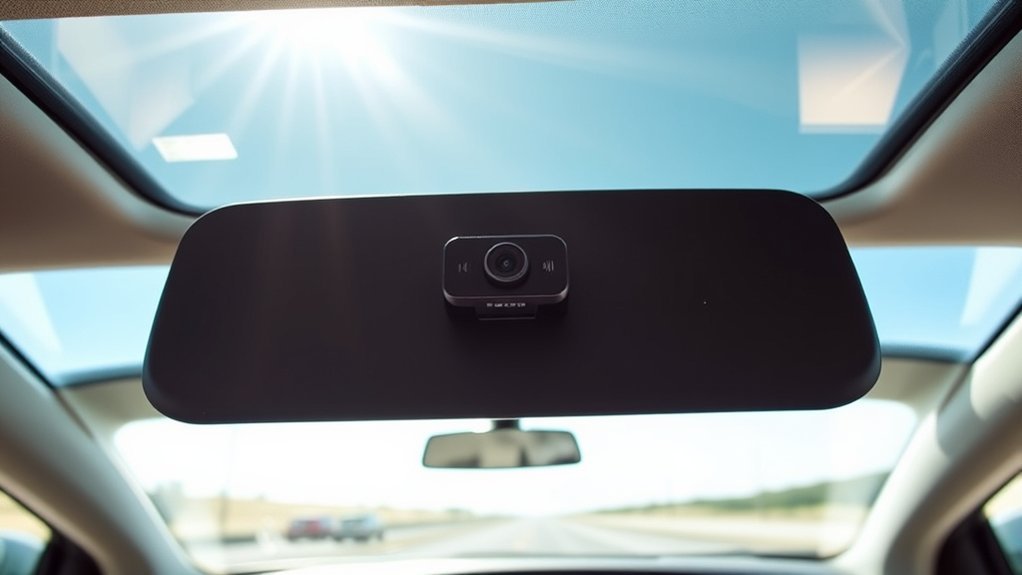
Have questions about dash cam installation? You’re not alone! The best dash cam placement is just behind your rearview mirror. This position allows for an unobstructed view of the road while capturing essential footage. Avoid mounting locations that block your view; doing so can lead to safety hazards or legal issues. When installing, angle the camera’s lens slightly upwards to achieve the best recording angles and a wider field of view.
It’s also wise to regularly check your camera’s alignment and functionality to guarantee clear recordings. Remember to research local laws regarding dash cam placement. Some jurisdictions have specific regulations that dictate where and how you can mount your dash cam. Ignoring these laws can result in fines or penalties. Adhering to these guidelines not only enhances your safety but also protects you legally. Enjoy the peace of mind that comes with proper dash cam installation!
Frequently Asked Questions
Where’s the Best Spot to Put a Dash Cam?
The best spot to put a dash cam is just behind the rearview mirror. This location guarantees ideal recording angles and dash cam visibility, capturing the road while keeping legal regulations in mind.
Should Dashcam Go on Driver Side or Passenger Side?
You should mount the dash cam on the driver side for ideal visibility. This guarantees better driver side visibility, avoids passenger side safety concerns, and addresses mounting angle considerations essential for capturing important road events effectively.
Will a Dashcam Drain My Battery?
A dash cam won’t drain your battery much, like a gentle breeze. With low power consumption and hardwiring options, you can enjoy peace of mind without compromising your battery lifespan. Just choose wisely!
Should Rear Dash Cam Be at Top or Bottom?
You should mount your rear camera at the top for ideal visibility. This positioning meets legal regulations, enhances visibility considerations, and captures a broader view of traffic, ensuring you’re well-protected while driving.
Conclusion
In wrapping up, placing your dash cam thoughtfully can turn a simple gadget into your trusty co-pilot on the road. By ensuring ideal visibility and compliance with the law, you’re not just protecting your ride; you’re safeguarding your peace of mind. Avoiding common pitfalls and managing those wires will keep things neat and tidy. So, gear up and enjoy the journey, knowing your dash cam is watching over you, ready to capture every twist and turn with clarity!




Leave a Reply