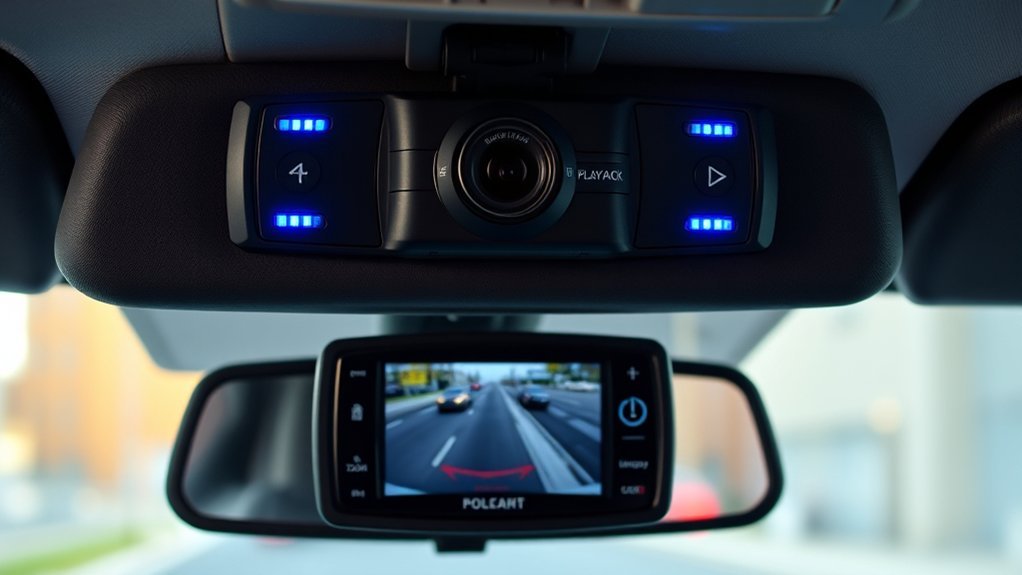
What Are Police Dash Cams and Their Purpose?
What’s in This Article
Choosing a police dash cam affects more than video quality. The right system can help your agency record traffic stops, protect evidence, review incidents, and support officer accountability.
Most police dash cams use high-definition video, event-based recording, secure storage, and tools like Global Positioning System (GPS) tracking. Some systems also include front, rear, and cabin cameras so your agency can document more than one angle.
Quick Answer
Police usually use purpose-built in-car camera systems, not basic consumer dash cams. Common features include 1080p or higher video, front and rear coverage, cabin recording, auto-activation, GPS tracking, secure evidence storage, and evidence management software. The best choice depends on your agency’s policy, budget, patrol workflow, and data security needs.
Key Takeaways
- Police dash cams help document traffic stops, crashes, arrests, pursuits, and other patrol events.
- Dual-lens and multi-camera systems give your agency more angles than a single front-facing camera.
- Auto-activation triggers help officers capture key events without reaching for the record button.
- Strong access controls, encryption, audit logs, and CJIS-aligned storage help protect video evidence.
- Your agency should check state law, retention rules, public-records rules, and vendor specs before buying.
What Police Dash Cams Do
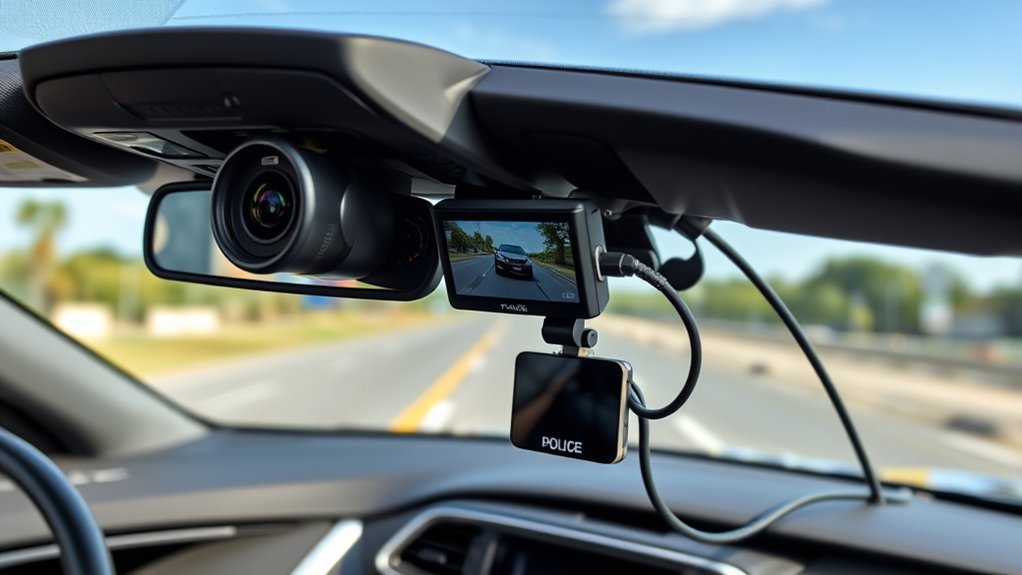
Police dash cams are in-car video systems built for law enforcement work. Officers use them to record traffic stops, emergency responses, vehicle searches, arrests, collisions, and public interactions near the patrol vehicle.
An in-car video system may record the road ahead, the rear seat, the cabin, or other vehicle angles. Many systems also pair with microphones, body-worn cameras, GPS logs, and digital evidence platforms.
The Office of Justice Programs notes that in-car cameras can support trial evidence, officer training, law enforcement accountability, and public credibility. That makes the camera part of a larger evidence workflow, not just a windshield device.
Police Dash Cams vs Body-Worn Cameras
Police dash cams and body-worn cameras solve different problems. A dash cam records from the patrol vehicle, while a body-worn camera moves with the officer after they leave the vehicle.
That difference matters during traffic stops, foot pursuits, searches, and field interviews. Your agency may need both tools if it wants vehicle-level context and close-up officer interaction footage.
What Features Matter Most in Modern Police Dash Cams?
Modern police dash cams focus on clear video, fast activation, secure evidence handling, and easy review. Your agency should compare the full system, not only the camera lens.
Key features often include:
- High-definition video: 1080p or higher video helps capture plates, faces, road details, and officer actions.
- Low-light recording: Infrared or low-light sensors help during night stops and dim patrol areas.
- Multiple camera views: Front, rear, cabin, and side views can reduce blind spots.
- Auto-activation: The system can start recording when lights, sirens, speed, impact, or other triggers occur.
- Secure storage: Encryption, access controls, and audit logs help protect footage from misuse.
- Evidence software: A linked platform helps officers upload, tag, search, share, and retain footage.
High-Definition Video Quality
Video quality matters because police footage often needs close review. A clear camera can help your agency review license plates, lane position, officer location, suspect movement, and road conditions.
Many current police in-car systems use 1080p full high-definition video. Some vendors offer higher resolution, but resolution alone does not decide quality. Lens angle, night performance, frame rate, audio quality, and storage settings also matter.
Advanced Activation Triggers
Activation triggers help officers record key events without losing focus. A system may start recording when the patrol vehicle lights activate, the siren turns on, the vehicle detects impact, or the officer presses a remote control.
Some systems also use location rules, speed thresholds, or sensor data. Your agency should test these triggers before rollout because false triggers and missed triggers can affect evidence review.
How Auto-Activation Triggers Make Recording Easier for Officers
Auto-activation triggers reduce the need for manual recording during tense moments. They help officers keep their attention on safety, communication, and control while the system captures footage.
Auto-activation can support better documentation, but your agency still needs a clear recording policy and officer training.
- Start recording during key events: Cameras can activate during collisions, light-bar use, siren use, or other configured events.
- Match patrol workflows: Your agency can set triggers based on the situations officers face most often.
- Support location-based awareness: Some systems can use GPS or geofencing to help trigger recordings in selected areas.
LensLock says its Hawk 6 Mobile Data Video Recorder (MDVR) uses a built-in 6-axis inertia sensor with an auto-activation trigger to record vehicle collision events. That kind of trigger can help capture evidence even when officers cannot press record.
Why Dual-Lens Systems Help Law Enforcement Recordings
Dual-lens systems help your agency document events from more than one angle. A front-facing camera may show the road and stopped vehicle, while a cabin or rear-seat camera may show officer and detainee interactions.
Comprehensive Incident Coverage
Single-view footage can miss important details. Dual-lens and multi-camera systems give reviewers more context before, during, and after an incident.
- Front-road coverage: The camera records traffic, vehicle movement, and road conditions.
- Interior coverage: A cabin or rear-seat camera records detainee transport and in-car interaction.
- Low-light support: Infrared features can help the rear camera record in dark patrol conditions.
Enhanced Evidence Collection
Multiple camera views can help investigators compare what happened inside and outside the vehicle. They can also help prosecutors, supervisors, and defense teams review the incident with more context.
LensLock says its Hawk 6 rear-seat camera uses infrared technology for dark conditions and includes a sensitive microphone for audio evidence. Your agency should confirm audio rules before use because consent and recording laws can vary by location.
Improved Officer Accountability
Better coverage can support officer accountability and public trust. It can also help protect officers from false claims when the footage shows what happened.
- More complete context: Multiple views can show the traffic stop, officer approach, and detainee area.
- Less manual control: Auto-activation can reduce missed recordings during stressful moments.
- Better review quality: Clear video and audio help supervisors assess policy, training, and safety issues.
How GPS and Geofencing Enhance Fleet Management
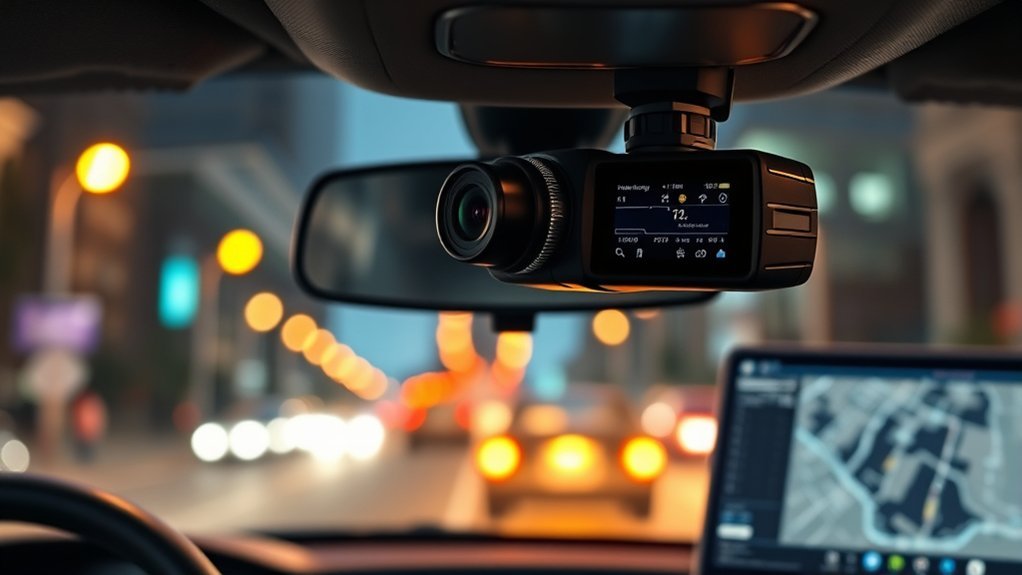
GPS tracking helps your agency see where patrol vehicles are during daily operations. Supervisors can use location data to review response patterns, support dispatch decisions, and analyze route history.
| Feature | Benefit |
|---|---|
| Real-Time Tracking | Helps supervisors monitor vehicle location |
| Geofencing | Can alert teams when vehicles enter or leave selected zones |
| Route Review | Supports after-action review and patrol planning |
| Resource Allocation | Helps agencies place units where they are needed |
| Performance Review | Adds context to response times and vehicle activity |
Geofencing lets your agency set virtual boundaries around certain areas. The system can then alert staff or trigger workflows when a patrol vehicle enters or exits a selected zone.
How Data Security Protects Your Police Dash Cam Footage
Dash cam footage can contain sensitive criminal justice information, personal data, addresses, faces, plates, medical details, and private conversations. Your agency needs a secure workflow from capture to deletion.
The FBI Criminal Justice Information Services (CJIS) Security Policy says agencies should protect criminal justice information through its full lifecycle, including creation, transmission, storage, viewing, sharing, and destruction. Strong camera hardware helps, but policy and access control matter just as much.
- Encryption: The system should protect footage during upload, transfer, and storage.
- Access control: Only approved users should view, export, edit, or share footage.
- Audit logs: The platform should record who accessed footage and what action they took.
- Integrity checks: Hashing or verification tools can help show whether a file changed after capture.
Warning: Do not rely on the camera alone to protect evidence, because weak passwords, loose access rules, and poor retention policies can still create risk.
Your agency should ask vendors about CJIS alignment, encryption, user roles, audit trails, data export, retention controls, and breach response. These details help protect the footage and the people shown in it.
How Evidence Management Integration Helps Dash Cam Workflows
Evidence management integration helps your agency move footage from the patrol vehicle into a searchable review system. That can save time when officers, supervisors, prosecutors, or records staff need a specific clip.
A connected platform can help users tag files, search events, link body-worn camera footage, manage retention dates, and control sharing. Wireless offloading through secure WiFi or cellular service can also reduce the need to handle memory cards by hand.
LensLock says its Hawk 6 system supports wireless evidence offloading over secure WiFi or cellular connections. It also states that agencies can access 24/7 support from professionals who work with law enforcement technology and evidence workflows.
MDVR vs. MDP6: Which In-Car Camera Setup Fits Your Agency?
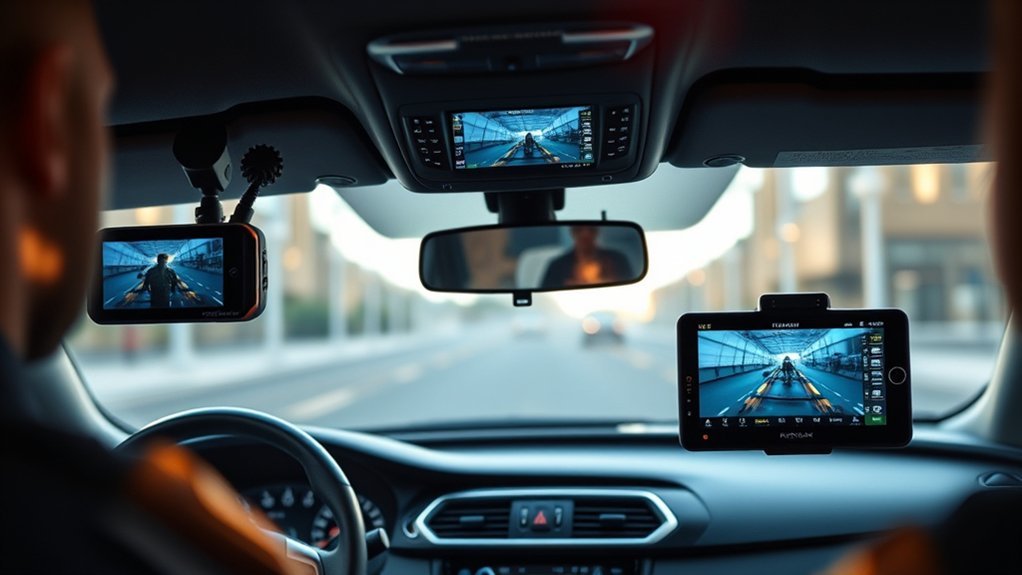
The terms MDVR and MDP6 do not describe the same type of product. MDVR usually means Mobile Data Video Recorder, which is a recorder platform used in many vehicle camera systems. MDP6 is a specific portable police dash cam system sold by Martel Electronics.
Note: Vendor specs and prices can change, so your agency should confirm current details before buying.
| Factor | MDVR-Style In-Car System | Martel MDP6 Portable System |
|---|---|---|
| Best fit | Agencies that need a fixed multi-camera patrol vehicle setup | Agencies that need a portable dash cam and field evidence camera |
| Camera coverage | Can support front, rear, cabin, or other vehicle camera views, depending on model | Uses a portable HD camera for in-car and outside-the-car recording |
| Activation | May support sensor, collision, light, siren, or other event triggers | Includes remote controls and light-bar activation cable, according to Martel |
| Storage | Often uses onboard DVR, hard drive, solid-state storage, or platform upload | Records to removable Micro SD storage, according to Martel |
| Workflow | Better for larger evidence programs and fleet-level integrations | Better for smaller agencies that want a lower-complexity setup |
Choose an MDVR-style system if your agency needs fixed installation, multi-camera coverage, stronger fleet integration, and automated evidence offload. Choose the MDP6 if your agency needs a portable 1080P HD camera package with officer audio, Micro SD recording, and no required cloud storage fee.
Privacy, Access, and Retention Policies to Review
Police dash cam footage can affect privacy, public records, criminal cases, and internal investigations. Your agency should not buy a system until it reviews local law, state law, union rules, prosecutor needs, and department policy.
Key policy areas include who can view footage, when officers must record, how long files stay in storage, when redaction must occur, and how your agency handles public-records requests. Clear policy helps officers use the system in a fair and consistent way.
Key Factors to Consider When Choosing a Police Dash Cam
When you choose a police dash cam, start with your agency’s real patrol needs. A small department may need a practical system with simple storage, while a larger agency may need fleet-wide integration and advanced evidence controls.
Review these factors before you request quotes:
- Video quality: Choose 1080p or higher when your agency needs clear event review.
- Camera layout: Decide whether you need front-only, front-and-rear, cabin, side, or multi-view coverage.
- Night performance: Test low-light and infrared recording in real patrol conditions.
- Audio capture: Confirm microphone range, clarity, consent rules, and officer controls.
- Activation triggers: Check light-bar, siren, collision, speed, GPS, and manual trigger options.
- Storage method: Compare Micro SD, hard drive, solid-state drive, cloud upload, and hybrid systems.
- Security controls: Ask about encryption, user roles, audit logs, retention tools, and CJIS alignment.
- Integration: Confirm links with body-worn cameras, records systems, dispatch, and evidence software.
- Support: Review installation help, training, warranty, and after-hours technical support.
Your agency should also test the system in a patrol vehicle before full deployment. A short field test can reveal problems with camera angle, upload speed, audio quality, officer workflow, and storage limits.
Frequently Asked Questions
How can you tell if a vehicle has a police dash cam?
You may not always see the dash cam from outside the vehicle. Marked police vehicles often have visible emergency lights, official decals, antennas, and in-car equipment, but many camera systems sit near the windshield or inside the cabin.
What type of camera do police use in patrol cars?
Police use purpose-built in-car video systems made for patrol work. These systems often include a front camera, rear-seat camera, officer microphone, recorder, GPS tools, and evidence management software.
How good are police dash cams?
Police dash cams can provide strong evidence when the camera angle, lighting, audio, storage, and activation settings work well. They still have limits, so supervisors should review footage with witness statements, reports, body-worn camera video, and other evidence.
Are police dash cams always recording?
Not always. Some systems record continuously during a shift, some use a pre-event buffer, and some activate during selected events. Department policy and system settings decide how recording works.
Can police dash cam footage be used in court?
Dash cam footage can support court cases when your agency preserves it correctly and follows evidence rules. Chain of custody, file integrity, access logs, retention rules, and local court standards all matter.
Legal and Safety Disclaimer: This article is for informational purposes only and does not constitute legal, procurement, or public safety advice. Always consult your agency counsel, records officer, prosecutor, and qualified technology staff before making decisions based on this information.
Conclusion
The best police dash cam is the system that records clear footage, protects evidence, and fits your agency’s patrol workflow. Look beyond video resolution and compare activation triggers, camera coverage, storage, security, policy controls, and support.
Before you buy, test the system in a real patrol vehicle and confirm your legal, privacy, and evidence rules. A careful review now can help your agency build a safer and more reliable video evidence program.
References
- COPS In-Car Camera Grant Program — Office of Justice Programs, U.S. Department of Justice
- Criminal Justice Information Services (CJIS) Security Policy, Version 6.0 — Federal Bureau of Investigation, 2024
- Police In-Car Camera System — LensLock
- Police Dash Cam System MDP6 — Martel Electronics
- Body-Worn Camera Frequently Asked Questions — Bureau of Justice Assistance