

Check tire pressure when the tires are cold—ideally after the vehicle has been parked for at least three hours or driven less than 1 mile (1.6 km). That “cold” baseline matches the PSI listed on your door sticker, and it avoids higher readings from heat after driving.
Key takeaways
- Use the vehicle door sticker/owner’s manual PSI (not the tire sidewall max).
- Temperature swings can shift pressure about 1–2 psi per 10°F (≈6°C)—check more often during seasonal changes.
- Don’t bleed air from hot tires; if you must top up while warm, recheck when cold.
- TPMS helps, but a gauge check (monthly and before trips) is still the most reliable routine.
Quick Answer: When to Check Tire Pressure (Cold Tires)
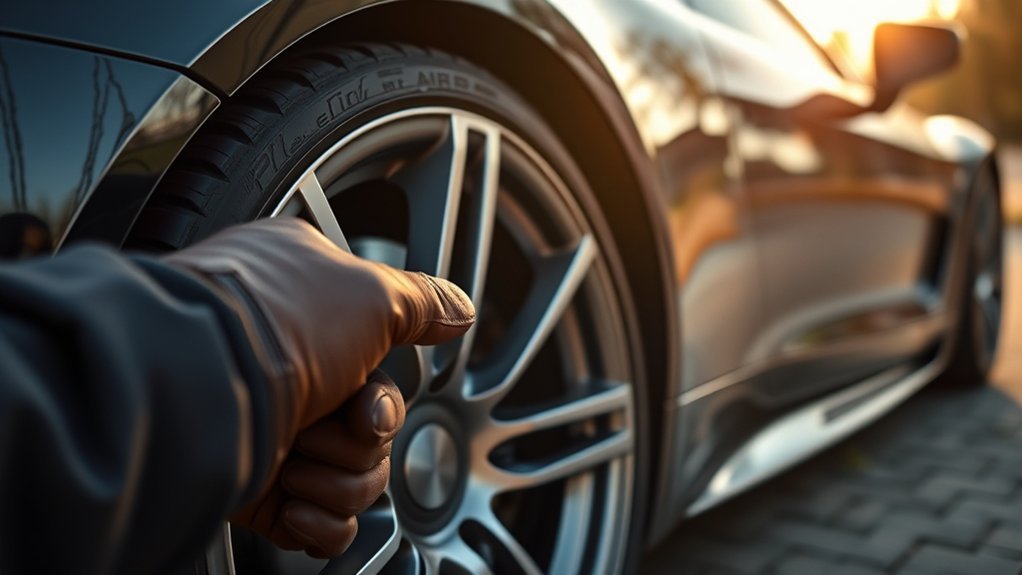
For the most accurate reading, check tire pressure first thing in the morning or after the car has sat for 3+ hours. If you’ve driven more than about a mile, the tires are no longer “cold,” and the pressure will read higher because the tire warms up in use. Set your tires to the manufacturer’s recommended cold PSI on the door sticker (or in the owner’s manual).
Why “Cold” Measurements Matter for Tire Pressure
Manufacturers list tire pressure as a cold number because it’s consistent. As tires warm up from flexing and road friction, the air inside heats and the pressure increases—so a “hot” reading can hide underinflation.
Temperature and heat effects
As a practical rule, pressure changes about 1–2 psi for every 10°F (about 6°C) change in temperature. Cold snaps can drop PSI enough to trigger a warning light, even without a puncture. Tires can also lose about 1 psi per month in normal use, so PSI can drift over time.
Best Times to Check Tire Pressure: Mornings, Before Trips, and Busy-Day Options
Morning (before driving) is best, especially during seasonal temperature swings. Also check before long trips, towing, or carrying heavy loads. If you can’t check at home, try to use a nearby air station and minimize driving beforehand.
If you have to add air while the tires are warm, don’t bleed air to “match the sticker.” Add air if needed and recheck when the tires are cold. Bridgestone, for example, notes that if you must adjust while tires are hot, you can set pressure about 4 psi above the recommended cold PSI, then recheck when cold.
Cold-Tire Check: A 3–5 Minute Step-by-Step Routine
Park on level ground and confirm the tires are cold (parked ≥3 hours or driven <1 mile). Then:
- Find the target PSI on the driver’s door sticker (front/rear may differ).
- Measure each tire with an accurate gauge; record the PSI.
- Inflate or release air to reach the door-sticker PSI.
- Recheck after each adjustment, then reinstall valve caps.
How to Interpret PSI Readings and Set the Correct Pressure
Low vs. the door-sticker PSI means underinflation (more heat buildup and faster shoulder wear). High vs. the door-sticker PSI can reduce ride comfort and traction. Always aim for the vehicle sticker number—do not inflate to the maximum PSI printed on the tire sidewall unless a vehicle manufacturer specifically instructs it.
[Products Worth Considering]

PROCESS LEVEL ACCURACY: Each ETENWOLF’s digital tire pressure gauge is calibrated manually to ANSI B40.7 Grade 2A(plus-minus 1 PSI).Presta valve adapter not included, if used for bicycles, it must be purchased separately
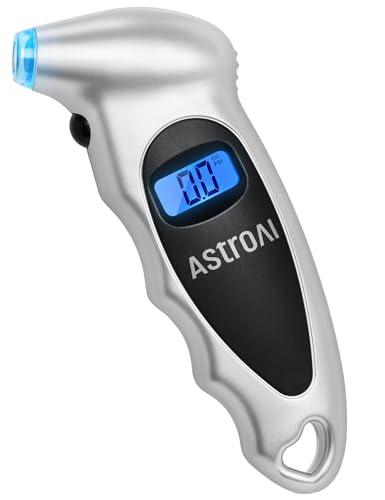
EXPERT-GRADE CALIBRATION: Each AstroAI Tire Pressure Gauge is calibrated with professional-grade tools, ensuring quick and accurate measurement results within plus-minus 1PSI. Stay prepared for any roadside emergency and travel with peace of mind.

Digital Tire Pressure Gauge 2 Pack, Industrial Tire Gauge 3-200 PSI, Calibrated to ANSI B40.7 Grade 2A(plus-minus 0.5%), Air Pressure Gauge with Replaceable AAA Batteries
Use TPMS and a Portable Gauge: When to Trust Sensors and When to Double-Check
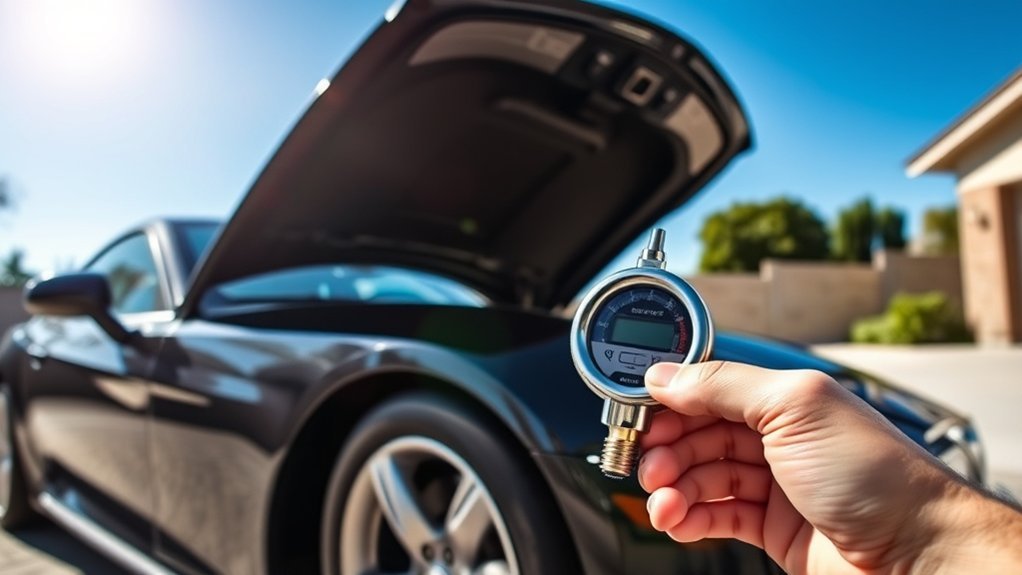
TPMS is an alert, not a precise gauge. In many vehicles, the warning light may not come on until a tire is very low (often around 25% below the sticker pressure). Use TPMS to catch problems early—but verify the exact PSI with a gauge.
[Products Worth Considering]

HIGH ACCURACY: Every ETENWOLF's pencil tire gauge is calibrated to ANSI B40.1 Grade B, it is accurate to 2% of span in the middle 50% of range and 3% of span in the lower and upper 25% of range. Each of ETENWOLF pencil tire pressure gauge is manually calibrated and has its unique calibration number printed on the pencil

RUGGED DESIGN: The stainless steel components prevent rust and corrosion while the precision-crafted nozzle seamlessly seals onto the valve stems for highly accurate readings (±2% span). We also provide 4 valve stem caps for convenient replacement.
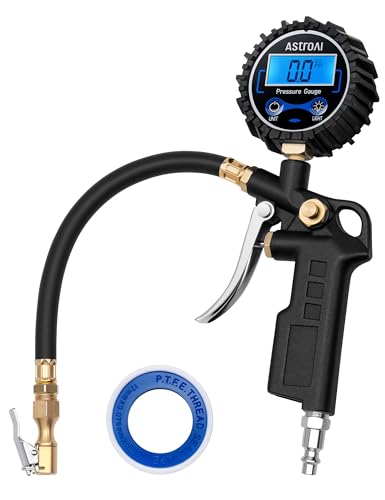
COMPATIBLE WITH both ¼” and ½” NPT air compressors outputs. COMPATIBLE WITH Standard Schrader Valves.
Troubleshooting Pressure Surprises: Leaks, Seasonal Drops, and When to See a Pro
If a tire keeps losing air, don’t blame weather forever. Inspect for nails/screws, cracked valve stems, or rim leaks, and monitor day to day. As a rule of thumb, if a tire loses more than about 2 psi per month, have it inspected by a tire professional.
| Symptom | What to do |
|---|---|
| Rapid loss | Pull over safely, use a spare or roadside assistance, and inspect for a puncture |
| Slow leak | Check daily for a few days; schedule a repair if it keeps dropping |
| Seasonal drop | Reinflate to the door-sticker PSI after big temperature changes |
| TPMS light | Verify with a gauge, then inflate/repair as needed |
[Products Worth Considering]

[PROFESSIONAL QUALITY ] – AUTOWN Tire Repair Kits are made of refined high-quality steel, AUTOWN upgraded tire patch kits comply with exacting standards of audit, can repair the toughest tires on the market.

The Slime 11-piece Deluxe Tire Plug Kit includes everything you need to plug up those nasty tire punctures

Professional Quality: The AUTOWN tire repair kits are made of refined high-quality steel and upgraded to comply with exacting standards of audit. This ensures that the kit is of professional quality and can repair even the toughest tires on the market.
Frequently Asked Questions
When is a tire considered “cold”?
A tire is “cold” when it hasn’t been driven for at least three hours, or it has been driven only a very short distance (about 1 mile / 1.6 km) at moderate speed.
Should I let air out of a hot tire if the PSI looks high?
Usually, no. Heat from driving raises PSI, and bleeding air from a hot tire can leave you underinflated once it cools. If you had to adjust while warm, recheck again when the tires are cold.
Why does my TPMS light come on in the morning and turn off later?
Cold air lowers PSI overnight. After you drive, the tire warms up and the pressure rises, which can turn the light off—even though the tire may still be low when cold. Confirm with a gauge and inflate to the door-sticker PSI.
Where do I find the correct PSI?
Use the tire-and-loading sticker on the driver’s door jamb (or the owner’s manual). Don’t use the tire sidewall maximum as your target.
Conclusion
Make tire pressure checks a quick monthly habit, and check more often when temperatures swing. Measure when the tires are cold, set PSI to the vehicle placard, and use TPMS as a backup—your gauge is what you trust most. For official tire safety basics, see NHTSA tire safety tips.







Leave a Reply to Tire Inflator Won't Shut Off At Set Pressure Cancel reply