
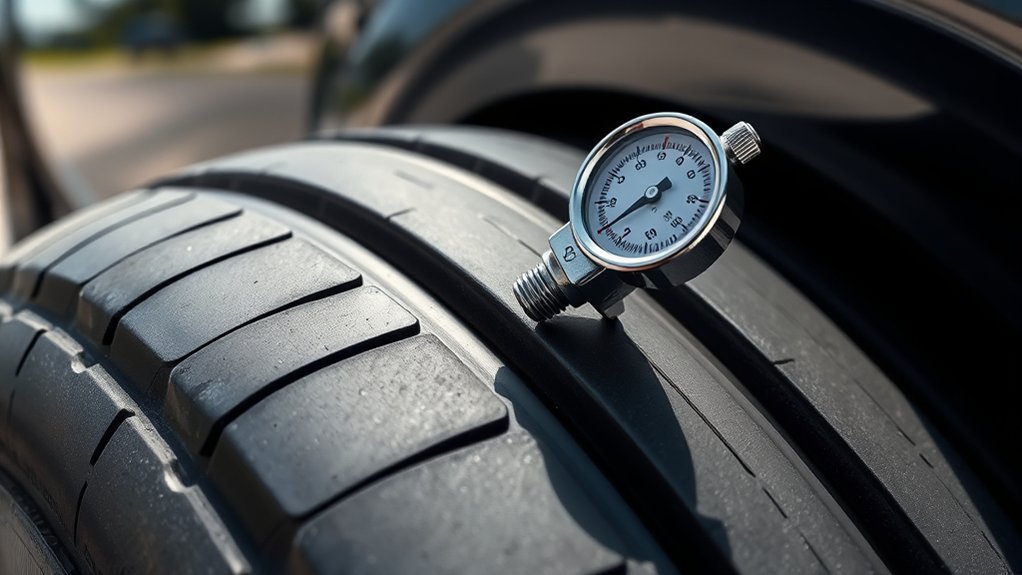
PSI (pounds per square inch) is the air pressure inside your tires, and you should check it when tires are cold with a reliable gauge. Keeping PSI at the manufacturer’s recommended level (found on the door sticker or manual) improves safety, handling, fuel economy, and tread life. Underinflation and overinflation both cause problems, so measure and adjust your tires regularly.
Quick: How to Check and Set Your Tire PSI
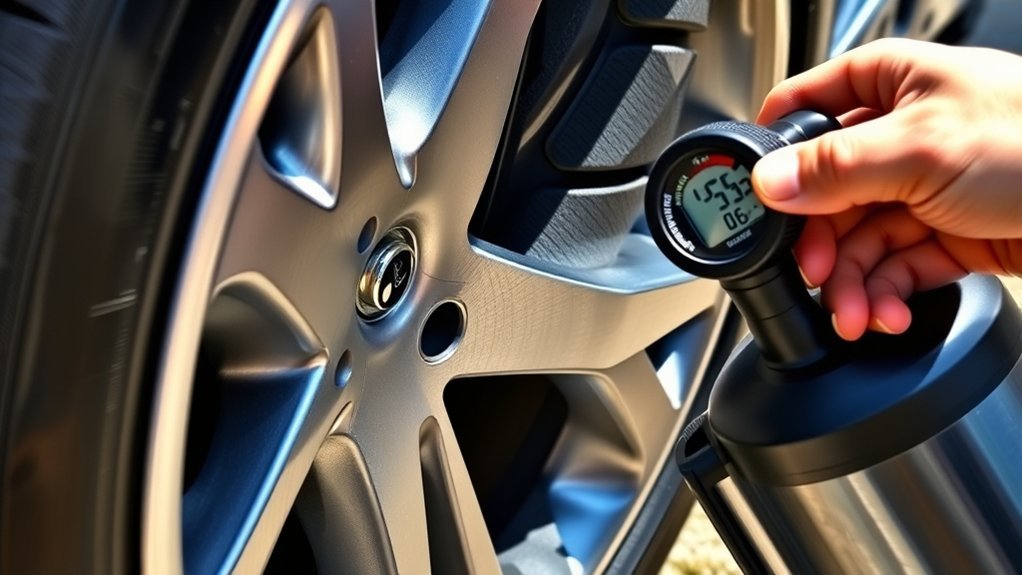
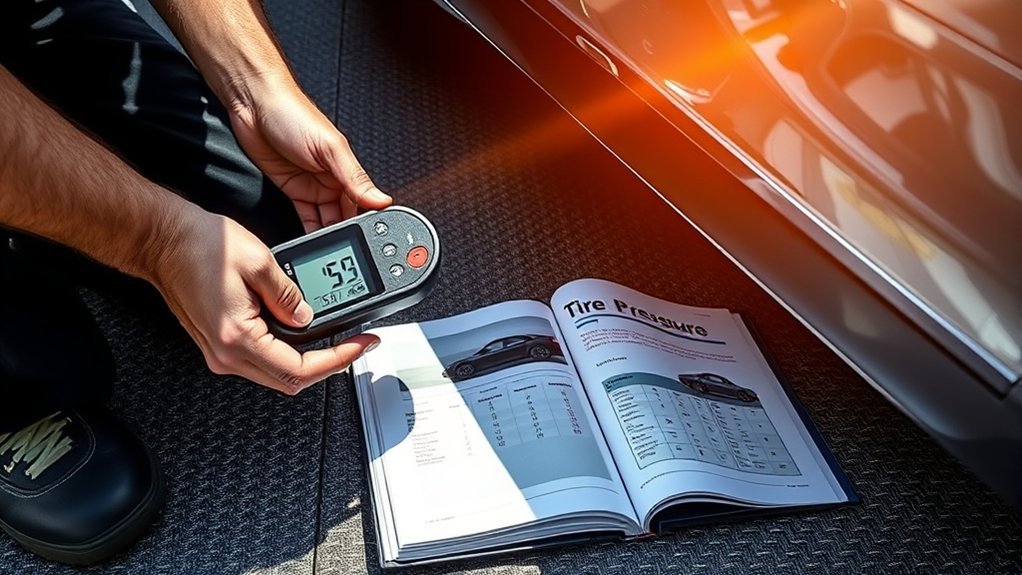
Start by checking your tires when they’re cold (parked 3+ hours, or driven less than 1 mile). Use a reliable tire pressure gauge to measure each tire, compare the reading to the recommended PSI on your door-jamb placard, then add or release air until it matches.
- Remove the valve cap, press the gauge straight onto the valve stem, and read the PSI.
- Add air with a compressor in short bursts, then recheck with the gauge.
- Let air out by gently pressing the valve pin, then recheck until you reach spec.
- Replace valve caps to help keep dirt and moisture out.
Most vehicles do well with a monthly pressure check and a quick check before long trips. If you notice one tire repeatedly losing air, have it inspected for a puncture or a leaking valve stem.
[Products Worth Considering]

Advanced accuracy: Professionally calibrated tire pressure gauges for cars. Accurately measures from 0-100 PSI with a resolution of +/-1 PSI.
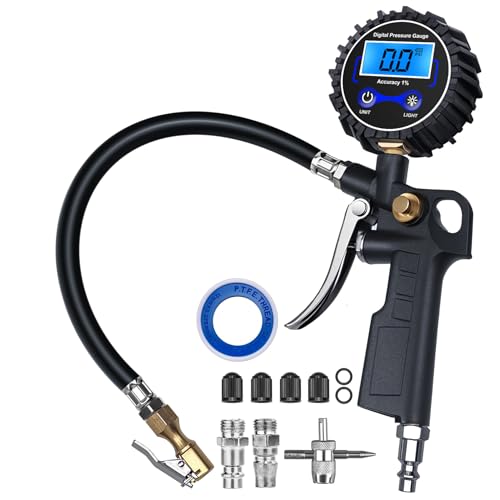
【Accuracy】The digital tire pressure gauge has 4 different measurement units: PSI, KPA, BAR, KG/CM². It reads within 1% of the exact tire pressure, with a resolution of 0.1 PSI and the measuring range is 3-250 PSI (0.2-17.2 Bar; 20-1724 Kpa; 0.2-17.5 kg/cm^2)
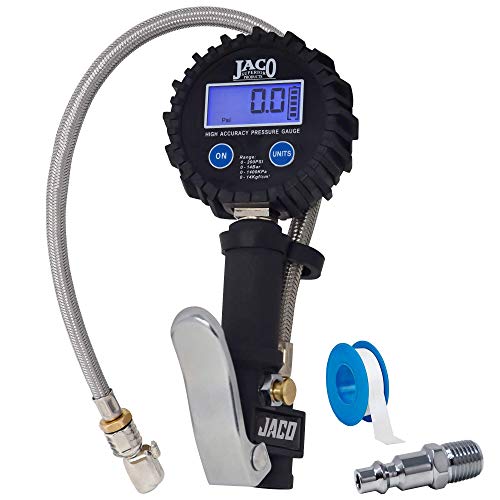
ANSI 1A ACCURACY: Performance tested & calibrated accurate to ±1% full scale with 0.5 PSI resolution for precise tire inflation. Bright 200 PSI LCD display & auto-off feature conserve battery life.
Key takeaways
- Use the door-jamb placard (not the tire sidewall) to find your recommended PSI.
- Measure pressure when tires are cold for the most accurate reading.
- Small PSI drops can affect fuel economy and wear—check monthly and before road trips.
- TPMS is a warning system, not a replacement for gauge checks—still verify pressure yourself.
What PSI Means for Your Tires
PSI—pounds per square inch—tells you how much air pressure is inside each tire. Keeping it within your vehicle’s recommended cold PSI helps the tires support the car and keeps grip, comfort, and handling steady.
The right PSI varies by vehicle and can be different for the front and rear tires. Check the tire information placard on the driver’s door jamb (or your owner’s manual) for the correct number. The PSI molded into the tire sidewall is the tire’s maximum pressure rating—not the number you should automatically inflate to.
Why Correct Tire PSI Matters for Safety, Handling, and Fuel Economy
Tire pressure affects how your car rides, turns, and stops. Underinflated tires flex more, build heat, and wear faster. Overinflated tires can lose grip and feel harsh.
Correct pressure can also help at the pump. FuelEconomy.gov (DOE/EPA) says underinflated tires can lower gas mileage by about 0.2% for every 1 PSI drop in the average pressure of all four tires. Keeping tires at the right PSI can improve mileage on average (up to a few percent in some cases). If you carry extra load, check your manual for any load guidance.
| Benefit | Effect | Action |
|---|---|---|
| Safety | More predictable braking and stability | Check monthly and before trips |
| Handling | Better grip and steering feel | Inflate to placard PSI |
| Economy | Lower rolling resistance | Recheck after temperature swings |
Convert PSI to BAR/kPa and Find Your Car’s Recommended Pressure
If your gauge or inflator uses different units, these conversions help:
- PSI to bar: bar = PSI ÷ 14.5038 (example: 35 PSI ≈ 2.41 bar)
- PSI to kPa: kPa = PSI × 6.8948 (example: 35 PSI ≈ 241 kPa)
To find your recommended tire pressure, check your owner’s manual or the placard on the driver’s door jamb. That placard may list different values for front and rear tires. Don’t confuse it with the tire sidewall’s maximum pressure rating.
For official safety guidance on tire pressure and placards, see NHTSA tire safety information.
[Products Worth Considering]

Heavy duty construction and rugged design for long lasting use

MILTON: Pencil Gauges made with machined parts, unlike our competition! Made in the USA.

[3-IN-1 Tire Inflator, Easy to Use] ENDARK air inflator with gauge has 3 functions of deflation, inflation and tire pressure check. When the air compressor is connected, press the valve to inflate the tire, press the button to deflate, and connect the tire to display the current tire pressure, which is very easy and smooth to use. Compatible with ¼”NPT air compressors outputs, really convenient air compressor tire inflator. NOTE that inflation needs to be used with an air compressor
Common Tire PSI Mistakes, When Pressure Is Dangerous, and Quick Fixes
Mistake #1: Using the tire sidewall number. The sidewall shows a maximum pressure rating. Use the vehicle placard or manual for the recommended cold PSI.
Mistake #2: Checking right after driving. Driving warms the tire and temporarily raises pressure. For the most accurate reading, check when the car has been parked for at least 3 hours. If you must add air when the tires are warm, inflate to the placard’s recommended cold PSI and recheck the next morning.
Mistake #3: Ignoring temperature changes. A rough rule of thumb is about 1 PSI change for every 10°F change in ambient temperature. When the weather shifts quickly, recheck your tires.
Quick fixes: If pressure is low, add air in short bursts and recheck. If a tire keeps losing pressure, have it inspected for a slow leak. Also check your spare tire periodically—many spares lose pressure over time too.
[Products Worth Considering]
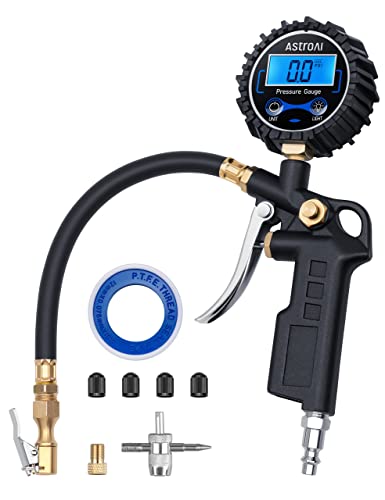
COMPATIBLE WITH both ¼” and ½” NPT air compressors outputs. COMPATIBLE WITH Standard Schrader Valves.
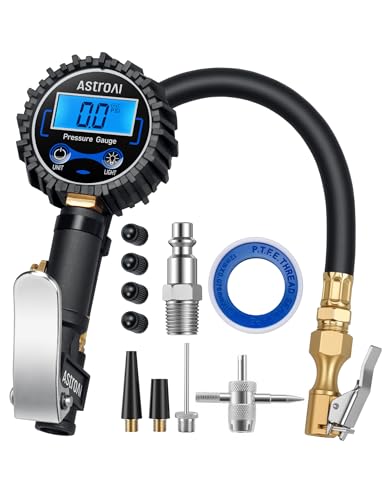
ADVANCED ACCURACY: Professionally calibrated to always return an accurate reading within 1% of the exact pressure of your tire. Accurately measures FOUR DIFFERENT UNITS in a range from 3-250 PSI (0.2-17.2 Bar; 0.21-1724 Kpa; 0.2-17.5 kg/cm^2). Stocking Stuffers for Men

【Accurate Digital Tire Gauge】The digital pressure gauge always returns a stable reading within 1% of the exact pressure of your tire by incredible 0.1 display resolution. No more guessing!
Frequently Asked Questions
What Should My PSI in My Tires Be?
Use the recommended cold PSI listed on your vehicle’s door-jamb placard (or in the owner’s manual). Many passenger vehicles are in the low-30s PSI, but the placard is the number that matters for your specific model.
What Does 35 PSI Mean?
It means the air inside the tire is exerting 35 pounds of pressure per square inch of tire area. Whether 35 PSI is “right” depends on your vehicle’s recommended cold PSI.
What Does PSI Mean on a Tire?
On a gauge, PSI is the unit you’re measuring. On the tire sidewall, you’ll often see a “Max Press” value—this is the tire’s maximum pressure rating, not your vehicle’s recommended setting.
Is 40 PSI Good Tire Pressure?
For many passenger cars, 40 PSI is higher than the recommended cold PSI and can make the ride harsher and wear the tread unevenly. Always follow the door-jamb placard unless your manual specifies a different pressure for your conditions.
Conclusion
Keeping your tires at the right PSI is a small habit that pays off in safety and savings. Check pressures when the tires are cold, follow your vehicle placard, and recheck monthly (and before long trips). Proper inflation smooths your ride, sharpens handling, and can improve fuel economy—while under- or overinflation quietly invites faster wear and bigger problems.
For fuel-economy details on tire pressure, see FuelEconomy.gov’s tire inflation guidance.







Leave a Reply