
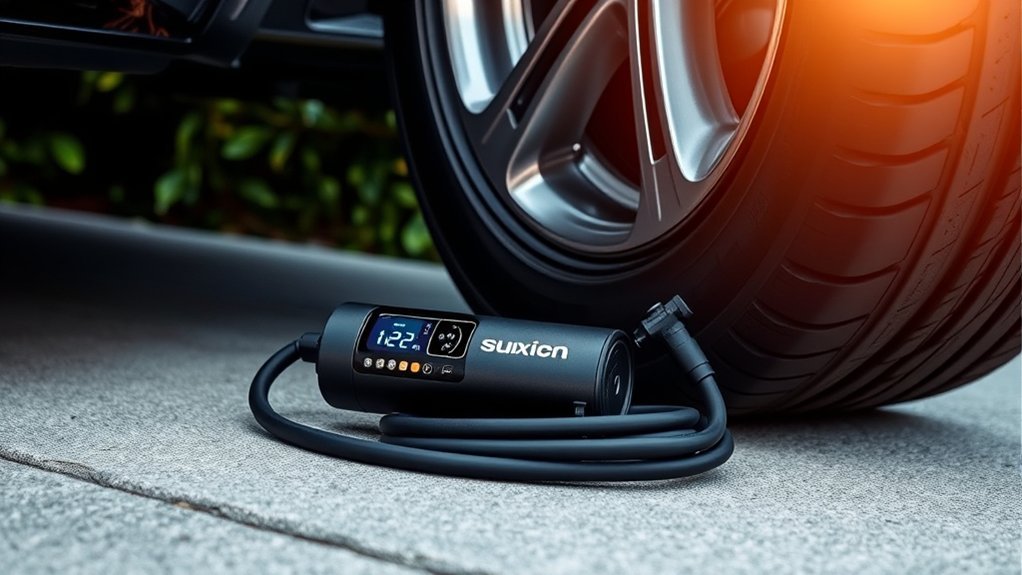
A tire inflator is a portable air compressor you use to restore tire pressure for safety, fuel economy, and longer tire life. You’ll use it for roadside fixes, seasonal pressure changes, or after detecting a slow leak. Models are corded (steady 12V power), cordless (battery portability), or hybrid portable compressors. Look for PSI range, CFM, auto shutoff, and a digital gauge. Keep one in your vehicle — the next sections explain features, use, and care.
What Is a Tire Inflator and When to Use One
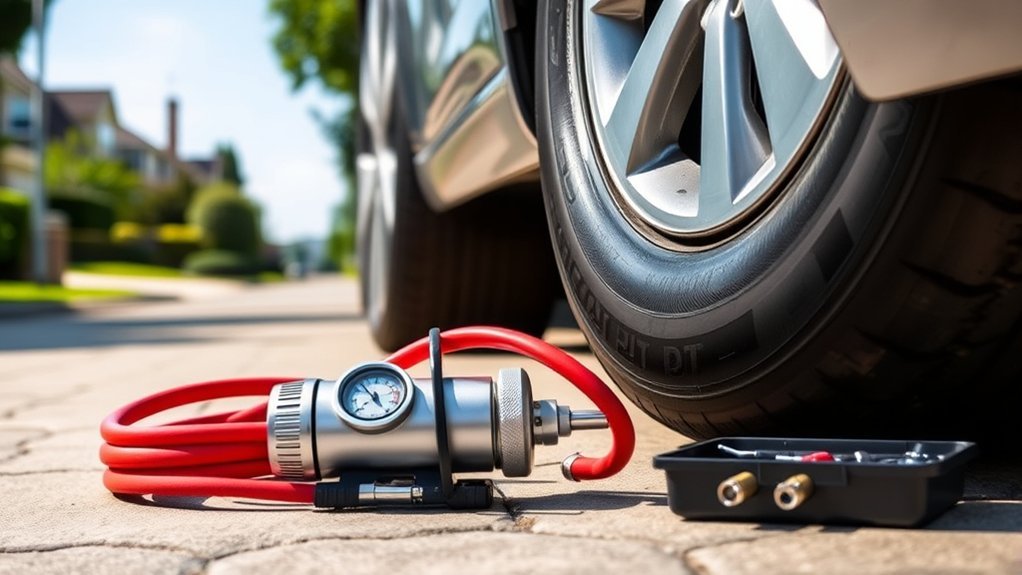
A tire inflator is a device that pumps air into vehicle tires to reach the manufacturer‑recommended pressure, which keeps your car handling, braking, and fuel economy optimized. You’ll recognize tire inflators as portable air compressors that restore recommended tire pressure quickly, whether you carry a cordless unit for independence or a corded model for sustained power. Use one whenever pressure drops below spec, after seasonal temperature swings, or if you detect a slow leak—regular monthly checks keep you out of emergency lanes. Built‑in gauges simplify the inflation process and many models offer automatic shutoff to prevent overinflation. In emergencies with flat tires, a compact inflator lets you take immediate corrective action without relying on station pumps or assistance, so you reclaim mobility on your terms. Pick a model based on power source, duty cycle, and portability; prioritize reliable pressure readouts and a robust compressor for repeat use and long‑term freedom on the road.
How to Use a Tire Inflator Safely (Step-by-Step)
Start by preparing the vehicle: park on level ground, engage the parking brake, check the recommended PSI, and remove the valve cap. Attach the inflator firmly to the valve stem and monitor the gauge while adding air to reach the specified pressure without over-inflating. When done, disconnect, replace the valve cap, inspect the tire for proper seating and damage, and store the inflator in a cool, dry place.
Prepare The Vehicle
Before you connect the inflator, park on level ground and engage the parking brake so the vehicle can’t roll while you work. Prepare the vehicle by confirming the recommended tire pressure from your owner’s manual or the doorjamb sticker. Use a tire pressure gauge to check current PSI before adding air. Remove the valve cap and inspect the valve stem for damage or debris that could cause leaks. Keep tools and the inflator within reach so you control the process without leaving the wheel. During tire inflation, monitor the tire pressure frequently with the inflator’s gauge to avoid overfilling. After you finish, recheck the pressure, replace the valve cap, and lock the vehicle if you’re stepping away. Act deliberately; freedom depends on self-reliance.
Attach And Inflate Correctly
When you’re ready to inflate, park on level ground, engage the parking brake, remove the valve cap, and firmly press the inflator nozzle onto the valve stem so it seals without leaking. You’ll use tire inflators to regain mobility; attach the hose, power the air pump (corded or charged cordless), and monitor the pressure. Use the built-in gauge or app to monitor the pressure and stop at desired pressure.
- Attach securely, listen for leaks, and confirm a snug fit.
- Inflate correctly by watching pressure readings; use automatic shut-off if available.
- Remove nozzle carefully, replace cap, then check my tire again to confirm PSI.
Move with confidence — precise, safe inflation frees you from roadside dependence.
Post-Use Inspection And Storage
After removing the nozzle and returning your valve cap, inspect the inflator and hose for cuts, kinks, loose fittings, or other damage that could compromise future use. For reliable post-use inspection, check hose connections, clamps, and seals; test switches and indicator lights; and verify there’s no oil or debris inside ports. Let the tire inflator cool at least 15 minutes after extended operation to protect the motor. Confirm battery charge on cordless units or examine the power cord for frays on corded models before storage. Pack the unit in a cool, dry place away from temperature extremes and moisture. Follow the manufacturer’s manual for specific storage and maintenance tips so your gear stays ready and free—practical freedom through proper care.
How Inflators Work: Power, Pumps, and Key Specs
Because tire inflators rely on an electric motor driving a pump, you should pick a model whose power source and specs match how and where you’ll use it. You’ll want an inflator that balances portability and output: the motor spins the pumps to draw ambient air and pressurize your tires, so motor size and supply dictate performance and runtime.
- PSI range and CFM — confirm the PSI range exceeds your vehicle’s recommended pressure and choose higher CFM for faster inflation.
- Power source and duty cycle — match corded, cordless, or AC options to availability; respect the duty cycle (often ~15 minutes) to avoid overheating.
- Controls and protections — look for a digital display for precise readings, automatic shut-off to prevent over-inflation, and LEDs for low-light use.
You’ll gain freedom from uncertainty by selecting tire inflators with clear specs: they let you inflate quickly, accurately, and safely, supporting confident, autonomous travel.
[Products Worth Considering]
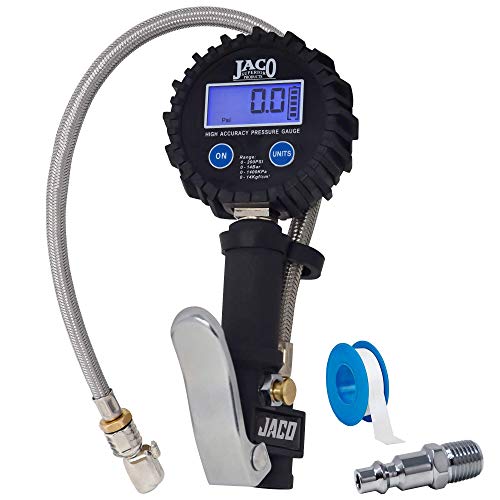
ANSI 1A ACCURACY: Performance tested & calibrated accurate to ±1% full scale with 0.5 PSI resolution for precise tire inflation. Bright 200 PSI LCD display & auto-off feature conserve battery life.

【EASY TO USE&AUTO SHUT OFF】:Plug Carsun portable air compressor power cable into the car's 12V power outlet, then press the inflation nozzle into the tire valve,set the pressure value required by the tire and press the switch to start inflating. The air compressor pump will automatically shut off when reaching desired tire pressure.

🚕【Accurate Digital Tire Gauge】The digital pressure gauge always returns a stable reading within 1% of the exact pressure of your tire by incredible 0.1 display resolution. No more guessing!
Types of Tire Inflators (Corded, Cordless, Portable Compressors)
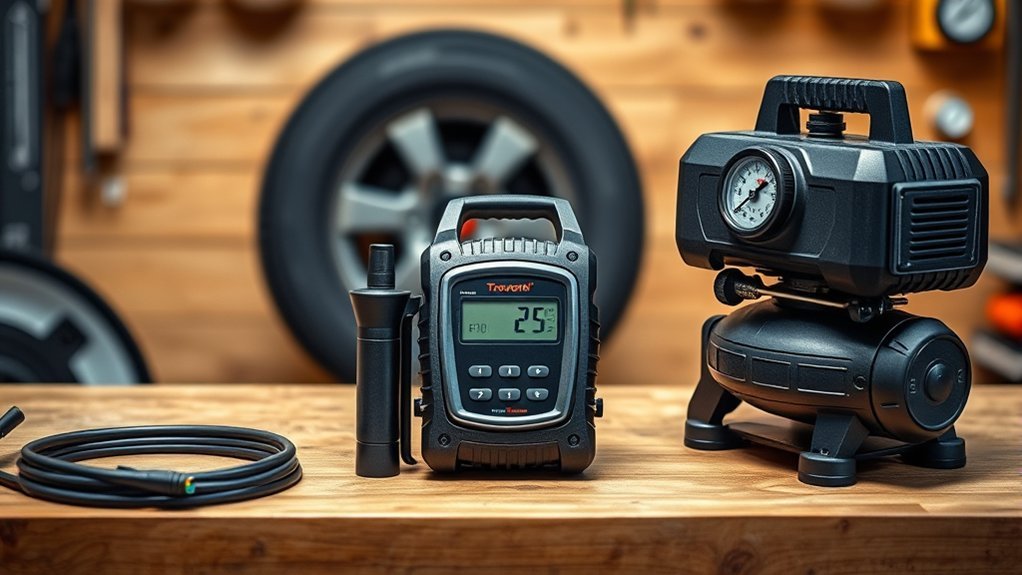
You’ll choose between corded units that draw steady 12V power and cordless models that trade output for mobility. Consider compressor size because larger compressors deliver higher PSI and faster fill rates but cost more in storage and weight. Match power source and portability to the tasks you expect—emergency roadside use favors battery units, while home or heavy-duty work favors corded or larger compressors.
[Products Worth Considering]

【METAL INFLATABLE STRUCTURE】: It’s composed of metal cylinder and metal gear, it could continuously work for 20 minutes, the maximum air pressure could reach 160psi, meet the needs of 4 tires at a time, more efficient and faster to use.

[Fast & Efficient Inflation] The OlarHike tire inflator features a high-performance motor that delivers rapid airflow—inflate a standard car tire (195/65 R15) from 30 to 35 PSI(+5 PSI) in just 55 seconds, or a larger SUV tire (235/65 R17) from 30 to 35 PSI(+5 PSI) in only 2.2 minutes. Ideal for cars, SUVs, light Pickup(Within 51 PSI), motorcycles, bicycles, and sports balls. Important Note: The unit can only inflate car/pickup truck tires up to 51 PSI

Accurate pressure reading with easy-to-read digital display with highly accurate pressure read out (-2 PSI delta on all applications tested*)
Corded Vs. Battery Power
When choosing between corded and battery-powered tire inflators, weigh portability against sustained performance: corded units draw from a 12V vehicle outlet or household power for steady PSI and higher CFM, while battery-powered models give you true cordless convenience for quick, on-the-road top-ups but may deliver lower flow and slower fill times. Modern cordless units often feature **USB-C fast charging** for versatility. You’ll decide based on use: roadside freedom or workshop endurance. Check PSI range and CFM to match tire specs, and consider portable air compressors if you need both modes. Maintain safety: monitor pressure, avoid overheating, and follow manufacturer safety tips.
- Corded inflators — consistent pressure, best for longer inflation tasks.
- Cordless inflators — battery power enables mobility, ideal emergency inflation.
- Portable air — hybrid options for flexibility.
Compressor Size And Portability
Pick the size and weight of a tire inflator to match how you’ll use it: small, lightweight cordless units give true portability for roadside top-ups but sacrifice sustained airflow and battery runtime, corded models deliver higher, steadier CFM for workshop use but depend on a vehicle or mains outlet, and larger portable compressors handle heavier-duty inflation and multi-task jobs at the cost of bulk.
Decide on compressor size by balancing portability and efficiency. If you want liberation from constraints, choose cordless inflators for quick, mobile rescue and minimal gear. If you need consistent pressure and faster fill times, corded inflators or larger portable air compressors provide better power sources and sustained CFM. Consider weight, case design, and duty cycle so the inflator meets your tasks without unnecessary bulk.
Which Tire Inflator Is Best for You : Quick Decision Checklist
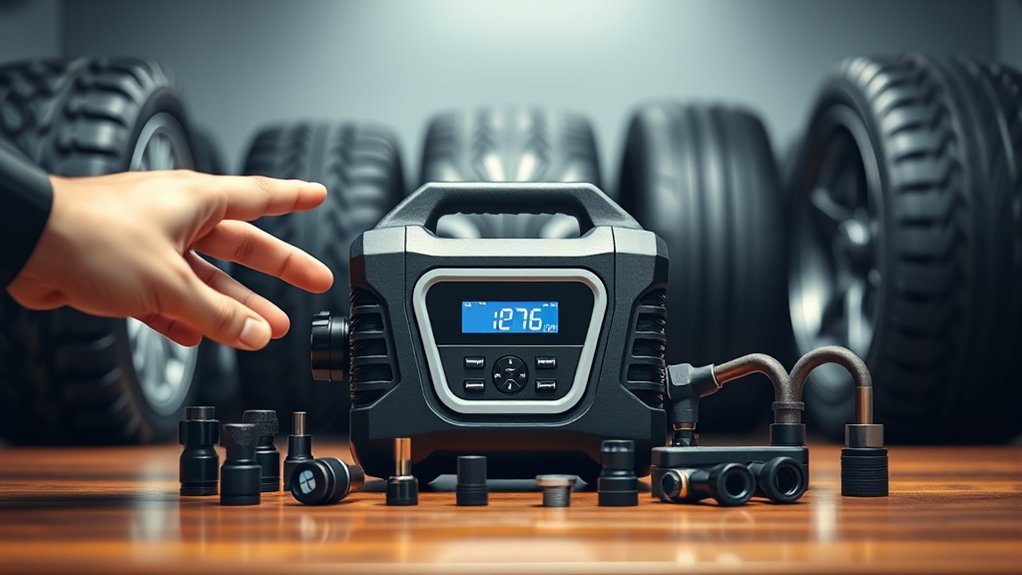
Looking for the right tire inflator? Choose based on where and how you drive. If you want freedom from cords, cordless tire inflators give true portability—portable tire inflators with rechargeable batteries suit riders who move often. For faster home topping, pick a 110V AC model (plugs into wall outlets) for efficient, high-volume inflators use. Keep a 12-V plug inflator in the car for emergencies; it runs off the cigarette lighter for immediate roadside recovery.
- Match power to need: guarantee PSI capacity ≥100 psi to exceed vehicle specs and handle SUVs or bikes.
- Prioritize controls: a digital tire readout and auto shut-off prevent overinflation—check your tire pressure, set target PSI, and let it stop.
- Practical details: inspect hose length, nozzle compatibility, recharge time, and included adapters; portability and runtime matter for liberated travel.
Pick the unit that aligns with your autonomy goals—lightweight, accurate, and ready when you are.
[Products Worth Considering]

ADVANCED TRUEGAUGE SCREEN: This battery tire inflator includes updated sensor technology, capable of collecting pressure data from tire inflators at a frequency of 200 times per second. Its valid data rate is higher than 80%, which is 60% better than the market average. Wherever you go, accurate readings help you drive safely.

【Fast and Efficient Inflation】Equipped with a powerful motor that delivers rapid airflow, this inflator can inflate a standard car tire (195/65 R15) from 30 to 35 PSI (+5 PSI) in just about 55 seconds. Ideal for cars, motorcycles, bicycles, and sports balls, this portable tire inflator enhances convenience for everyday life and travel. Note: It can only inflate car tires up to 51 PSI

Please Note: This product must be powered by a 12V DC Cigarette Lighter to function properly, and ensure the vehicle is in a running state. And it equipped with a 9.8-foot cord, which can meet the usage needs of most regular-sized vehicles.
Maintenance & Troubleshooting for Tire Inflators
Because regular checks keep your inflator reliable, inspect hoses, fittings, and the pressure gauge before and after use and look for cuts, kinks, loose connections, or corrosion that can cause leaks or inaccurate readings. For routine maintenance, clean the unit, store it dry and cool, and follow the manufacturer’s guidelines for duty cycles so the motor doesn’t overheat. Check built-in or analog gauges against a trusted standalone gauge to verify air pressure accuracy; recalibrate or replace faulty gauges. If inflation is slow or inconsistent, verify compatibility with your tire size and examine the air intake and hose for blockages or restrictions. Tighten fittings and replace worn seals to stop leaks. When troubleshooting electrical or performance faults, isolate variables: power source, hose integrity, gauge readout, and duty-cycle limits. You should document any repairs and keep spare parts recommended by the maker. Maintain this regimen to keep autonomy on the road and guarantee tire inflators serve you reliably.
Frequently Asked Questions
What Does a Tire Inflator Do?
It raises and maintains tire pressure quickly, using air hoses and digital gauges; you’ll get portable convenience, fast inflation speed for emergency situations, follow maintenance tips and safety precautions, and reclaim independence on the road.
Is It Worth Buying a Tire Inflator?
Yes — you’ll gain cost benefits and freedom: portability features, fast inflation speeds, emergency situations coverage, and maintenance tips cut expenses. Check user reviews and brand comparisons; it’s a practical, technical long term investment you’ll use.
What Is the Difference Between a Tire Compressor and an Inflator?
Like night and day, you’ll see tire inflator types focus on portability and lower PSI, while compressors offer compressor features, higher inflation speed, varied power sources, size differences, usage scenarios, portability options and maintenance tips for practical freedom.
Does a Car Need to Be Running to Use a Tire Inflator?
No, your car doesn’t have to be running to use a tire inflator; cordless or 110V units work fine. Follow tire maintenance tips, inflator safety precautions, check tire pressure, consider inflator power sources, portable inflator benefits, emergency preparedness gear.
Conclusion
You’ve seen why a tire inflator’s worth its weight in gold: it keeps you rolling, boosts safety, and saves time and money. Pick one that matches your vehicle, power access, and speed needs, and follow proper steps and maintenance to avoid surprises. Keep fittings clean, check hoses, and store it dry. With routine care, you’ll be ready to inflate on the fly and avoid being left in the lurch.







Leave a Reply