
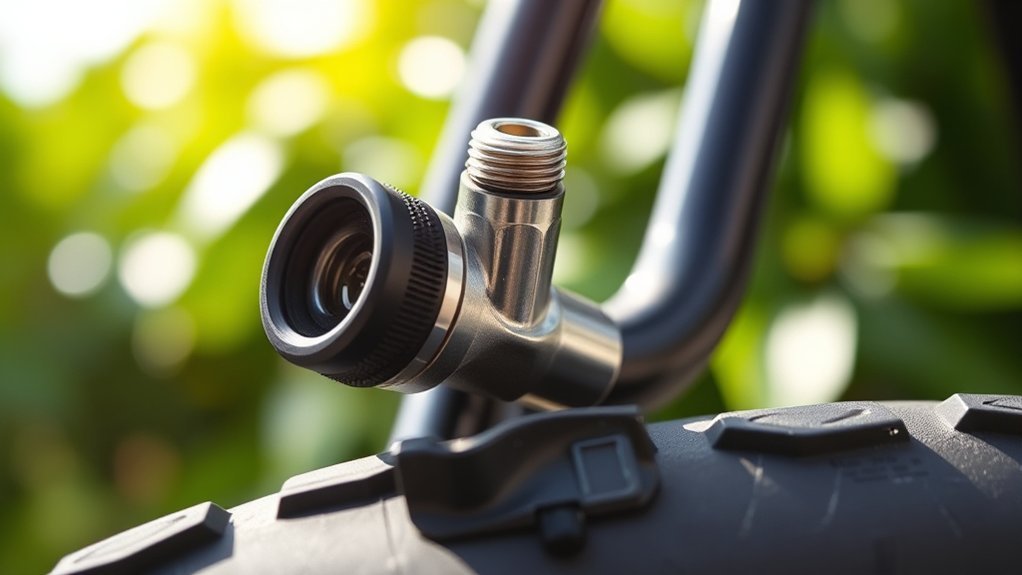
A Schrader valve is the sturdy, spring-loaded valve found on most car and motorcycle tires. It has a hollow, threaded stem with a center pin that lets air in or out and seals on its own under pressure. You can attach standard air chucks without adapters, check pressure with a gauge, and release air by pressing the pin. Keep the cap on to block dirt, and tighten or replace the core if it leaks. Below, you’ll learn how it works and how to service it.
Quick Answer
- A Schrader valve is a spring-loaded valve stem with a center pin. Pressing the pin opens airflow; releasing it reseals automatically.
- Found on most car, motorcycle, and many bicycle tires, plus HVAC, hydraulic, and SCUBA systems.
- Inflate by pressing an air chuck onto the valve. Check pressure with a gauge. Deflate by tapping the center pin.
- If you notice slow leaks, test with soapy water, tighten or replace the valve core, and always keep the cap on.
- The standard stem thread is 0.305″-32 UNEF with an ~8 mm outer diameter, so it fits almost all pumps and filling stations.
What a Schrader Valve Is and Why It Matters
A Schrader valve is a spring-loaded valve stem found on most car and motorcycle tires and many pressurized systems. Its hollow, threaded tube and center pin let air flow in or out when pressed, then seal on their own under pressure.
You can recognize one by the threaded valve core and roughly 8 mm outer diameter. These match standard air chucks, so you won’t need adapters at filling stations.
The Schrader valve handles tire air pressure on pneumatic tires for safe, efficient driving. It also services other pressurized equipment rated up to 2,000 PSI. Its automatic sealing reduces leaks and makes inflation simple.
The common 0.305″-32 external stem thread and rugged build mean broad compatibility and long life across vehicles and industries. Whether you’re topping off a car tire or servicing workshop equipment, the Schrader valve gives predictable performance and easy access.
How a Schrader Valve Works: Parts and Mechanism
Think of the Schrader valve as a simple poppet-and-spring assembly inside a hollow, threaded metal stem. It keeps pressurized systems sealed until you need to add or remove air.
Inside, a threaded valve core acts as a poppet valve. A central pin depresses the core against the spring, letting air enter or exit. When you release the pin, the spring pushes the core closed, locking pressure inside.
The stem’s external thread (0.305″-32) and the core’s internal thread (0.209″-36) let you fit caps and gauges securely. You can control pressure quickly, reliably, and without tools beyond a simple depressor.
The valve reseals each time, resisting leaks in automotive tires, refrigeration lines, A/C systems, and pneumatic setups.
| Part | Role |
|---|---|
| Stem | Housing, threads |
| Core | Poppet valve, seal |
| Pin | Opens flow |
| Spring | Closes core |
| Cap | Protects threads |
Inflate, Check, and Deflate a Schrader Valve
Before you attach an air chuck, remove the valve cap and make sure the stem is clean so dirt won’t get inside. Press the chuck onto the Schrader stem until it seals and the center pin is depressed. After inflating or checking pressure, press the pin gently to bleed air if needed. Then tighten the valve cap and inspect the core for leaks.
Preparing the Valve
Start by removing the valve cap and inspecting the Schrader core for tightness and debris. Press the center pin with your pump chuck to inflate, fit a pressure gauge over the valve to check PSI, and gently press the pin with a fingernail or small tool to deflate if needed.
Clear away grit, tighten a loose valve core with a proper tool, and replace a damaged core before continuing. When inflating, hold the chuck steady and watch tire pressure rise to your target. To check pressure, seat the gauge firmly and read PSI quickly to avoid loss. To deflate, tap the pin gently and release small bursts until you reach the right level. Screw the valve cap back on when you’re done.
Using the Air Chuck
Seat the air chuck squarely on the Schrader valve stem so it depresses the center pin and creates a secure seal. Once seated, you can inflate quickly without leaks.
To check tire pressure, attach a pressure gauge or use the one built into the air chuck, read the PSI, and decide whether to add or release air. To inflate, hold the chuck steady and let air flow until you hit the target. The valve reseals when you remove the chuck.
To deflate, press the center pin gently with the chuck, a tool, or your finger until you reach the right pressure. Work steadily, keep fittings clean, and you’ll handle this task with confidence.
Maintenance, Troubleshooting, and Replacing the Core
Check the valve core regularly for tightness and use the valve cap to keep dirt and moisture out. If you notice slow leaks or pressure loss, inspect the stem and seals for damage or debris. Replace the core with a valve-core tool when needed. Below are common seal problems and step-by-step core replacement instructions.
[Products Worth Considering]

Wide Application: Suitable for all standard valve cores, car, truck, motorcycle, bicycle, electric cars, etc., as well as air conditioning units.Dual ends with 2 different sizes to cover all the valve cores

This handy valve core removal and installation tool makes removing and inserting valve cores easy and error-proof
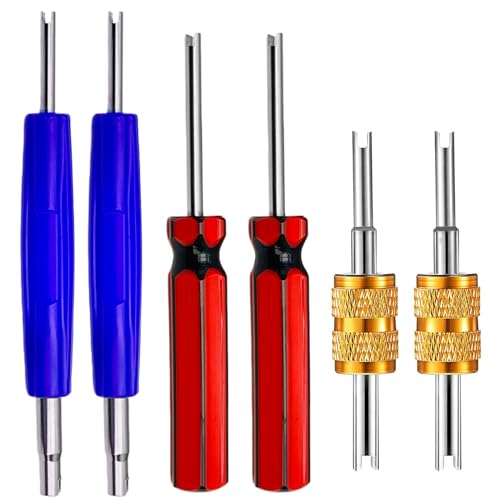
Wide Application: Suitable for all standard valve cores, car, truck, motorcycle, bicycle, electric cars, etc., as well as air conditioning units.
Regular Valve Core Checks
Regular inspection of the Schrader valve core keeps your tires holding pressure and prevents slow leaks from a damaged, loose, or dirty core. Routine checks help you spot air leaks and stop gradual deflation before it becomes a problem.
Use soapy water to pinpoint leaks. Bubbles show whether the valve core or surrounding area is failing. The valve core is replaceable. Use a valve core tool to remove, clean, or swap it out quickly. Confirm the core is snug but not over-tightened. It should resist significant rotation and meet manufacturer torque guidance to avoid pressure loss.
- Check valve core condition during routine tire inspections.
- Use soapy water to detect escaping air.
- Clean debris to restore the seal.
- Replace the core with a valve tool if needed.
Common Seal Problems
After routine inspections, watch for common seal problems that let air slip out. A worn valve core or missing cap can invite dirt that compromises the seal, causing air leakage and falling tire pressure.
Troubleshoot with soapy water: bubbles mean a leak that needs attention. Tighten the valve core by hand as part of regular maintenance. If tightening doesn’t fix it, replace the core. Keep caps in place to protect seals and avoid roadside headaches.
| Symptom | Quick check |
|---|---|
| Hissing | Soapy water |
| Slow loss | Cap missing/damaged |
| Immediate leak | Core loosened or damaged |
Stay proactive: inspect, tighten, protect, and replace when necessary.
How to Replace the Core
When a valve core is worn or leaking, remove and replace it with a valve core removal tool. Unscrew the old core, drop in a compatible replacement rated for your system’s pressure, then hand-tighten it snugly without over-torquing.
Inspect the valve stem first, then choose a core matched to the operating pressure (0 to 2,000 PSI range). Tighten securely, but don’t strip the threads.
After installation, check for air leaks with soapy water. No bubbles means you’re good. Regular checks prevent surprise pressure loss on the road.
- Carry a valve core removal tool and spare replacement cores.
- Match core specs to your pressure needs.
- Tighten securely but avoid over-torquing the valve stem.
- Test for air leaks right away and on a regular basis.
Sizes, Threads, and Materials: Standards to Know
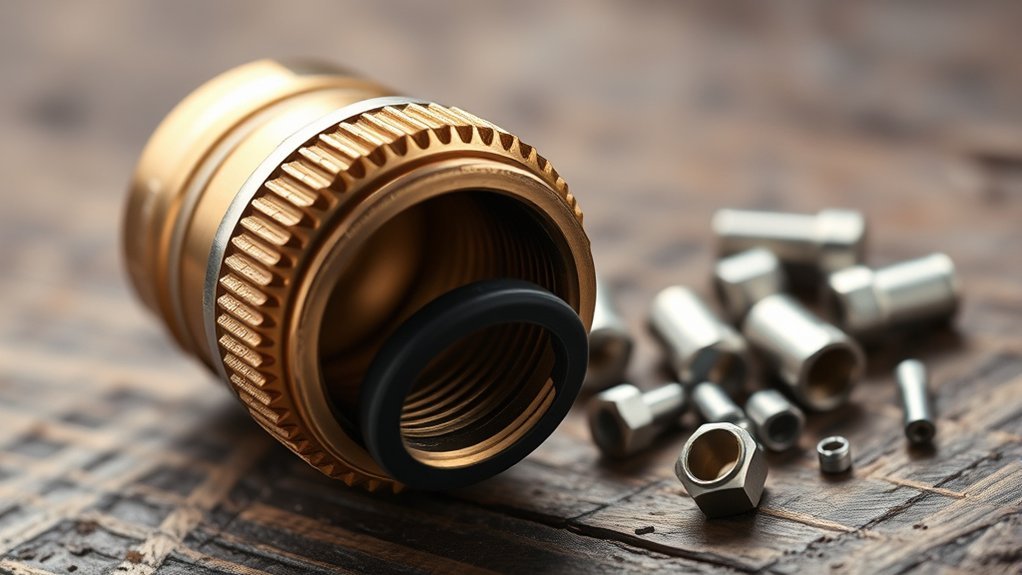
Because Schrader valves follow tight industry standards, you can count on consistent thread sizes, stem diameters, and materials for broad compatibility and durability.
The external thread is standardized at 0.305 inches-32 (UNEF), and the internal core thread at 0.209 inches-36. Sizes and threads match common pumps and caps reliably. The stem outer diameter sits near 8 mm, wider than a Presta’s 6 mm, which affects rim hole design and adds construction strength.
Most Schrader stems are made from nickel-plated brass, chosen for corrosion resistance and long service life. This material holds up under repeated use and harsh conditions. Because design and standardization focus on compatibility, you won’t be stuck with proprietary adapters. Your inflator, gauge, and replacement cores will fit across many bikes, cars, and industrial systems.
[Products Worth Considering]

What You Get – 3 x valve core remover, 1 x 4-way valve tool,10 x valve stem caps ,20 x valve cores.
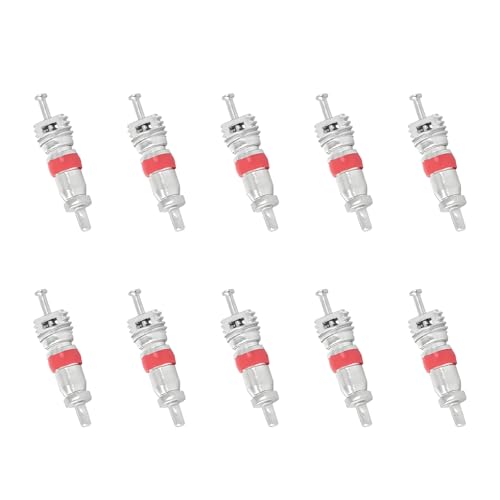
Safety Assurance: This valve cores undergo rigorous air-tightness testing to guarantee secure tire sealing. They maintain optimal tire pressure throughout use, preventing pressure loss while driving to enhance safety and significantly extend your tires' service time

Efficient Disassembly: The AC valve removal tool included in AC valve core kit comes in three different styles to ensure versatility and assist technicians in easily removing and installing automotive air conditioning systems, making it an ideal and convenient tool for automotive enthusiasts
Common Schrader Valve Applications and Pressure Ranges
You’ll see Schrader valves most often on car and motorcycle tires, but they handle a wide range of uses and pressures from 0 to 2,000 PSI. That includes passenger tires, aircraft landing gear, refrigeration service ports, SCUBA tanks, hydraulic systems, TPMS-equipped wheels, and domestic fire extinguishers.
For routine use, they make inflating and deflating automotive and motorcycle tires simple. In more demanding settings, they serve landing gear struts and hydraulic circuits. Their design also makes integration with tire pressure monitoring systems straightforward, keeping safety systems accurate without extra complexity.
In service environments, Schrader valves let you connect gauges, charge refrigerant, or top off SCUBA cylinders with reliable sealing and durability.
- Automotive tires: easy inflation, TPMS compatibility
- Aircraft and hydraulics: certified for high-pressure use
- Refrigeration/AC: service ports for charging and testing
- SCUBA/fire extinguishers: reliable inflation and quick-release operation
Schrader vs Presta: Key Differences for Cyclists
Schrader and Presta valves suit different needs and rims. Schrader valves have an ~8 mm stem diameter and a spring-loaded pin that opens when depressed. They match wider rim holes and many pressure monitoring systems (TPMS) adapted from automotive use.
Presta valves use a narrower ~6 mm stem and a small closure nut you unscrew to let air flow. They’re lighter and favored on high-pressure bicycle tires and many tubeless setups where higher PSI matters.
There are trade-offs: Schrader valves are heavier by about 4 to 5 grams and include robust valve cores. Presta valves keep weight down and often offer finer sealing at high pressures. You can use adapters to fit Presta stems into Schrader-sized rims without losing performance. Choose based on rim hole size, desired weight savings, and whether you need TPMS compatibility or higher PSI handling.
[Products Worth Considering]
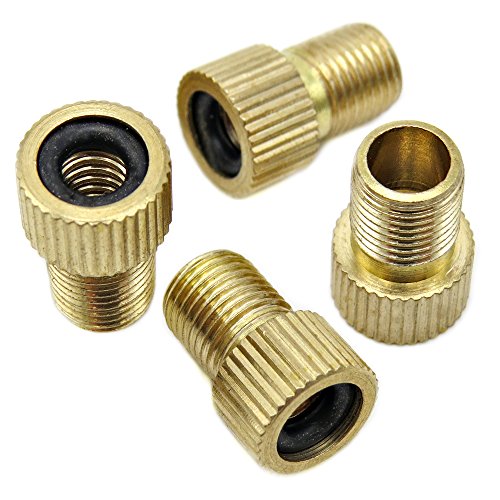
Effortless Conversion: Easily convert Presta valves to Schrader valves for universal compatibility with standard pumps and air compressors.
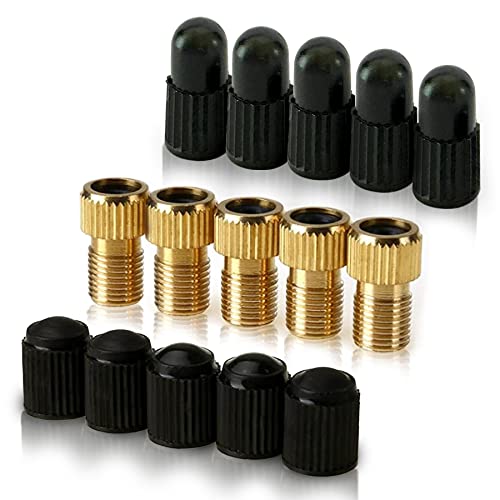
UNIVERSAL FITMENT: This Shrader valve tool conveniently converts your bicycles or e-scooter Presta valve to Schrader, allowing you to inflate tires using a standard pump or air compressor. Be prepared! This five-set offers peace of mind whilst cycling long and short distances. Universal fitment for all bike tires with Presta valves including kids and adult mountain bike, drift trike, electric bicycles, electric moped, and electric motorbike.

This is a simple bicycle tool that converts any Presta valve to a Schrader valve.
Safety Tips for High-Pressure Schrader Systems
Schrader valves rated for high-pressure applications (refrigeration, SCUBA, hydraulics) need extra care. Always confirm the valve core’s pressure rating matches or exceeds your system’s operating pressure before installation.
Wear safety glasses when working around pressurized lines. Never exceed the rated pressure of the valve or connected equipment. When servicing HVAC or refrigeration systems, follow EPA guidelines for refrigerant handling. For SCUBA cylinders, have the valve and tank inspected by a certified technician at recommended intervals.
If a valve core shows signs of corrosion, cracking, or deformation, replace it immediately rather than attempting repair.
When to Choose a Schrader Valve and Compatibility Tips
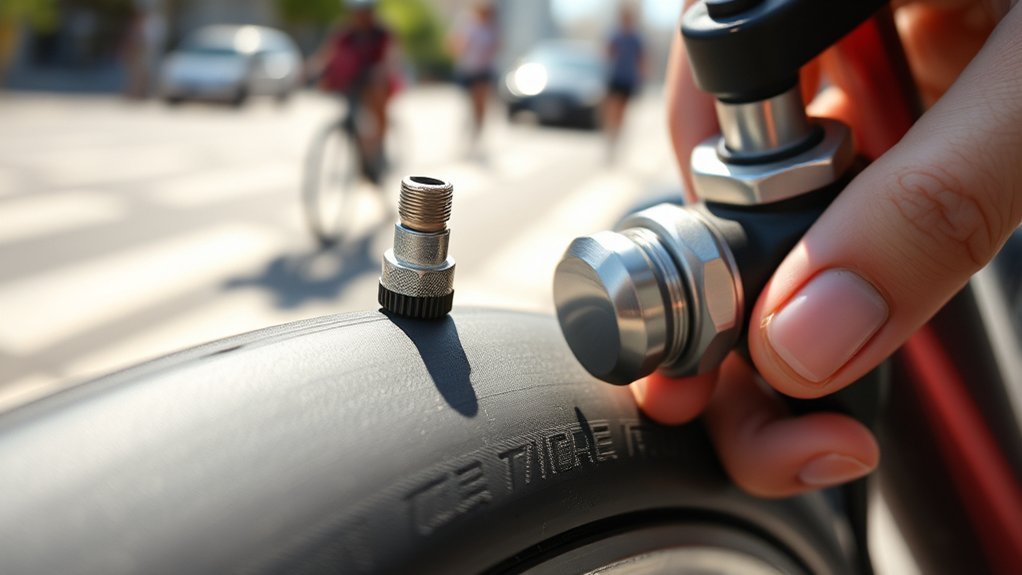
When you need ease of inflation, widespread pump compatibility, and a sturdy valve for heavier wheels, go with a Schrader valve. Its ~8 mm stem fits standard filling-station chucks and most vehicle rims, so you won’t need special adapters.
Make sure your pump has a Schrader-compatible chuck. Use tubes made for Schrader stems if you’re switching from Presta, and tighten the valve core now and then to prevent slow leaks.
Schrader valves are the go-to choice on cars, motorcycles, and many utility bikes where compatibility with air pumps at stations matters more than saving a few grams. The wider stem diameter gives strength and simple access. Check that your rim hole and inner tubes match Schrader specs before converting.
Maintain correct tire pressure by confirming the valve core is snug and using a reliable chuck to avoid leaks during inflation.
- Use Schrader for vehicles and heavy wheels.
- Verify air pumps have Schrader chucks.
- Swap to Schrader-compatible inner tubes if needed.
- Tighten valve cores regularly.
Frequently Asked Questions
What Is the Difference Between a Schrader Valve and a Regular Valve?
Schrader valves use a spring-loaded core that auto-seals, with standard threads and easy inflation. “Regular valve” isn’t a specific type. Most car tire valves are Schrader valves. Presta and Dunlop (Woods) are the other main types you’ll encounter on bicycles.
What Is a Schrader Valve Used For?
You use a Schrader valve for tire inflation, pressure regulation, and various automotive and industrial applications. It’s common on cars, motorcycles, many bicycles, HVAC systems, and more. Check valve compatibility before servicing any pressurized system.
How Do I Know if I Have Schrader or Presta?
Check the stem. Schrader is wider (~8 mm) with a spring-loaded pin inside. Presta is narrower (~6 mm) with a small threaded lock nut on top. If you can press the center pin and air comes out, it’s a Schrader.
Is an AC Schrader Valve the Same as a Tire Valve?
They use the same basic Schrader design and threading. However, AC service port valves may use different core materials or seals rated for refrigerant pressures and chemicals. Don’t swap cores between systems unless they’re rated for the specific application.
Conclusion
Schrader valves are simple yet essential: small, sturdy, and everywhere you look on cars and many bikes. That everyday reliability contrasts with the finer, high-pressure precision of Presta valves, so you’ll pick one for convenience and durability or the other for performance and lighter weight. Know how to inflate, check, and replace the core, and you’ll avoid leaks and flats. Choose based on your vehicle, pump compatibility, and the pressure range you need.







Leave a Reply