
When you tow, set tire pressure based on your load and tire type. There’s no single “right PSI” for every truck, SUV, and trailer.
For your tow vehicle, use the tire sticker on the driver’s door jamb (or check your owner’s manual). For trailers—especially those running ST (Special Trailer) tires—the guidance typically points you to the max cold PSI molded on the tire sidewall.
How Much Tire Pressure to Run When Towing: Quick Rules (Tow Vehicle / Trailer)
Start here:
- Tow vehicle (truck/SUV/car): Set tires to the cold PSI on the door-jamb sticker (or manual). If it lists a “loaded,” “max load,” or towing value, use that number when hitched and loaded.
- Trailer with ST tires: Most tire makers recommend running cold pressure at the max PSI on the sidewall, unless your trailer builder specifies a different cold pressure for your setup.
- Trailer with LT tires: Use the tire maker’s load/inflation table based on the heaviest loaded axle end. Keep both tires on the same axle at the same pressure.
Check pressure cold (before driving, or after the rig has been parked for several hours).
Also watch the weather. Pressure moves roughly 1–2 PSI per 10°F change in ambient temperature.
[Products Worth Considering]

HIGH ACCURACY: Every ETENWOLF's pencil tire gauge is calibrated to ANSI B40.1 Grade B, it is accurate to 2% of span in the middle 50% of range and 3% of span in the lower and upper 25% of range. Each of ETENWOLF pencil tire pressure gauge is manually calibrated and has its unique calibration number printed on the pencil

【EXTENDED REACH DUAL HEAD】LUMITECO 12" pencil-style pressure gauge is designed with the Integrated Straight foot air chuck and 30°reverse chuck. Ideal for dual wheels and other difficult reached valves. Your good choice for checking tire pressure as well as a great father's day gift.
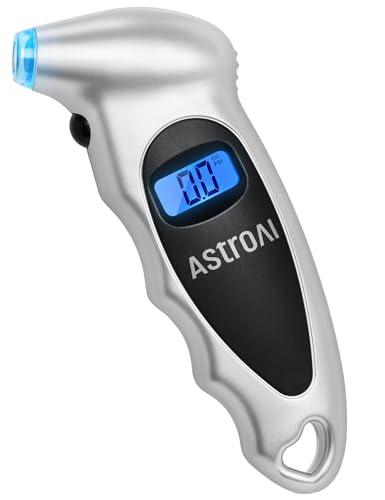
EXPERT-GRADE CALIBRATION: Each AstroAI Tire Pressure Gauge is calibrated with professional-grade tools, ensuring quick and accurate measurement results within plus-minus 1PSI. Stay prepared for any roadside emergency and travel with peace of mind.
How Load Index, Load Range, and Heat Affect Towing Tire Pressure
Your tire’s load index is a code you can look up to find the max weight the tire can carry at its max rated pressure. Many LT and ST tires also show a load range, which corresponds to the tire’s construction and its max cold pressure.
Underinflation is the biggest towing risk. When a tire runs low for the load, it flexes more, runs hotter, and is more likely to fail.
- Capacity first: Make sure each tire’s load rating can handle the axle load it supports. You can find detailed load rating information from the Tire Industry Association.
- Use the right number: For the tow vehicle, follow the door sticker or manual (not the tire sidewall max). For most trailer ST tires, the sidewall max cold PSI is your target.
- Don’t exceed the wheel: Wheels have their own pressure and load limits. Check those too.
Calculate PSI: Use Axle Weights (Plus Tongue Weight) and Tire Ratings
The safest way to set towing pressures is to base them on real axle loads.
Tongue weight (the downward force on the hitch) is typically about 10–15% of a bumper-pull trailer’s loaded weight. It adds load to the tow vehicle, usually the rear axle.
Best method: weigh your setup on a public scale. Get axle weights for:
- tow vehicle only (loaded as you’ll drive), and
- tow vehicle + trailer (hitched and loaded).
Then:
- Tow vehicle tires: set cold PSI to the door sticker or manual values that match your load condition.
- Trailer tires: confirm the axle load is within the tires’ ratings. Inflate per ST sidewall max (common guidance) or per the tire maker’s load table (LT tires).
Tip: if you can get left/right weights (axle-end weights), base pressure on the heavier side.
[Products Worth Considering]

PROCESS LEVEL ACCURACY: Each ETENWOLF’s digital tire pressure gauge is calibrated manually to ANSI B40.7 Grade 2A(plus-minus 1 PSI).Presta valve adapter not included, if used for bicycles, it must be purchased separately
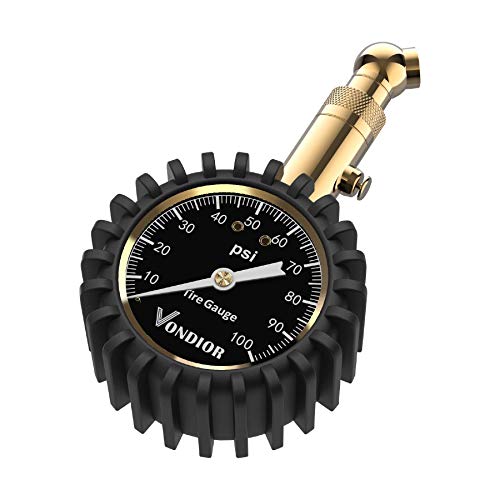
HIGH PERFORMANCE LOW MAINTENANCE – She is your pride and joy. Your car is one of your partners in life. Making sure it performs at its best takes tender loving care, which means essentially checking tire pressure regularly. But going to the garage or gas station is a hassle. Highly calibrated accurate to ±1% full scale of 60 PSI range Vondior tire pressure gauge will make sure your tires are good to go! Includes a swiveling valve connector, rotating on its' axis for maximum convenience.

Enhanced Visibility in Low Light: Features a green backlit LCD screen and integrated flashlight, allowing for clear reading of tire pressure even in dark or dimly light conditions.
Check and Adjust Tire Pressure Before and During a Tow: Step-by-Step
- Confirm the tire type: P, LT, or ST. Make sure the load rating fits your job.
- Set cold pressures: Door sticker or manual for the tow vehicle. For ST trailer tires, set to the sidewall max cold PSI unless the trailer maker says otherwise.
- Walk around before you roll: Look for cuts, bulges, cracks, nails, or uneven wear. Check the spare too.
- Stop early: After about 30–60 minutes, stop safely and check for odd heat, smell, or vibration. Pressure will rise as tires warm up. Don’t bleed air just because it’s higher hot. Recheck and correct when the tires are cold.
- Recheck on long days: At fuel stops, do a quick visual check. Make sure no tire is dropping pressure.
- After unloading: If you raised tow-vehicle pressure for a load setting, return to your normal door-sticker values for daily driving.
Warning Signs, Common Problems, and When to Upgrade Tires for Towing
- Slow leaks: fix them and recheck cold pressure before your next trip.
- Bulges, deep cracks, or cords showing: replace the tire before towing again.
- Uneven wear: often points to alignment issues, suspension problems, or chronic under/overinflation.
- Always near the limit: if your real axle loads are close to the tire’s rating, consider a higher load-rated tire (and verify the wheels can handle it).
For more guidance on tire inspection and safety, visit NHTSA’s tire safety resources.
[Products Worth Considering]

Set of 4 New Premium Radial Trailer Tires 225/75R15 10PR, Brand: FREE COUNTRY


Premium FREE COUNTRY Heavy Duty 10 ply rated, load Range E, 2400LBS capacity!
Key Takeaways
- Use the door-jamb sticker (or manual) for the tow vehicle, not the tire sidewall max.
- For most ST trailer tires, run at the max cold PSI on the sidewall.
- Weigh your rig if possible. Set pressure from actual axle loads.
- Check pressure cold, then stop early to catch heat or leaks before they become failures.
Frequently Asked Questions
What tire pressure should I run when towing?
For the tow vehicle, use the cold PSI on the door-jamb sticker (or your owner’s manual). If there’s a “loaded,” “max load,” or “towing” value, use that when the rig is loaded.
For trailers on ST tires, common guidance is to inflate to the max cold PSI on the sidewall unless the trailer maker specifies otherwise.
Should I use the PSI on the tire sidewall or the door sticker?
Use the door sticker or owner’s manual for the tow vehicle. The sidewall number is the tire’s max pressure, not the recommended pressure for your specific vehicle.
Trailer tires are different. Many ST trailer tires are meant to run at the sidewall max cold pressure.
How do I know if my tires are rated for the load?
Look up the tire’s load index (or load rating) and make sure it covers the axle load it supports. If you use load tables, base pressure on the heaviest loaded side of the axle.
When should I check tire pressure?
Check pressure when tires are cold—before driving, or after the rig has been parked for several hours.
If you’ve already been driving and a tire is low, add air to the right cold pressure. Then recheck later when you can get a cold reading.
How much does tire pressure change with temperature?
A common rule of thumb is about 1–2 PSI per 10°F change in ambient temperature. Recheck cold pressures if the weather changes significantly.
What tongue weight should I aim for?
For bumper-pull trailers, a typical target is about 10–15% of the loaded trailer weight. Always confirm your trailer and hitch specs, and use a scale when possible.
Conclusion
To tow safely, set tire pressure from the right source: the tow vehicle’s door sticker or manual and the trailer tire’s listed cold pressure (often the sidewall max for ST tires).
Check load ratings, weigh the rig if you can, and do early checks so heat or air loss doesn’t turn into a blowout.







Leave a Reply