
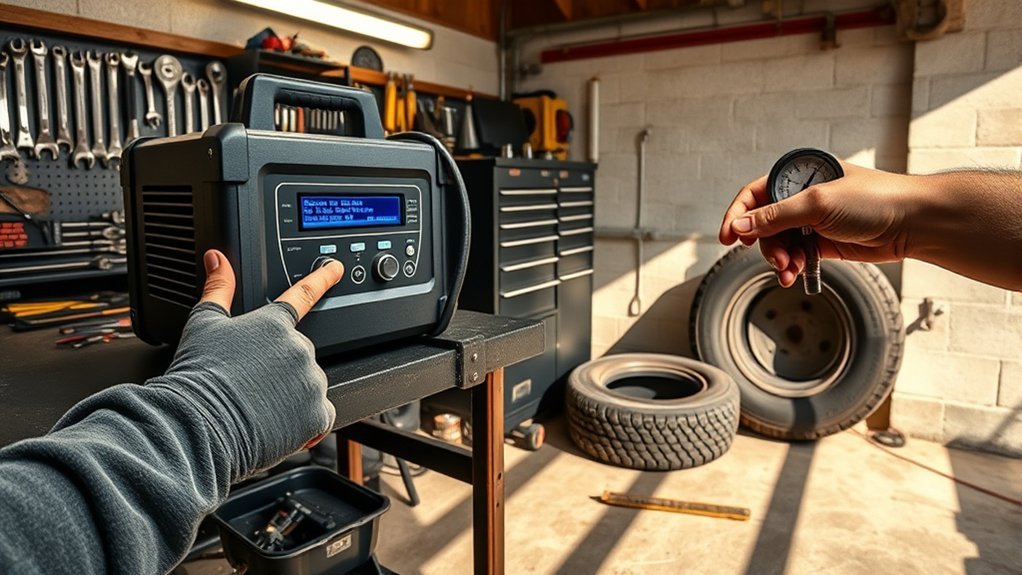
If your tire inflator is running but the tire stays flat, or if the pump won’t turn on at all, the cause is usually a power issue, a blown fuse, or an air leak. Start by making sure the unit is properly plugged in, charged, or connected to a working 12V source. Then inspect the air hose, fittings, and nozzle for damage. Also check the tire’s valve stem. A loose valve core will let air escape as fast as the pump pushes it in. If you still have problems after these checks, keep reading for step-by-step fixes.
Quick Answer
- Won’t turn on: Check your power source first. A blown fuse in the 12V plug, a dead battery, or a loose connection is the most common cause.
- Runs but won’t inflate: Look for air leaks at the hose, fittings, or valve stem. Tighten or replace the valve core if you hear hissing.
- Low or inconsistent pressure: Clean the air filter, let the unit cool down between uses, and replace any cracked hose sections.
- Tire keeps going flat: The problem may be the tire itself. Check for punctures, sidewall damage, or a bad bead seal using soapy water.
Quick Diagnostic Checklist for a Non-Inflating Tire Inflator
When your tire inflator won’t fill a tire, start by confirming the power and connections. Make sure the battery is charged or the 12V plug is fully seated. Check that the nozzle is sealed tightly on the valve stem.
Next, inspect the air hose for visible damage. Run your hand along its length while the unit is running. A hissing spot tells you exactly where the leak is. Check the valve connector for debris or blockage that could stop airflow.
Try the inflator on another tire to rule out a puncture or a faulty valve stem on the vehicle. If the unit works elsewhere, the problem is the tire, not your inflator. Finally, clean the inflator’s air filter and intake openings to prevent clogs that reduce air output.
Check Seals, Valve Stems, and Valve Cores (Schrader & Presta)
Start by checking the valve core tightness with a valve core tool. If you hear a hiss from the stem, tighten or replace the core. Replace any worn valve seals to restore a proper seal and prevent slow leaks. For bicycles with Presta valves, make sure the adapter is fitted correctly and the small locking nut is loosened before inflating.
[Products Worth Considering]

What You Get – 3 x valve core remover, 1 x 4-way valve tool,10 x valve stem caps ,20 x valve cores.

▶1. What's in the package?— In this kit , you will get full range of valve core remover tire repair tools set, including 50 x tire valve caps, 1 x red dual head valve core remover, 1 x blue dual head valve core remover, 50 x silver valve cores, 1 x 4-way valve tool, 1 x red single head valve core remover, 5 x sliver alloy tire valve stem caps, 5 x black alloy tire valve stem caps, 5 x gold alloy tire valve stem caps, total 119 pcs. Ideal for repairing tire, removing and installing valve cores.

【High & Low Voltage Quick Connector】 Our AC valve core removal tool kit provides two quick connectors the high-pressure connector (red) with a 16mm bottom ID and the low-pressure connector (blue) with a 13mm bottom ID. The ball valve on the side can be opened and closed by a quarter turn. This prevents refrigerant leakage in the air conditioning system when replacing the valve core.
Inspect Valve Core Tightness
This is a quick but essential step. A loose core or damaged stem will let air escape and ruin an otherwise successful inflation. Use a valve core tool to snug the core (do not over-tighten) and listen for hissing. The recommended torque for a standard Schrader valve core is about 4 inch-pounds. Inspect the rubber stem for nicks, cracks, or debris that could block the seal.
For car tires (Schrader valves), a hiss when attaching the inflator usually means the core needs tightening or replacing. For bicycles (Presta valves), remember to loosen the small locking nut before attaching the pump, and retighten it afterward.
Replace Worn Valve Seals
A bad seal lets air escape during inflation. Check valve stems and cores regularly, since damage or blockages can prevent proper air transfer. Keep a replacement seal kit and a valve core tool in your vehicle so you can act fast.
- Check for cracked or damaged rubber around the valve stem.
- Listen for a tiny hissing sound when the inflator is attached.
- Ensure the core isn’t blocked with dirt or debris.
- Keep a spare seal and valve core kit in your glovebox.
- Keep a valve core tool handy for quick swaps.
Presta Adapter Adjustment
When fitting a Presta adapter for a bicycle tire, loosen the core cap, thread the adapter on until it just contacts the seal, and test the fit. Position the inflator nozzle square to the valve and confirm the head sits flush. If you hear hissing, recheck the seal and retighten the adapter or replace the pump’s head seal.
Power, Fuse and Connector Checks for Portable and Plug-In Inflators
Before you start inflating, verify your power source. Plug 120V units into a working wall outlet, or confirm your portable battery is fully charged. If you’re using a 12V car plug, check the fuse in the plug tip and try the inflator’s reset button if it won’t power on. Inspect all connectors for tight, corrosion-free contacts.
[Products Worth Considering]

Package Contents: 2x Car Cigarette Lighter Power Plug DC Adapter

40 Amp 12v Relay with Mounting Tabs
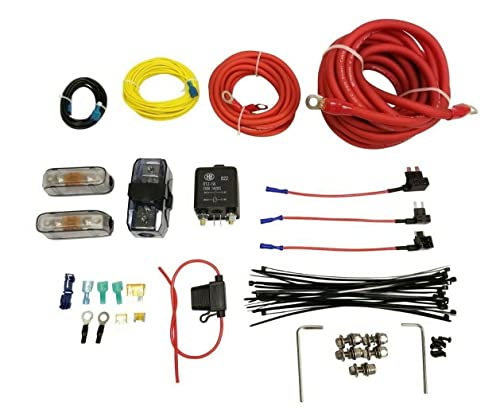
Heavy-Duty Wiring Kit – Designed for dual air compressor setups with 12V systems
Power Source Verification
Always confirm your inflator has a reliable power supply before taking it apart. Plug-in units must be firmly seated in a working outlet. Portable units need a fully charged battery or a tested 12V socket (cigarette lighter). Inspect cords and connectors for cuts, frays, or debris that break electrical contact. Don’t assume your car’s 12V socket works. Try another socket if the pump won’t turn on. Replace blown fuses with the correct amperage rating based on the manufacturer’s specs.
- Verify the plug is firmly seated in a known-good outlet.
- Ensure connectors are clean, tight, and free of debris.
- Check for an intact, undamaged power cord.
- Ensure the portable battery is fully charged.
- Test an alternative 12V vehicle socket.
Fuse And Circuit Checks
If your inflator won’t start or shuts off on and off, check its fuses first. A blown fuse, loose connector, or damaged cord is often the culprit and is quicker to fix than an internal motor fault. Remove and inspect the fuse located in the 12V plug tip or the unit’s casing. Replace it only with a fuse of the same amperage. Scan the power cord for exposed wires. If your model has a reset button or breaker switch, press it.
Connector And Grounding Inspection
A quick connector check can often reveal why a portable or plug-in inflator won’t run. Make sure the unit is firmly plugged in and examine the power cord for cuts. Confirm all terminals and battery clamps (if applicable) are free of corrosion and seated securely.
- Inspect for a frayed cord.
- Check for a blown fuse in the 12V plug tip.
- Tighten any loose terminals or battery clamps.
- Clean corroded connectors.
- Test the pump on a different outlet or 12V socket.
Why Your Compressor Shows Low or Inconsistent Pressure And How to Fix It
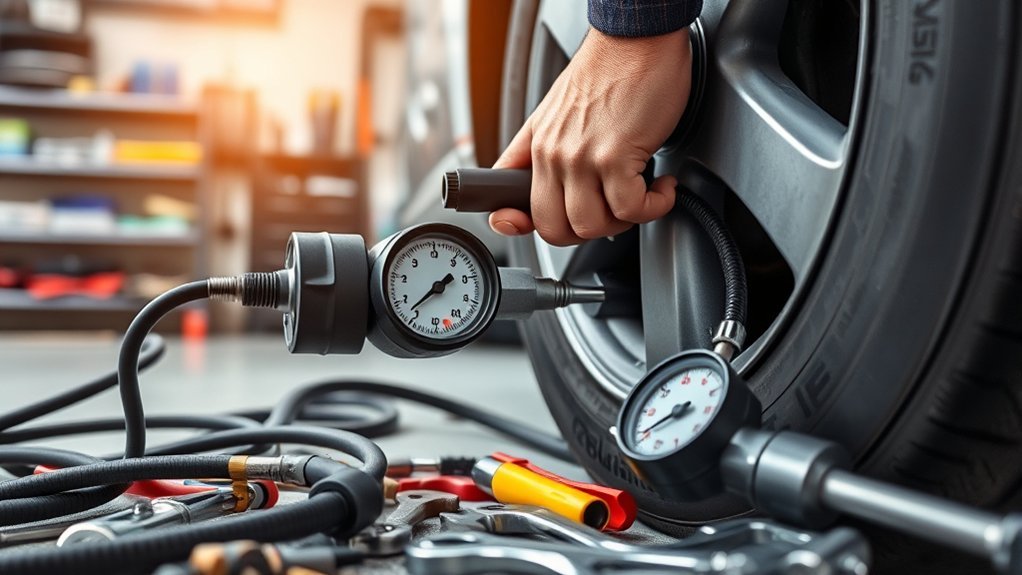
When your inflator delivers low or uneven pressure, you’ll get slower fill times and unreliable PSI readings. Common causes include worn hose fittings, a weak power supply, clogged air filters, or overheating from continuous use. Start with the basics: inspect fittings and hoses for wear and secure your electrical connections.
Replace or clean the air filter to prevent blockages that reduce air output. Prevent overheating by allowing cool-down breaks between uses. Most modern portable inflators include automatic thermal protection that shuts the unit down after about 10 to 15 minutes of continuous use to prevent motor damage. If performance still lags after the unit cools down, you may have worn internal piston seals.
Clean and Clear the Inflator Head, Hoses and Filters
If the inflator head, hoses, or filters are clogged or damaged, your pump will struggle to push air into the tire. Clean the inflator head, inspect hoses, and service the air filter on a regular basis. Use warm soapy water to clean the chuck head, check the internal rubber seals, and rinse away any tubeless sealant residue or dirt.
If the inflator head, hoses, or filter are clogged or damaged, clean, tighten, or replace them to restore reliable pressure.
- Clean out flaky sealant or dirt inside the air chuck and threads.
- Inspect the hose for cracks that leak air under high pressure.
- Check the air filter for dust that could starve the motor of intake air.
- Straighten any kinked tubing that chokes airflow.
- Tighten loose fittings that spray air and fail to inflate the tire.
Tighten all connections, replace any damaged hose sections, and keep filters free of dust to restore reliable pressure.
[Products Worth Considering]

Widely Applicable: The tire inflation extension tube is designed to be used with the inflator to quickly connect to the tire for inflation and is suitable for inflating the tires of most vehicles including cars, motorcycles, bicycles and electric cars

【360° ROTATING TIRE CHUCK】LUMITECO tire inflation hose with swivel tire chuck features more flexibility for a hassle-free inflation process, ensuring you can inflate with ease from any angle. No more struggling to position your portable air compressor, just adjust the air chuck and inflate.

【PACKAGE INCLUDES】: You will receive 7pcs inflator hose set, including 1x 33''/84cm extend air pump hose, 1x Presta Valve Adaptor(American type to French type), 1x Ball Pump Needle Adaptor, 2x Tapered Nozzles, 2x Converting Nuts.
Prevent Compressor Overheating (and Tank Maintenance)
To keep your inflator running well, you need to manage its duty cycle. Restricted airflow raises the operating temperature and forces the motor to work harder, so always keep the air filter clean. Monitor your fill times. Portable inflators typically include thermal shutoff protection that kicks in after 10 to 15 minutes of continuous operation. If the unit starts running hot, shut it down, let it cool for 15 minutes, and check that the ventilation slots aren’t blocked before you start again.
Note for Garage Compressors: If you are using a heavy-duty shop compressor rather than a portable 12V inflator, you also need to drain the air storage tank regularly. Open the petcock valve at the bottom of the tank after each use to drain moisture and prevent internal rust.
How to Use Tire Sealant With a Portable Inflator
Many portable inflators come with a built-in tire sealant feature or include a separate sealant bottle for emergency puncture repair. To use one, connect the sealant canister to the inflator’s hose according to the manufacturer’s directions, attach the nozzle to the tire valve, and run the inflator. The sealant flows into the tire along with the air and coats the inside of the tread to plug small holes.
After inflating, drive the vehicle slowly for a few minutes (usually about 5 to 10 km or 3 to 6 miles) to distribute the sealant evenly. Then stop and recheck the pressure. Keep in mind that sealant is a temporary fix. It works for small tread punctures but will not seal sidewall damage or large gashes. Visit a tire shop as soon as possible for a permanent repair or replacement.
Also be aware that sealant residue can clog the inflator’s chuck and hose over time. Flush the nozzle with warm water after each use to prevent buildup.
When the Tire Not the Inflator Is the Problem (Punctures, Sidewalls, Leaks)
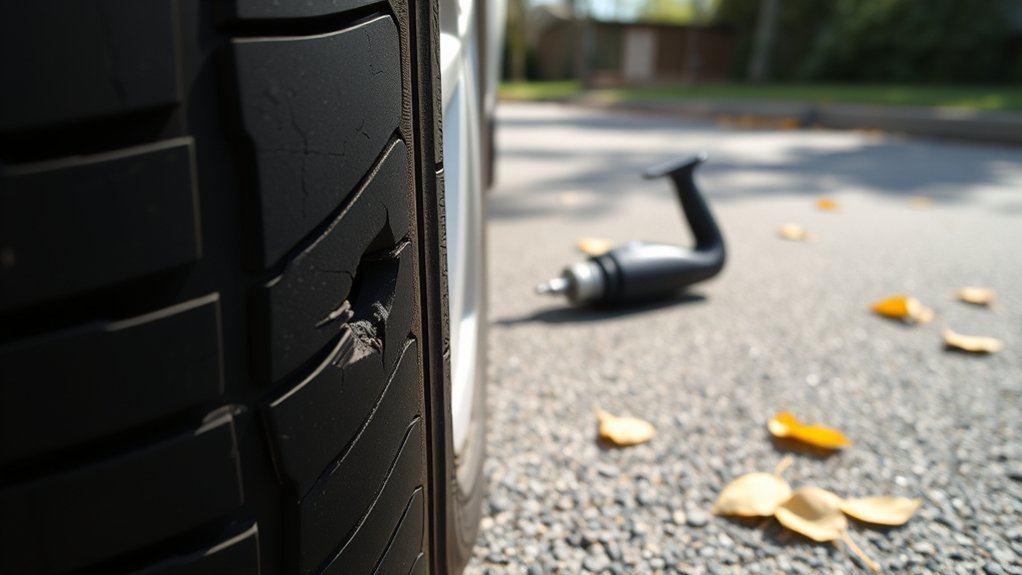
If your inflator is running fine but the tire isn’t holding air, inspect the tire itself. Small punctures, valve issues, or sidewall damage are often the real cause. Diagnose the tire carefully: listen for hissing, feel for airflow, and spray soapy water over the tread and valve stem to reveal bubbles where leaks hide.
Before blaming the pump, inspect the tire. Listen for hisses, check the valve core, and use soapy water to find hidden leaks.
- Look for a nail or screw embedded in the tread.
- Check for a slow seep from the bead area where the tire meets the rim.
- Inspect for a cracked sidewall showing cuts or severe deformation.
- Look for a bent or corroded valve stem with a visible air trail.
- Check for rapid air loss after a temporary patch failure.
If you find sidewall damage, the tire must be fully replaced. Sidewalls cannot be safely patched.
Simple Preventive Maintenance and When to Call a Technician
Keeping your inflator healthy prevents most roadside headaches. Build a short routine of basic checks: clean or replace the air filter, check the hose for crimps, and follow the manufacturer’s instructions for duty cycles (run times). Do these tasks monthly to prevent blockages and reduced flow.
If cleaning the unit and following the manual don’t stop pressure loss, odd noises, or frequent electrical shutoffs, it’s time to contact customer support or replace the unit. Persistent electrical issues, stalling motors, or internal cylinder leaks usually require replacement parts or a completely new inflator.
Frequently Asked Questions
What Is the Common Problem With a Tire Inflator?
The most common problem is a blown 12V fuse or a poor connection at the power socket. On the mechanical side, the most frequent issue is a damaged air chuck or a worn hose fitting that leaks air before it reaches the tire.
How to Reset a Portable Tire Inflator?
Unplug the unit from the power source or remove the battery if it is cordless. Wait 30 to 60 seconds to let the internal circuit board reset. Clear any kinks in the hose, reconnect the power, and try again.
Why Does My Portable Tire Inflator Keep Shutting Off?
Your inflator is most likely shutting off because the automatic thermal protection has activated due to overheating. Other causes include an inadequate power supply, a weak car battery, or the auto-shutoff PSI target being reached.
How to Diagnose a Faulty Tire Inflator?
Listen for abnormal grinding or rattling noises, inspect the pressure gauge for accuracy, verify the power cord and hose are fully intact, and use soapy water on the hose fittings to test for air leaks.
Can a Tire Inflator Damage TPMS Sensors?
A standard portable inflator will not damage your TPMS (tire pressure monitoring system) sensors. However, using the wrong adapter or forcing a connection onto the valve stem can bend or break the sensor’s stem. Always attach the inflator nozzle carefully and avoid applying sideways pressure. If your TPMS warning light stays on after inflation, the sensor may need recalibration or replacement by a professional.
Conclusion
A tire inflator that won’t inflate usually comes down to a simple power failure, a blown fuse, or an air leak at the chuck. You can troubleshoot most problems quickly by checking your 12V connection, tightening the tire’s valve core, and making sure the air hose is free of cracks. Keep the air filter clean and respect the unit’s cool-down times to prevent overheating. If the inflator works but the tire still goes flat, check the tire for punctures or sidewall damage.
“`







Leave a Reply