
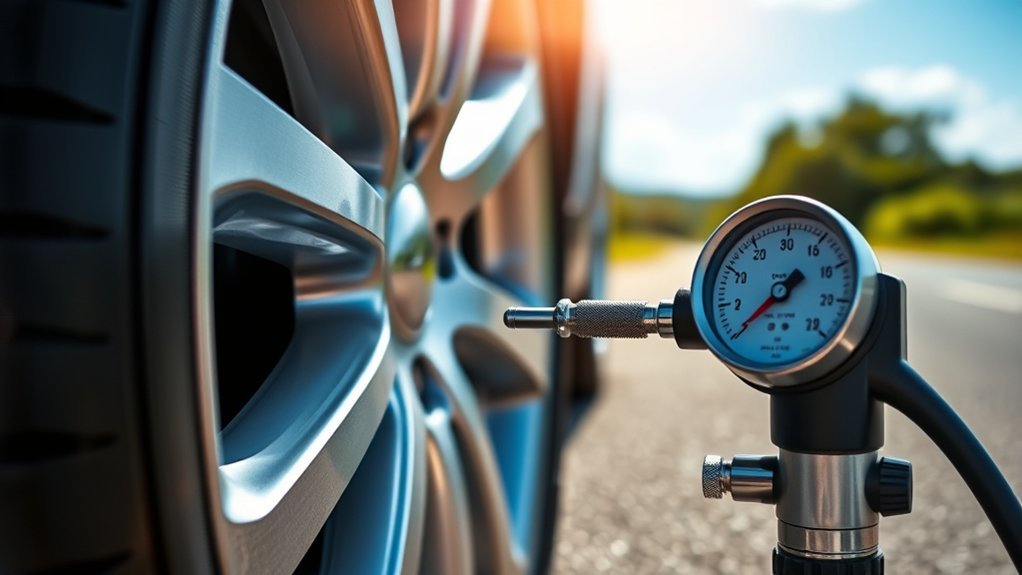
You need a tire inflator because keeping each tire at the manufacturer’s PSI preserves safety, fuel economy, and tread life. Check cold tires monthly with a reliable gauge and follow the vehicle’s door-plaque or manual PSI, not the sidewall maximum. Underinflation causes heat buildup, blowouts, longer braking, and shoulder wear; overinflation shortens center tread contact and grip. Automated inflators and workflows cut downtime and errors, and the next section explains how to implement checks and tools.
Quick Checklist: Keep Tires at the Right PSI
Because tire pressure affects safety, fuel economy, and tread life, check your tires at least once a month using a reliable gauge and the vehicle’s recommended PSI (found in the owner’s manual or door placard). You’ll measure when tires are cold—after three or more hours parked—to get accurate readings and guarantee proper tire inflation. Keep a stick, analog, or digital gauge in your kit and verify each tire against the recommended tire pressure. Note that tires can lose up to 3 PSI monthly from natural seepage, so routine checks prevent gradual underinflation.
When you find deviations, inflate or deflate to the specified PSI so tires properly inflated reduce uneven tread wear and restore ideal rolling resistance. Regular adjustments can improve fuel efficiency by up to 3% and extend tire lifespan. This quick checklist puts control in your hands: check tire pressure monthly, use a reliable gauge, consult the placard, and correct to recommended pressure for consistent performance and freedom on the road.
[Products Worth Considering]

Enhanced Visibility in Low Light: Features a green backlit LCD screen and integrated flashlight, allowing for clear reading of tire pressure even in dark or dimly light conditions.

PROCESS LEVEL ACCURACY: Each ETENWOLF’s digital tire pressure gauge is calibrated manually to ANSI B40.7 Grade 2A(plus-minus 1 PSI).Presta valve adapter not included, if used for bicycles, it must be purchased separately

EXPERT-GRADE CALIBRATION: Each AstroAI Tire Pressure Gauge is calibrated with professional-grade tools, ensuring quick and accurate measurement results within plus-minus 1PSI. Stay prepared for any roadside emergency and travel with peace of mind.
Safety Risks of Wrong Tire Pressure
If your tires are underinflated, they’ll build excessive heat and raise the risk of a blowout at speed. Low pressure also lengthens braking distances, reducing your ability to stop quickly in an emergency. Overinflation cuts tire contact patch and wet traction, increasing the chance of skids and loss of control.
Increased Blowout Risk
When your tires aren’t inflated to the manufacturer’s specification, they generate excess heat from increased flexing and friction, sharply raising the chance of a blowout. You need to treat tire pressure as a liberation tool: correct inflation reduces heat buildup and prevents the structural fatigue that causes sudden failures. Underinflated tires flex more, raising friction and the probability of catastrophic blowouts—factors tied to hundreds of fatalities and numerous crash reports. Overinflation also risks rupture by making the tire brittle and vulnerable to road impacts. You can reclaim control through regular maintenance: check pressure with a gauge, follow vehicle specs, and inspect for damage. Consistent attention to inflation preserves stability, limits unexpected blowouts, and keeps you free to drive safely.
Reduced Braking Performance
Beyond preventing blowouts, correct tire pressure has a direct effect on how quickly your vehicle stops. You depend on properly inflated tires to deliver consistent braking performance; even a 1 PSI drop can cut braking effectiveness by about 10%. Under-inflated tires flatten contact patches, reduce traction and grip, and lengthen stopping distances, which undermines vehicle safety in routine and emergency stops. Over-inflation also harms braking performance by shrinking the contact patch and increasing skid risk on uneven surfaces. You should check tire pressure frequently and set it to the manufacturer’s recommended PSI to restore handling responsiveness and braking consistency. Maintaining correct tire pressure keeps the braking system predictable, lowers accident risk, and frees you to drive with confidence.
Poor Wet Traction
Because wet roads demand consistent tire-to-pavement contact, incorrect tire pressure directly reduces your traction and control: underinflation flattens the tread and raises hydroplaning risk, while overinflation shrinks the contact patch and promotes skidding. You rely on properly inflated tires to channel water and maintain grip; underinflated tires lose surface contact and make steering inputs sluggish, increasing the chance of hydroplaning. Overinflated tires concentrate load on a smaller area, degrading wet traction and lengthening stopping distances measured in studies of emergency braking. Check pressure regularly and set the correct pressure specified by the manufacturer. Maintaining ideal tire pressure improves handling in rain, reduces the likelihood of skids, helps you retain freedom on the road, and can even reduce fuel consumption.
How Under- and Overinflation Hit Fuel Economy and Costs
Although it’s easy to overlook, incorrect tire pressure directly increases your fuel costs: underinflation raises rolling resistance (cutting fuel efficiency by roughly 1% per PSI lost and up to about 3% overall), while overinflation reduces effective road contact and can also lower economy, so keeping tires at the manufacturer’s recommended PSI saves fuel and extends tire life. You’ll notice underinflated tires force the engine to work harder, wasting fuel and contributing to the billions of gallons lost annually. Overinflated tires compromise efficient energy transfer and ride comfort, so neither extreme serves your freedom to move economically.
- Check low tire pressure regularly to protect fuel economy and performance.
- Correcting underinflated tires restores ideal rolling resistance and mpg.
- Avoid overinflated tires to maintain consistent contact and efficient energy use.
- Maintain proper tire inflation to reduce costs and extend the lifespan of your tires.
Monitor pressure, act promptly, and reclaim control of your fuel spend.
Tire Wear Patterns: Why Correct PSI Extends Tire Life
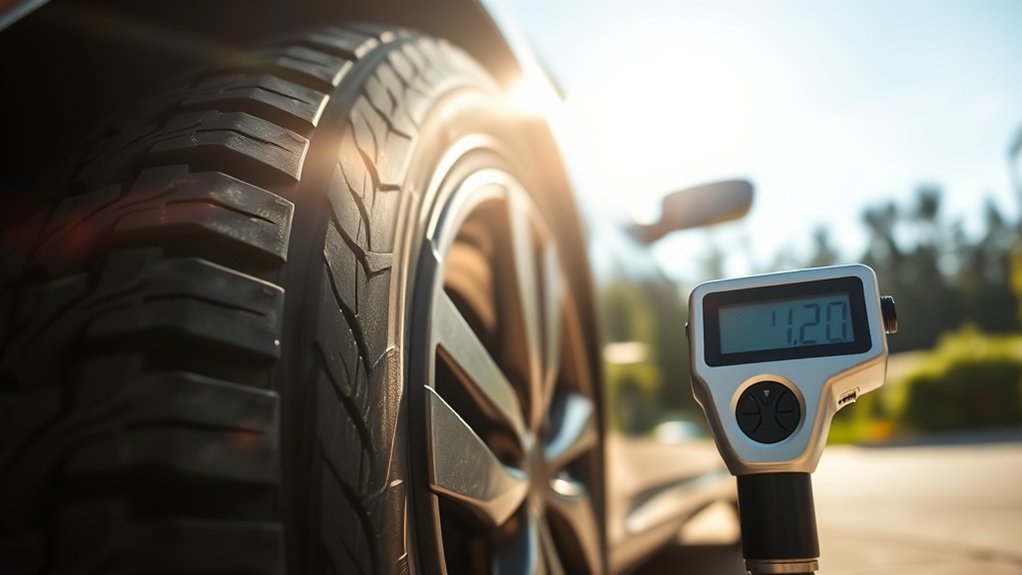
If your tires are underinflated you’ll see excess wear on the shoulders as the sidewalls flex and heat up, while overinflation concentrates load on the center tread and wears it faster. Keeping the PSI at the manufacturer’s spec distributes weight evenly across the contact patch, promoting uniform tread life. Check and top off pressure monthly (tires can lose about 3 PSI) to prevent uneven wear and extend tire lifespan.
Uneven Tire Wear
When your tires aren’t kept at the correct PSI, you’ll see distinct wear patterns: underinflation causes excessive edge wear from increased flex and heat, while overinflation produces center-only wear by concentrating load on the tread crown. You’ll prevent uneven wear by keeping properly inflated tires at the recommended inflation. Underinflated tires generate excessive friction, heat, and edge breakdown that shortens tire life. Overpressure concentrates load, also cutting life and performance. Use a simple monitoring system and monthly checks — tires can lose ~3 PSI per month — to maintain pressure and freedom from breakdowns. Your autonomy depends on reliable equipment; manage inflation proactively.
- Check pressures monthly
- Follow manufacturer recommended inflation
- Inspect tread for edge vs center wear
- Use a monitoring system
Center Vs Shoulder
Because correct PSI keeps the tire tread flat against the road, you avoid shoulder-heavy wear from underinflation and center-only wear from overinflation. You’ll see that properly inflated tires create uniform contact patch, reducing tire wear and extending service life. Check pressure to meet manufacturers recommended PSI; correct inflation minimizes friction and uneven patterns that rob you of freedom on the road. Regular inspection helps you maintain proper tire pressure, cutting replacement frequency and saving resources.
| Condition | Effect |
|---|---|
| underinflated tires | Shoulder wear, higher rolling resistance |
| overinflated tires | Center wear, harsher ride |
Be disciplined: monitor pressures, follow manufacturers recommended settings, and you liberate yourself from premature tire failure.
How Proper Tire Pressure Improves Handling, Braking, and Comfort
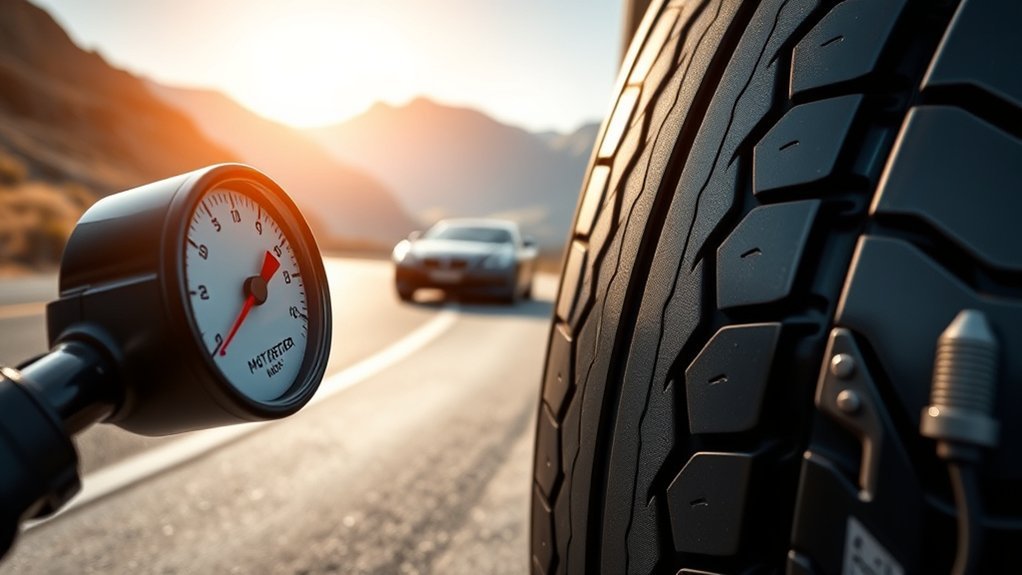
Although often overlooked, keeping your tires at the manufacturer’s recommended pressure directly improves handling, braking, and ride comfort by maintaining the tire’s best contact patch with the road. You’ll notice properly inflated tires provide predictable handling, sharper steering response, and stable cornering because the rubber meets the pavement evenly. That contact also boosts braking performance: grip is maximized, stopping distances shrink, and emergency maneuvers feel controlled. Comfort improves too — you’ll feel fewer vibrations and a smoother driving experience without the harshness of overinflation or the sluggishness of underinflation. Proper pressure reduces uneven wear, extending tire life and preserving consistent performance over time. It even helps fuel efficiency by lowering rolling resistance, freeing you from avoidable waste.
- Maintain pressure to keep the contact patch best.
- Preserve braking performance and shorter stopping distances.
- Balance comfort versus harshness across road surfaces.
- Prevent irregular wear to sustain handling and fuel economy.
How and When to Check PSI (Gauges, Inflators, and TPMS Limits)
If you want consistent performance and safety, check tire pressure at least once a month with the tires cold, since heat raises readings and tires can lose up to 3 PSI monthly from normal leakage. Carry a reliable pressure gauge—stick, analog, or digital—and verify each tire against the PSI on the vehicle sticker or in the owners manual before you add air. Set inflators to the recommended PSI, never to the maximum pressure stamped on the sidewall.
Check all four tires and the spare; TPMS limits often won’t warn until pressure is about 25% low, so don’t rely on it alone. Underinflated tires reduce grip, handling, and fuel efficiency, and increase wear. Inflate slowly, remeasure, and cap valves to prevent leakage. When you want control and mobility, maintain properly inflated tires. Regular, precise checks free you from unexpected failures and keep your vehicle performing as designed.
[Products Worth Considering]

PROCESS LEVEL ACCURACY: Each ETENWOLF’s digital tire pressure gauge is calibrated manually to ANSI B40.7 Grade 2A(plus-minus 1 PSI).Presta valve adapter not included, if used for bicycles, it must be purchased separately
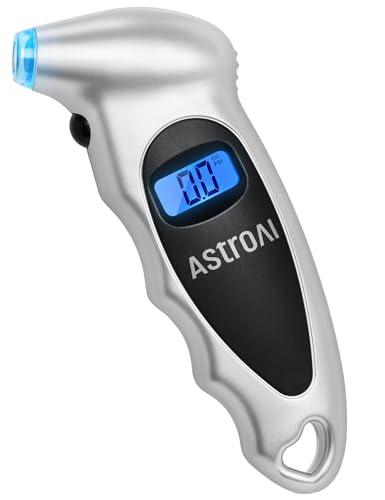
EXPERT-GRADE CALIBRATION: Each AstroAI Tire Pressure Gauge is calibrated with professional-grade tools, ensuring quick and accurate measurement results within plus-minus 1PSI. Stay prepared for any roadside emergency and travel with peace of mind.

Digital Tire Pressure Gauge 2 Pack, Industrial Tire Gauge 3-200 PSI, Calibrated to ANSI B40.7 Grade 2A(plus-minus 0.5%), Air Pressure Gauge with Replaceable AAA Batteries
For Gas Stations & Fleets: Automated Inflators, Workflows, and Troubleshooting
When you manage a gas station or fleet, automated inflators streamline tire care by delivering repeatable, +/-0.5 PSI accuracy and integrated monitoring to cut downtime and safety risks. You’ll rely on automated inflators and digital gauges to enforce proper inflation, reduce blowouts, and extend tire life. Set workflows so fleet operators perform scheduled checks using calibrated pressure gauge references, log results to a central system, and route vehicles for corrective service when readings drift.
Automated inflators deliver ±0.5 PSI accuracy and digital monitoring to enforce proper tire pressure, reduce blowouts, and cut downtime.
- Use digital gauges with wireless reporting to simplify tire maintenance and free staff for higher-value tasks.
- Train attendants and drivers to verify air pressure and compressor function during each stop.
- Implement automated alerts for out-of-range PSI to prevent unsafe operation.
- Troubleshoot by checking compressor health, valve integrity, and gauge calibration before replacing hardware.
You’ll gain operational freedom: consistent tire pressure, safer vehicles, and measurable cost savings from disciplined, tech-enabled processes.
[Products Worth Considering]
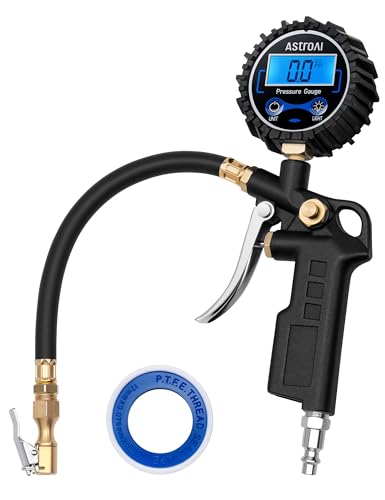
COMPATIBLE WITH both ¼” and ½” NPT air compressors outputs. COMPATIBLE WITH Standard Schrader Valves.
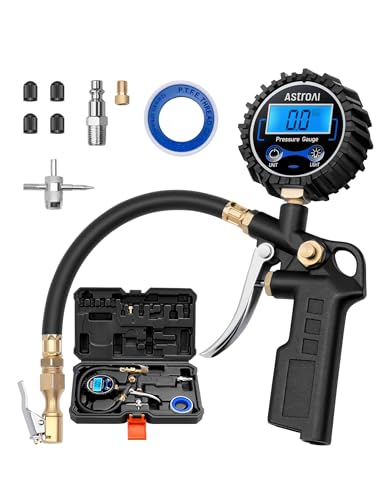
COMPATIBLE WITH both ¼” and ½” NPT air compressors outputs. COMPATIBLE WITH Standard Schrader Valves.

🚕【Accurate Digital Tire Gauge】The digital pressure gauge always returns a stable reading within 1% of the exact pressure of your tire by incredible 0.1 display resolution. No more guessing!
Frequently Asked Questions
Why Is Proper Tire Inflation Important?
Proper tire inflation matters because it prevents uneven tire wear, boosts fuel efficiency, addresses safety concerns, improves driving performance, supports maintenance tips, adapts to seasonal changes, and lets you apply reliable inflation techniques for vehicle freedom.
What Is the 3% Rule for Tires?
Like a heartbeat, the 3% rule says each 1 PSI below recommended reduces fuel efficiency ~3%. You’ll maintain ideal performance, control wear patterns, address temperature effects, follow maintenance tips, and protect safety considerations.
Why Is a Tire Inflator Important?
A tire inflator’s essential: you guarantee pressure monitoring, follow tire maintenance tips, exploit inflator features, boost fuel efficiency, gain safety benefits, perform seasonal checks, and improve emergency preparedness so you stay free, equipped, and in control.
What Is the 5 Psi Rule?
The 5 psi rule means you top up tire pressure when it’s 5 psi below the manufacturer’s recommendation, ensuring inflation benefits: better fuel efficiency, longer tire lifespan, reduced safety concerns, and simple maintenance tips you can follow.
Conclusion
Keep tires at the right PSI — it cuts crash risk and saves money. You’re 3 times more likely to have a tire-related issue with improperly inflated tires, so check pressure monthly and before long trips. Proper PSI reduces uneven wear, improves fuel economy, and sharpens handling and braking. Use a calibrated gauge or automated inflator, follow TPMS limits, and document checks for fleets to prevent downtime and extend tire life.







Leave a Reply