
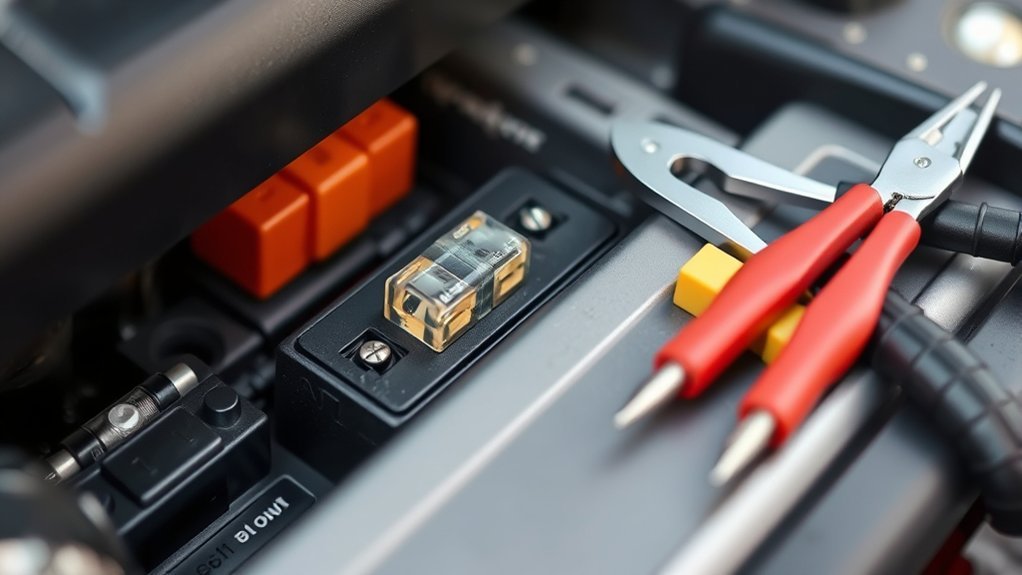
If your tire inflator blows the cigarette-lighter fuse, start at the fuse box. Turn the ignition off. Pull the lighter fuse and inspect it. Confirm it’s blown with a multimeter. Test the outlet with a device you know works. Check the socket contacts for corrosion or damage. Disconnect the battery before replacing the fuse with the correct amperage. If the new fuse blows again, inspect the wiring. You can also use a fused battery lead for high-draw units.
Quick Answer
- Pull the cigarette-lighter fuse. Check it visually or test for continuity with a multimeter.
- Replace blown fuses with the same amperage (usually 20A). Always disconnect the battery first.
- If the new fuse blows immediately, your inflator draws too much power for the socket. Wire it directly to the battery with an inline fuse instead.
- Avoid continuous use. Follow the inflator’s duty cycle. Let it cool between uses to prevent overheating.
- Keep spare fuses in your glove box so you can fix this on the spot.
Quick Check: Is a Blown Fuse the Problem?

If your 12V tire inflator won’t run, a blown fuse is the most likely cause. Open the fuse box and look for darkened or broken elements. This simple check solves many issues immediately.
If the fuse looks fine but you are still unsure, use a multimeter to test continuity across it. No continuity confirms the fuse is open and needs replacing.
Before replacing anything, verify the power source. Plug a known-working device into the cigarette lighter to confirm the socket supplies voltage. If the socket is dead but the fuse is intact, you will need to trace the wiring or check nearby fuses.
If fuses keep blowing under load, consider wiring directly to the battery with alligator clips. Only move to a higher-rated fuse after you have confirmed the wiring and the device’s actual amp draw. Keep spare fuses in your vehicle so you can replace a blown fuse immediately.
Find and Test the Cigarette-Lighter Fuse
Check your owner’s manual to find the fuse box location. It is usually under the dash or in the engine bay. Identify the cigarette-lighter fuse from the diagram inside the cover.
With the ignition off, pull the fuse. Use a multimeter to check continuity. No continuity means the fuse is blown. Replace it with the same amperage (typically 20A). Keep spares on hand. If it blows again, have the wiring inspected. For a primer on how to use a multimeter, Fluke’s guide covers the basics clearly.
Locate Fuse Box
Your owner’s manual will tell you exactly where to find the fuse box. Check under the driver’s dashboard first. Then check the engine compartment. The cigarette-lighter fuse is often rated at 20 amps.
Once you find the box, remove the cover. Follow the diagram to inspect fuses for a broken filament or darkened window. Before touching anything, disconnect the battery to avoid electrical shock. Use a multimeter for continuity to confirm the fuse is blown before you replace it. Always match the replacement to the original amperage.
Identify Lighter Fuse
Check your owner’s manual for the cigarette lighter or accessory outlet fuse location. Remove that fuse with the ignition off and the battery disconnected. Then visually inspect the blade fuse for a broken metal strip. That alone often tells you if it failed.
For a definitive answer, use a multimeter. Touch the probes to the fuse terminals. No continuity means a blown fuse. Most lighters use a 20A fuse, but check your manual for the exact spec. You can find a reference guide to blade fuse types and ratings on the Littelfuse website.
If fuses keep blowing after replacement, you likely have an electrical problem. This could be a short circuit or an overloaded outlet. Carry matching spare fuses and use the manual as your guide.
Test And Replace
Start by disconnecting the battery. Consult your owner’s manual to confirm which fuse controls the cigarette lighter. Remove it with needle-nose pliers or a fuse puller. Test it with a multimeter for continuity. Zero continuity means blown.
- Locate the lighter fuse per the manual and remove it safely.
- Test with a multimeter for continuity; zero continuity means blown.
- Replace with an identical amperage fuse (usually 20A); insert firmly.
- Reconnect the battery, then plug in a device to confirm the cigarette lighter and tire inflator work.
Test the Outlet and Other Vehicle Power Ports
Start by measuring the outlet’s voltage with a multimeter. It should read close to 12V DC. If the reading is absent or too low, the outlet won’t run your inflator.
Plug a known-working device (like a phone charger) into the socket. This verifies it supplies live power under load. While the vehicle is off, inspect the cigarette lighter socket for debris, corrosion, or bent contacts. Clean it gently with contact cleaner and a nylon brush.
If the socket shows no power, check for blown fuses in the fuse box before assuming a deeper fault. Never replace a fuse with a higher amperage than specified. If fuses are intact but power is intermittent, look for loose connections at the outlet harness.
Trace the vehicle wiring back as far as needed to find damaged insulation, chafing, or disconnected terminals. Repair wiring with proper crimps or solder and heat shrink, then retest.
Replace a Blown Fuse Safely
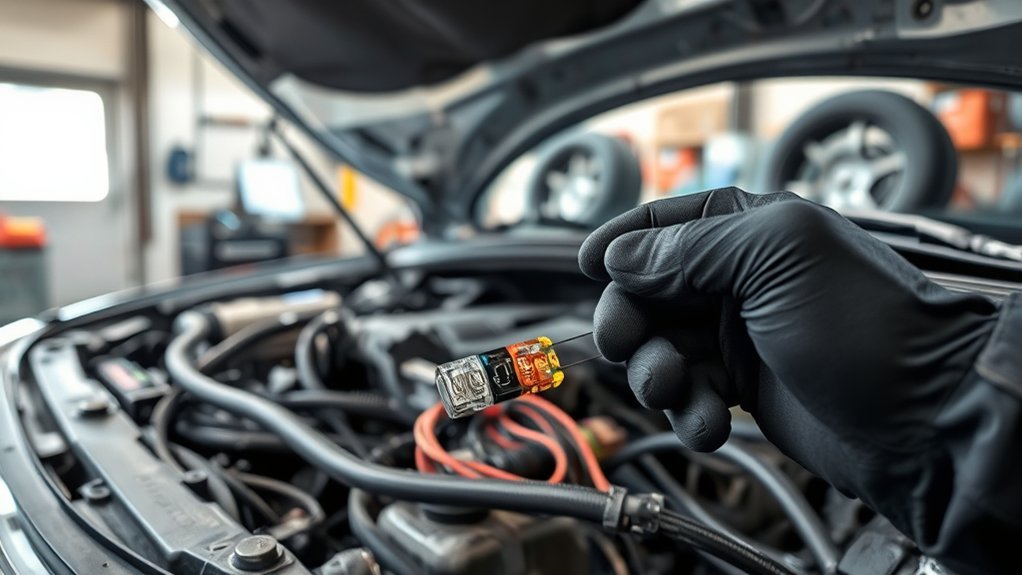
Once you confirm the fuse is blown, replace it safely. Locate the fuse box (dashboard or engine bay) and confirm the correct fuse and rating in the owner’s manual. Then disconnect the vehicle battery before touching anything.
- Use a multimeter to test the suspect fuse for continuity and confirm it’s blown.
- Match the replacement fuse amperage to the manual before inserting.
- Use a fuse puller or needle-nose pliers to extract and install fuses safely.
- Verify the new fuse is seated properly, reconnect power, and test.
If the electrical component still doesn’t work, stop and inspect the wiring. Do not keep swapping fuse after fuse. Repeated replacements without diagnosis can cause bigger problems.
[Products Worth Considering]

Material: Blade fuses are made of premium zinc alloy for good conductivity and corrosion resistance

【Meet all your needed size】– The fuse kit includes micro size 50pcs, mini size 160pcs and standard size 90pcs. Three styles of auto fuses have 11 current specifications (2A /3A / 5A/ 7.5A/ 10A/ 15A/ 20A/ 25A / 30A/ 35A/40A), equipped with a fuse puller.(Not including micro2 fuse.)

[Easy to Use]: Thin tips and offset handles allow for easier use than traditional pliers. The clamp head is convenient for entering and leaving a small space Where human hands and other tools cannot reach, And is not easy to damage the relays and Fuses.𝐏𝐥𝐞𝐚𝐬𝐞 𝐛𝐮𝐲 𝐛𝐲 𝐋𝐙𝐋𝐈𝐍𝐘𝐉𝐋𝐎𝐍𝐆 𝐬𝐭𝐨𝐫𝐞.
Use a Fused Battery Connection for High-Draw Compressors
For high-draw compressors, choose a fuse holder rated for the compressor’s running and stall current. Mount it close to the battery to protect the cable and vehicle wiring. Use heavy-gauge wire and secure alligator or terminal connections. Route cables away from moving parts and hot surfaces. Always install the fuse inline at the battery positive. Match the fuse amperage to the compressor’s specifications.
[Products Worth Considering]

【PROFESSIONAL LINE INSURANCE】 Quelong provides you with 2pcs professional heavy duty 12AWG wire inline fuse holders for better circuit protection, 2pcs each of 15A/20A/25A/30A/40A blade fuses.

Material: gold-plated metal, polycarbonate transparent PC shell
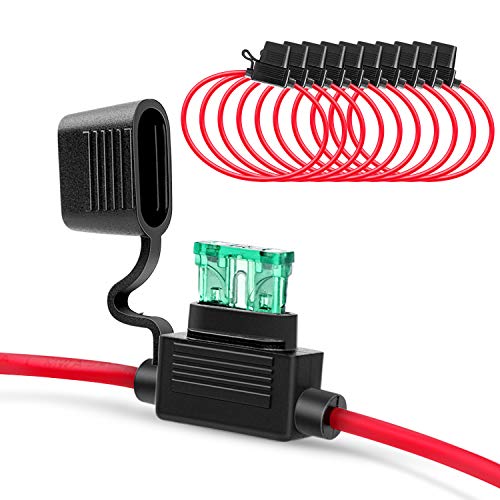
SAFETY PROTECTION: Heavy duty 14 gauge (AWG) red color wire, great look and added protection to the circuit
Fuse Holder Selection
When using a high-draw compressor, connect it to the battery through a quality inline fuse holder. This gives the unit reliable power without overloading the vehicle’s circuits. Choose a holder rated for the compressor’s current (commonly up to 30A). Install a fuse that matches or slightly exceeds the compressor’s steady amp draw. This avoids nuisance blows while still protecting against shorts.
- Pick a fused battery connection rated above the compressor’s steady draw to ensure adequate power.
- Verify the amperage rating and compatibility with tire inflators and vehicle electrical components.
- Use short, heavy-gauge leads to minimize voltage drop.
- Secure and weatherproof the holder for reliable operation.
Safe Battery Wiring
High-draw compressors can pull well over 20 amps. Wire them directly to the battery with an inline fuse. This protects the vehicle’s circuits and keeps performance consistent.
Route the power cord cleanly from compressor to battery. Keep it away from hot or moving parts. Use a fused battery connection with an inline fuse rated just above the compressor’s max draw (typically 25 to 30A). Use 10 or 12 AWG wire and tight, corrosion-free terminals. Clamp the fuse holder close to the battery positive terminal. This keeps the unprotected lead as short as possible.
Inspect the setup before each use for wear, looseness, or heat damage. If you blow a fuse, cut power. Fit the correct replacement, then resume.
Why Inflators Trip Fuses (Amps, Duty Cycle, Faults)
Small inflators can draw high current. They will blow the cigarette-lighter fuse if you push them past their limits or the fuse rating. Treat them like power tools. Monitor the current, respect manufacturer guidelines on compressor duty cycles, and check for faults before each use. Amp draw increases as tire pressure rises. The 20A lighter fuse often cannot handle continuous high-load operation.
- Measure: Watch current draw during use. See if it approaches or exceeds the fuse rating.
- Time: Follow the inflator’s duty cycle. Run it, then let it cool to prevent overheating and higher resistance.
- Inspect: Check the power cord, clamps, and connectors for damage. This prevents voltage drop and extra power demand.
- Respond: If the unit trips fuses repeatedly, stop using it. Address wiring faults or internal motor issues immediately.
Prevent Blown Fuses: Gear and Best Practices
Match your inflator’s amp draw to the lighter-socket fuse rating before you buy. Check the label on your pump and the fuse in the socket. Most sockets are rated at 20 amps. They will blow under higher loads. Use an inflator with built-in protection to limit current and prevent damage.
If your inflator needs more amperage than the socket can handle, connect it directly to the battery with alligator clips. This reduces stress on the outlet. It also gives the compressor the power it needs.
When inflating, monitor pressure and respect the duty cycle. Run the pump in short bursts. Let it cool between cycles. Continuous use overheats the motor and raises the risk of a blown fuse. Check the battery charge before heavy use. A weak battery increases current draw. Keep spare fuses, proper adapters, and a reliable inflator on hand. Follow NHTSA tire safety recommendations for proper inflation pressure.
[Products Worth Considering]

LED Indicator: Cigarette plug features a built-in high-brightness LED indicator that automatically illuminates when powered on. This allows you to visually monitor the power status, to avoid the need for repeated plugging and unplugging tests, and enhances your ability to use it conveniently
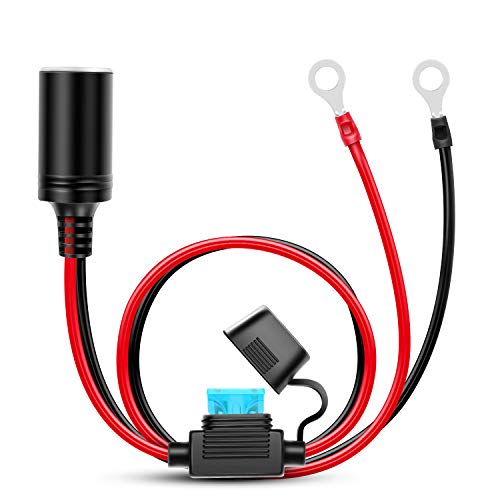
Cable Type: cigarette lighter female socket extension cable; 16 AWG UL certified wire, red cord is positive, black cord is negative.

OPTIMAL QUALITY: Bell Automotive's BellAire 1000 Tire Inflator continuously inflates four P195/65R15 tires.
Frequently Asked Questions
Can I Just Replace a Blown Fuse?
Yes, but follow the right steps. Disconnect power first. Match the replacement to the original fuse type and amperage as shown in your manual. Use a multimeter to confirm the fuse was actually blown before replacing it. If the new fuse blows too, have the wiring and the inflator inspected.
What Is the Most Common Cause of Air Compressor Failure?
Overheating is the most common cause. Follow the compressor’s duty cycle. Make sure there’s adequate ventilation. Monitor air pressure, and check the power supply before each use. Routine inspection goes a long way toward preventing failure.
How to Reset a Portable Tire Inflator?
Disconnect power and let the unit cool down completely. Then follow the reset button or the steps in the manual. While you wait, inspect the fuse and replace it if needed. If the unit still won’t work, check the power cord and connections for damage.
How to Diagnose a Blown Fuse?
Pull the fuse and look for a broken strip inside the casing. Then use a multimeter to test continuity across the terminals. No continuity confirms it’s blown. Most failures come down to a simple break in the fuse element. A multimeter gives you a definitive answer in seconds.
Conclusion
Check the fuse, swap it, and test the outlet. If the new fuse holds, keep using the fused cigarette lighter or a fused battery lead. Follow duty-cycle limits and carry a spare fuse. If a fuse blows again, stop and inspect for wiring faults before replacing anything else. When in doubt, get professional help. Never guess with electrical systems. Safety comes first.







Leave a Reply