The right tire inflator connector must match three things: the valve on the tire, the airflow design of the inflator, and the way you need to reach and hold the valve stem. A connector that fits poorly can leak, bend a valve, or make a pressure gauge respond incorrectly, while a compatible chuck makes inflation faster and easier to control.
Quick Answer
Choose a tire inflator connector by matching the valve type, flow type, thread or coupler, pressure rating, and access angle. Most cars use Schrader valves. Use open-flow chucks with many inline inflator gauges, closed-flow chucks on suitable direct air lines, and angled or extended chucks for recessed or dual-wheel stems.
Key Takeaways
- Match flow to the tool: Open-flow chucks are commonly used with inline gauges and hand-operated inflator tools. Closed-flow chucks are commonly used on direct compressor hoses or systems designed for a sealing chuck.
- Match the valve: Cars, trucks, motorcycles, and many bicycles use Schrader valves. Many road and performance bicycles use Presta valves.
- Match the access: Straight chucks work for exposed stems, while 45-degree, 90-degree, dual-head, swivel, flexible, or extended chucks help with tight wheel openings and inner duals.
- Check every connection: Verify the thread size, male or female orientation, quick-coupler profile, maximum working pressure, and seal condition before pressurizing the system.
At a Glance
| Time Required | About 5–10 minutes to identify the valve, inspect the inflator connection, and test the seal |
| Difficulty | Easy, provided the flow type and fitting are clearly labeled |
| Tools Needed | Your inflator or air hose, the connector, an accurate pressure gauge, and a wrench only if a threaded fitting must be changed |
| Cost | Varies by chuck, adapter, material, and reach; no purchase is needed if the existing connector already matches |
Quick Pick: Best Tire Inflator Connector for Your Vehicle
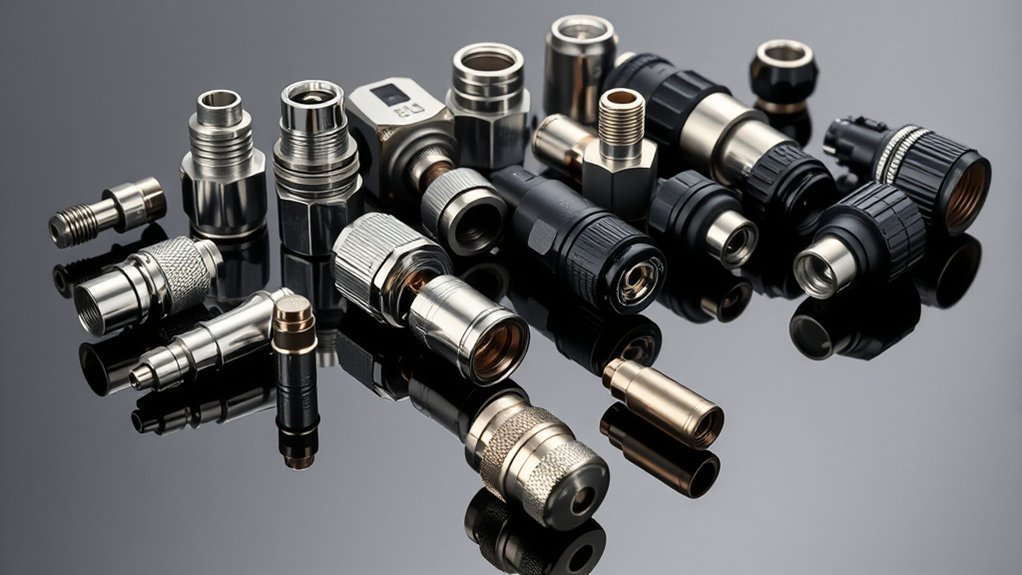
Start with the vehicle and valve location, then confirm the flow type and fitting on your inflator. The following choices cover most common jobs:
- Passenger cars and light trucks: A straight push-on or lock-on Schrader chuck is usually sufficient when the valve stem is easy to reach.
- Motorcycles and small wheels: A 45-degree or 90-degree chuck reduces hose strain where brake discs, spokes, or a narrow rim opening block straight access.
- RVs, trailers, semis, and dual rear wheels: A dual-head or extended-reach chuck helps reach the inner stem without forcing the hose against the wheel.
- Presta bicycle valves: Use a Presta-compatible pump head, locking Presta chuck, or a suitable Presta-to-Schrader adapter.
- Repeated shop work: A lock-on or push-to-lock design can reduce hand fatigue, but the chuck still must match the inflator’s airflow design.
Brand-specific models can illustrate these design choices. For example, JACO lists its Lightning™ T-Series as an open-flow, 7-inch extended chuck with dual swivel points; its S-Series as a straight open-flow locking chuck; and its S2 and L2 models in open- or closed-flow versions. The L2 adds a 90-degree body. These are examples, not universal requirements, and you should confirm the selected version before ordering.
Note: “Lock-on,” “push-to-lock,” “open-flow,” and “closed-flow” describe different features. The locking method tells you how the chuck grips the valve; the flow type tells you how air moves through the chuck.
What Tire Inflator Connectors Are and Why They Matter
A tire inflator connector, often called an air chuck, is the mechanical link between the air source and the tire valve. It must press or open the valve core, seal around the stem, and let the inflator add, hold, measure, or release air as designed.
The connector affects four practical results:
- Seal quality: A worn gasket, damaged stem, or poorly aligned chuck can leak while you inflate.
- Gauge response: A chuck with the wrong flow design can prevent an inline gauge from sensing tire pressure correctly.
- Valve protection: Excess side load from a stiff hose or bad angle can stress a metal or rubber valve stem.
- Access: A straight chuck may not reach an inner dual, recessed motorcycle valve, or valve positioned behind a wheel spoke.
Chucks, Nozzles, and Valve Fits: At a Glance
| Connector feature | Best use | Main check |
|---|---|---|
| Manual push-on chuck | Quick checks on accessible Schrader stems | Hold it straight to prevent leakage |
| Clip-on or lever-lock chuck | Hands-free inflation | Clip must grip the valve threads securely |
| Push-to-lock chuck | Frequent attach-and-release cycles | Confirm full engagement before adding air |
| Dual-head or extended chuck | Inner dual wheels and recessed stems | Head angle and reach |
| Angled or swivel chuck | Motorcycles, trailers, and tight wheel openings | Swivel should not leak under hose tension |
| Presta head or adapter | Road, gravel, and many performance bicycles | Open the Presta locknut before inflation |
Common Chuck Styles
Manual chucks require hand pressure to maintain the seal. Clip-on and lever-lock chucks grip the valve stem threads. Automatic lock-on and push-to-lock chucks use an internal gripping mechanism and release button. Dual-head chucks provide two access angles, while swivel heads let the hose rotate without twisting the stem.
No mechanism can guarantee a perfect seal on every valve. Dirt, damaged threads, a bent stem, a worn gasket, or side pressure from the hose can still cause leakage.
Open vs Closed
Open-flow chucks have no internal shutoff valve, so air can pass through whenever the upstream inflator allows it. They are commonly paired with inline tire inflator gauges, trigger-controlled tools, and some portable inflators.
Closed-flow, also called sealing-type, chucks contain a valve that opens when the chuck engages the tire valve. They are commonly used on direct compressor hoses and systems specifically designed for that style. Milton, for example, states that several of its closed/sealing chucks are not intended for use with inflator gauges.
Warning: Do not choose flow type by handle color alone. Color coding varies by maker. Read the product label or manual and verify whether the chuck is open-flow or closed-flow.
Valve Fit Guide
Most passenger vehicles, trucks, motorcycles, and many bicycles use Schrader valves. Many road, gravel, and performance bicycles use Presta valves. Woods or Dunlop valves remain common on some bicycles outside North America, and newer Schwalbe Clik Valve systems use their own click-on interface while retaining compatibility with many Presta-style pump heads.
Keep the correct head or adapter for the valves you service. A universal bicycle pump head may support more than one bicycle valve, but an automotive Schrader chuck should not be forced onto a Presta stem without a compatible adapter.
Common Chuck Types: Lock-On, Push-to-Lock, Open vs Closed Flow
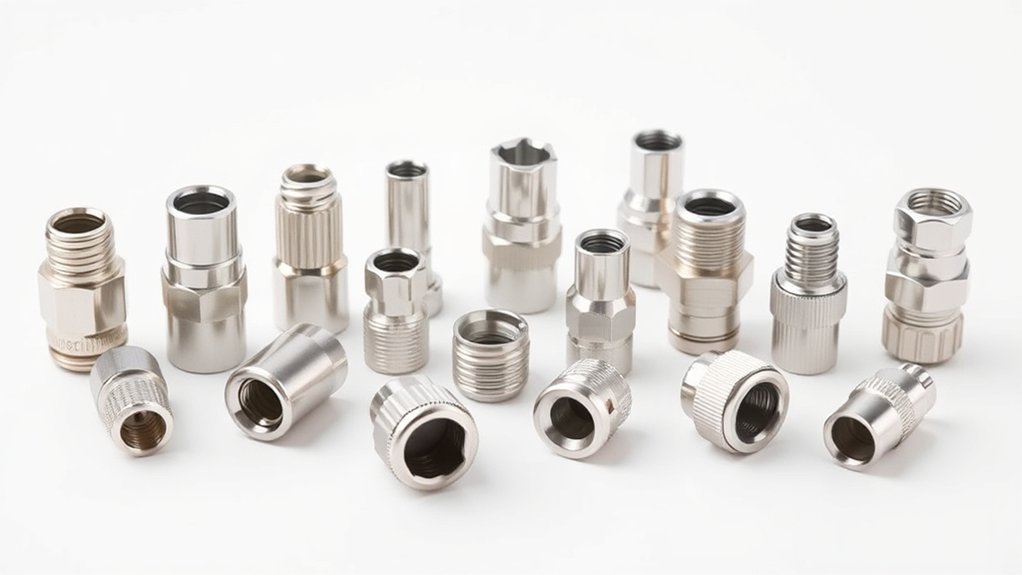
Lock-On vs Push-to-Lock
A lock-on chuck grips the valve stem and stays attached without constant hand pressure. A push-to-lock chuck is a type of locking design that engages when pushed onto the stem and usually releases with a button or collar.
- Choose a lever or clip lock when you want a simple mechanical grip that is easy to inspect.
- Choose push-to-lock when you make frequent connections and want fast one-handed operation.
- Choose a swivel head when hose twist pulls the chuck sideways.
- Choose a longer or dual-head chuck when the stem is recessed or located on an inner dual wheel.
Pro Tip: Before buying a premium locking chuck, test whether the real problem is the connector angle. A less expensive angled or swivel chuck may fix leakage caused by hose tension.
Open Flow vs Closed
Flow type is independent of the locking mechanism. The same product family may offer both open- and closed-flow versions. Match the version to the tool:
- Use open-flow when the inflator manufacturer calls for an open chuck, especially with many inline gauges and hand-operated trigger tools.
- Use closed-flow when connecting directly to an air line or when the system manufacturer specifies a sealing chuck.
- Do not connect an open-flow chuck directly to a pressurized tank hose without an upstream hand valve or inflator tool, because air can discharge through the unattached chuck.
- Do not assume a closed-flow chuck will work with an inflator gauge. Some closed chucks prevent the gauge from receiving the pressure signal it needs.
Nozzles & Adapters: When to Use Angled, Flexible, or Specialty Fittings
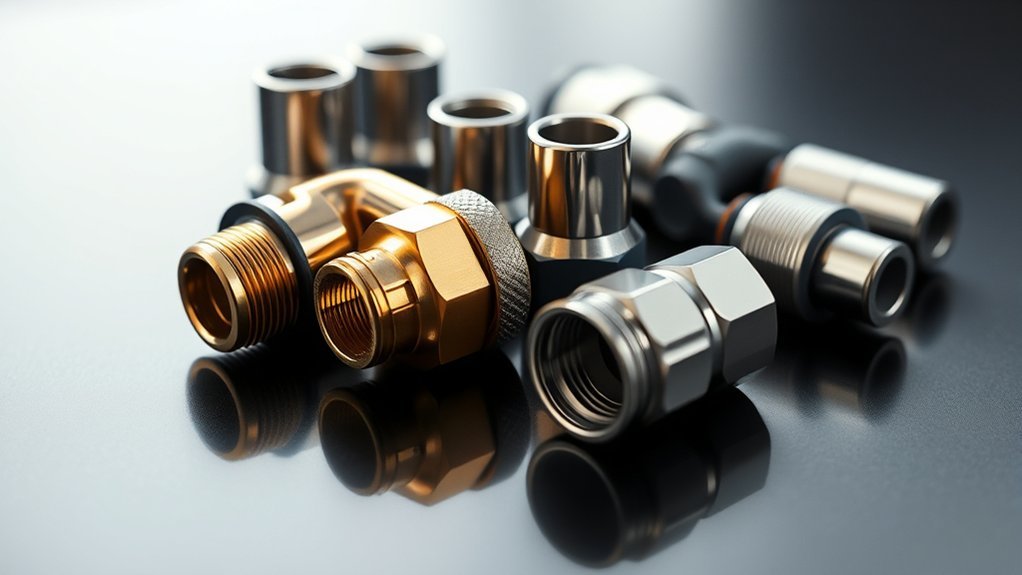
Choose the shape of the connector after checking the airflow and valve type:
- Straight: Best for exposed stems with a clear approach.
- 45-degree or 90-degree: Helps when spokes, brake components, wheel covers, or rim depth block straight access.
- Flexible extension: Repositions the hose where a rigid chuck cannot align without side load.
- Dual-head: Reaches forward- or rear-facing stems and inner dual wheels.
- Swivel: Lets the hose rotate while the sealing face remains aligned.
- Presta adapter: Allows a Schrader-style pump head to service a Presta valve, although a dedicated Presta head is often easier for regular bicycle use.
Flexible extensions and adapters add more joints, so they also add potential leak points. Inspect each seal and keep the assembly as simple as the job allows.
Valve Fits Explained: Schrader, Presta, and Specialty Stems
Schrader valves are approximately 8 mm in outside diameter and use a spring-assisted internal valve core. The chuck must depress the core pin while sealing around the stem. This valve is standard on most cars and motorcycles and is also used on many bicycles.
Presta valves are approximately 6 mm in outside diameter. Before inflation, loosen the small locknut at the tip and briefly press the tip if it is stuck. Use a Presta-compatible head, a locking Presta chuck, or an adapter. A self-locking chuck is convenient but not required.
Woods or Dunlop valves are another bicycle type found in many markets. They require a compatible pump head or adapter. Schwalbe Clik Valve systems use a click-on head; Schwalbe and Park Tool state that many standard Presta-compatible pumps can also inflate them, although pressure-gauge compatibility can vary by pump design.
Match Connectors to Use Cases: Cars, Bikes, RVs, Trucks
Choose the connector in this order: valve type first, flow type second, fitting third, and access angle last.
- Cars and pickups: Schrader chuck; straight, angled, or lock-on depending on stem access.
- Motorcycles: Schrader chuck with a short 45-degree or 90-degree head is often easier around brake discs and spokes.
- Bicycles: Match Schrader, Presta, Woods/Dunlop, or Clik. Use a dedicated bicycle head when accurate low-volume pressure control matters.
- RVs and trailers: Use a pressure-rated extended or dual-head chuck that reaches recessed stems without bending them.
- Dual-wheel trucks and semis: Use a long dual-head or locking chuck. Commercial servicing may require remote inflation equipment and other safety controls.
- Automatic multi-tire systems: Use only the flow type and connector specified by the system maker; many use closed-flow chucks, but the requirement is system-specific.
Choose Open vs Closed Flow: How Flow Affects Your Setup
Use this checklist before attaching a new connector:
- Identify the inflator control: Does a trigger or hand valve control the air upstream of the chuck?
- Read the tool instructions: Look for “open flow,” “closed flow,” “sealing type,” or “for inflator gauges.”
- Check what happens when disconnected: An open-flow chuck can pass air while unattached if the upstream valve is open. A closed-flow chuck should remain shut until it engages a valve stem.
- Confirm gauge behavior: Connect to a tire and compare the inflator reading with a trusted gauge. A steady, repeatable mismatch may indicate an incompatible chuck, a restriction, or a calibration problem.
- Check multi-hose instructions: Do not assume every multi-tire system uses the same flow design.
Thread, Coupler, and Pressure Compatibility
Valve fit is only one side of compatibility. The back of the chuck must also fit the inflator or hose.
- Thread size: Many North American chucks use 1/4-inch NPT, but this is not universal. Check whether the chuck has male or female threads.
- Quick-coupler profile: NPT describes the threaded joint, not the shape of the quick-connect plug. Industrial/M-style, automotive/Tru-Flate, ARO, and European profiles may not interchange correctly.
- Hose barb size: A barbed chuck must match the hose’s inside diameter and be secured with the proper clamp or fitting.
- Pressure rating: The chuck, hose, coupler, gauge, and regulator must all be rated for the maximum pressure the air system can supply.
- Materials and seals: Brass and steel resist wear; aluminum reduces weight. Replaceable rubber seals can extend service life.
Note: The connector’s maximum pressure rating is not the correct inflation pressure for the tire. For road vehicles, use the vehicle maker’s recommended cold pressure on the door placard or in the owner’s manual.
Hookup, Quick-Release, and Troubleshooting
How to Attach an Air Compressor Nozzle to a Tire
- Park safely, switch off the vehicle, and locate the recommended cold tire pressure.
- Inspect the tire, valve stem, valve threads, and connector seal for damage or debris.
- Remove the valve cap. For a Presta valve, loosen the tip locknut.
- Align the chuck straight with the stem. Push it on fully, then engage the lever, clip, collar, or automatic lock.
- Listen for continuous leakage. A brief hiss during connection can be normal; a steady hiss means the chuck is not sealed.
- Inflate in short bursts and watch the gauge. Do not exceed the vehicle or tire manufacturer’s instructions.
- Release the lock and pull the chuck off straight. Recheck pressure with the same gauge or a trusted reference gauge.
- Replace the valve cap and check the valve area for leakage.
Warning: Large truck, bus, agricultural, and multi-piece rim assemblies can release extreme energy if a tire or rim fails. OSHA requires specific equipment and procedures for covered workplace servicing, including a clip-on chuck, an in-line valve with a gauge or preset regulator, and enough hose to let the worker stand outside the trajectory.
Why the Connector Leaks
- Leak stops when you hold the chuck at an angle: The seal is worn, the head is misaligned, or hose tension is pulling sideways.
- Air leaks from the valve after removal: The valve core may be loose, dirty, bent, or damaged.
- Gauge does not respond: The chuck may have the wrong flow type, may not be depressing the valve core, or the hose may be blocked.
- Chuck will not lock: Check valve thread damage, stem diameter, debris, and whether the chuck is designed for that valve type.
- Quick coupler leaks at the hose: The plug profile may not match the coupler, or the coupler seal may be worn.
- Pressure drops after disconnecting: Recheck the valve core and tire for leakage; do not assume the brief disconnect hiss came from the tire.
Maintenance and Replacement
Keep the chuck clean and dry. Wipe away grit before connection, inspect the sealing washer or O-ring, and replace damaged seals where the maker provides service parts. Replace the connector if the body is cracked, the lock will not hold, the swivel leaks, the threads are stripped, or readings remain inconsistent after the gauge and hose are checked.
Frequently Asked Questions
What are the different types of air chucks?
Common designs include manual push-on, clip-on, lever-lock, automatic lock-on, push-to-lock, dual-head, angled, swivel, and extended-reach chucks. Each may also be open-flow or closed-flow, so check both the grip style and the airflow design.
Are air chucks universal?
No. Compatibility depends on the tire valve, open- or closed-flow design, thread size and direction, hose barb size, quick-coupler profile, and pressure rating. A chuck that fits a Schrader valve may still be incompatible with the inflator behind it.
What are the different types of tire inflators?
Common inflators include manual hand and foot pumps, 12-volt portable compressors, cordless inflators, shop compressor tools with gauges, and automatic multi-tire systems. The connector must match the tool’s valve support, flow design, fitting, and pressure range.
How do you attach an air compressor nozzle to a tire?
Inspect the stem, remove the cap, align the correct chuck straight with the valve, push it on fully, and engage its lock if equipped. Inflate in short bursts, release the connector without bending the stem, then verify pressure with an accurate gauge.
Should I use an open-flow or closed-flow air chuck?
Use the type specified by the inflator or air system manufacturer. Open-flow is common with inline gauges and trigger-controlled tools. Closed-flow is common on direct air lines and some automatic multi-tire systems. The wrong type can vent air or prevent correct gauge operation.
Can I use a Schrader chuck on a Presta valve?
Yes, but only with a suitable Presta-to-Schrader adapter. Do not force an automotive chuck directly onto the narrow Presta stem. For frequent bicycle inflation, a dedicated Presta or dual-valve pump head is usually more convenient.
Is 1/4-inch NPT universal for tire inflator connectors?
No. It is common on North American pneumatic tools, but other thread sizes and hose fittings exist. Also, 1/4-inch NPT does not identify the quick-coupler profile, so a threaded adapter may still be needed.
Why does air escape when I remove the chuck?
A short hiss is often air leaving the chuck or hose. A long hiss or continued loss can mean the connector was removed slowly, the valve core is sticking, or the core is loose or damaged. Recheck the tire pressure and test the valve for leakage.
Conclusion
The best tire inflator connector is not simply the one with the strongest lock. It is the connector that matches the valve, airflow design, fitting, working pressure, and access angle of your setup. Use open-flow or closed-flow only as the inflator maker specifies, choose a head that reaches the stem without side load, and test the seal and gauge response before relying on the tool.
For vehicle tires, inflate to the recommended cold pressure on the door placard or in the owner’s manual. For large or commercial wheel service, use the required remote inflation and safety equipment rather than standing in the wheel’s trajectory.
Sources
- National Highway Traffic Safety Administration: TireWise — recommended cold tire pressure, placard guidance, and monthly pressure checks
- OSHA 29 CFR 1910.177 — equipment and safe-position requirements for covered rim-wheel servicing
- Milton Industries: Closed/Sealing Air Chuck — closed-flow terminology and inflator-gauge compatibility warning
- JACO: Lightning S2 Air Chuck — manufacturer definitions and use cases for open- and closed-flow versions
- Park Tool: Tire, Wheel and Inner Tube Fit Standards — Schrader, Presta, and Woods/Dunlop valve identification
- Schwalbe Clik Valve — Clik system operation, conversion options, and backward compatibility