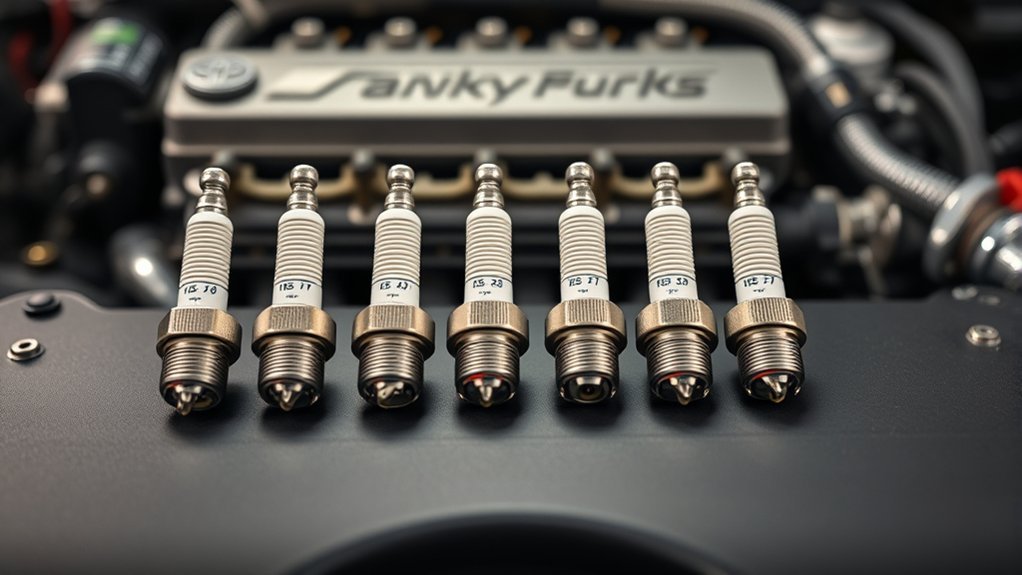
Understanding spark plug heat range is essential for optimizing your Toyota Supra’s performance. You’ll want to choose the right plugs based on your engine type—Denso PK16R11 for naturally aspirated models and PK20R11 for turbo setups. If you’ve upgraded your power, consider colder plugs to prevent overheating and fouling. Regular inspection and proper gapping, especially in turbocharged applications, guarantee maximum efficiency. Discover how else you can enhance your Supra’s performance with the right spark plugs.
Understanding Spark Plug Heat Range and Its Importance
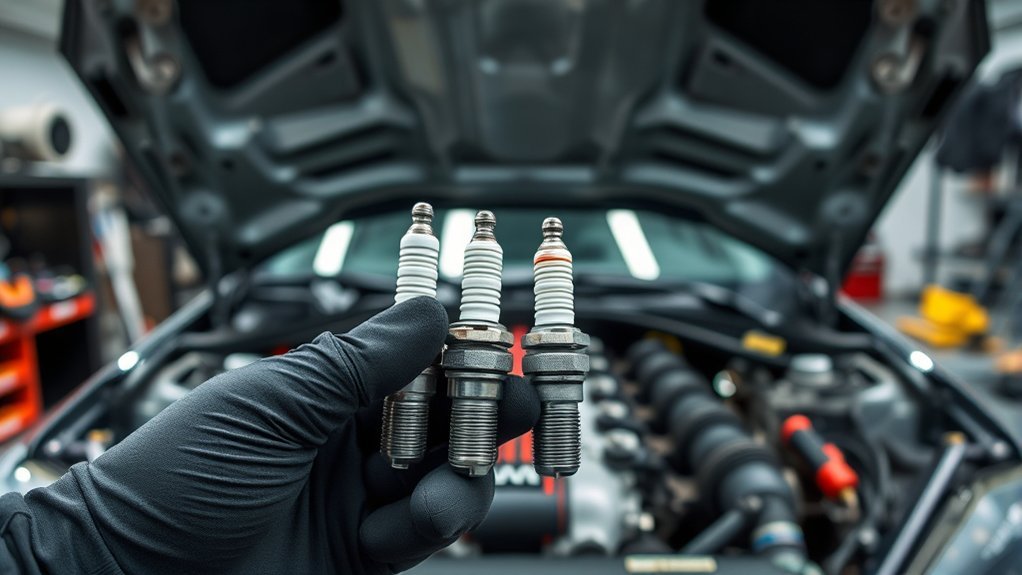
Understanding the heat range of a spark plug is important, especially when tuning a high-performance engine like the Toyota Supra. The heat range determines how effectively a spark plug transfers heat from the combustion chamber to the engine head. For best performance, you’re aiming for temperatures between 500°C and 850°C. When you increase your engine’s power by 75-100 hp, consider using colder plugs, as they dissipate heat more quickly, preventing overheating.
It’s significant to note that heat range numbers differ by manufacturer; higher numbers in domestic brands indicate hotter plugs, while in Japanese brands like NGK and Denso, they signify colder plugs. Selecting the correct heat range is essential—too hot can cause overheating, whereas too cold can lead to fouling. Additionally, the insulator nose length affects heat retention; a longer nose retains heat, while a shorter one helps mitigate fouling. Choosing wisely guarantees your Supra performs at its peak.
How to Choose the Right Spark Plug for Your Supra
Choosing the right spark plug for your Toyota Supra involves more than just picking a part off the shelf. You need to take into account several factors to guarantee peak performance. Follow these guidelines:
- Model Compatibility: Use Denso PK16R11 for naturally aspirated models or Denso PK20R11 for turbocharged versions.
- Heat Range: If you’re modifying your Supra for increased horsepower, opt for a colder spark plug—typically one heat range colder for every 75-100 hp increase.
- Maintenance: Inspect spark plugs every 15,000 miles, making sure the gap is set between 0.6mm to 0.9mm, especially for tuned Supras under higher boost levels.
Understanding the heat range is essential; remember that a higher number in domestic brands indicates a hotter plug, while it’s the opposite for Japanese brands like NGK and Denso. This knowledge empowers you to make informed choices for your Supra’s performance.
When to Upgrade From Stock to Colder Spark Plugs
When your Toyota Supra’s modifications push the power output beyond the stock levels, upgrading to colder spark plugs becomes essential for maintaining engine performance and reliability. If you’re adding 75-100 horsepower, it’s time to take into account a change. For turbocharged setups, using a spark plug one heat range colder than stock, like the NGK BKR7E, helps manage increased combustion temperatures effectively.
| Power Output (whp) | Stock Spark Plug | Recommended Colder Plug |
|---|---|---|
| Up to 600 | Stock | N/A |
| 600 – 700 | Stock | N/A |
| 700+ | N/A | NGK BKR7E |
| Turbocharged | Stock | NGK BKR7E |
| Regular Monitoring | Essential | Important |
Regularly check your spark plug condition, as colder plugs can show signs of fouling or wear differently than stock plugs, ensuring you maintain peak performance.
The Impact of Modifications on Spark Plug Selection
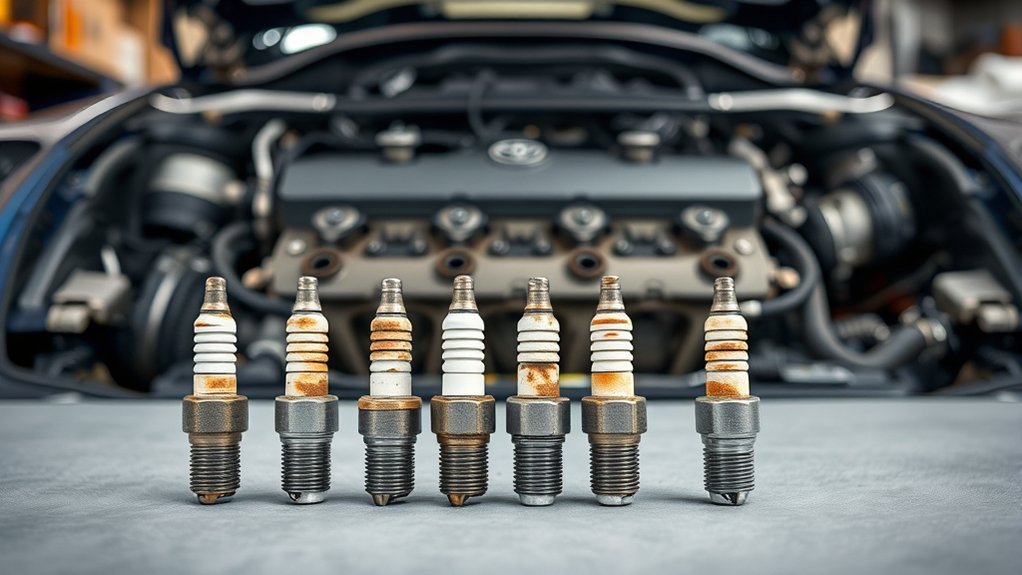
Modifications to your Toyota Supra greatly influence spark plug selection, particularly as power output increases. As you boost horsepower through enhancements like turbocharging or supercharging, you’ll need to take into account a colder heat range for your plugs. Here are three key considerations:
- Heat Range Adjustment: For every 75-100 horsepower increase, switch to a plug one heat range colder.
- Plug Selection: Stock plugs (NGK heat range 6) may need replacing with NGK BKR7E or Denso IK22 to handle higher thermal demands.
- Insulator Nose Length: Colder plugs have longer insulator noses, minimizing fouling and managing elevated combustion temperatures.
Using plugs that’re too hot can lead to misfires or engine damage. Regular monitoring and precise gapping adjustments are essential after modifications to maintain peak performance and prevent issues like detonation. Choose wisely to liberate your Supra’s full potential!
Comparing Spark Plug Brands: Heat Range Insights for Your Supra
When comparing spark plug brands for your Toyota Supra, understanding heat range variations is essential for ideal performance. NGK and Denso offer distinct advantages; NGK’s range numbers reflect a direct correlation to temperature thresholds while Denso’s system requires careful interpretation for modifications. Selecting the right brand and heat range can greatly impact your engine’s efficiency and reliability, especially under increased power demands.
Brand Performance Comparison
While selecting the right spark plug for your Toyota Supra, understanding the differences in heat range across brands is vital for enhancing performance. Different manufacturers provide varied plug heat characteristics that can greatly affect your vehicle’s efficiency. Consider these key comparisons:
- NGK: Offers colder plugs like the BKR7E for turbo applications, guaranteeing durability and reduced risk of detonation.
- Denso: Provides iridium options such as IK22, known for high performance under boost, with ideal gap settings.
- Champion & Autolite: Typically indicate hotter plugs with higher numbers, which may not be suitable for modified vehicles.
Choosing the correct NGK part is essential; improper heat range can lead to misfiring and performance issues in your Supra. Regular checks guarantee maximum operation.
Heat Range Variations
Understanding the heat range variations between spark plug brands is essential for maximizing your Toyota Supra’s performance, especially under different driving conditions. Different manufacturers define heat ranges differently; for instance, higher numbers signify hotter plugs in domestic brands like Champion, while in Japanese brands like NGK and Denso, they indicate colder plugs. For turbocharged applications, using one heat range colder plug, such as the NGK BKR7E, is advisable for moderate forced induction. This table illustrates the variations:
| Brand | Heat Range | Best Application |
|---|---|---|
| NGK | 6 | Stock Turbo Setup |
| NGK | 7 | Mild to Medium Boost |
| Denso | 22 | High-Performance Racing |
| Champion | 4 | Standard N/A Applications |
Selecting the right heat range can prevent overheating and guarantee peak combustion.
Essential Maintenance Tips to Extend Your Spark Plug Lifespan
To extend the lifespan of your spark plugs, regularly adjust their gap to guarantee ideal combustion efficiency. Timely replacement is vital; replacing them every second service prevents wear and fouling that can hinder engine performance. Consistently monitoring these factors will help you maintain peak engine functionality and avoid costly repairs.
Regular Gap Adjustments
Maintaining the correct spark plug gap is essential for guaranteeing ideal engine performance in your Toyota Supra. Regular gap adjustments are vital to prevent misfiring and enhance combustion efficiency. Here’s how to handle it:
- Inspect every second service: Check for gap wear and overall condition to guarantee optimal gap size.
- Adjust in 0.1mm increments: For stock plugs, aim for 0.9mm gap in turbocharged setups, while colder plugs should be around 0.7mm.
- Set before installation: Iridium plugs shouldn’t be gapped after installation, as re-gapping can damage the electrode.
Timely Spark Plug Replacement
Regular gap adjustments are just one part of keeping your Toyota Supra’s ignition system in prime condition; timely spark plug replacement is equally important for overall performance. Inspect your spark plugs every 15,000 miles or during each service to catch any wear or fouling early. Replace copper plugs every 4-6,000 miles, platinum plugs every 25,000 miles, and iridium plugs every 30,000 miles for peak ignition. Avoid re-gapping iridium plugs, as this can damage the electrode. Additionally, consider the heat range of your spark plugs—using a colder plug for modified engines can help manage higher combustion temperatures and prevent detonation. Consistent maintenance guarantees efficient fuel combustion and enhances your Supra’s driving experience.
How to Spot Faulty Spark Plugs?
How can you tell if your spark plugs are failing? Identifying faulty spark plugs involves careful inspection of key indicators that affect the combustion chamber’s performance. Here are three essential signs to watch for:
- Electrode Wear: Check for excessive gap widening or erosion on the spark plug electrodes, which can indicate poor performance.
- Insulator Condition: Look for cracks or carbon buildup on the insulator. A cracked insulator may lead to misfiring, while carbon deposits suggest improper combustion.
- Fouling Issues: Observe for oil or fuel fouling. Oil fouling indicates worn piston rings, while fuel fouling often results from a rich fuel mixture or failing injectors.
Additionally, monitor for consistent misfires or rough idling after the engine warms up. Evaluating the spark plug’s color post-removal can also offer insights into combustion quality, revealing vital information about your engine’s health.
What to Do If You Find Faulty Spark Plugs?
Finding faulty spark plugs is a critical moment that requires immediate action to maintain your engine’s performance. Start by inspecting the plugs for wear, particularly carbon buildup, which can indicate an incorrect heat range or excessive gap. If the lifespan suggests it’s time for a change—copper plugs every 4-6,000 miles, platinum every 25,000, and iridium every 30,000—don’t hesitate to replace them. When selecting plugs to use, make sure they match your vehicle’s specifications; for tuned Supras, consider using colder plugs to cope with heightened power levels. Additionally, check the ignition coils, as they can fail more frequently and contribute to misfires. Regular maintenance and inspections of both spark plugs and ignition components will help prevent performance issues, making certain your engine runs efficiently. Addressing these details promptly can enhance your driving experience and preserve your vehicle’s integrity.
Properly Gapping Your Spark Plugs for Performance
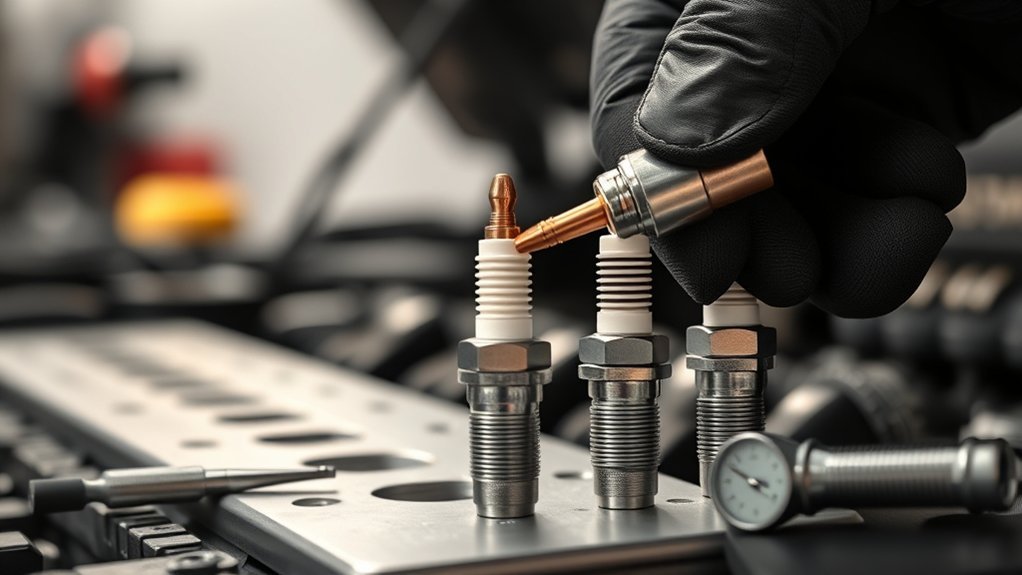
Properly gapping your spark plugs is essential for maximizing engine performance, especially in turbocharged applications. You’ll need to adhere to specific gap measurements—0.9mm for up to 1 bar of boost and 0.7mm for higher pressures—to prevent misfires and guarantee efficient combustion. Regular checks and precise adjustments in 0.1mm increments can remarkably enhance ignition efficiency and overall engine health.
Importance Of Correct Gapping
Correct gapping of your spark plugs plays an essential role in optimizing engine performance and ensuring ignition efficiency. A well-gapped spark plug dramatically influences your vehicle’s heat range and combustion process. Here’s what you need to evaluate:
- Ignition Efficiency: A wide gap may cause misfires, while a narrow gap leads to incomplete combustion.
- Turbocharged Adjustments: For higher boost levels, reducing the gap to 0.6mm-0.7mm enhances performance.
- Regular Monitoring: Consistent checks on spark plug gaps prevent performance issues and maintain engine reliability.
Gapping Techniques And Tips
Achieving ideal performance in your Toyota Supra hinges on precise gapping techniques for spark plugs. For turbocharged applications, aim for a gap between 0.6mm and 0.9mm, adjusting incrementally by no more than 0.1mm. After each adjustment, retest to confirm effective operation without damaging the electrode. Remember, iridium plugs should never be re-gapped, as this can cause electrode damage. Always consult your manufacturer’s specifications to avoid misfiring and guarantee peak performance. Regularly maintaining spark plug gaps not only enhances ignition efficiency but also improves fuel economy and protects your engine from potential damage. By mastering these techniques, you’ll liberate your Supra’s true potential on the road.
How Spark Plugs Improve Engine Efficiency
When spark plugs function at their best, they greatly enhance engine efficiency by promoting precise combustion processes. This ideal combustion leads to better fuel atomization and a more complete burn of the air-fuel mixture, which is vital for performance.
Consider these key factors:
- Correct Heat Range: Prevents overheating or fouling, reducing the risk of engine damage.
- Proper Spark Gap: Guarantees a strong, consistent spark for efficient ignition, enhancing throttle response.
- Regular Maintenance: Changing spark plugs every 30,000 miles helps maintain peak efficiency, reduces emissions, and prevents misfires.
Frequently Asked Questions
What Spark Plug Heat Range Do I Need?
You need a spark plug heat range that matches your performance tuning goals. Generally, choose colder plugs if you’ve modified your engine considerably. Consider materials like iridium or platinum for better durability and efficiency.
What Is the Difference Between 7 and 9 Spark Plug Heat Range?
Think of spark plug performance as a dance. A heat range 7 suits a gentle waltz, while a heat range 9 embraces a fiery tango. Engine tuning dictates your choice, ensuring harmony between power and efficiency.
What Is the Ideal Operating Temperature Range for a Spark Plug?
The ideal operating temperature range for a spark plug is between 500°C and 850°C. This range enhances engine performance, ensuring peak combustion and longevity, especially when considering spark plug materials and their heat transfer capabilities.
How to Check Spark Plug Heat Range?
To check spark plug heat range, refer to manufacturer specs, inspect materials, and assess performance tuning needs. Measure insulator nose length and observe plug conditions for signs of overheating to guarantee ideal engine operation.
Conclusion
In the intricate dance of your Toyota Supra’s engine, spark plugs play a pivotal role, igniting the fuel-air mixture with precision. Choosing the right heat range isn’t just a technical necessity; it’s like tuning a finely crafted instrument. By understanding the nuances of spark plug selection, you can guarantee peak performance and efficiency. So, as you rev up your engine, let each spark ignite not just power, but the thrill of driving your Supra at its best.