Is The Toyota RAV4 A Compact Or Midsize SUV (explained)
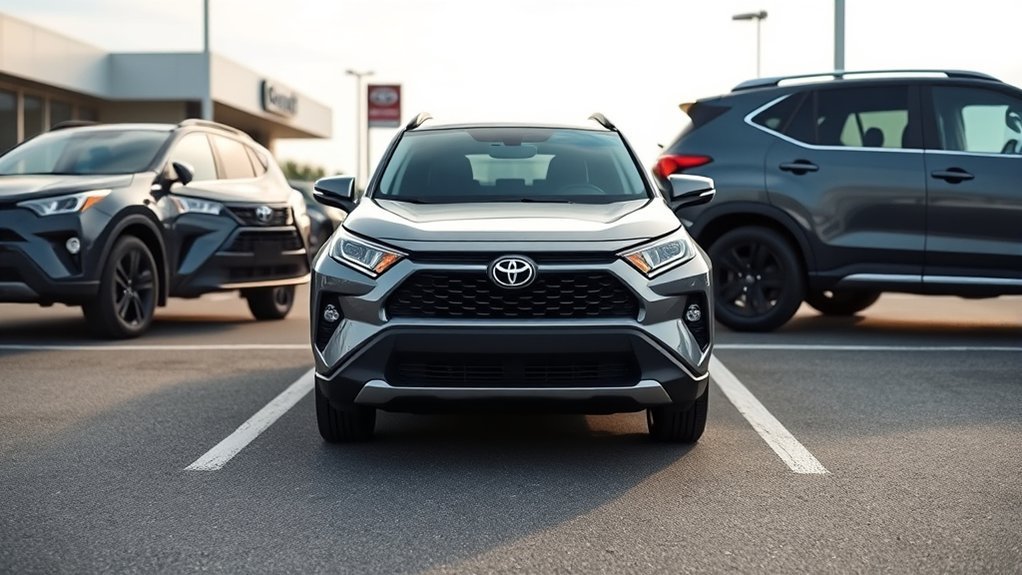
The Toyota RAV4 is classified as a compact SUV, making it a great option if you’re looking for efficiency and maneuverability. Unlike larger midsize SUVs, the RAV4 typically seats five passengers and offers better fuel economy, which can save you money on gas. Its smart design provides easy cargo access and versatility on the road. If you want to know how this classification impacts your choice, stick around for more insights and comparisons.
Understanding the Toyota RAV4’s Role in the SUV Market
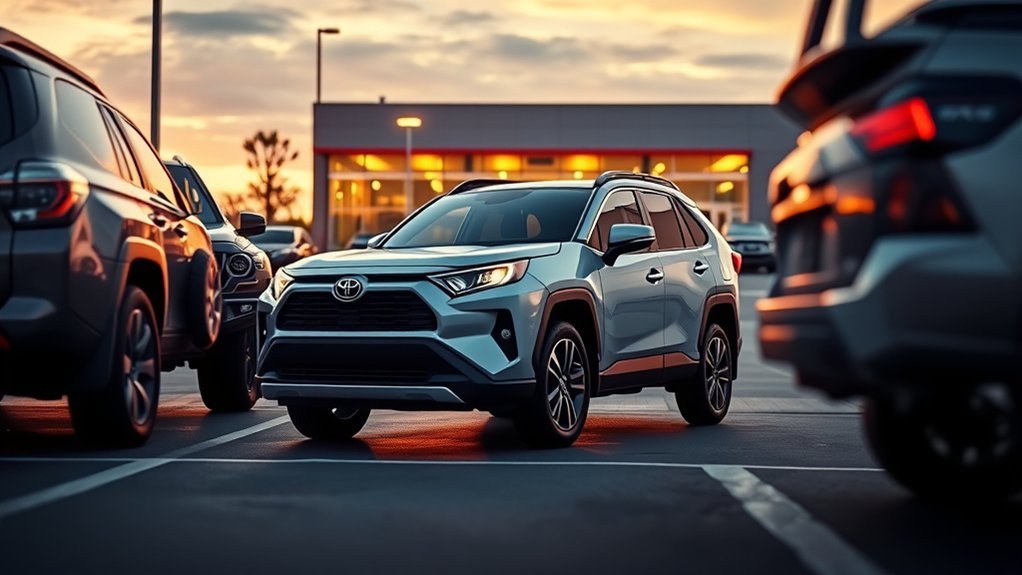
As you explore the SUV market, you’ll notice that the Toyota RAV4 stands out as a defining example of a compact SUV, blending practicality with style. Launched in 1994, the RAV4 has pioneered the compact crossover segment, shaping design trends for years. With over 10 million units sold worldwide by 2020, it’s no surprise that it’s become the best-selling SUV in America as of 2023.
The RAV4’s compact size makes it perfect for city driving, offering maneuverability without sacrificing cargo space or passenger comfort. Its versatility shines through with available all-wheel-drive options and a hybrid variant, catering to diverse needs and preferences. Whether you’re traversing urban streets or venturing off the beaten path, the RAV4 delivers a reliable, efficient driving experience. Embracing both functionality and modern design, it’s clear why the RAV4 remains a top choice for those seeking freedom in their travels.
What Are SUV Classifications and Why Should You Care?
Understanding SUV classifications is essential for you as a buyer, as it directly influences your choices regarding size, capacity, and functionality. Whether you’re looking for a compact model like the RAV4 for daily commutes or a midsize option for family trips, knowing the distinctions helps you find the right fit. These classifications also affect important factors like fuel efficiency and driving dynamics, making your decision even more impactful.
SUV Size Categories
When it comes to choosing an SUV, knowing the different size categories can greatly influence your decision. SUVs are classified into subcompact, compact, midsize, and full-size categories, each defined by passenger capacity and cargo space. The compact category, including the Toyota RAV4, typically seats five passengers, offering a blend of space and maneuverability ideal for urban driving. Midsize SUVs, like the Toyota Highlander, can accommodate up to eight passengers, providing more cargo volume and spacious interiors. Understanding these classifications is essential, as the distinction impacts fuel efficiency and overall driving experience. By aligning your choice with your lifestyle and requirements, you’ll find the right SUV that empowers your journey and enhances your freedom on the road.
Importance of Classification
Classifying SUVs isn’t just a matter of semantics; it greatly impacts your purchase decision and overall driving experience. Understanding SUV classifications—like the compact category of the Toyota RAV4—helps you make informed choices based on your needs. If you’re seeking a balance of maneuverability and adequate passenger capacity, a compact SUV might be your best bet. These models typically offer better fuel efficiency than their midsize and full-size counterparts, appealing to budget-conscious buyers. Your choice also influences practical aspects, such as insurance costs and parking convenience. By grasping the nuances of SUV classifications, you guarantee that your driving experiences align with your lifestyle, making every journey more enjoyable and fulfilling.
Impact on Purchasing Decisions
Choosing the right SUV can feel overwhelming, especially with the various classifications available. Understanding whether you need a compact SUV like the Toyota RAV4 or a midsize SUV can greatly impact your purchasing decisions. Compact SUVs typically strike a balance between passenger space and fuel economy, making them ideal for urban drivers and small families. The RAV4 offers enough cargo capacity for gear while comfortably seating five passengers. In contrast, midsize SUVs provide enhanced towing capacity and more interior space, which might appeal to those prioritizing family outings or recreational activities. Knowing these distinctions helps you assess your lifestyle needs, budget, and overall vehicle performance, ensuring you make an informed choice that liberates your driving experience.
RAV4 vs. Other Compact SUVs
How does the Toyota RAV4 stack up against its competitors in the compact SUV segment? In a head-to-head with the Honda CR-V and Nissan Rogue, the RAV4 holds its ground firmly. Its dimensions—about 180.9 inches long and 73 inches wide—fit well within the compact SUV standards, offering a comfortable ride without compromising maneuverability in urban environments. When it comes to cargo capacity, the RAV4 shines with up to 69.8 cubic feet of space with the rear seats down, making it a practical choice for those needing room for gear. Additionally, the RAV4 Hybrid elevates fuel efficiency, reaching up to 37 mpg overall, ideal for eco-conscious drivers. This combination of spaciousness, efficiency, and adaptability solidifies the RAV4’s position as a top contender among compact SUVs, appealing to those who prioritize both function and freedom on the road.
RAV4 Dimensions and Cargo Capacity Explained
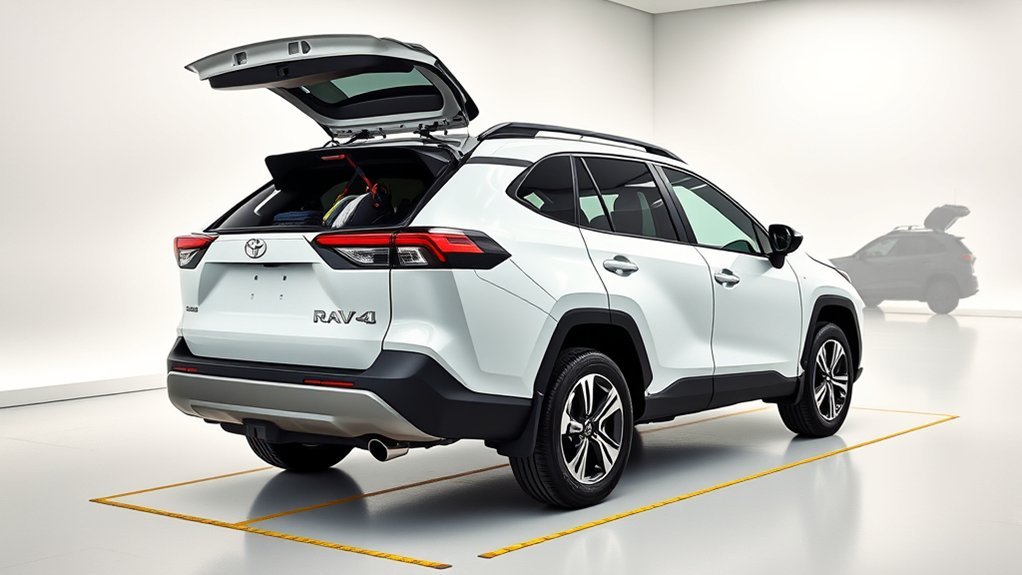
The Toyota RAV4 stands out not just for its performance and efficiency, but also for its well-thought-out dimensions and cargo capacity. As a compact SUV, it’s designed to balance maneuverability with spaciousness, catering to various driving lifestyles. Here’s a closer look at its key features:
- Dimensions: With a wheelbase of 2,410 mm and a length of 4,150 to 4,160 mm, the RAV4 offers a comfortable interior space without feeling bulky.
- Cargo Capacity: You’ll enjoy around 37.6 cubic feet behind the rear seats, expanding to approximately 69.8 cubic feet when you fold them down, providing a versatile trunk for all your adventures.
- Versatile Design: The smart design allows for easy access to cargo, appealing to young couples and families who need flexibility in their daily activities.
This blend of practicality and space makes the RAV4 a compelling choice in the compact SUV market.
How Size Affects RAV4 Performance
The compact size of the Toyota RAV4 greatly enhances its maneuverability in urban environments, making tight turns and parking a breeze. This same size also guarantees stability on rough terrain, allowing you to tackle off-road adventures without sacrificing comfort. Overall, the RAV4’s dimensions strike a perfect balance, optimizing both city driving and outdoor exploration.
Maneuverability In Urban Settings
While traversing bustling city streets, drivers will appreciate the Toyota RAV4’s compact dimensions, which enhance its maneuverability. This SUV is perfectly designed for urban environments, allowing you to navigate tight spaces with ease. Here’s how its size contributes to your driving experience:
- Agility: The RAV4’s lightweight construction offers quick responses, making it a breeze to dart in and out of traffic.
- Parking Ease: Its narrower proportions simplify parking in cramped spots, giving you greater confidence in dense areas.
- Versatile Space: The balance of spaciousness and compactness guarantees you have room for passengers and cargo without compromising maneuverability.
With these features, the RAV4 shines in urban settings, delivering both practicality and freedom on the road.
Stability On Rough Terrain
Maneuvering city streets with confidence is just one aspect of the Toyota RAV4’s impressive capabilities; it also excels on rough terrain. As a compact SUV, the RAV4 offers enhanced stability and maneuverability, thanks to its shorter wheelbase of 2,410mm. This design allows you to navigate uneven surfaces and obstacles with ease. The available all-wheel-drive system boosts traction and control, making it well-equipped to handle various trail conditions. Additionally, the RAV4’s generous ground clearance lets you tackle moderate off-road challenges without breaking a sweat. This balance between size and performance means you can enjoy a comfortable highway ride while still feeling liberated and confident on rugged terrains. Embrace the adventure; the RAV4 is ready to take you there.
Importance of RAV4’s Classification for Buyers
Understanding the classification of the Toyota RAV4 as a compact SUV is essential for buyers weighing their options. This knowledge helps you navigate the SUV market, especially when comparing it to midsize SUVs like the Toyota Highlander. Here are three reasons why the RAV4’s classification matters:
Understanding the Toyota RAV4 as a compact SUV is vital for informed buying decisions and effective market comparisons.
- Fuel Efficiency: Compact SUVs like the RAV4 generally offer better fuel efficiency, saving you money at the pump.
- Affordability: The RAV4’s classification can lead to lower insurance rates and maintenance costs, making it a budget-friendly choice.
- Lifestyle Suitability: Knowing its compact status helps you assess how well the RAV4 meets your family use, outdoor activities, and everyday commuting needs.
Future Trends for the Toyota RAV4’s Classification?
As the automotive landscape evolves, the classification of the Toyota RAV4 is likely to adapt alongside shifting consumer preferences and technological advancements. The growing demand for fuel efficiency and lower emissions is steering the RAV4 toward electrification, especially with the RAV4 Prime and hybrid powertrain models gaining traction. This trend aligns with an increased focus on advanced technology and safety features that consumers now prioritize.
Here’s a glimpse into the potential future trends for the RAV4’s classification:
| Trend | Impact on RAV4 | Potential Outcome |
|---|---|---|
| Electrification | More hybrid options | Enhanced fuel efficiency |
| Advanced technology | Improved safety features | Higher consumer appeal |
| Design innovations | Eco-conscious branding | Broader market reach |
Ultimately, these shifts could redefine the RAV4’s position as a compact SUV while appealing to a wider audience seeking liberation through eco-friendly options.
Frequently Asked Questions
Is RAV4 a Midsize or Compact SUV?
The RAV4’s compact dimensions enhance its performance and fuel efficiency, while its advanced safety features and technology, spacious cargo space, and diverse trim levels make it a strong choice for urban and adventurous drivers alike.
What’s the Difference Between a Compact and Midsize SUV?
Think of compact SUVs as nimble dancers, while midsize SUVs are sturdy bouncers. Compact models prioritize fuel efficiency and maneuverability, whereas midsize options offer more cargo space and passenger capacity, impacting performance and price range considerably.
Does a RAV4 Count as a Compact Car?
Yes, the RAV4 counts as a compact car. Its dimensions and features align with compact classification, positioning it well in the SUV comparison market. This makes it a popular choice within the compact vehicle categories.
What’s the Most Common Problem With a Toyota RAV4?
You’ll often encounter engine issues, especially excessive oil consumption, along with electrical problems and brake malfunctions. Transmission failures and suspension wear also plague RAV4 owners, leading to a challenging driving experience you might not expect.
Conclusion
Ultimately, the Toyota RAV4 fits snugly into the compact SUV category, a classification that influences everything from fuel efficiency to maneuverability. While some may argue it’s straddling the line with midsize competitors, the RAV4’s dimensions and performance metrics reinforce its compact status. This classification matters, as it guides buyers in making informed decisions based on their needs. As the market evolves, it’ll be interesting to see if Toyota adapts the RAV4’s design to meet shifting consumer preferences.