
To winterize a Toyota Supra for storage, wash and dry the car including the underside, change the engine oil if a change is due, fill the tank and add a fuel stabilizer as its label directs, inflate the tires to the pressure on the door placard, connect a battery maintainer or disconnect the battery as the owner manual allows, and cover the car in a dry, ventilated space. Block mouse entry points, leave the parking brake off with the wheels chocked so the brakes do not seize, and in spring check fluids, tires and brakes before the first drive. Specific intervals and products are in the manual and on the product labels.
Why You Should Winterize a Toyota Supra for Storage

When you winterize your Toyota Supra, you’re not just taking precautions; you’re actively preserving its performance and longevity. One critical step is filling your gas tank with a fuel stabilizer, which prevents moisture buildup and corrosion in the fuel lines. This simple action extends the life of your fuel components, ensuring efficient operation come spring. Additionally, using a high-quality car cover protects your Supra from dust and moisture, further safeguarding its exterior. Properly storing your vehicle also involves maintaining tire pressure or using jack stands to prevent flat spots, ensuring peak performance once you hit the road again. Finally, disconnecting the battery or applying a battery maintainer keeps it from draining, allowing for a reliable start after months of hibernation. By winterizing, you’re not just protecting your investment; you’re liberating it from the harsh winter elements, setting the stage for a smooth return to driving.
Step 1: Clean and Dry Your Vehicle Thoroughly
Start by washing the exterior of your Toyota Supra using proper techniques to eliminate any dirt and contaminants that could damage the paint during storage. Next, focus on cleaning the interior, ensuring all surfaces are dust-free and moisture-free to prevent mold growth. Finally, employ effective drying methods to ensure that your vehicle is completely dry before sealing it away for winter.
Exterior Washing Techniques
To ensure your Toyota Supra remains in top condition during storage, a thorough exterior wash is essential. Start by using a pH-balanced car shampoo to effectively remove dirt, grime, and contaminants that could harm the paint. Always make sure to use a microfiber wash mitt for gentle scrubbing, covering all surfaces, including wheel wells and the undercarriage to prevent rust buildup. Rinse your vehicle thoroughly with clean water to eliminate any soap residue, as this can cause spotting. After washing, dry the car completely with soft microfiber towels, ensuring no moisture is trapped in crevices. For added protection, consider applying a high-quality wax or paint sealant, creating a shield against elements while your Toyota Supra is in storage.
Interior Cleaning Essentials
Thoroughly cleaning and drying the interior of your Toyota Supra is essential for preventing odors and pest infestations during storage. Start by removing all personal items and trash. Then, apply effective interior detailing techniques:
- Vacuum Cleaner: Use a high-quality vacuum to clean carpets, seats, and upholstery, ensuring you get under seats and in between cushions.
- Gentle Cleaner: Wipe down surfaces like the dashboard and console with a gentle cleaner, avoiding harsh chemicals that could damage finishes.
- Upholstery Protection Products: After cleaning, apply a fabric protector to seats and carpets to repel stains and moisture.
These cleaning tool recommendations will keep your interior pristine, ensuring your Supra remains in top condition during its winter slumber.
Drying Methods Importance
While many overlook the importance of drying their vehicle, ensuring your Toyota Supra is completely dry is essential for preventing corrosion and damage during storage. Moisture accumulation leads to corrosion risks that can compromise your car’s integrity. Utilize effective drying techniques, focusing on areas prone to water retention, like door seals and the engine bay.
After drying, applying a coat of wax further enhances moisture prevention, creating a protective layer against environmental contaminants.
Step 2: Essential Fluid Changes and Maintenance Tips
Making certain your Toyota Supra is ready for winter storage requires careful attention to essential fluid changes and maintenance tasks. Start by performing oil filter maintenance; change the engine oil and replace the oil filter to remove impurities and prevent corrosion during storage. Next, focus on fluid level importance—top off all essential fluids, including coolant, brake fluid, and windshield washer fluid, to ensure peak performance when you bring the vehicle back into action. Finally, implement rust prevention techniques by inspecting rust-prone areas and treating them with a protective coating like Waxoyl or heavy oil to minimize deterioration.
- Change engine oil and oil filter.
- Top off coolant, brake fluid, and windshield washer fluid.
- Treat rust-prone areas with protective coating.
Step 3: How to Disconnect Your Battery and Care for Electronics?
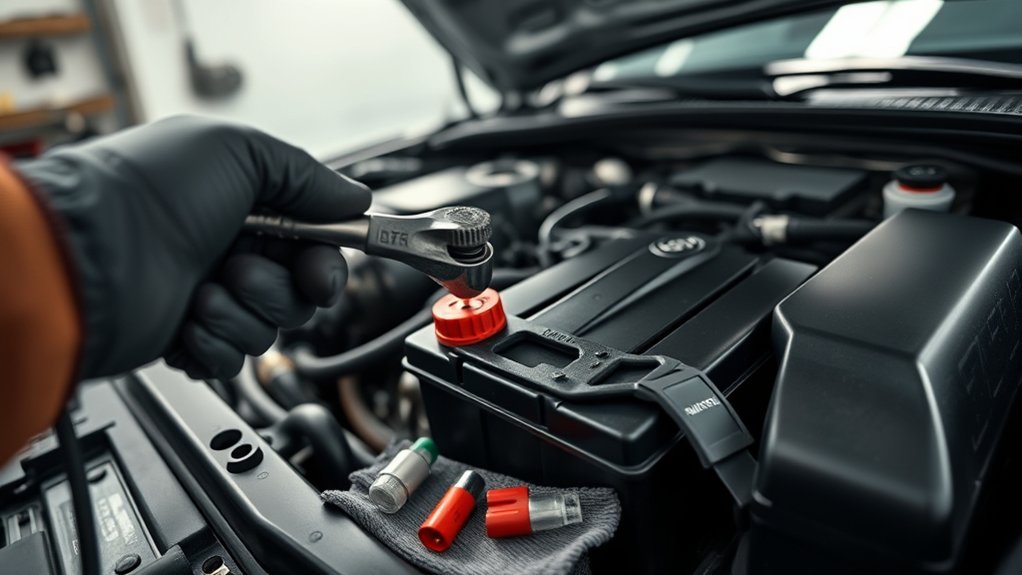
To disconnect your battery safely, start by turning off the vehicle and using a wrench to remove the negative terminal first, followed by the positive terminal. Regularly inspect the electrical connections for any corrosion and consider using a battery maintainer to keep your battery charged during storage. Ensuring all electronic systems are off will help prevent battery drain and moisture buildup, protecting your Supra’s electronics.
Proper Battery Disconnection Steps
Disconnecting your Toyota Supra’s battery is an essential step in winterizing the vehicle for storage, and it requires careful attention to detail. Follow these key battery safety precautions and maintenance tips:
- Turn off the vehicle: Make sure your Supra is completely powered down before starting.
- Remove the negative terminal: Use a wrench that fits securely, starting with the negative terminal (marked with a minus sign) to prevent electrical shorts. Keep it away from the battery to avoid accidental contact.
- Apply protection: After disconnecting, consider a thin layer of Vaseline or dielectric grease on the terminals for corrosion prevention techniques during storage.
Battery Tender Usage Benefits
After securing your Toyota Supra’s battery, consider the advantages of using a battery tender. It helps prevent electrical issues and potential drainage, making sure your battery remains ready for action. Following essential battery maintenance tips, regularly check water levels and terminal corrosion to optimize performance, especially for extended storage. You can also apply Vaseline to terminals to combat corrosion. For long-term storage, disconnecting the battery is vital to eliminate parasitic drain, enhancing battery life extension. By leveraging these practices, you’ll make certain your Supra’s battery is in peak condition when you’re ready to hit the road again.
Inspecting Electrical Connections Regularly
One essential step in preparing your Toyota Supra for winter storage involves regularly inspecting electrical connections. This not only prevents future issues but also ensures peak performance when you’re ready to drive again. Follow these electrical inspection techniques to maintain your vehicle:
- Disconnect the Battery: Always remove the negative terminal first to prevent shorts, followed by the positive.
- Check for Corrosion: Inspect terminals and apply a thin layer of Vaseline to prevent corrosion.
- Conduct Wiring Safety Checks: Look for any wear or damage in the wiring, ensuring all connections are secure and protected against winter conditions.
Step 4: Fuel Preparation and Stabilization
To ensure your Toyota Supra remains in peak condition during storage, proper fuel preparation is essential. Start by filling the gas tank to full capacity; this minimizes air exposure, preventing moisture accumulation and corrosion in the fuel system. Next, add a fuel stabilizer to the full tank, making sure it mixes thoroughly to prolong fuel quality and inhibit gum and varnish deposits. After adding the stabilizer, run the engine for about 10-15 minutes. This circulation ensures that the stabilizer reaches all parts of the fuel system, providing ideal engine protection. Avoid leaving the tank empty during storage, as this can lead to corrosion from condensation buildup. If possible, consider using a marine-grade fuel additive for enhanced protection against oxidation and degradation during winter storage. By following these steps, you’ll safeguard your Supra’s fuel system and ensure it’s ready to roar back to life come spring.
Step 5: Winterizing Your Tires for Storage
Proper fuel preparation sets the stage for other important aspects of winterizing your Toyota Supra, particularly when it comes to your tires. Ensuring your tires are ready for storage is crucial for flat spot prevention and overall vehicle health.
- Inflate Tires: Inflate your tires to the manufacturer’s recommended tire pressure to combat flat spots during storage.
- Elevate the Vehicle: Consider using jack stands or quick jacks to relieve pressure on the tires and suspension components, keeping them in prime condition.
- Tire Rotation: If you plan to store your Supra for an extended period, periodically rotate the tires to distribute weight evenly across the tire surface.
Regularly check the tire condition for any signs of damage, wear, or air loss before and during the storage period. With these steps, your tires will be primed for action when you’re ready to hit the road again.
Step 6: Covering and Storing Your Supra in a Controlled Environment

As you prepare to store your Toyota Supra, covering it with a breathable vehicle cover is essential for protecting its exterior from dust and moisture while allowing air circulation. Choose a cover type specifically designed for cars, as it helps prevent scratches and promotes ventilation. Select a cool, dry storage location to minimize humidity and temperature fluctuations, which can adversely affect your vehicle’s condition.
Ensure the environment is free from pests and potential damage sources, like chemicals or solvents that could harm the Supra’s interior or exterior. Avoid direct sunlight by storing the car indoors or in a shaded area to prevent paint damage and fading. Regularly check on your vehicle during storage to monitor for moisture buildup or pest activity. This proactive approach keeps your Supra in prime condition, ready to hit the road when spring arrives.
Safety and Owner Manual Notes
Figures such as intervals, pressures and engine speeds differ by model year, engine and market, so this guide stays general; the owner manual for your car, the tire placard and a dealer or technician are the references for your own numbers.
Disconnecting the battery can reset settings and, on some model years, affect electronic systems, so check the manual before you do it and prefer a maintainer connected as the maker instructs. Use jack stands on the lifting points in the manual if you raise the car, and never rely on a jack alone.
Related reading:
- Best Car Covers Indoor Storage of Toyota Supra
- How to Maintain a Toyota Supra Battery in Storage
- Top StopTech Brake Upgrades MK5 Toyota Supra Enthusiasts
Frequently Asked Questions
Should I disconnect the battery or use a maintainer?
A maintainer keeps the battery charged without resetting the car. If you disconnect it, check the manual first, because some settings and systems need to relearn afterwards.
Do I need to change the oil before storage?
If a change is due, yes, because used oil holds acids and moisture. If it was changed recently, leave it.
Should I leave the parking brake on?
No. Brake pads can stick to the discs over months. Leave it off and chock the wheels on level ground.
How do I keep mice out?
Block openings with steel wool, keep the space clean, and check under the hood and in the cabin when you come back.
Conclusion
Clean, fluids, fuel stabilizer, correct tire pressure, battery care, cover and chocks; the manual and the product labels fill in the numbers.