
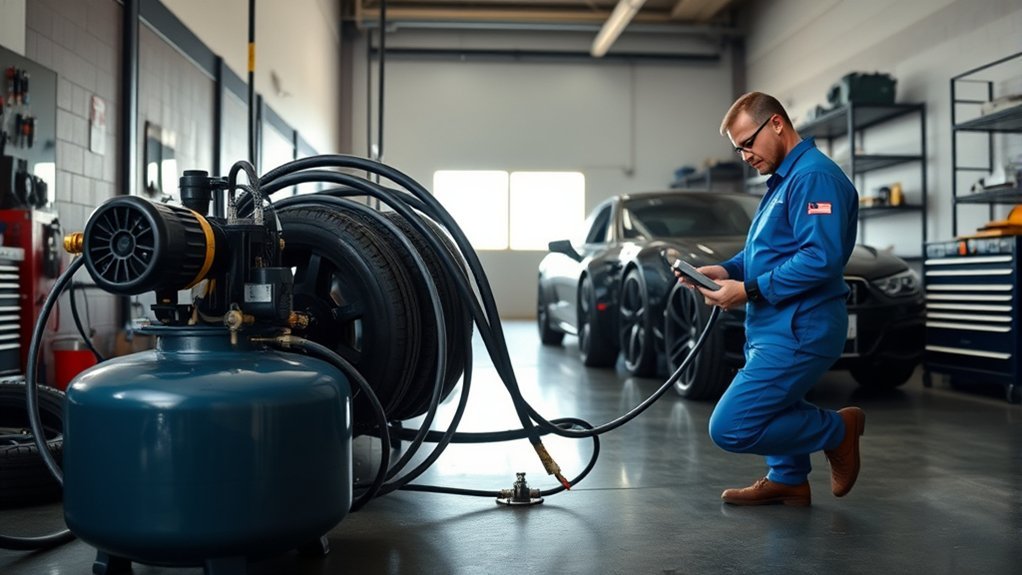
Use a high-CFM compressor with a 4-in-1 multi-hose kit so all four tires fill at the same time. Set the target PSI. Monitor gauges as you inflate to avoid overpressure. Use large-diameter hoses, locking chucks, and fast-deflating valve cores. This keeps airflow steady and prevents leaks. Run short compressor cycles with cool-down periods. This protects the motor and maintains speed. Follow safety checks on fittings and TPMS. Keep learning about specific gear choices and step-by-step setup.
Quick Answer: Inflate Four Tires Fast and Safely
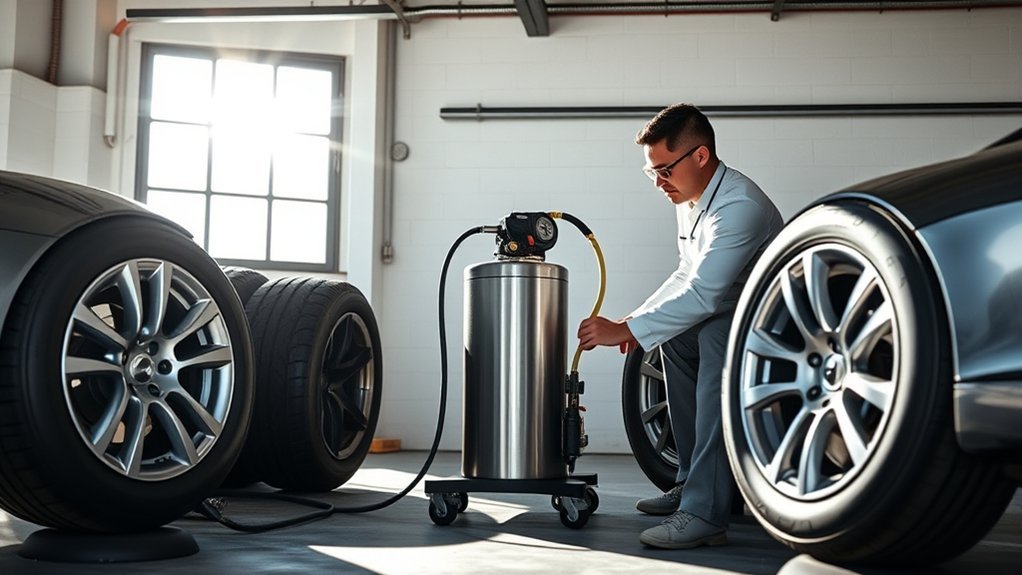
To inflate all four tires quickly and safely, use a multi-tire system like the MORRFlate 4-Tire kit and a high-output compressor such as the TenSix PSI Pro Gen 2. Plug it in. Set your target PSI. Let the system fill each tire at the same time. Real-world tests show 35-inch tires can go from 10 to 40 PSI in under five minutes. Connect the kit. Confirm fittings and valves are secure. Choose your desired pressure. Start the compressor. Monitor briefly to verify even flow. The TenSix’s 10.6 CFM keeps airflow steady without overheating. For faster cycles, swap in high-precision Apex fast-deflating valves. Tests cut inflation time from 3.5 to about 2.2 minutes. You get quick setup and consistent PSI across four tires. This frees you to move on. Stay attentive to fittings and pressure settings. You reclaim time and control without compromising safety.
Why Inflation Time Matters (Safety, Tire Life, Fuel)
You know how a multi-tire system and high-output compressor speed up filling. Now think about why that speed matters. Restore correct tire pressure quickly. You cut wait time and reduce risks. Underinflated tires flex more. They build heat. They can fail on highways. Fast inflation stops uneven wear and sidewall damage. It preserves tire life. Act with purpose. Prioritize rapid, accurate fills after off-roading. Do not drive long on low pressures. Shorter wait time gets you back on the road. You get predictable handling. This lowers blowout risk and improves braking. You regain fuel efficiency sooner. Properly inflated tires reduce rolling resistance. They save fuel on long runs. Speed is not reckless with safe procedures. Use the right tools. Monitor PSI. Inflate to recommended values. Efficient inflation lets you move confidently. It preserves tire longevity. It keeps fuel consumption in check. Your adventures stay on track, not delayed. Check NHTSA tire safety guidelines for more on pressure maintenance.
Choose a Compressor: CFM, Usable PSI, and Duty Cycle
Match compressor CFM to your tire size. You get fast, even fills without overworking the motor. Check duty cycle and heat-management features, like thermal cutoffs or cooling fins. The unit can run long enough for multiple tires without overheating. Prioritize models that sustain usable PSI at high airflow. This keeps inflation safe and efficient.
[Products Worth Considering]

30S Lightning-Fast Inflation: Get back on the road in a flash with VEVOR dual-cylinder tire inflator. With upgraded dual cylinders, 150 PSI maximum pressure and 10.6 CFM high airflow, our 12V heavy duty air compressor inflates 2X faster than others, delivering 30s fast inflation.

Smart Auto-Stop: The Kohree 12V air compressor features preset pressure and one-touch inflation for effortless use. The digital LCD display and control panel allow you to set your desired tire pressure (3 units: PSI, BAR, and kg/cm²). Once the preset pressure is reached, the compressor automatically shuts off. During inflation, the tire pump may pause briefly 2–4 times for 1–2 seconds to stabilize airflow, ensuring accurate pressure readings and preventing over-inflation

10 GALLON AIR COMPRESSOR: The Ultra Quiet Air Compressor consists of a lightweight storage tank, handle, and wheels for easy portability. Our portable air compressor uses an 8 gallon pressure tank fitted with a 2HP oil-less motor that delivers 110V, 8.76 CFM@115PSI, and 3450 RPM. The oil free air compressor uses a dual tube and dual cylinders for simultaneous air intake, and the intake tube is made of 392°F high temperature resistant silicone and stainless steel braided mesh.
Compressor CFM Vs. Tire Size
Tire volume grows with size. You need a compressor with enough CFM (cubic feet per minute) to move the larger air mass quickly. Hold usable PSI. Choose a unit that delivers high CFM at the pressures you need. Pick one with a duty cycle long enough for continuous runs. This avoids overheating. Match compressor CFM to tire size. Bigger tires demand more airflow. Prioritize higher CFM ratings to cut inflation time. Verify the compressor sustains usable PSI under load. This prevents slow fills or uneven bead seating. For heavy-duty or multiple large tires, pick models rated for real-world output. Units providing ~10.6 CFM at 0 PSI fill 35-inch tires fast. Always follow safe procedures. Monitor pressure while inflating.
Duty Cycle And Heat Management
Size your compressor for CFM and usable PSI. Then manage how long it runs and how hot it gets. Respect the duty cycle. A 50% duty cycle means run five minutes, rest five. Track run intervals. Plan swaps between tires. Use a unit with balanced PSI and CFM. You avoid forcing continuous operation that creates heat. Choose compressors with thermal cutoff switches and durable materials. They protect the motor and extend service life when you push for speed. The MORRFlate TenSix PSI Pro Gen 2 delivers high 10.6 CFM output. It supports effective heat management. Work efficiently. Follow duty-cycle limits. You inflate multiple tires quickly without risking equipment failure.
Why a 4-in-1 Inflation Kit Beats Single-Port Setups
You need to get all four tires up to pressure quickly and safely. A 4-in-1 inflation kit beats single-port setups. It lets you connect and fill every wheel at once. That cuts total inflation time. It reduces backpressure. It limits compressor stress that can cause overheating. Attach the four chucks to each valve. Set your target pressure. Start the compressor. No hopping between wheels. Simultaneous flow balances air delivery. It prevents uneven pressure swings and heat buildup. Single-port systems create those issues. You save minutes inflating large, 35-inch tires. You avoid repeated rest cycles that wear the compressor. The kit maximizes output. Let it run while you prep camp or inspect suspension. This frees you from tedious pump-watching. Stay safe. Secure fittings. Monitor pressure increments. Let equipment cool if duty cycles rise. A 4-in-1 kit is efficient. It reduces strain on you and your compressor. See details on the MORRFlate official site.
[Products Worth Considering]

2025 NEW IMPROVED VERSION – Advanced 2-Way Slide Valve System Retains Air Pressure Even Without Compressor Connection, Enabling Precise Manual Airflow Control In & Out of Tires (Ideal For Controlled Deflation).

Ultra-Efficient: Say goodbye to tedious single-tire inflation rotations. The 4 Tire Inflator Hose Kit lets you inflate or deflate all four tires simultaneously, drastically cutting wait times. Whether for routine maintenance or adjustments before/after off-road adventures, it delivers twice the results with half the effort.

【4×4 Applications】 Quickly & Accurately Inflate & Deflate 1-4 Tires simultaneously with ±0.1PSI precision. Automatically Equalize pressure in all connected tires. Efficiently combines with any powerful air compressor to inflate all tires with precisely required pressure. Save great time Managing Tire Pressure during your Overlanding trips or Off-road challenges, no more individually bending-over check or adjust for each tire.
Gear Checklist: Hoses, Chucks, Valves, and Pressure Tools
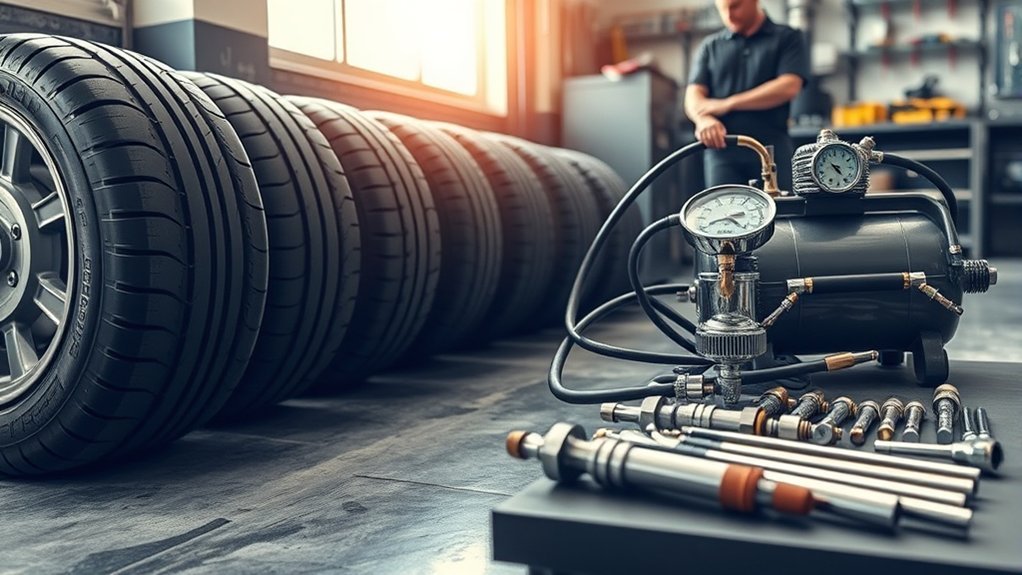
Match hoses, chucks, valves, and gauges to your compressor’s capacity and tires’ needs. You avoid bottlenecks, leaks, and unsafe pressure swings. Pick durable hoses with sufficient diameter. They minimize airflow restriction. Hoses free you from slow fills and reduce heat buildup. Choose secure chucks that lock quickly. They seal reliably to prevent pressure loss during connections. Use high-precision fast-deflating valves (Apex-style). They speed inflation and controlled deflation. These can cut cycles a lot. For simultaneous service, invest in a multi-tire inflation kit like the MORRFlate 4-Tire Inflation & Deflation Kit. Pair it with a high-CFM compressor, for example, a 10.6 CFM unit. The system breathes freely. Carry a calibrated pressure gauge. Integrate TPMS monitoring where possible. Stay informed without guessing. Assemble this gear thoughtfully. Test connections under low pressure. You gain faster, safer tire work. You move on confidently.
[Products Worth Considering]

PACKAGE INCLUDES: Full set of accessories ,rubber hose, high-precision pressure gauge, dust caps, cleaning towel, gloves and dedicated storage bag for tire inflator kit. Whether for home tire maintenance or emergency tire adjustment during travel, you can handle needs with confidence.

EFFORTLESS 4 TIRE MANAGEMENT: Inflate, deflate, and equalize air pressure in all 4 tires simultaneously with the MORRFlate Quad+ 4 tire inflation system. Hose kit only – this does not include a compressor.
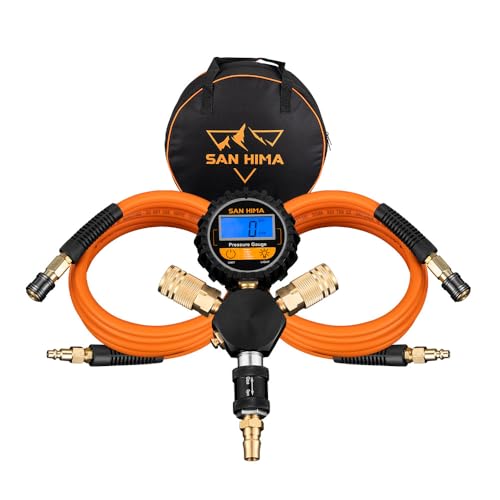
Master Tire Pressure with Ease: Take control of your tires like never before with a high-precision digital tire pressure gauge that tracks pressure in real-time. Switch seamlessly between PSI, BAR, kPa, or kg/cm³ to match your preferences, and toggle the backlight for clear readings in any light. Plus, the auto shut-off feature maximizes battery life, lasting up to 200 hours with the included batteries.
Inflate Four Tires in Under Five Minutes : Step-by-Step
Your hoses, chucks, valves, and gauges are matched and tested. Move into a fast, safe inflation routine. Get four 35-inch tires up to pressure in under five minutes. Hook the MORRFlate 4-Tire Inflation & Deflation Kit to the vehicle. Secure stainless steel hoses to each valve. Park on level ground with chocks. Power up the TenSix PSI Pro. Select Smart Auto Mode. Set your target PSI. Confirm safety limits. Start the TenSix PSI Pro’s dual-cylinder compressor. Its 10.6 CFM at 0 PSI gives the airflow you need. It fills all four tires quickly. Monitor briefly for leaks. Rely on Smart Auto Mode to stop at the set pressure. When done, verify each tire with a handheld gauge. Remove chucks. Stow hoses. You move on knowing pressure is consistent. Heat is managed by aluminum cylinders. Inflation was fast and controlled.
Hose, Valve & Chuck Tips to Shave Seconds
Choose a larger-diameter hose to boost airflow. Cut inflation time. Check fittings for secure seals before use. Pick valve cores that support high flow. Use quick-connect chucks that seal instantly. This prevents leaks and wasted time. Confirm connections. Monitor pressure as you work. Stay safe while shaving seconds.
Hose Diameter Matters
It is easy to overlook hose diameter. But it cuts tire inflation time fast. A wider hose moves more air. Pair it with low-restriction valves and a well-sealing chuck. Get air into the tire quicker with less backpressure. You want control and speed without risking damage.
- Visualize a thick hose delivering steady, higher air flow to reduce fill time.
- Picture a tight-sealing chuck engaging fast to prevent leaks and loss of pressure.
- Imagine valves designed to keep flow smooth, avoiding turbulent drops in air pressure.
- Envision a multi-hose setup feeding several tires at the same time for freedom from long waits.
Check fittings. Secure seals. Monitor pressure rise. Safety first. Inflate confidently.
Valve Core Choices
Pick the right valve core. You shave seconds off each inflation. Keep pressure stable and safe. Choose high-precision, fast-deflating cores (Apex-style). Spend less time per tire. Keep control over pressure changes. Match cores to a valve stem that supports maximum airflow. A restrictive stem negates core gains. Pair those cores with a larger-diameter hose in your system. Prevent bottlenecks. Sustain flow. Use quality chucks to hold the seal. Avoid wasting time reseating connections. For a multi-tire inflation system, pick cores and stems for simultaneous flow. Pressures equalize cleanly. Prioritize durability and predictable sealing for speed and safety.
Quick-Connect Chucks
Quick-connect chucks shave seconds off each inflation. They let you snap on and go with one hand. This reduces setup time. It keeps you in control. You use quick-connect chucks to save time. Stay free from slow setups. Choose larger-diameter hoses with quality chucks. Reduce backpressure. Speed airflow when inflating multiple tires. One-handed operation keeps you steady. It lets you monitor pressure safely.
- Visualize a solid snap-on connection sealing instantly.
- Picture a wider hose feeding high flow to each tire.
- Imagine swapping chucks quickly across four valves.
- See total inflation under five minutes with a multi-tire rig.
Invest in durable chucks for reliable seals and minimal air loss.
Manage Heat and Duty Cycle for Consistent Speed

Compressors heat up under continuous load. Manage duty cycle and cooling to keep inflation speed consistent and safe. Balance time and effort with short, timed runs. Add cool-down intervals. Monitor pressure control closely. Avoid chasing leaks or overworking the pump. Use a high-CFM, usable-PSI compressor or dual-cylinder model. Maintain airflow efficiency. Reduce run duration per tire. Employ thermal cutoff features or automatic shutoffs. Protect components. Preserve consistent output. They stop overheating before performance drops. For many tires, split the job across multiple compressors or a multi-tire system. Distribute workload. Limit individual duty cycles. Keep intake vents clear. Mount units with airflow in mind. Let compressors rest between bursts. This speeds inflation. It extends tool life. It frees you from slowing cycles. Finish tasks faster without sacrificing safety.
Common Mistakes to Avoid When Inflating Tires
Inflating tires seems simple. But mistakes can lead to safety issues or damage. Avoid overinflating by not ignoring target PSI. Check gauges often. Do not skip cool-down periods. This overheats compressors. Secure all fittings before starting. Leaks waste time and air. Use the wrong hose diameter, and airflow slows. Match gear to tire size. Forget TPMS checks, and you risk sensor damage. Monitor even flow in multi-tire systems. Uneven pressure causes handling problems. Stay safe by testing under low pressure first. These steps prevent common errors. They match the goal of fast, reliable inflation.
Buyer’s Checklist: Vehicle Size, Budget, and Use Case
Match the compressor to your vehicle and use. Larger tires need higher CFM and usable PSI. Budget for a heavy-duty or multi-tire system if you service big trucks, ATVs, or off-road rigs often. Assess vehicle size. Set a realistic budget. Pick gear that frees you from slow, repetitive tasks.
Match compressor specs to your vehicle and use. Bigger tires need higher CFM/PSI. Budget for heavy-duty or multi-tire systems.
- Visualize your rig: larger diameter tires = more air, longer runs; choose high CFM or a multi-port unit.
- Picture your workflow: frequent off-roading or fleet use demands simultaneous inflation to minimize downtime.
- Think safety systems: confirm TPMS compatibility so you don’t disable sensors or introduce errors.
- Expect smart features: automatic target PSI and thermal management protect components and keep speeds consistent.
Match specs to use case. Avoid underpowered compressors. Invest within your budget for freedom on and off the trail.
Frequently Asked Questions
What Is the 7 7 Rule for Tires?
The 7 7 rule for tires guides when to switch to winter tires. Do this when temperatures stay at or below 7°C (45°F) for seven straight days. It ensures better traction in cold weather. Switch back after seven days above 7°C. You follow tire pressure maintenance tips to stay safe and free.
What Is the 3% Tire Rule?
The 3% tire rule states that new tires should not differ more than 3% in diameter from the originals. This keeps speedometer accuracy, ABS, and handling safe. You follow inflation guidelines. Check pressures. Adjust gradually. Prioritize safety so you drive confidently and avoid uneven wear.
How to Stack Tires Efficiently?
Stack tires efficiently by using tire organization and stacking techniques. Place larger tires at the bottom. Use racks or chocks for stability. Label by size and pressure. Keep access clear. Check security before moving for safe workflow.
Should I Put Air in My Tires When They’re Hot or Cold?
Check and add air when tires are cold. You respect tire pressure factors and temperature effects. Follow a simple process. Avoid overinflation. Keep yourself safer and freer on the road.
Conclusion
You want speed without shortcuts. Picture four tires reaching the same safe, steady pressure while you relax. Use the right compressor, a 4-in-1 kit, short quality hoses, and accurate gauges. Work methodically. Hook all chucks. Monitor PSI. Let components cool. Stagger duty cycles if needed. This process keeps you safe. It preserves tire life. It gets you back on the road fast. The method is efficient, repeatable, and controlled every time.







Leave a Reply to Why Is My Tire Inflator So Loud? (Fixes + When To Worry) Cancel reply