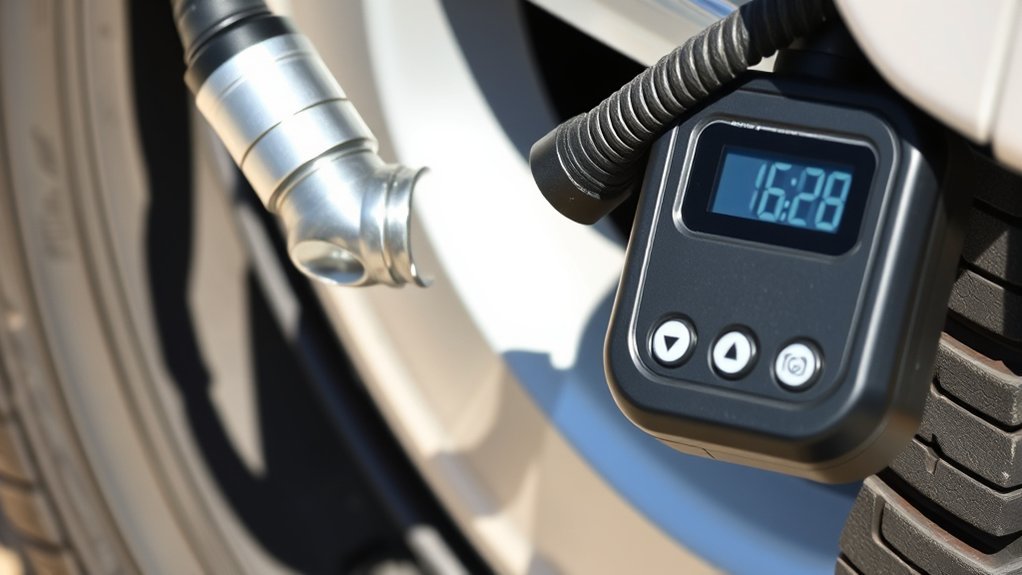
How Portable Tire Inflators Work and When to Use Them
What’s in This Article
- Quick Answer: How Portable Tire Inflators Work and When to Use Them
- Before You Begin: What You Need
- How a Portable Tire Inflator Connects to a Valve
- Step-by-Step: How to Use a Tire Inflator Safely
- Power Options: 12V, 110V, and Cordless Batteries
- Inside a Portable Inflator: Motor, Piston, Valves, and Seals
- How Pressure Sensing and Auto-Shutoff Keep You Safe
- Limitations of Portable Tire Inflators
- Common Problems and Quick Troubleshooting Tips
- Which Inflator Is Right for You: Use Cases and Buying Pointers
- Frequently Asked Questions
- Conclusion
A low tire can turn a simple drive into a stressful stop. A portable tire inflator helps you add air before a small pressure problem becomes a bigger safety issue.
You use a small electric pump that draws in air, compresses it with a motor-driven piston, and pushes that compressed air through a hose into the tire. You plug it into 12V vehicle power, 110V wall power, or use a battery pack, attach the valve head tightly, set the target pressure, and stop when the tire reaches the right pounds per square inch (PSI).
Many units include auto-shutoff, but compact inflators still need cooling breaks during longer jobs. This guide shows you how setup, power options, pressure sensing, safety limits, and troubleshooting work.
Quick Answer: How Portable Tire Inflators Work and When to Use Them
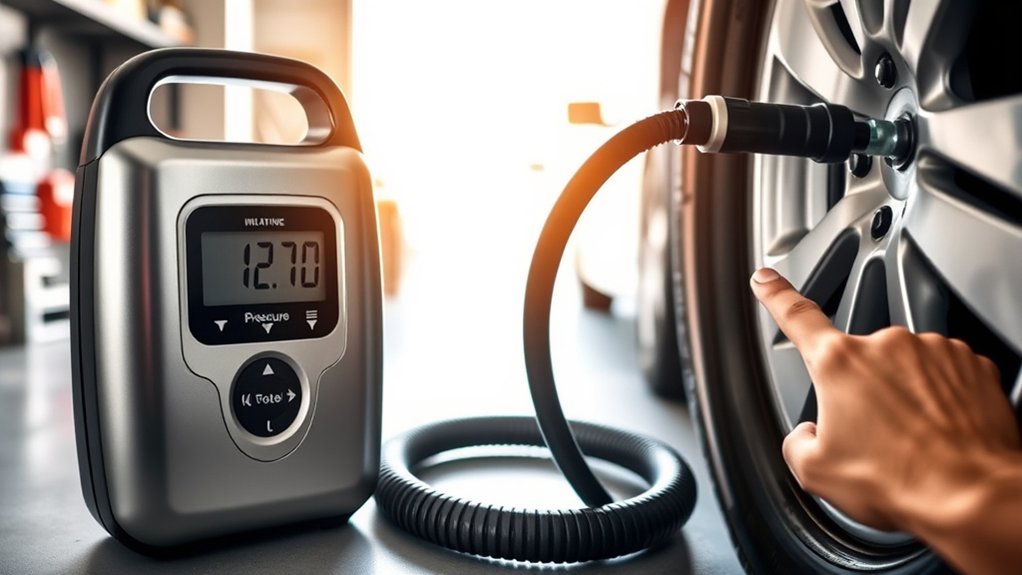
Portable tire inflators work like compact air compressors. An electric motor moves a piston or small pump, compresses air, and sends that air through a hose into your tire.
You use portable tire inflators to top off low tires, bikes, sports balls, and some small inflatables. For car tires, use the pressure listed on your vehicle’s door placard or owner’s manual, not the number printed on the tire sidewall.
Many compact inflators need a cooldown after several minutes of use, and some manuals limit continuous use to about 10 minutes. Check pressure with the pump off or with a separate tire pressure gauge because readings can shift while air flows through the hose.
Key Takeaways
- A portable tire inflator uses an electric motor and pump to compress air into your tire.
- You should inflate tires to the vehicle maker’s recommended cold PSI.
- Auto-shutoff helps prevent overinflation, but you should still confirm the final pressure.
- Small inflators work best for top-offs, not damaged tires or heavy-duty air tools.
- You should follow the duty cycle in your inflator manual to avoid overheating.
Before You Begin: What You Need
Estimated total time: 10 to 20 minutes for most passenger-car top-offs, depending on tire size, starting pressure, and inflator output.
Set up your inflator before you connect it to the tire. A few simple checks help you avoid leaks, false readings, and overheating.
- Use a portable tire inflator that matches your power source.
- Keep a separate tire pressure gauge in your vehicle.
- Find your vehicle’s recommended cold PSI on the door placard or owner’s manual.
- Check the hose, valve chuck, cord, and power plug before use.
- Work on a safe, flat surface away from traffic when possible.
How a Portable Tire Inflator Connects to a Valve
Start by unscrewing the small valve cap to expose the valve stem. Then twist or clamp the inflator’s hose onto the stem until it seals tightly.
A tight connection prevents leaks while you read and set PSI. You should see the current pressure on the gauge before the pump starts.
- Confirm the valve stem looks clean and free of debris.
- Align the portable tire inflator hose with the valve stem.
- Twist or clamp the connector until you feel resistance and hear no hissing.
- Set the desired PSI before you start the pump, if your model allows presets.
- Start the inflator and watch the gauge during inflation.
- Shut off the inflator when the tire reaches the target pressure.
- Detach the hose carefully and replace the valve cap.
This process gives you direct control over tire pressure without waiting for a service station.
Step-by-Step: How to Use a Tire Inflator Safely
Start with cold tires when you can. The National Highway Traffic Safety Administration (NHTSA) says the correct pressure means the vehicle maker’s recommended cold inflation pressure.
Cold tires usually mean the vehicle has not moved for at least three hours. If you must inflate warm tires, recheck the pressure later when the tires cool.
Warning: Do not keep running a compact inflator past its duty cycle, because heat can damage the pump or hose.
Prepare The Inflator
Place the inflator on a flat, stable surface within reach of the tire valve. Confirm your power source before you connect the hose.
- Inspect the inflator, hose, cord, and valve connector.
- Confirm the power source matches the inflator’s rating.
- Remove the valve stem cap and keep it in a safe spot.
- Attach the chuck firmly to the valve stem.
- Set the target pressure if your inflator has a preset option.
This short check helps you start cleanly and avoid air leaks.
Inflate And Check Pressure
Remove the valve stem cap and clear dirt from the valve area. Attach the portable air compressor hose to the valve stem until the connection seals.
Power on the inflator and watch the pressure gauge closely. Use the recommended tire pressure for your vehicle, and don’t guess.
When the tire reaches the target PSI, turn off the inflator first. Then detach the hose carefully, replace the valve cap, and confirm the pressure with a separate gauge if possible.
Check tire pressure regularly, especially before long trips. Proper pressure supports safer handling, better tire life, and better fuel use.
Power Options: 12V, 110V, and Cordless Batteries
All tire inflators compress air, but the power source changes speed, portability, and best use. You should match the power type to where you plan to inflate.
12V direct current (DC) models plug into your vehicle’s power outlet. They work well for roadside emergencies because you can keep one in the trunk.
110V alternating current (AC) units need a wall outlet, but they often give steadier power for garage use. Cordless models give you the most freedom, but battery life and airflow can limit longer jobs.
- Choose 12V: Use it for roadside top-offs and regular travel.
- Choose cordless battery: Use it for quick, light jobs away from outlets.
- Choose 110V: Use it for home garage maintenance and repeated fills.
- Choose hybrid models: Use them when you want battery, AC, and 12V options.
Do not expect a small cordless inflator to match a shop compressor. Large tires, very low pressure, and repeated fills need more airflow and a longer duty cycle.
Inside a Portable Inflator: Motor, Piston, Valves, and Seals
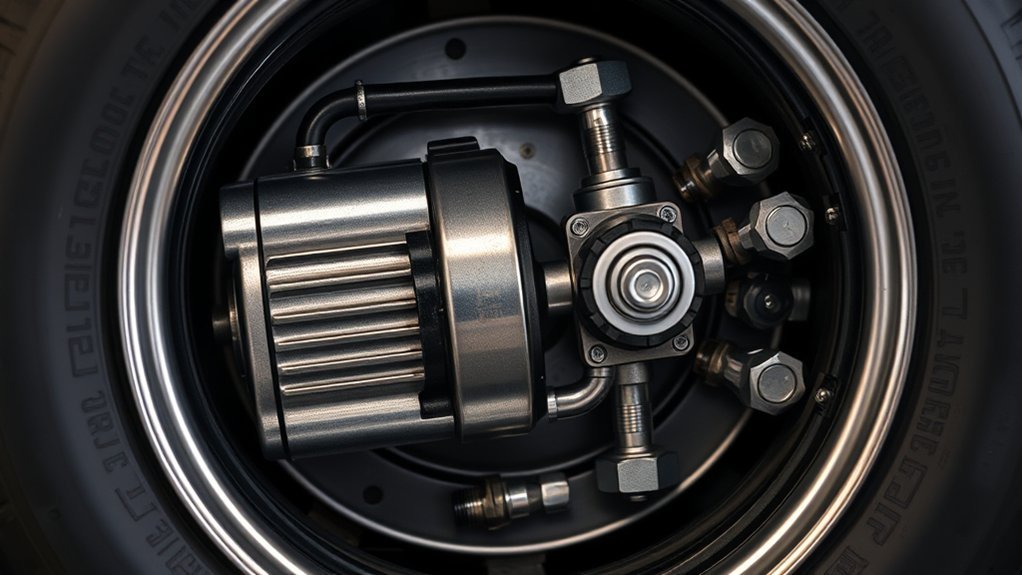
When you connect a portable inflator, an electric motor turns a geared linkage. That linkage moves a piston back and forth inside a small cylinder.
The piston pulls in air, compresses it, and pushes it through the hose. Intake and outlet valves guide the airflow so air moves toward the tire instead of back into the pump.
Check valves help reduce backflow when you disconnect the hose. Seals help the pump hold pressure and prevent leaks around moving parts.
Keep the motor vents clean, inspect the hose, and keep debris away from the valve connector. These simple habits help the inflator run cooler and seal better.
| Component | Role |
|---|---|
| Motor | Drives the pump mechanism |
| Piston | Compresses incoming air |
| Gears | Convert motor rotation into pump motion |
| Valves | Control air direction |
| Seals | Help prevent pressure leaks |
How Pressure Sensing and Auto-Shutoff Keep You Safe
Pressure sensors read the tire’s PSI and send that information to the inflator’s control system. This gives you pressure monitoring during inflation.
The auto-shutoff mechanism uses that reading to stop the compressor when the tire reaches your preset target. This helps reduce the chance of overinflation.
Note: Auto-shutoff helps, but you should still verify pressure with a trusted gauge after the pump stops.
Pressure Sensors Explained
A pressure sensor helps you see the tire pressure while air flows into the tire. Digital controls can make target setting easier than watching a small analog dial.
- Use the sensor reading to track progress during inflation.
- Confirm the final pressure after the pump stops.
- Compare the built-in gauge with a separate tire gauge from time to time.
- Stop using the inflator if readings jump sharply or seem wrong.
Accuracy matters because underinflation and overinflation can hurt handling, tire wear, and safety.
Auto-Shutoff Mechanisms
A reliable auto-shutoff system combines pressure sensing with simple control logic. You set the target PSI, start the pump, and the control unit stops the motor when the tire reaches that target.
This feature reduces guesswork and lowers the chance of improper inflation. It also helps when you need to watch traffic, weather, or other roadside risks.
You should still stay near the inflator while it runs. Listen for air leaks, watch for heat, and stop the unit if the hose or pump feels unsafe.
Limitations of Portable Tire Inflators
Portable inflators handle quick top-offs well, but they do not replace every air tool or tire service. You should know these limits before you rely on one.
- They do not store air: Most portable inflators lack tanks, so they supply air only while the pump runs.
- They may struggle with fully flat tires: Many small units cannot handle zero pressure, large tires, or tire beads that have separated from the rim.
- They cannot fix tire damage: A puncture, torn sidewall, bad valve stem, or cracked wheel needs repair or replacement.
- They can overheat: Compact pumps need rest periods, especially during long fills.
- They depend on power: Weak batteries, poor 12V connections, or short cords can stop the job.
If your tire loses air again soon after inflation, do not keep driving as if the problem has gone away. Check for damage or get tire service.
Common Problems and Quick Troubleshooting Tips
A simple checklist solves many inflator problems. Start with power, then check the hose, valve seal, heat, and gauge reading.
If the unit won’t start, confirm the plug, outlet, fuse, or battery charge. For 12V models, make sure the vehicle power outlet works and the plug sits firmly.
If the unit runs but does not add air, stop and reseat the valve connector. Then check the hose for kinks, cracks, or blockages.
If the pressure reading jumps around, turn the pump off and check with a separate gauge. Readings often stabilize when air stops moving through the hose.
If the inflator shuts off from heat, let it cool according to the manual. Repeated overheating means the tire may need more airflow than your unit can provide.
Which Inflator Is Right for You: Use Cases and Buying Pointers
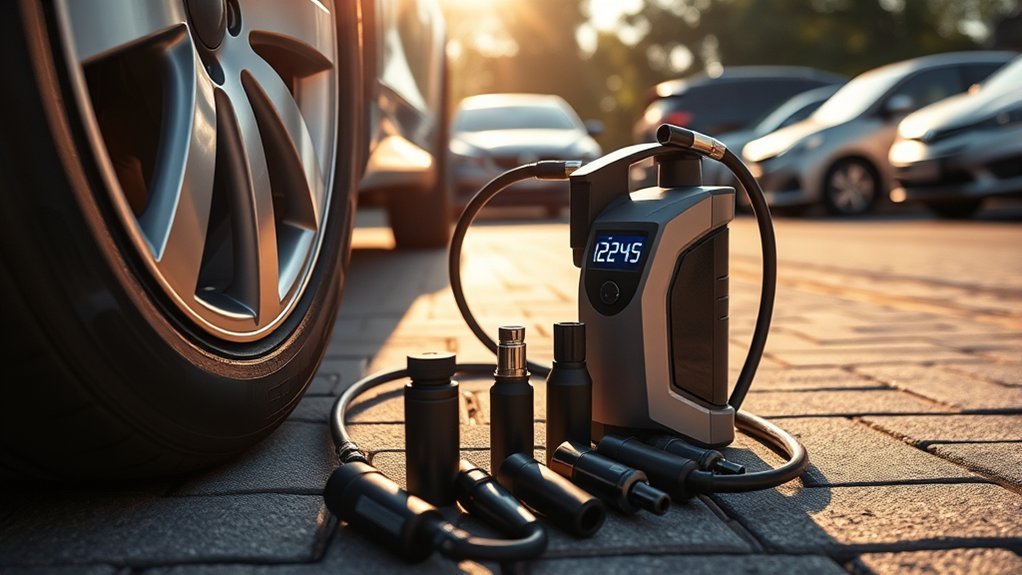
The right tire inflator depends on where you’ll use it and how much air you need. Match the inflator to your vehicle, tire size, and normal driving habits.
Choose 110V AC for regular home garage work. Choose 12V for road trips and emergency top-offs. Choose cordless for light, quick jobs where easy carrying matters most.
Prioritize automatic shut-off, a readable gauge, a long enough hose, and a clear duty cycle. If you often fill large tires, also check airflow in cubic feet per minute (CFM).
- Home garage: Choose 110V power, stronger output, and a longer duty cycle.
- Roadside use: Choose a 12V plug model that stays in your trunk.
- Travel and camping: Choose a cordless unit for light top-offs and small gear.
- Fleet or work use: Choose high airflow, durable parts, and calibrated gauges.
Built-in PSI gauges help, but you should confirm accuracy when the unit rests idle. A small separate gauge gives you a useful backup.
Frequently Asked Questions
How does a tire inflator work?
A tire inflator uses an electric motor to drive a piston or pump. The pump compresses air and sends it through a hose into your tire valve.
Does a car need to be running to use a tire inflator?
Not always. Some inflators use battery power, some use wall power, and many 12V units use the vehicle’s power outlet.
Follow your inflator manual. Some vehicles may need the ignition in accessory mode, while others may need the engine running to protect the battery during longer use.
Do cordless tire inflators really work?
Yes, cordless tire inflators work well for many quick top-offs. They give you easy portability, but they usually have less runtime and airflow than corded models.
Do not expect a small cordless unit to quickly recover a fully flat car tire. Check its tire-size rating and duty cycle before you rely on it.
What are the disadvantages of portable tire inflators?
Portable tire inflators can run hot, inflate slowly, and depend on battery or outlet power. Some built-in gauges also need confirmation with a separate gauge.
Small inflators also cannot repair punctures, bad valves, torn sidewalls, or damaged wheels.
What PSI should I set my tire inflator to?
Set your inflator to the vehicle maker’s recommended cold tire pressure. You can usually find it on the driver’s door placard or in the owner’s manual.
Do not use the maximum PSI printed on the tire sidewall as your normal inflation target. That number shows the tire’s limit, not your vehicle’s recommended pressure.
Safety Disclaimer: This article gives general vehicle safety information only. Always follow your vehicle owner’s manual, tire placard, and inflator manual before inflating tires or driving on a low tire.
Conclusion
A portable tire inflator helps you restore low tire pressure by turning electric power into compressed air. You connect the chuck, set the target PSI, run the pump, and confirm the pressure when the pump stops.
Choose the power type and airflow that match your use case. Respect duty cycle limits, watch for heat, and keep a separate tire gauge for better accuracy.
Use your inflator for routine top-offs, roadside emergencies, and small inflation jobs. If a tire keeps losing air, treat that as a repair issue, not a normal inflation task.
References
- Tire Safety Ratings and Awareness — National Highway Traffic Safety Administration, accessed 2026
- Gas Mileage Tips: Keeping Your Vehicle in Shape — FuelEconomy.gov, accessed 2026
- How to Check Tire Pressure with a Tire Pressure Gauge — Bridgestone Tires, accessed 2026
- Tire Inflator Manuals and User Guides — Manuals+, accessed 2026