
Checking your transmission fluid is a critical maintenance task for your Toyota RAV4, but the method depends entirely on your model year. While older RAV4s feature a standard dipstick, models from 2013 and newer generally have “sealed” transmissions that require a different approach. Whether you are driving a classic 2010 model or a modern 2025 edition, understanding these differences is key to preventing expensive repairs and guaranteeing your vehicle operates smoothly.
Key Takeaways
- 2012 and Older Models: Typically have a yellow or orange dipstick near the battery. You can check these yourself in minutes.
- 2013 and Newer Models: Usually have sealed transmissions (no dipstick). Fluid checks require a lift and specific temperature procedures.
- Fluid Type Matters: Most 2006+ models use Toyota ATF WS. Older models (Gen 1-2) often require Type T-IV. Always verify with your manual.
- When to Check: Immediate inspection is needed if you notice slipping gears, delayed shifting, or dark/burnt-smelling fluid.
Why Transmission Maintenance Is Critical
Regularly monitoring your transmission fluid health helps maintain the longevity of your Toyota RAV4. Low or dirty fluid can cause improper shifting and accelerate wear on internal gears and clutches. Fresh fluid provides ideal lubrication and cooling, preventing overheating—the enemy of transmission life. Additionally, maintaining proper fluid levels helps your system function within designed parameters, improving overall performance and fuel efficiency. Regular checks also alert you to potential leaks before they become catastrophic failures.
Step 1: Does Your RAV4 Have a Dipstick?
Before you begin, you must determine which transmission type you have. Toyota shifted design philosophies with the Gen 4 RAV4 (2013–2018).
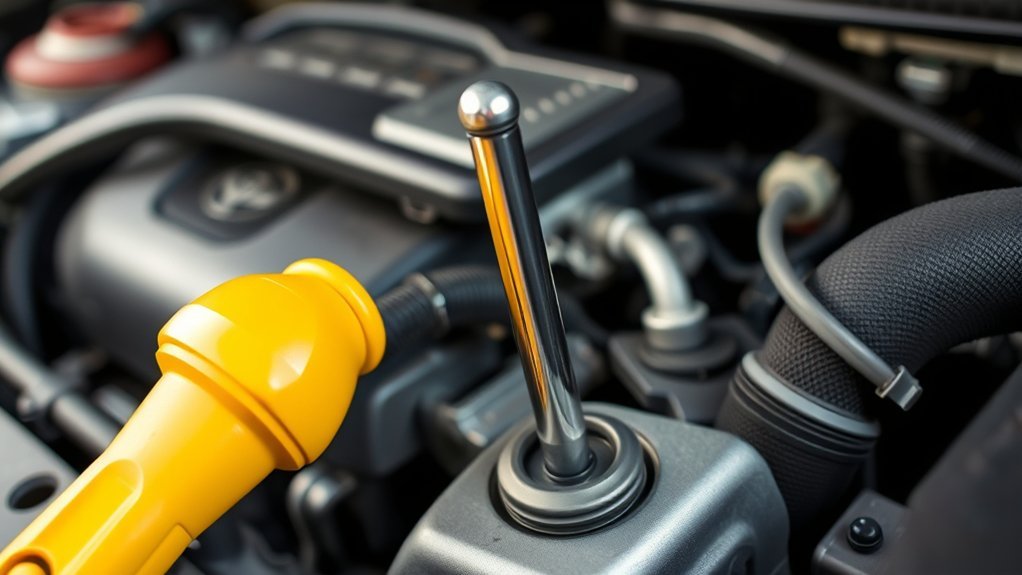
- Dipstick Models (Typically 2012 & Older): If you see a handle (often red, orange, or black) labeled “ATF” or “TRANS” near the battery or air intake, follow the Dipstick Method below.
- Sealed Models (Typically 2013 & Newer): If you cannot find a dipstick, your vehicle likely has a sealed transmission. See the Sealed Transmission section below.
[Products Worth Considering]

【Compatibility】:This automotive transmission dipstick is compatible with vehicles with 4-cylinder and V6 engines, CVT8/CVT2/CVT3, and automatic transmissions.

[Compatible with] Engine Oil Dipstick Fit for Toyota Camry 2002-2006, Highlander 2004-2006,Rav4 2004-2006,Scion tC 2005-2010

【Compatible Dipstick】:This CVT transmission dipstick is used in vehicles equipped with 4-cylinder and V6 engines, CVT2/CVT3/CVT8 and automatic transmissions.
How to Check Fluid: Models With a Dipstick (Pre-2013)
If your RAV4 is equipped with a dipstick, follow these steps for an accurate reading.
[Products Worth Considering]

Fit type: Universal Fit

Genuine Toyota part that fits your specific vehicle

【High Quality Material】: Made of high-quality materials such as Stainless Steel and Rubber, with exquisite craftsmanship, it has the properties of oil resistance, wear resistance, high and low temperature resistance, and anti pulling force. It is of high quality, not easy to bend or damage, and has a long service life. You can purchase with confidence.
Preparation
- Warm Up: Drive your RAV4 for 15–20 minutes. Transmission fluid expands when hot, and dipsticks are calibrated for warm fluid (roughly 158°F–176°F).
- Park Level: Park on a perfectly level surface. Even a slight incline can give a false reading.
- Cycle Gears: With the engine running and your foot on the brake, slowly shift through all positions (P, R, N, D, etc.) and return to Park. This fills the hydraulic circuits.
The Inspection
- Locate the Dipstick: On most older RAV4s (e.g., 2006–2012), the dipstick is located on the driver’s side, often near the battery.
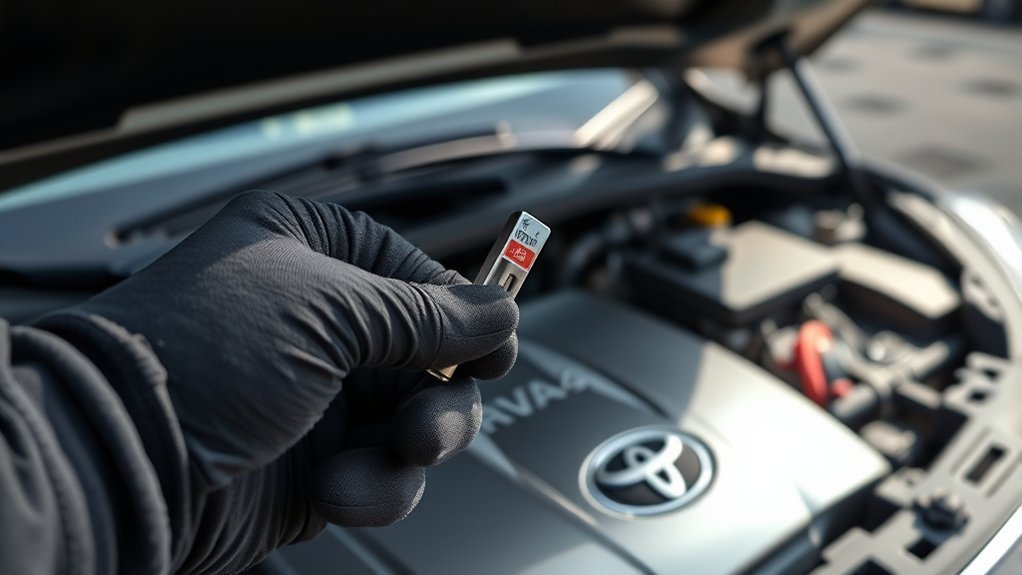
- Wipe Clean: With the engine still running, pull the dipstick out and wipe it clean with a lint-free rag.
- Reinsert & Read: Insert the dipstick fully, then pull it out again.
- Check Level: Observe where the fluid touches the stick. It should be between the two notches in the “HOT” range. If it is in the “COLD” range while the engine is hot, your level is low.
How to Check Fluid: Sealed Models (2013+)
For 2013, 2014, 2015, 2016, and newer RAV4s, there is no dipstick under the hood. These transmissions are “sealed for life” regarding normal maintenance, but “sealed” does not mean “maintenance-free.”
Checking fluid in these models is more complex and typically involves:
- Lifting the vehicle level on a hoist.
- Using a scan tool to verify the transmission fluid temperature (usually between 95°F and 113°F).
- Opening an overflow plug on the transmission pan. If fluid trickles out, the level is correct. If nothing comes out, it is low.
Recommendation: For sealed transmissions, we strongly recommend visiting a professional mechanic if you suspect a leak or shifting issue. Attempting this without the proper tools can result in under-filling the transmission, leading to damage.
[Products Worth Considering]

For best performance, follow the manufacturer's recommendations in your vehicle owner’s manual.

6Qt Genuine 00289-ATFWS

Wide range of professional automotive specialy tools
What to Look for in Fluid Appearance
If you can access the fluid, its condition tells a story:
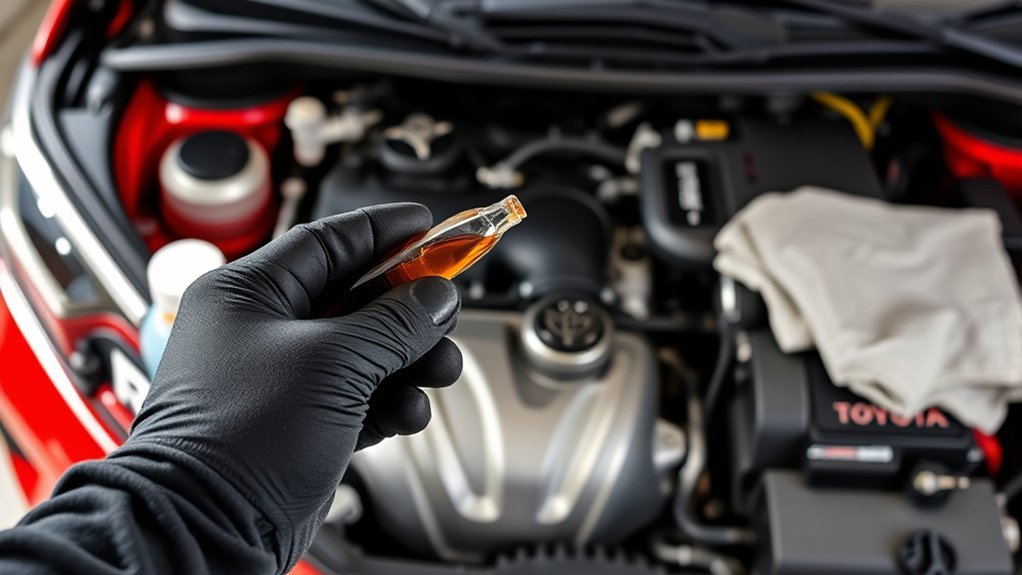
- Healthy Fluid: Bright red, translucent, and has a consistent sheen.
- Worn Fluid: Dark red or brown, but still smells like oil. This suggests it may be time for a change (drain and fill).
- Damaged Fluid: Black, opaque, or smells like burnt toast. This indicates internal damage or severe overheating. Do not flush the transmission; consult a mechanic immediately.
- Milky/Cloudy: Indicates water contamination (coolant leak). This is a critical failure requiring immediate repair.
Top 5 Mistakes When Checking Transmission Fluid
Accurate fluid checks require precision. Avoid these common errors to ensure your RAV4 keeps running smoothly.
- Checking Cold: Fluid volume changes significantly with heat. Checking cold can make the fluid appear low when it is actually full.
- Engine Off: Unlike engine oil, transmission fluid must almost always be checked with the engine running.
- Uneven Ground: Parking on a slope will shift the fluid in the pan, giving a wildly inaccurate reading.
- Using the Wrong Fluid:
- 2006+ Models: Typically use Toyota ATF WS.
- Older Models: Often use Type T-IV.
Always check your owner’s manual or the stamp on the dipstick to confirm.
- Ignoring Leaks: If you constantly need to add fluid, you have a leak. Transmissions do not “consume” fluid like engines consume oil.
Frequently Asked Questions
Does a 2016 Toyota RAV4 Have a Transmission Dipstick?
No. The 2016 RAV4 features a sealed transmission and does not have a dipstick. To check the fluid level, a mechanic must use the overflow plug method while monitoring fluid temperature via a scan tool.
Where Is the Transmission Dipstick on a 2019 RAV4?
The 2019 RAV4 (Gen 5) also uses a sealed transmission (either the 8-speed Direct Shift or the CVT for Hybrids) and does not have a dipstick. Visual checks for leaks underneath the vehicle are your best DIY maintenance step.
What Transmission Fluid Should I Use?
As of 2026, most modern RAV4s (generally 2006 and newer) require Toyota ATF WS (World Standard) fluid. Older models (Gen 1 and Gen 2, pre-2006) often require Type T-IV. Never mix these fluids, as they have different viscosity and friction properties.
How Often Should I Change the Fluid?
While Toyota often markets WS fluid as “lifetime,” many mechanics recommend a “drain and fill” every 60,000 miles to ensure longevity, especially if you tow or drive in stop-and-go traffic.
Conclusion
Maintaining your RAV4’s transmission fluid is essential for vehicle longevity. If you have an older model (pre-2013), use the dipstick method regularly to ensure levels are safe. For owners of 2013 and newer models, focus on monitoring for leaks and observing shift quality. If you experience slipping, rough shifts, or delays, don’t wait—consult a professional mechanic. A proactive approach today can save you from a transmission replacement tomorrow.







Leave a Reply