
What’s in This Article
- Average Tire Lifespan for a Toyota RAV4: What to Expect
- Key Signs Your RAV4 Tires Need Replacement
- How to Maintain Your RAV4 Tires for Longevity
- Check Tire Size, Load Rating, and Speed Rating Before Buying
- How to Choose Between OEM and Aftermarket Tires
- Should You Replace All Four Tires on an AWD RAV4?
- How Driving Conditions Affect Your Toyota RAV4 Tires
- Why Tire Rotation and Balancing Extend RAV4 Tire Life
- How Much Should You Expect to Pay for RAV4 Tires?
- Why Do Regular Tire Inspections Matter?
- Frequently Asked Questions
You want your Toyota RAV4 to stay safe, steady, and reliable on every drive. Your tires decide how well your SUV grips the road, stops in rain, and handles rough surfaces.
Most RAV4 tires last 25,000 to 75,000 miles, but that range depends on tire type, driving style, road quality, and care. You should also watch tire age, not just tread depth, because rubber gets weaker over time.
Quick Answer
Toyota RAV4 tires usually last 25,000 to 75,000 miles. Replace them right away at 2/32 inch tread depth, and start planning earlier around 4/32 inch for wet roads or about 5/32 inch for snow. Check tire age too: many tire shops suggest replacement around six years, while NHTSA says some vehicle and tire makers recommend replacement between six and ten years.
Key Takeaways
- Expect most RAV4 tires to last 25,000 to 75,000 miles with normal driving and proper care.
- Replace tires immediately at 2/32 inch tread depth, which NHTSA lists as unsafe.
- Plan earlier replacement around 4/32 inch for wet roads or about 5/32 inch for snow.
- Rotate tires every 5,000 to 8,000 miles, or follow your RAV4 manual and tire warranty terms.
- Check tire pressure monthly while the tires are cold to reduce wear and improve safety.
Average Tire Lifespan for a Toyota RAV4: What to Expect

Your Toyota RAV4 tires usually last 25,000 to 75,000 miles. Tire type, driving habits, vehicle load, and road conditions decide the exact number. Softer performance tires often wear faster than touring or all-season tires.
Good care helps you reach the higher end of that range. Check tire pressure monthly, rotate tires on schedule, and inspect tread before long trips.
Age matters too. According to NHTSA, some vehicle and tire makers recommend replacing tires that reach six to ten years old, even when tread remains. Discount Tire also recommends replacement after six years because rubber can lose strength with age.
Key Signs Your RAV4 Tires Need Replacement
Watch your Toyota RAV4 tires closely for safety and performance. You can catch most problems early with a simple tread, pressure, and sidewall check. Act quickly when you see warning signs.
Tread Depth Inspection
Inspect tread depth at least once a month. NHTSA says tires become unsafe when tread wears down to 2/32 inch. At that point, replace the tire right away.
You should start shopping sooner if you drive in rain or snow. Tire Rack recommends replacement around 4/32 inch for wet roads and about 5/32 inch for snow-covered roads. The penny test can help: if you see the top of Lincoln’s head, your tire has reached about 2/32 inch.
Look for uneven wear too. Uneven tread often points to low pressure, bad alignment, or worn suspension parts. Fix those problems before you install new tires.
Visible Damage Check
Inspect sidewalls and tread during every tire check. Replace any tire with bulges, deep cuts, exposed cords, or serious cracking. Those signs can point to internal tire damage.
Pay attention to vibration, repeated air loss, or poor grip in wet conditions. NHTSA advises drivers to consult a tire service professional when tire performance changes. Fast action helps protect you and your passengers.
How to Maintain Your RAV4 Tires for Longevity
Follow a simple maintenance routine and your RAV4 tires can last longer. Check tire pressure monthly with a reliable gauge while the tires are cold. Use the pressure listed on the driver’s door label or in your owner’s manual, not the number printed on the tire sidewall.
Rotate tires every 5,000 to 8,000 miles, unless your manual or tire warranty gives a different schedule. Toyota maintenance guides often include tire rotation at 5,000-mile service visits. Rotation spreads wear across all four tires.
Schedule an alignment if your RAV4 pulls to one side, your steering wheel sits off-center, or the tread wears unevenly. Smooth driving also helps. Hard braking, fast starts, and repeated pothole hits can shorten tire life.
Check Tire Size, Load Rating, and Speed Rating Before Buying
Before you buy replacement tires, check your RAV4’s tire size on the driver’s door label. NHTSA also advises drivers to use the owner’s manual or tire information label for the correct size. Common RAV4 sizes include 225/65R17, 225/60R18, and 235/55R19, but your trim and model year may differ.
Match the load rating and speed rating too. These ratings help the tire carry your SUV safely and perform as Toyota intended. If you feel unsure, ask a tire shop to match the exact original equipment size and rating.
How to Choose Between OEM and Aftermarket Tires
Original equipment manufacturer (OEM) tires come selected for your RAV4’s ride, handling, and efficiency targets. They often make the choice simple when you want the same feel your SUV had when new.
Aftermarket tires give you more choices in tread pattern, ride comfort, winter grip, off-road traction, and treadwear warranty. Choose a tire that matches your climate, driving habits, and correct RAV4 size. Avoid choosing by price alone because traction and tread life matter more for safety.
Should You Replace All Four Tires on an AWD RAV4?
If your RAV4 has all-wheel drive, try to keep all four tires close in tread depth. Large tread differences can make the drivetrain work harder because each tire turns at a slightly different speed. Your owner’s manual or Toyota dealer can confirm the safe tread difference for your model.
When one tire fails early, ask the tire shop whether shaving a new tire or replacing a full set makes more sense. The safest answer depends on tread depth, tire age, tire model, and drivetrain layout.
How Driving Conditions Affect Your Toyota RAV4 Tires

Harsh terrain, potholes, heat, cold, and heavy loads can wear tires faster. Extreme heat can also speed tire aging because heat affects rubber over time. NHTSA links tire aging risk to service, storage, and environmental conditions.
Different conditions affect your tires in different ways:
| Driving Condition | Effect on Tires |
|---|---|
| Harsh Terrain | Faster tread wear and higher puncture risk |
| Extreme Temperatures | Faster rubber aging and pressure changes |
| Snowy or Icy Roads | Lower grip when tread becomes shallow |
| Potholes | Sidewall damage, belt damage, and uneven wear |
Aggressive acceleration and hard braking add extra stress. Drive smoothly, avoid road hazards when you can, and your tires should wear more evenly.
Pro tip: Check your RAV4 owner’s manual or door placard for the exact cold tire pressure before you add air.
Why Tire Rotation and Balancing Extend RAV4 Tire Life
Rotate and balance your tires on schedule to help them last. NHTSA says rotation can reduce irregular wear, and Toyota maintenance guides commonly include tire rotation at 5,000-mile service visits. Your tire warranty may also list its own rotation rule.
Balancing helps your wheels rotate smoothly. If your steering wheel shakes at highway speed, ask a technician to check balance and inspect for tire or wheel damage. Alignment also matters when your RAV4 pulls to one side or wears one tire edge faster.
How Much Should You Expect to Pay for RAV4 Tires?
RAV4 tire prices vary by size, brand, tire type, speed rating, and retailer. Discount Tire lists many Toyota RAV4 tires from about $90 to $200 or more per tire, while some Toyota dealer pages show higher ranges for certain tires. Premium, high-performance, all-terrain, and winter tires can cost more.
Use the numbers below as a planning guide, not a final quote. Installation, balancing, valve stems, tire disposal, road hazard coverage, and local taxes can change your total.
Average Tire Price Range
Here’s a quick planning range for RAV4 replacement tires:
| Tire Type | Planning Range Per Tire |
|---|---|
| Standard Touring Tires | About $90 to $250+ |
| All-Season Tires | About $120 to $320+ |
| High-Performance Tires | About $250 to $500+ |
| Winter or All-Terrain Tires | Varies by size, brand, and rating |
Check live prices before you buy. Rebates, service coupons, and mount-and-balance specials can lower your total cost.
Factors Affecting Tire Costs
Tire type, brand, size, load rating, and treadwear rating influence price. A 17-inch tire often costs less than a larger 19-inch or 20-inch tire in the same product line. Winter and all-terrain tires can also cost more because they use specialized tread designs.
Warranty coverage varies by tire line and retailer. Compare treadwear warranty, road hazard protection, installation cost, and rotation policy before you choose.
Discounts and Promotions Available
Shop smart and you can lower your RAV4 tire cost:
- Look for manufacturer rebates on matching sets of four tires.
- Use dealership or tire shop coupons for installation, rotation, or alignment.
- Compare out-the-door prices that include mounting, balancing, fees, and taxes.
These deals can reduce your out-of-pocket cost while still helping you choose safe, correct tires.
Why Do Regular Tire Inspections Matter?
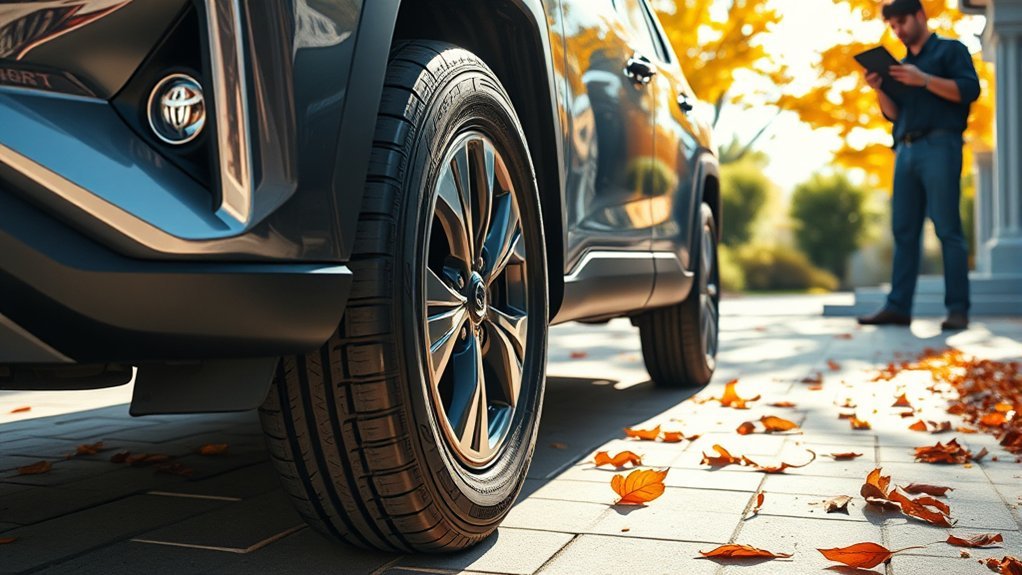
Regular inspections keep you safer and help you avoid surprise repairs. You can spot low tread, cracks, bulges, nails, or uneven wear before those problems become dangerous. Monthly pressure checks also help tire life and fuel economy.
| Inspection Area | Why It Matters | Recommended Frequency |
|---|---|---|
| Tire Tread Depth | Supports traction and control | At least monthly |
| Signs of Wear | Catches alignment or pressure problems early | With each oil change or service visit |
| Tire Pressure | Protects handling, tire life, and fuel economy | Monthly and before long trips |
| Tire Age | Helps you catch rubber aging before failure | Check the DOT date during inspections |
Warning: Do not drive on tires with bulges, exposed cords, serious cracking, or tread at 2/32 inch or lower.
Frequently Asked Questions
How Long Should Tires Last on a RAV4?
Tires on your RAV4 usually last 25,000 to 75,000 miles. Driving conditions, maintenance, tire type, and tire brand affect the total. Rotate them on schedule and keep proper pressure for the best chance at longer life.
When Should You Replace RAV4 Tires by Tread Depth?
Replace RAV4 tires immediately when tread reaches 2/32 inch. If you often drive in rain, start shopping around 4/32 inch. If you drive in snow, plan earlier replacement around 5/32 inch.
How Much Does a New RAV4 Tire Cost?
A new RAV4 tire can cost about $90 to $250 or more for many standard choices. Premium, winter, all-terrain, and high-performance tires can cost more. Always compare the full installed price, not only the tire price.
What Are the Best Tires to Put on a Toyota RAV4?
The best tires match your RAV4’s size, load rating, climate, and driving style. Choose all-season tires for normal daily driving, winter tires for severe snow, or all-terrain tires for frequent gravel and light trails. A tire shop can confirm the correct fit for your trim.
Why Do My Tires Only Last 30,000 Miles?
Aggressive driving, rough roads, poor alignment, low pressure, or skipped rotations can shorten tire life. Some softer tire compounds also wear faster by design. Check pressure monthly and inspect tread wear patterns at each service visit.
Safety Disclaimer: This article gives general tire safety information and does not replace advice from a qualified technician. Always follow your Toyota owner’s manual, tire manufacturer guidance, and a professional inspection before you make tire or safety decisions.
Conclusion
Smart tire care helps your Toyota RAV4 stop, steer, and handle safely for more miles. Check pressure monthly, measure tread depth often, and rotate your tires on schedule. Replace damaged, aged, or worn tires before they put you at risk.
Start with a quick tread and pressure check before your next long drive. That small habit can help your RAV4 feel safer, smoother, and more predictable on the road.
References
- Tire Safety Ratings and Awareness – National Highway Traffic Safety Administration, 2026
- 2025 Toyota RAV4 Hybrid Warranty and Maintenance Guide – Toyota, 2025
- Tire Lifespan and Aging – Discount Tire, 2026
- How Much Tread Depth Is Enough? – Tire Rack, 2026
- Tire Tread Depth and Legal Limit – Michelin, 2026