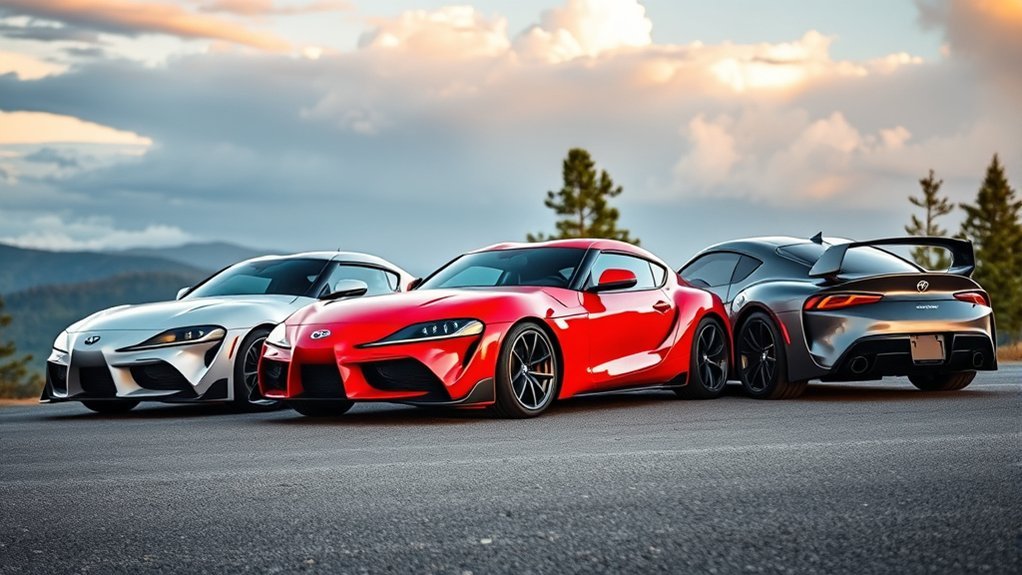
The Toyota Supra has famously evolved through five generations since its inception in 1979. Each generation brings unique features, performance upgrades, and individual quirks. You’ll notice enhancements in design from the original Celica Supra to the modern GR Supra. Common issues vary, with some models achieving cult status thanks to their appearances in pop culture. The Supra not only impresses on the road but also captivates collectors. Keep exploring to uncover more about its fascinating history and legacy.
The Evolution of the Toyota Supra: A Timeline of Generations
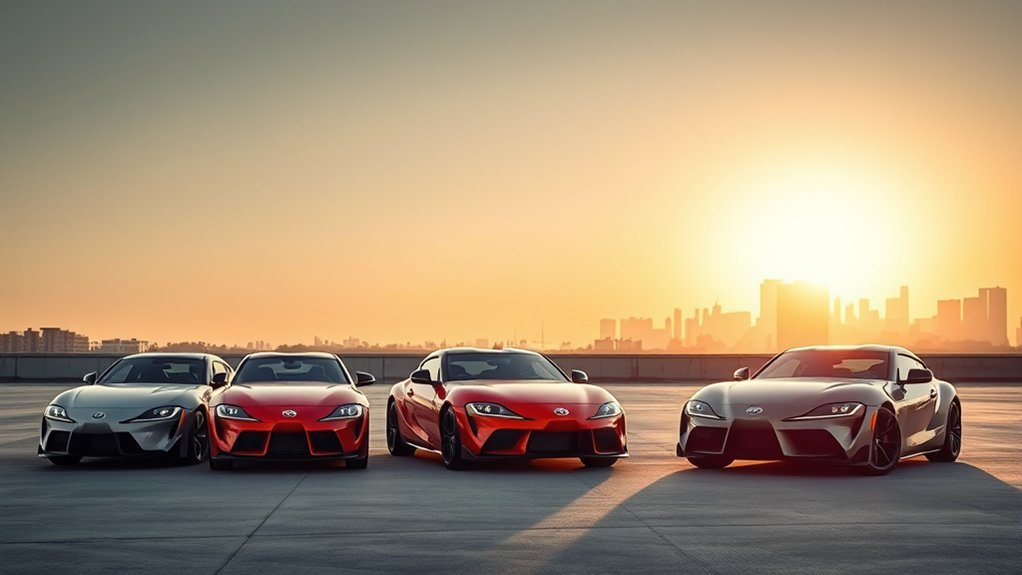
When you look back at the evolution of the Toyota Supra, it’s fascinating to see how this iconic sports car has transformed over the decades. Starting with the Celica Supra in 1979, you witnessed the birth of a legend powered by a modest 2.6L engine. As the generations progressed, the second generation introduced a more potent 2.8L inline-six, while the third generation separated from its Celica roots, showcasing turbocharged models that reached 276 horsepower. The Toyota Supra MkIV, produced from 1993 to 2002, took the spotlight with the legendary 2JZ-GTE engine, revered for its performance and tunability. Finally, the reimagined Toyota GR Supra emerged in 2019, featuring a robust 3.0-liter turbocharged inline-six engine that generates 382 horsepower, marrying modern design with exhilarating sports performance. Each generation reflects the unwavering spirit of automotive innovation and exhilarating freedom.
Key Features of Each Toyota Supra Generation
As you explore the key features of each Toyota Supra generation, you’ll notice a remarkable evolution in performance, design, and technology. From the humble beginnings of the first generation to the cutting-edge innovations of the fifth, each model reflects the changing priorities of automotive enthusiasts. Get ready to discover how these enhancements have shaped the Supra into an iconic sports car.
Performance Enhancements Over Generations
The evolution of the Toyota Supra showcases a remarkable journey of performance enhancements that reflect the brand’s commitment to engineering excellence. From the first generation’s smooth 2.6L inline-six engine with 110 horsepower, you’ll see how each generation embraced more power and style. The second generation ramped up performance with a 2.8L engine delivering 160 horsepower. The third generation introduced turbo models, pushing power to 276 horsepower, while the fourth generation became legendary with its 2JZ-GTE twin-turbo engine, releasing 320 horsepower and a 0-60 mph time of just 5.0 seconds. Today, the fifth generation GR Supra impresses with a 3.0-liter turbocharged inline-six engine producing 382 horsepower, elevating performance and handling to exhilarating new heights.
Design Evolution Through Decades
While each generation of the Toyota Supra has its unique characteristics, they all share a common thread of innovative design that reflects the era’s automotive trends. The first generation, rooted in the Celica lineage, prioritized comfort with its extended wheelbase and 2.6-liter engine. The second generation introduced pop-up headlights and a bolder stance, enhancing its sporty appeal. Shifting to the third generation, sleek lines and a turbocharged 3.0-liter engine signified a change toward performance. The fourth generation’s low, wide body and the powerful 2JZ-GTE engine set a new standard in sports design. Finally, the fifth generation embraces modernity with a streamlined silhouette, showcasing a turbocharged inline-six that emphasizes both performance and advanced engineering.
Technological Innovations Introduced
Building on the rich design evolution of the Toyota Supra, technological innovations have played a pivotal role in shaping each generation’s identity and performance. The first generation introduced a 2.6L inline-six engine, blending comfort with spirited handling. In the third generation, a turbocharged 3.0L engine emerged, pushing power to 276 horsepower while incorporating advanced technologies like double-wishbone suspension for superior dynamics. The fourth generation took it further with the iconic 2JZ-GTE twin-turbo engine, boasting 320 horsepower and lightweight design, setting the performance gold standard. Fast forward to the fifth generation, where a BMW co-developed 3.0L turbocharged engine cranks out 382 horsepower, alongside modern tech features and advanced safety systems, ensuring the Supra remains a leader in performance and innovation.
Performance Highlights: Specs and Powertrain Overview
When you look at the Toyota Supra’s performance highlights, you’ll notice a remarkable evolution in engine specifications across generations. From the early Celica Supra’s modest 110 horsepower to the jaw-dropping 382 horsepower of the 2023 GR Supra, each model showcases a unique blend of power and innovation. Additionally, with options for both manual and automatic transmissions, you’ll find a setup that perfectly suits your driving style.
Engine Specifications By Generation
As you explore the evolution of the Toyota Supra, you’ll find that each generation has brought significant advancements in engine specifications and performance. The first-generation featured a 2.6L inline-six engine with 110 horsepower, designed for comfortable cruising. By the second generation, the 2.8L inline-six engine ramped up to 160 horsepower, enhancing its sporty appeal. The third generation introduced a powerful 3.0L turbocharged engine, boasting up to 276 horsepower, marking a pivotal shift in performance. The fourth generation solidified its legendary status with the 2JZ-GTE engine, producing between 220 and 326 horsepower. Finally, the fifth-generation GR Supra showcases modern engineering with a 3.0L twin-turbo inline-six engine, delivering an impressive 382 horsepower, embodying the legacy of performance across generations.
Performance Metrics Comparison
While the Toyota Supra has always been synonymous with performance, its evolution across generations reveals a remarkable trajectory in powertrain advancements and acceleration metrics. Starting with the 1979 Mk1, you had a modest 110 hp and 0-60 mph in 10.2 seconds. Fast forward to the 1989 Mk3 Turbo, you felt the surge of 232 hp and 254 lb-ft of torque, slashing the time to 6.6 seconds. The iconic 1993 Mk4 Turbo pushed boundaries with 320 hp, hitting 0-60 mph in just 5.0 seconds. Finally, the 2020 Mk5 and 2023 GR Supra models upped the ante with 335 hp and 382 hp, respectively, delivering exhilarating acceleration in around 4.1 seconds. These performance metrics showcase a thrilling evolution that enthusiasts crave.
Transmission Options Overview
The evolution of the Toyota Supra‘s transmission options has played a significant role in enhancing its performance and driver experience. Over five generations, you’ve witnessed a transformation from the 5-speed manual paired with a 2.6L inline-six in the early models, emphasizing comfort, to the Turbo models of the late ’80s and ’90s, where a 3.0L turbocharged engine produced up to 320 horsepower. The 2020 Supra introduced an 8-speed automatic, delivering 335 horsepower, while still offering a 6-speed manual transmission for enthusiasts. By 2023, the GR Supra retained this automatic while boosting power to an impressive 382 horsepower, showcasing how Toyota has continuously refined its performance through innovative transmission options, catering to all driving preferences.
Common Issues to Watch for in Different Supra Generations
When considering a Toyota Supra, it’s vital to be aware of the common issues that can arise in different generations, as each has its unique set of challenges. The second-generation Supra (MkII) is notorious for rust, especially around the hatch and rear shock towers, which compromises structural integrity. If you’re eyeing a third-generation Supra (MkIII), be wary of blown head gaskets, particularly in turbo models—lasting damage can be a costly surprise. The fourth-generation Supra (MkIV) may present issues like leaking valve seals and problematic Targa tops as it ages. Meanwhile, the first-generation Supra (MkI) suffers from maintenance neglect, making it rare but highly sought after by collectors. Regular inspections across all generations are important to catching these common problems early and saving you from significant repairs down the line. Stay informed, and you’ll enjoy a more liberated ownership experience!
Understanding Collectability: What Makes Some Supras More Desirable?
Collectability among Toyota Supras is influenced by several factors, making certain models more desirable than others. The fourth-generation MkIV, with its powerful 3.0-liter twin-turbo engine, stands out due to its iconic status, especially after starring in “The Fast and the Furious.” If you’re seeking rare gems, look for the manual transmission variants of the MkIV Turbo; only about one-third of the 11,000 sold in the U.S. were equipped this way, enhancing their appeal. The second-generation MkII has also gained traction among collectors for its unique design and improved performance, particularly models from 1984 onward. Don’t overlook limited production models like the Turbo-A, which boasts only 500 units made, solidifying its collectability. Finally, the MkIII’s turbocharged variants attract enthusiasts who admire the performance innovations of the time, further enriching the Toyota Supra’s legacy in the collector’s market.
How the Toyota Supra Stands Out in the Sports Car Market
In the world of sports cars, the Toyota Supra has carved out a distinct niche that combines thrilling performance with cutting-edge technology. Its evolution through five generations reflects a commitment to excellence, making it a standout in the competitive sports car market. Here’s why:
- Powerful Performance: The fifth-generation Supra boasts a BMW-sourced 3.0-liter turbocharged inline-six engine, delivering an exhilarating 382 horsepower.
- Iconic Heritage: The fourth-generation Mk4, with its legendary 2JZ-GTE engine, remains an icon among enthusiasts.
- Rear-Wheel Drive Dynamics: This configuration enhances handling and driving excitement.
- Cultural Impact: The Supra’s appearances in films like “The Fast and the Furious” have solidified its status as a performance legend.
- Advanced Safety Features: Recent models integrate technology like adaptive cruise control, balancing performance with safety.
The Toyota Supra isn’t just a sports car; it’s a statement of freedom and exhilaration on the road.
Frequently Asked Questions
What Is the History Behind the Name “Supra”?
The Supra name originates from Latin, meaning “above” or “beyond,” reflecting Toyota’s branding strategy to signify performance and evolution. Its cultural impact highlights a legacy of innovation, pushing boundaries in automotive design and engineering.
How Has the Supra Influenced Popular Culture?
How could the Supra not influence popular culture? It’s starred in car movies, fueled street racing scenes, inspired video games, showcased custom builds, boasted iconic designs, and attracted celebrity endorsements, solidifying its legendary status.
What Are the Best Aftermarket Modifications for a Supra?
For your Supra, consider turbo upgrades for power, suspension enhancements for handling, performance exhaust systems for sound, engine tuning for efficiency, brake improvements for safety, and body kits for a sleek, personalized look. Enjoy the ride!
Are There Any Notable Racing Successes of the Supra?
You’ll find the Supra’s racing heritage shines brightly through iconic motorsport victories, including JGTC championships, endurance race achievements, and international rally success, alongside its thrilling performances in drifting competitions. It’s a legacy worth celebrating!
How Does the Supra Compare to Its Competitors Over the Years?
The Supra consistently excels against competitors, showcasing impressive performance metrics and design evolution. Engine comparisons reveal power advantages, while strategic pricing and positive consumer reviews enhance its market positioning, making it a favorite among enthusiasts seeking liberation in driving.
Conclusion
To sum up, the Toyota Supra’s evolution reflects its status as a legendary sports car, with over 1.3 million units sold since its debut in 1978. Each generation brings unique features and performance upgrades, but common issues can affect their longevity. Understanding what makes certain models more collectible adds depth to your appreciation of this iconic vehicle. As the Supra continues to capture the hearts of enthusiasts, it remains a standout in the competitive sports car market.