
When you overinflate tires above the manufacturer’s PSI, the center tread bulges and your contact patch shrinks. You’ll feel a harsher ride and reduced grip, especially in wet conditions or emergency maneuvers. Overinflation shifts load to the center, causing faster center-only wear and a higher blowout risk as the rubber becomes stressed. Pressure also rises with heat, so checking cold PSI regularly matters more than most drivers realize.
Quick Answer
- Overinflated tires have more air pressure than the manufacturer recommends, causing the center tread to bulge.
- Key signs: center tread wear, harsher ride, reduced grip, and higher blowout risk.
- Fix it by bleeding air from the valve stem until you reach the recommended PSI, checked cold.
- Temperature raises pressure roughly 1 psi per 10°F, so monitor regularly, especially in hot weather.
- Always use a calibrated gauge and compare to the door sticker, not the tire sidewall maximum.
What Overinflated Tires Are and Why Tire Pressure Matters
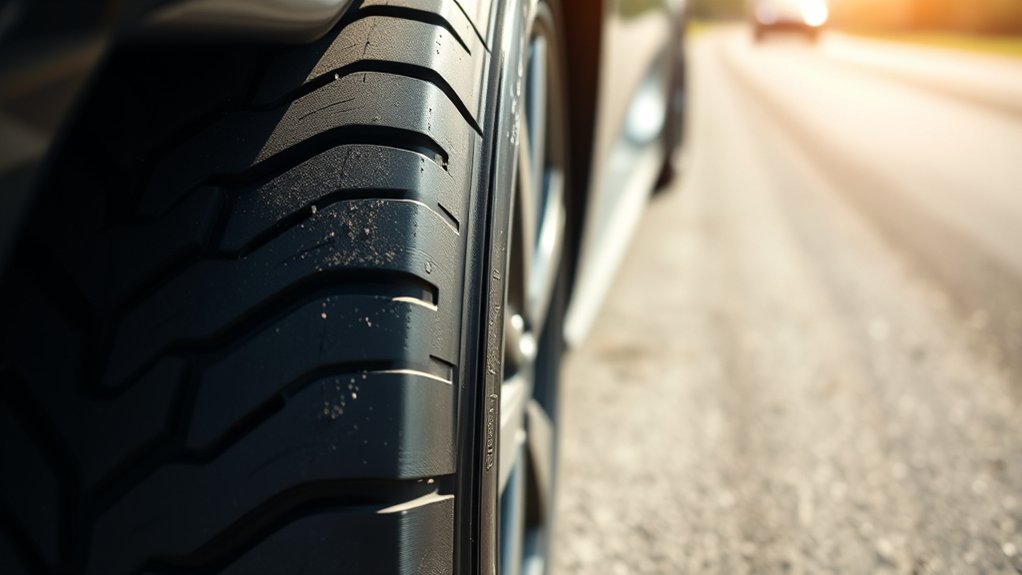
Overinflated tires have internal air pressure above the manufacturer’s recommended PSI, which causes the center tread to bulge and reduces the tire’s contact patch with the road.
Maintaining the correct pressure preserves that contact patch, giving you predictable grip, consistent tread wear, and the handling the vehicle was designed to deliver.
Temperature plays a role too. Pressure rises about 1 psi for every 10°F increase, so unintentional overinflation can happen just from parking in the sun or driving in summer heat. Checking pressure when tires are cold prevents this from sneaking up on you.
5 Signs Your Tires Are Overinflated
A gauge reading confirms overinflation, but you can spot it other ways too. Watch for uneven tread wear concentrated in the center while the edges look relatively fine. That uneven load also reduces traction, so reduced grip and unpredictable handling on wet roads are common complaints.
Ride quality takes a hit as well. Stiffer sidewalls transmit every road imperfection into the cabin, making the drive feel noticeably harsher. Visual inspections may also reveal subtle tread bulging or abnormal wear patterns.
Finally, overinflated tires are more vulnerable to punctures and impact from road hazards, raising the probability of a tire blowout. None of these are edge cases; they’re predictable outcomes of running above spec.
How to Fix Overinflated Tires Right Now
Start by checking tire pressure with a reliable gauge while the tires are cold. Compare that reading to the vehicle’s recommended PSI, found on the driver’s door sticker or in the owner’s manual. Use that number, not the maximum pressure printed on the tire sidewall.
To release air, press the metal pin inside the valve stem and bleed air in short bursts. Check pressure after each release and stop when you hit the target. Once done, drive briefly and check cold tire pressure again, since heat will raise the reading slightly. Adjust if needed until the pressure holds steady at spec.
After that, build a routine. Checking pressure monthly with a calibrated gauge takes two minutes and prevents the uneven wear and handling issues that come from drifting out of spec.
Why Overinflated Tires Happen (Temperature, Gauges, and Habits)
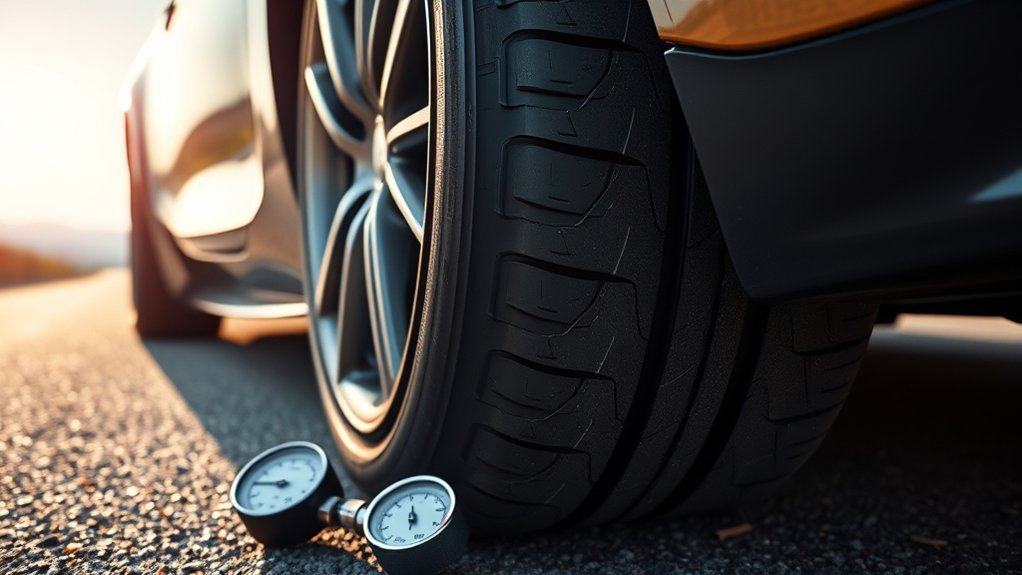
Overinflation usually comes from a mix of environmental change and human error. Air expands with heat, so pressure climbs roughly 1 psi per 10°F. Parking in direct sun or driving in hot weather can push properly inflated tires into overinflated territory without you adding any air.
Altitude also matters. Gauges calibrated at sea level can give skewed readings at elevation, leading to inaccurate top-offs.
Inflation habits are another factor. Cheap or uncalibrated gauges give inaccurate readings, and topping off tires without first checking current pressure compounds the problem. The fix is straightforward: check cold pressure, use a reliable gauge, and record your baseline values. Treat heat-induced pressure spikes as something to monitor, not ignore. Repeated overinflation accelerates center tread wear, degrades grip, and shortens tire life.
Safety Risks and How to Prevent Overinflation
Overinflated tires concentrate contact on the center of the tread, which reduces lateral traction. That raises the chance of losing control during sharp turns or emergency maneuvers. Beyond handling, overinflation stresses suspension components and accelerates tire wear.
| Risk | Cause | Prevention |
|---|---|---|
| Loss of control | Center-only tread contact | check your tire pressure monthly |
| Harsher ride | Excess stiffness | use a reliable gauge when cold |
| Accelerated wear | Uneven load distribution | adjust PSI for temperature changes |
Prevention is simple: check pressure monthly, use a calibrated gauge, and set PSI to manufacturer specs. That combination restores intended traction, reduces wear, and lets you drive with confidence.
Frequently Asked Questions
Do Overinflated Tires Have Less Grip?
Yes. Overinflation shrinks the contact patch, which reduces traction, increases braking distance, and makes handling less predictable, especially in wet conditions. Start monitoring pressure regularly to avoid this.
Does Increasing Tire Pressure Improve Grip?
No. Going above the recommended pressure worsens grip and handling. It may offer a slight fuel efficiency gain, but the trade-offs in traction, comfort, and tire longevity are not worth it.
What Is the 3% Tire Rule?
The 3% rule says to keep tire pressure within 3% of the manufacturer’s specification. Staying within that range protects handling, tread wear, fuel efficiency, and ride comfort.
What Are the Effects of Overinflated Tires?
Overinflated tires deliver worse handling, uneven tread wear, a harsher ride, and higher blowout risk. Any fuel efficiency gain is marginal and not worth the safety trade-off. Follow inflation guidelines and check pressure regularly.
Conclusion
Correct tire pressure keeps your handling predictable and your tires wearing evenly. Overinflation compromises grip, roughens the ride, and concentrates wear in ways you can measure and prevent. Check pressures cold, use a calibrated gauge, and match the manufacturer’s spec. Temperature swings and old habits can push pressure out of range; catching it early keeps the vehicle performing as designed.







Leave a Reply