
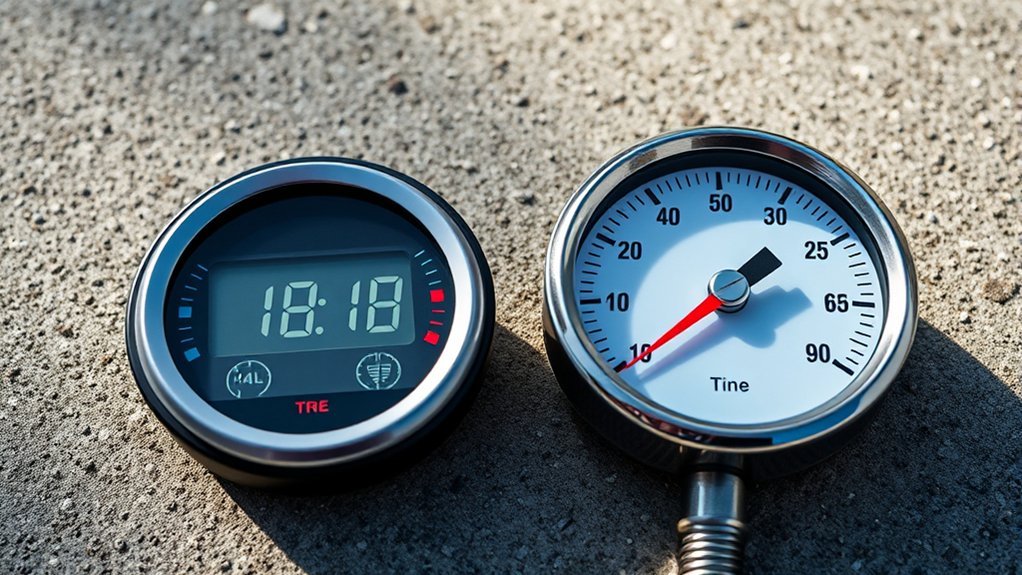
A digital tire pressure gauge gives faster, tighter readings: they typically show tenths of a PSI, repeat consistently, and have backlit displays for low light. Analog gauges are simple, rugged, and need no batteries, but they’re usually ±1–2 PSI and can drift or be hard to read at angles. For precision and convenience, pick digital. For durability and battery-free use, pick analog. Keep reading for pros, cons, and buying tips.
Quick Answer: Which Tire Pressure Gauge Is More Accurate, and Why?
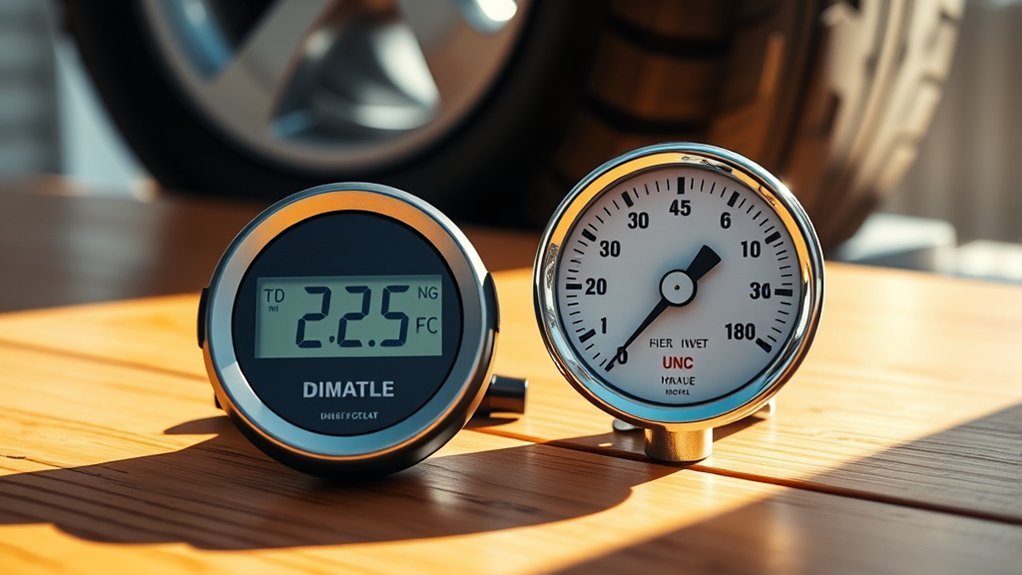
Digital tire pressure gauges are generally more accurate. They typically read within ±0.5 PSI and display tenths of a PSI. Analog gauges often vary by ±1–2 PSI and lose precision over time from mechanical wear, needle friction, and viewing angle issues.
Digital units show the same number on back-to-back checks because electronic components don’t suffer the same mechanical wear as springs and pivots. For anyone who wants repeatable, precise readings, digital is the better choice. Analog gauges can work fine for routine checks, but expect small variations between readings as parts age.
How to Choose the Right Tire Pressure Gauge: 5 Quick Criteria
Match the gauge to how you’ll actually use it. First, set your accuracy requirement: choose digital if you need ±0.5 PSI precision; analog is fine if ±1–2 PSI works for you. Second, think about ease of use: digital displays and backlighting speed up checks in low light, while analog dials are simpler if you prefer a visual readout. Third, factor in durability and maintenance: analogs need no batteries and hold up in extreme temperatures, while digitals need power and a bit more care. Fourth, weigh extra features: programmable alerts, memory, and auto-shutoff are useful if you want faster, less fussy checks. Fifth, consider how comfortable you are with technology. Pick the tool that makes you feel confident, not frustrated.
[Products Worth Considering]

EXPERT-GRADE CALIBRATION: Each AstroAI Tire Pressure Gauge is calibrated with professional-grade tools, ensuring quick and accurate measurement results within plus-minus 1PSI. Stay prepared for any roadside emergency and travel with peace of mind.

【Accurate Digital Tire Gauge】Safeguard your every trip. HYVOHEX tire pressure gauge is certified by ANSI B40.7 Grade 2A standard and equipped with a high-sensitivity sensor to provide you with instant, error-free results (±0.1 PSI). The intelligent anti-interference chip ensures stable operation in extreme temperatures (-4°F-130°F). Whether it is daily commuting or long-distance driving, you can always know the tire condition
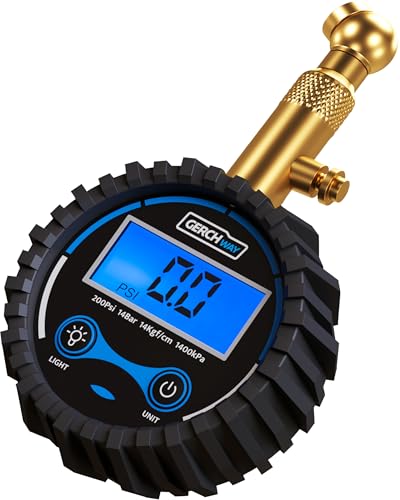
Tough & Reliable: Built with a solid brass body and surrounded by a protective rubber case, this air gauge tire pressure tool is designed for long-lasting use in any environment.
Analog Tire Pressure Gauges: How They Work and When to Pick Them
Analog gauges use a simple mechanical system, usually a Bourdon tube or piston, that converts pressure into needle movement on a dial. They’re tough and battery-free, so they keep working in rough conditions and cold weather. Pick one when durability and straightforward readings matter most, but keep in mind accuracy can drift ±1–2 PSI and occasional calibration may be needed.
Mechanical Operation Basics
An analog tire pressure gauge works like a mechanical translator: it converts air pressure into a needle reading you can check at a glance. Pressure enters through a Bourdon tube or spring-loaded piston, which flexes and moves a needle across a PSI dial. No batteries or electronics involved.
Accuracy for most models sits around ±1–2 PSI. That’s good enough for many everyday needs, but expect periodic calibration as parts wear. Reading can be tricky in low light, so look for high-contrast dial faces.
Durability and Ruggedness
Analog gauges are built from metal and sealed components. They resist drops, dust, and moisture better than most electronics, and they keep working in cold or remote conditions where batteries fail.
That said, mechanical parts do wear over time. Springs relax, pivots loosen, and seals age. To keep readings accurate, you’ll need periodic calibration and basic maintenance. With that upkeep, an analog gauge is a reliable, long-lived tool.
When to Choose Analog
Choose an analog tire pressure gauge when you want a simple, dependable tool that won’t quit in cold weather or remote spots. They use a Bourdon tube or spring-loaded piston, a needle, and a dial, with no batteries needed.
They’re a good pick when durability and simple feedback matter more than extra features. Typical accuracy is ±1–2 PSI, which covers routine checks but not fine-tuned performance work. Plan on occasional calibration as mechanical wear can drift readings over time.
Digital Tire Pressure Gauges: How They Work and When to Pick Them
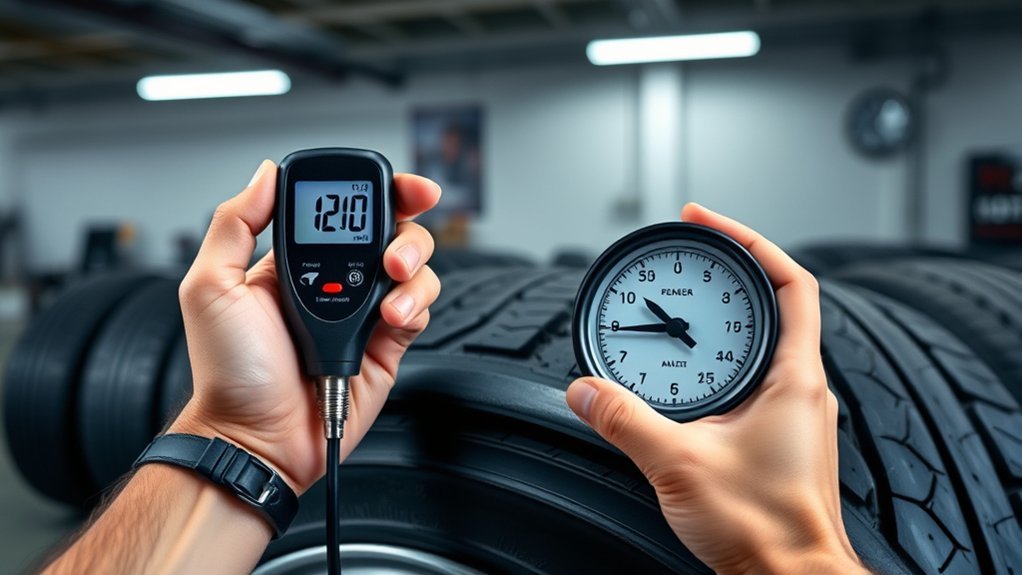
Digital tire pressure gauges use electronic sensors to convert air pressure into an electrical signal, then display the result on a clear, backlit LCD. Readings are typically accurate to ±0.5 PSI and show one decimal place, which makes fine adjustments easy, even in low light.
Many models store past readings, offer programmable pressure alerts, and shut off automatically to save battery. That makes routine checks quicker and less of a chore. The main things to watch: batteries and extreme temperatures both affect performance, so check battery level regularly and avoid storing the gauge in very hot or cold spots.
Choose digital when precision, readability, and extra features matter more than rugged, battery-free simplicity.
Head-to-Head: Accuracy, Repeatability, Readability, and Durability
Digital gauges usually win on accuracy and precision, coming in within ±0.5 PSI, while analog units can drift ±1–2 PSI as they wear. Readability also favors digital, thanks to backlit numeric displays and tenths-of-a-PSI resolution. Analog needles are harder to read and depend on your viewing angle and available light. For durability, analogs resist extreme conditions and don’t need batteries, but can suffer permanent mechanical damage with heavy use. Digitals hold calibration well if protected, but do require battery changes.
[Products Worth Considering]

Enhanced Visibility in Low Light: Features a green backlit LCD screen and integrated flashlight, allowing for clear reading of tire pressure even in dark or dimly light conditions.

PROCESS LEVEL ACCURACY: Each ETENWOLF’s digital tire pressure gauge is calibrated manually to ANSI B40.7 Grade 2A(plus-minus 1 PSI).Presta valve adapter not included, if used for bicycles, it must be purchased separately
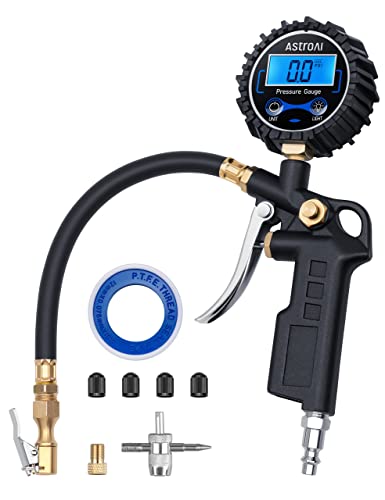
COMPATIBLE WITH both ¼” and ½” NPT air compressors outputs. COMPATIBLE WITH Standard Schrader Valves.
Accuracy and Precision
Small pressure differences matter more than most drivers realize. According to NHTSA tire safety guidance, even a few PSI off from the recommended pressure can affect handling, fuel economy, and tire life. Digital gauges typically measure within ±0.5 PSI and repeat identical results on back-to-back checks. They display tenths of a PSI, so small adjustments are straightforward.
Analog gauges often vary ±1–2 PSI. Needle friction and viewing angle introduce inconsistency, and judging half-PSI adjustments is difficult. For precise pressure management, digital is the clear choice. Just keep spare batteries on hand to maintain that accuracy over time.
Readability and Durability
Digital gives you pinpoint accuracy and easy readability, especially in low light, which cuts down on interpretation errors. Analog survives harsh temperatures and long glovebox storage without batteries, but comes with possible mechanical drift and less consistent readings. Choose based on how and where you actually use it.
| Feature | Digital | Analog |
|---|---|---|
| Readability | Clear numeric display | Needle + scale |
| Accuracy | ±0.1–0.2 PSI typical | ±1–2 PSI typical |
| Durability | Good if undamaged/battery OK | Robust, battery-free |
| Repeatability | High | Variable with wear |
If you want precision, go digital. If you want rugged, long-term dependability without worrying about batteries, go analog.
Best Gauge by User Type and Practical Tips for Accurate Readings
Match the gauge to your use case. If you need precise adjustments, track pressure for performance driving, or often check tires at night, a digital gauge is the better fit. Its accuracy and backlit display make the job easier. If you want a reliable, battery-free tool that handles extreme temperatures and long-term storage, an analog gauge is the practical choice, accepting a typical ±1–2 PSI variance.
For anyone who wants a backup option, carrying both works well: use digital for pre-trip checks and analog as a spare.
A few tips for accurate readings: always check tires cold, seat the nozzle firmly on the valve stem, and calibrate your gauge periodically. Keep gauges clean and store them away from heat or moisture to preserve accuracy and extend their lifespan.
[Products Worth Considering]

PROCESS LEVEL ACCURACY: Each ETENWOLF’s digital tire pressure gauge is calibrated manually to ANSI B40.7 Grade 2A(plus-minus 1 PSI).Presta valve adapter not included, if used for bicycles, it must be purchased separately
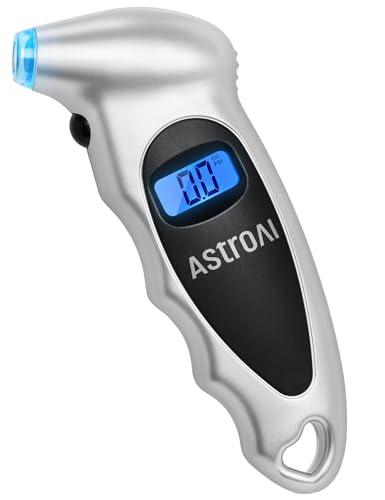
EXPERT-GRADE CALIBRATION: Each AstroAI Tire Pressure Gauge is calibrated with professional-grade tools, ensuring quick and accurate measurement results within plus-minus 1PSI. Stay prepared for any roadside emergency and travel with peace of mind.

Digital Tire Pressure Gauge 2 Pack, Industrial Tire Gauge 3-200 PSI, Calibrated to ANSI B40.7 Grade 2A(plus-minus 0.5%), Air Pressure Gauge with Replaceable AAA Batteries
Frequently Asked Questions
Are Digital or Analog Tire Pressure Gauges Better?
Digital gauges are generally better for precision. Analog gauges are more rugged and need no batteries. The right choice depends on how you use it: digital wins for accuracy and readability, analog wins for toughness and simplicity.
What Type of Tire Pressure Gauge Is Most Accurate?
Digital gauges are the most accurate. They give precise, consistent readings with minimal calibration drift, and they’re easier to read than analog needle gauges.
What Is a Disadvantage of Digital Gauges?
The main downsides are battery dependency and display fragility. If the battery dies or the screen gets damaged, the gauge is useless until repaired or replaced. Keeping a spare battery on hand solves most of that problem.
Are Digital Pressure Gauges the Least Accurate?
No. Digital gauges are actually the most accurate type. Some people choose analog for its simplicity and durability, but accuracy is not a reason to avoid digital.
Conclusion
Pick the gauge that fits your situation: digital for quick, precise readings and easy nighttime use; analog for rugged simplicity without batteries. Before buying, check accuracy, repeatability, and readability. A good gauge, used correctly, keeps your tires safe, your fuel economy solid, and your tires lasting longer. Check pressure cold, seat the nozzle firmly, and test your gauge periodically against a known standard.







Leave a Reply