
You should set tires to the cold‑recommended PSI on your vehicle’s placard (usually 30–35 PSI) and check them when cold. Hot driving can raise pressure about 4–8 PSI, roughly 1 PSI per 10°F. Use a calibrated gauge or TPMS. Avoid exceeding the tire’s max sidewall rating. Inflate hot tires only a few PSI above cold spec then recheck when cool. Follow precise checks and tools for safe summer performance—keep going to learn step‑by‑step procedures.
Quick Answer: Best Tire Pressure for Summer Driving (30–35 PSI Guidance)
Set your tires to the pressure specified on your vehicle’s driver-side door jamb—typically 30–35 PSI for most passenger cars. That value balances load capacity, handling, and heat tolerance in summer conditions. You’ll target the ideal tire pressure within that range, but heat causes air to expand. Pressures can rise 4–8 PSI after driving.
To get accurate readings, check your tire pressure when tires are cold, ideally after three hours stationary. Use a calibrated gauge, deflate or inflate in small increments, and confirm all four corners match the recommended figure. This gives consistent contact patch and steering feedback.
Regular monitoring matters during prolonged heat waves. Overinflation reduces traction and raises blowout risk. You’re responsible for safety and autonomy on the road, so establish a routine: inspect tires weekly, record readings, and adjust before long trips. This disciplined approach preserves performance and keeps you moving freely through summer driving conditions.
Find Your Vehicle’s Recommended PSI (Door Sticker vs. Manual)
Although you might rely on general guidance, always use the vehicle-specific PSI listed on the driver-side door jamb sticker or in the owner’s manual. Those values account for your car’s weight, suspension, and tire size. Check pressure when tires are cold and adjust to that exact recommendation rather than a generic 30–35 PSI range.
You’ll find the definitive recommended level on that sticker or in the vehicle owners manual. Treat it as the safety baseline for summer driving. For more official details, see NHTSA tire safety resources.
| Source | Location | Action |
|---|---|---|
| Door jamb sticker | Driver-side frame | Set tire pressure to listed PSI |
| Owner’s manual | Glove box/index | Verify model-specific specs |
| Tire placard | Fuel door (some) | Cross-check values |
| Aftermarket tires | Tire sidewall | Note max PSI (not recommended) |
| Records | Maintenance log | Track changes over time |
Respect temperature changes and maintenance concerns. Follow the sticker or manual, document adjustments, and prioritize accuracy to preserve control, efficiency, and freedom on the road.
How and When to Check Tire Pressure in Hot Weather : Step‑by‑Step
Now that you’ve confirmed your vehicle’s recommended PSI from the door jamb or manual, you’ll need a clear procedure for checking pressure in hot weather. Start by planning checks at least once a month and more often if roads are rough or temperatures are extreme.
Measure tire pressure when tires are cold—after three hours stationary—to get accurate baseline readings. Use a reliable gauge, remove the valve cap, press the gauge firmly, and record the PSI for each tire. Compare readings to the recommended correct tire pressure.
Remember heat can raise PSI by 4–8 points. That’s why cold measurements matter for safety and performance.
If you find underinflated tires, acknowledge the risk to control and efficiency, and prepare to add air per safe procedures. Re-check all tires after any adjustment and keep records to spot trends. Regular, precise checks free you from preventable failures and keep your vehicle operating with predictable handling.
[Products Worth Considering]

EXPERT-GRADE CALIBRATION: Each AstroAI Tire Pressure Gauge is calibrated with professional-grade tools, ensuring quick and accurate measurement results within plus-minus 1PSI. Stay prepared for any roadside emergency and travel with peace of mind.

【Accurate Digital Tire Gauge】Safeguard your every trip. HYVOHEX tire pressure gauge is certified by ANSI B40.7 Grade 2A standard and equipped with a high-sensitivity sensor to provide you with instant, error-free results (±0.1 PSI). The intelligent anti-interference chip ensures stable operation in extreme temperatures (-4°F-130°F). Whether it is daily commuting or long-distance driving, you can always know the tire condition
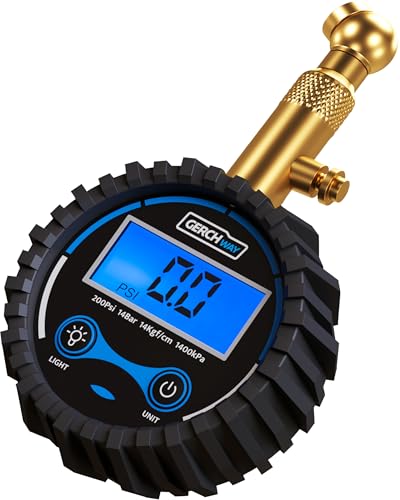
Tough & Reliable: Built with a solid brass body and surrounded by a protective rubber case, this air gauge tire pressure tool is designed for long-lasting use in any environment.
Adjust Hot‑Tire Readings Safely (What to Set Now and How to Recheck Cold)
When you measure hot tires, use a reliable gauge and note the ambient temperature and time since driving so your reading is traceable. If you must inflate while hot, add 3–4 PSI above the vehicle’s recommended cold pressure, then mark the tire and recheck after the tires have cooled (typically after three hours). Recheck cold pressures in a shaded, stationary vehicle and adjust to the manufacturer’s spec, remembering that about 1 PSI changes per 10°F.
[Products Worth Considering]

Enhanced Visibility in Low Light: Features a green backlit LCD screen and integrated flashlight, allowing for clear reading of tire pressure even in dark or dimly light conditions.

PROCESS LEVEL ACCURACY: Each ETENWOLF’s digital tire pressure gauge is calibrated manually to ANSI B40.7 Grade 2A(plus-minus 1 PSI).Presta valve adapter not included, if used for bicycles, it must be purchased separately
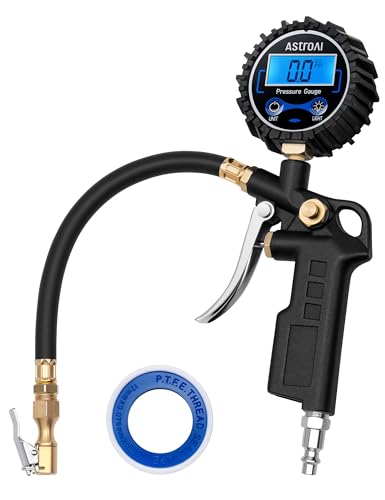
COMPATIBLE WITH both ¼” and ½” NPT air compressors outputs. COMPATIBLE WITH Standard Schrader Valves.
How To Measure
If you’ve just driven, wait at least 30 minutes before measuring tire pressure so the air cools and readings reflect the true, cold PSI. Hot tires can read higher because air expands with heat (about 1 PSI per 10°F). Use a calibrated gauge, remove valve caps, press firmly and note each wheel.
If you must check hot, set pressure 3–4 PSI above the recommended cold value printed on the driver-side door jamb or owner’s manual, then recheck when cold. Record ambient temperature and measured PSI to track how temperature affects the air inside. Prioritize maintaining the correct tire settings to avoid blowouts and traction loss. Regular, precise checks reinforce the importance of tire pressure and free you from avoidable roadside risk.
What To Set
Start by setting hot-tire readings 3–4 PSI above the vehicle’s recommended cold pressure to compensate for heat expansion, then plan to recheck after the tires cool for at least three hours. You’ll use this conservative offset during summer driving to offset temperature-driven increases (about 1 PSI per 10°F). Consult the vehicle owners manual or door sticker for the baseline cold pressure. Target ranges often sit 30–35 PSI but vary by model.
- Inflate to cold-recommended +3–4 PSI while tires are hot; this prevents underinflation once they stabilize.
- Avoid overinflated tires by not exceeding manufacturer max; overinflation reduces traction and raises blowout risk.
- Reinspect when ambient temps stabilize; document pressures and adjust to the exact cold-spec for safety and freedom on the road.
Recheck When Cold
After setting hot-tire readings 3–4 PSI above the vehicle’s cold recommendation, plan to recheck pressures once the tires are cold to confirm accuracy and safety. You’ll wait at least 30 minutes after driving, though a full three-hour stationary period guarantees true cold tire pressure and removes heat expansion artifacts. Hot measurements can overread by 4–8 PSI. That’s why you temporarily adjust the pressure and then recheck.
Use the PSI on the driver-side door jamb as your cold-reference target. When cold, measure and adjust the pressure to match the specified value precisely. Bleed air if necessary. This method protects vehicle safety, preserves handling, and frees you from guesswork—empowering you to control tire pressure reliably in summer conditions.
Why Heat and Road Surface Raise Tire Pressure (10°F ≈ 1 PSI)
Because hot pavement and engine heat raise the air temperature inside your tires, pressure increases roughly 1 PSI for every 10°F rise. So a tire set to the correct cold PSI can read 4–8 PSI higher after driving on hot asphalt. You need to recognize how Summer Heat and hot road surfaces drive pressure changes. Air expands predictably with temperature, raising tire pressure as surface and under-hood temperatures climb. That expansion can push tires toward overinflation, altering footprint, grip, and wear.
- Road-surface effect: Asphalt can exceed 125–150°F, heating the tire carcass and elevating internal air temperature quickly.
- Thermal response: For every 10°F the air temperature rises, expect ~1 PSI increase; cumulative rises create the 4–8 PSI delta after driving.
- Safety action: Monitor cold readings, factor Summer Heat into proper tire maintenance, and adjust inflation to preserve handling, tire life, and your freedom to drive safely.
Best Tools and Tech for Accurate Summer Readings (Gauges, TPMS, Compressors)
Accurate summer tire readings start with the right tools: a calibrated digital gauge for precise cold-psi checks, a reliable TPMS that gives real-time alerts for pressure deviations, and a portable compressor or automatic inflator to make quick, on-the-road adjustments.
You’ll rely on digital tire pressure gauges to measure subtle changes—remember temperature levels shift about 1 PSI per 10°F—so calibrate and store the gauge properly. Use TPMS as your continuous sentinel. It alerts you to leaks or heat-driven expansion before performance degrades.
Keep portable air compressors or automatic inflators in the trunk to correct PSI after stops, avoiding the 4–8 PSI spike tires can show post-driving. Inspect fittings and hoses for wear, and choose devices with metal valves and secure connectors to prevent loss during inflation. Adopt a regimen: cold checks with a digital gauge, trust TPMS for real-time monitoring, and correct with portable air compressors. That workflow keeps you safe and free on summer roads.
[Products Worth Considering]

PROCESS LEVEL ACCURACY: Each ETENWOLF’s digital tire pressure gauge is calibrated manually to ANSI B40.7 Grade 2A(plus-minus 1 PSI).Presta valve adapter not included, if used for bicycles, it must be purchased separately
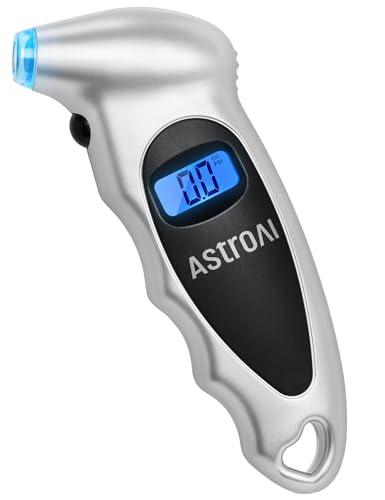
EXPERT-GRADE CALIBRATION: Each AstroAI Tire Pressure Gauge is calibrated with professional-grade tools, ensuring quick and accurate measurement results within plus-minus 1PSI. Stay prepared for any roadside emergency and travel with peace of mind.

Digital Tire Pressure Gauge 2 Pack, Industrial Tire Gauge 3-200 PSI, Calibrated to ANSI B40.7 Grade 2A(plus-minus 0.5%), Air Pressure Gauge with Replaceable AAA Batteries
Summer Tire Pre‑Trip Checklist: Routine Checks and Maintenance
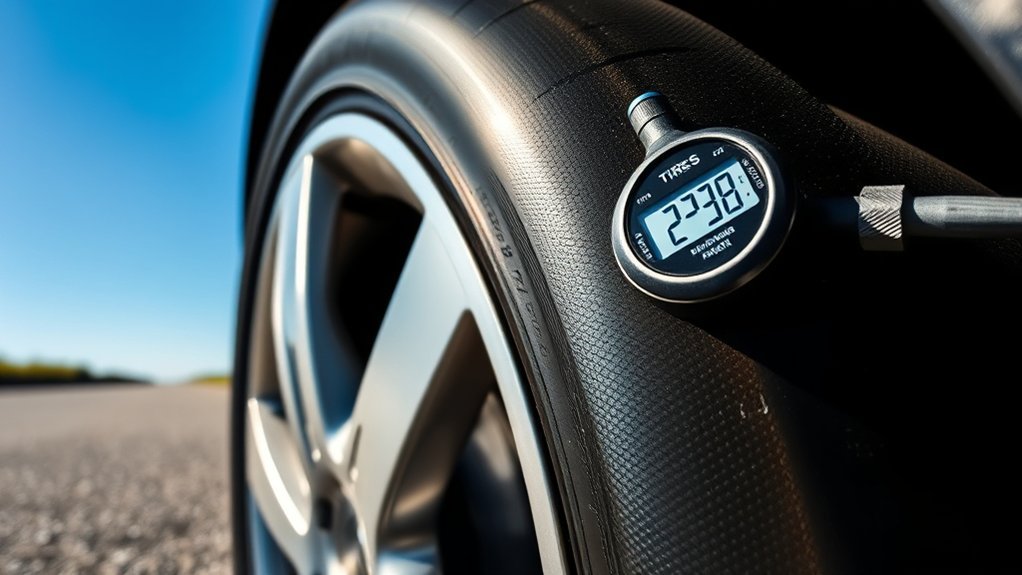
When you’re planning a summer road trip, run a concise pre‑trip tire check that prioritizes pressure, condition, and service history. Measure cold PSI (tires stationary at least three hours) and confirm each tire sits within the 30–35 PSI range adjusted for expected temperature rise (~1 PSI per 10°F). Inspect tread for uneven wear, cuts, bulges or sidewall damage. Verify valve stems and TPMS sensors are intact, and review recent alignment and rotation records (rotate/align every 10,000–13,000 km).
Perform these routine checks to guarantee safety and freedom on the road. Heat affects pressure and structural integrity, so don’t gamble. If pressures exceed target after hot runs, correct when cold. Schedule a maintenance appointment before departure if you find uneven wear or suspect misalignment. Carry a calibrated gauge and portable compressor, and know your vehicle’s spec. Follow this checklist to protect performance, minimize risk, and keep your summer road trip liberating.
- Measure cold tire pressure and adjust for heat effects.
- Inspect tread, sidewalls, valves, and TPMS.
- Confirm tire alignment and recent maintenance appointment.
Frequently Asked Questions
How Much PSI Do Tires Expand When Hot?
Tires typically expand about 4–8 PSI when hot. You’ll see roughly 1 PSI per 10°F temperature effects. For tire pressure accuracy during summer driving, monitor heat expansion and prioritize safety considerations to stay safe and avoid blowouts.
What Is the 3% Tire Rule?
The 3% tire rule is a guideline for tire replacement. It means new tires should have an overall diameter within 3% of the originals to protect speedometer accuracy, handling, and safety systems. For summer pressure management, the practical rule to follow is 1 PSI per 10°F temperature rise. You’ll apply tire maintenance tips and pressure monitoring to counter heat effects, preserve summer driving safety, and prevent adverse tire wear patterns.
What Is the Best Tire Pressure for Summer Driving?
Set your tires to the manufacturer’s recommended PSI, adding 3–4 PSI in hot conditions for safety. You’ll gain tire pressure benefits, follow summer driving tips, account for temperature effects, and guarantee tire maintenance and road safety.
What Is the 7 7 Rule for Tires?
The 7-7 rule is a guideline for switching to winter tires. It recommends putting on winter tires when daily temperatures stay at or below 7°C (45°F) for seven consecutive days. For summer tire pressure, stick to checking cold PSI and adjusting for the 1 PSI per 10°F rise. You’ll monitor pressure, adjust for heat effects, apply tire maintenance tips, prioritize summer driving safety, prevent tire wear factors, and keep pressure monitoring consistent.
Conclusion
Think of your tires as pressure vessels on a hot day — like concert balloons that swell on stage. You’re the technician tuning each note. Use the vehicle’s recommended PSI, check cold, compensate carefully for heat, and recheck after cooling. Precise gauges, steady routine checks, and conservative adjustments keep pressure within safe limits.
Treat summer pressure management as preventive engineering. Consistent, measured actions reduce wear, prevent failures, and keep you in control.







Leave a Reply