
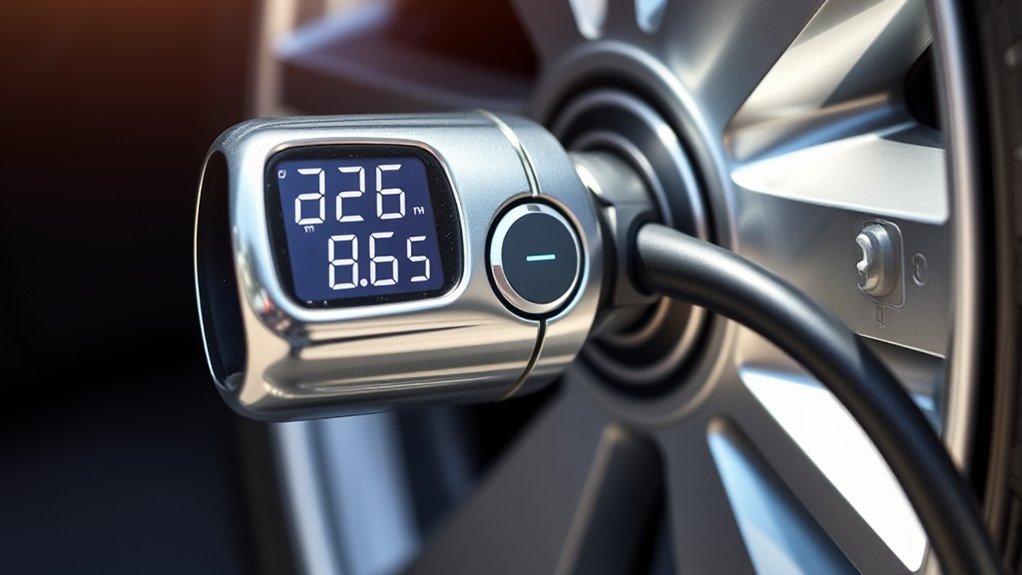
An automatic shutoff stops inflation when your preset PSI is reached (typically within a small tolerance) by using a pressure sensor and control circuit that monitor real-time pressure and stop the compressor motor (and, on some designs, close an internal valve). That prevents overinflation that can rupture casings, stress beads and valves, and degrade handling or wear. It’s a hands-off safety feature that reduces human error and fleet downtime. Keep going to learn how detection, valves, and calibration make it reliable.
What “Automatic Shutoff” Means for Tire Inflators
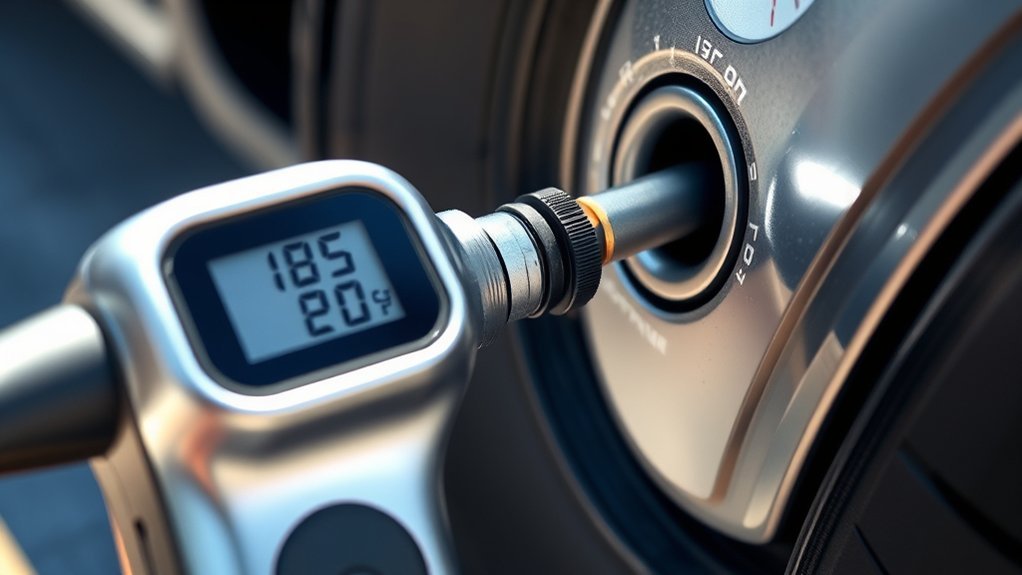
When you set a target PSI and start the inflator, its built-in pressure sensor continuously measures tire pressure and automatically stops inflation once the preset value is reached, preventing overinflation and the attendant risks of tire failure, uneven wear, and compromised handling. You rely on the automatic shutoff to enforce the desired pressure without manual intervention; continuous monitoring maintains accurate inflation by sensing real-time pressure changes and stopping at the set point. This system reduces human error, providing hassle-free inflation while prioritizing safety and ideal tire pressure in variable conditions like cold weather. You’ll notice less risk of blowouts and uneven tread wear, and the inflator itself avoids unnecessary cycling. By preventing over-inflation, you preserve structural integrity and extend service intervals, which extends lifespan for both tire and tool. The mechanism gives you control and freedom from constant checks while delivering precise, repeatable results aligned with safe operation.
How Tire-Inflator Shutoffs Detect Target Pressure
Although the housing is compact, the shutoff system actively measures tire pressure through an internal sensor and feeds that data to a microcontroller that compares it to your preset PSI; when the readings match the target (typically within a small tolerance, often around ±1–2 PSI depending on the model), the controller stops the compressor (and may close an internal valve, depending on design). You set the desired pressure via dial or digital input, and the device performs continuous monitoring of air pressure during inflation. The microcontroller samples the sensor at defined intervals, filters noise, and applies debounce logic so transient spikes don’t falsely activate the automatic shut-off feature. This tight feedback loop delivers accurate inflation and limits human error, reducing the risk of tire damage. By relying on verified sensor readings and preset pressure thresholds, the tire inflator enforces safe limits and prevents overinflation while conserving device life. You retain control, but the system enforces safety, enabling confident operation without constant supervision.
How the Inflator Actually Stops Airflow (Valves, Solenoids, Relays)
You’ll find a few valve types doing the heavy lifting—ball, poppet, and solenoid-actuated spool valves—each offering different leakage rates and failure modes that affect shutoff reliability. In many portable inflators, the controller primarily stops the compressor motor (often via a relay or electronic switch), and some designs also use valves to isolate airflow or manage bleed-down, so a single electrical fault can either leave inflation running or stop inflation prematurely. Focus on valve sealing integrity (where applicable), solenoid response time, and relay wiring/ratings, because weaknesses here directly raise the risk of overinflation or unexpected underinflation.
Valve Types And Roles
Valves are the critical safety components that actually stop airflow in automatic tire inflators, and they must operate reliably to prevent dangerous overinflation. You rely on solenoid valves as the primary shutoff element in systems that use them: the pressure sensor feeds real-time data to the microcontroller, which commands the solenoid valves to isolate the air supply when your setpoint is met, halting compressor operation. You also get exhaust valves for controlled deflation and rapid pressure reduction when needed, improving tire pressure management. Valve selection (direct-acting, pilot-operated, poppet) affects response time, fail-safe behavior, and leak rates. Design must account for electrical flow through relays, mechanical wear, and contamination risks so you can confidently prevent overpressure without compromising safety.
Solenoids, Relays, Control
When the pressure sensor reports that the preset target has been reached, the microcontroller stops the compressor motor (often via a relay or electronic switch) and, in some designs, energizes a solenoid to close the supply valve and isolate airflow, helping prevent overinflation. You rely on solenoids and relays as the executive layer of control where they’re used: relays translate low-power logic into higher-power actuation, and solenoids physically seal the valve to interrupt airflow. The automatic shut-off depends on continuous pressure readings and real-time monitoring; the controller samples sensors, compares to the setpoint, and cuts power when the target is reached (allowing for small settling or overshoot depending on the design). This tight loop reduces risk of tire damage or catastrophic failure. You gain hands-off inflation with repeatable, practical control.
How Shutoff Prevents Common Overinflation Damage
When you rely on an automatic shutoff, it helps prevent tire casing rupture by limiting pressure rise to your target PSI. It also protects the valve and bead seams by reducing pressure spikes that stress those connection points. Consistent cutoff helps avoid uneven tread wear caused by chronic overpressure, reducing accident and repair risk.
Prevents Tire Casing Rupture
Because excess internal pressure can quickly exceed a tire’s engineered limits, an automatic shutoff stops inflators when your preset pressure is reached, sharply reducing the chance of casing rupture. You rely on the automatic shutoff feature to enforce safe operating limits: the built-in pressure sensor continuously measures pressure and halts inflation before excessive internal pressure induces microtears or structural failure. That prevention directly lowers the risk of tire blowouts and preserves casing integrity so you can drive with fewer avoidable risks. Maintain ideal tire pressure to reduce uneven wear and stress concentrations that trigger rupture; the shutoff helps prolong tire lifespan by preventing overinflation-related degradation.
- Continuous monitoring via built-in pressure sensor
- Stops inflation at preset ideal tire pressure
- Limits excessive internal pressure that causes microtears
- Reduces risk of tire blowouts and premature casing damage
Protects Valve And Seams
Having the inflator stop at your preset pressure also protects the tire’s smaller, failure-prone components — particularly the valve stem and the bead seams. You rely on the automatic shutoff feature to stop inflation when the target pressure is reached, preventing overinflation that stresses the valve assembly and risks seal blowouts. By eliminating manual overshoot, the device preserves seam adhesion and maintains tire integrity under load. Consistent inflation minimizes cyclic stress that leads to microseparation along bead seams and valve-seat fatigue. That controlled process protects the valve from excessive throat pressure and keeps mounting joints intact, which directly improves safety. Choosing inflators with reliable shutoff control lets you assert control over risks and maintain safer mobility.
Avoids Uneven Tread Wear
If you let pressure run past the target even slightly, the tire’s center will take more load and wear faster, so an automatic shutoff that stops inflation at the preset pressure prevents that common overinflation pattern. You protect tread life and vehicle control by using the automatic shutoff feature for proper inflation and consistent pressure management. Overinflated tires accelerate uneven tread wear, shortening tread life and increasing blowout risk. Regular use keeps each tire at ideal tire pressure, preserving contact patch and delivering enhanced traction and stability.
- Prevents center-heavy wear through precise cutoff.
- Maintains uniform pressure to reduce handling risks.
- Supports improved fuel efficiency via proper inflation.
- Lowers replacement cost and helps avoid premature wear.
Who Benefits Most: Drivers, Fleets, and Off-Roaders

When you rely on on-board or portable inflators with automatic shutoff, they remove the guesswork and cut the primary risk of under- or overinflation by ensuring each tire hits the manufacturer’s specified pressure. You gain measurable safety improvements: consistent tire pressure reduces blowout risk and stabilizes handling. For drivers, that means predictable commute performance and better fuel efficiency; you’ll pay less at the pump and face fewer roadside failures.
For fleets, automatic shutoff becomes an enforcement tool. You’ll standardize inflation across units, lower maintenance costs, and minimize downtime from uneven wear or pressure-related failures. That reduces liability and operational risk while freeing managers to optimize routes.
For off-roaders, the feature helps prevent accidental overinflation during highway changes and supports traction off-road. You’ll quickly adjust pressures without guessing, maintaining stability across terrain shifts. In all cases, automatic shutoff streamlines procedures, cuts human error, and improves consistency for operators who value control and reduced mechanical risk.
Using an Automatic Shutoff Tire Inflator: Step-By-Step
Start by confirming the inflator is powered and pre-set to the target PSI before you touch the valve; this helps prevent accidental overrun and ensures the unit’s pressure sensor and shutoff circuit are operating within expected parameters. You connect power, set the desired pressure on the digital display or pressure gauge, and only then clamp the nozzle to the tire valve to eliminate leaks. Activate the unit; the automatic shut-off feature will begin monitoring pressure and controlling compressor cycles.
- Attach nozzle securely to valve, verify airtight seal to avoid false readings.
- Press power; observe digital display and pressure gauge for live monitoring.
- Let the inflator run; it will inflate tires while comparing current pressure to desired pressure.
- Confirm compressor stops at target; the shutoff helps prevent overinflation and completes efficient inflation.
Maintain focus on safety: precise setup and disciplined monitoring reduce risk and help you avoid pressure-related failures.
[Products Worth Considering]

The Rapidair automatic tire inflator with shutoff feature is a professional quality handheld unit. S

ADVANCED TRUEGAUGE SCREEN: This battery tire inflator includes updated sensor technology, capable of collecting pressure data from tire inflators at a frequency of 200 times per second. Its valid data rate is higher than 80%, which is 60% better than the market average. Wherever you go, accurate readings help you drive safely.
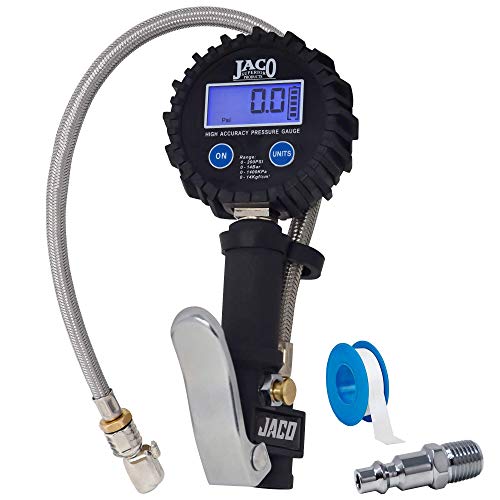
ANSI 1A ACCURACY: Performance tested & calibrated accurate to ±1% full scale with 0.5 PSI resolution for precise tire inflation. Bright 200 PSI LCD display & auto-off feature conserve battery life.
When the Automatic Shutoff Fails: Quick Troubleshooting
Although an automatic shutoff is designed to prevent overinflation, you must treat any failure as an immediate safety issue and begin systematic troubleshooting. Start by powering down, then disconnect and reconnect the unit to reset controls; this simple step can restore the automatic shut-off feature if electronics glitched. Next, inspect fittings and the hose for air leaks that distort pressure readings and can prevent overinflation safeguards from engaging. Verify the inflator’s pressure sensor accuracy with a calibrated pressure gauge; compare indicated values to confirm trust in shutoff triggers. If discrepancies persist, consult the manufacturer’s manual for model-specific diagnostics and contact customer support for guided repair or replacement. Maintain a disciplined test routine so you can use equipment with confidence—test before trips, log failures, and replace faulty components promptly. Acting decisively preserves safety and control when an automatic shutoff fails.
| Step | Action | Expected Result |
|---|---|---|
| 1 | Disconnect and reconnect | Reset electronics |
| 2 | Inspect hose | Find air leaks |
| 3 | Use calibrated pressure gauge | Verify pressure readings |
| 4 | Check sensor | Identify sensor fault |
| 5 | Consult manual/support | Repair guidance |
[Products Worth Considering]

PROCESS LEVEL ACCURACY: Each ETENWOLF’s digital tire pressure gauge is calibrated manually to ANSI B40.7 Grade 2A(plus-minus 1 PSI).Presta valve adapter not included, if used for bicycles, it must be purchased separately
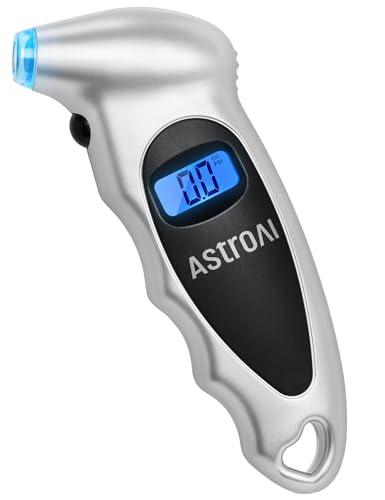
EXPERT-GRADE CALIBRATION: Each AstroAI Tire Pressure Gauge is calibrated with professional-grade tools, ensuring quick and accurate measurement results within plus-minus 1PSI. Stay prepared for any roadside emergency and travel with peace of mind.

Digital Tire Pressure Gauge 2 Pack, Industrial Tire Gauge 3-200 PSI, Calibrated to ANSI B40.7 Grade 2A(plus-minus 0.5%), Air Pressure Gauge with Replaceable AAA Batteries
Choosing the Right Automatic Shutoff Tire Inflator (Accuracy, Flow, Power)
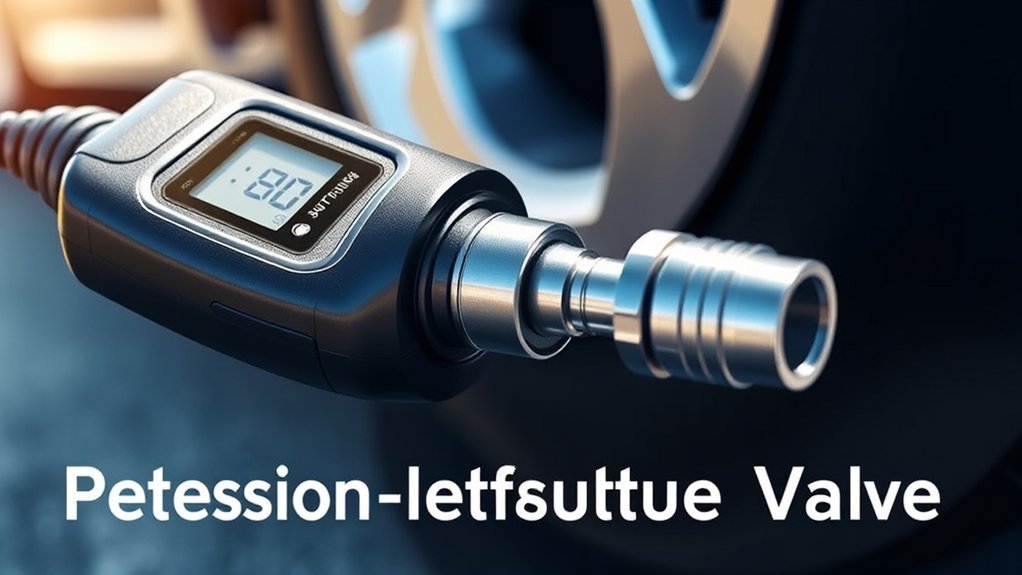
Because accurate pressure control is critical to safety, you should choose an automatic-shutoff inflator that delivers tight accuracy (often around ±1–2 PSI depending on the model), a suitable CFM flow rate for your tire sizes, and the correct power source for your use case. You want tire inflators that give reliable inflation without guesswork, with preset pressure settings to reduce human error and the automatic shut-off feature to help stop overinflation. Consider flow rate: higher CFM shortens fill time on large tires, reducing exposure during roadside repairs. Match power source to deployment — 12V DC for mobile resilience, 110V AC for garage speed. Look for built-in LED for safe night use and multiple nozzles for versatility.
- Verify tight accuracy and digital readout for maintaining ideal tire pressure.
- Select CFM appropriate to tire volume to limit warm-up and delay risks.
- Choose power source aligned with where you’ll operate most.
- Prioritize preset pressure settings and built-in LED for secure control.
[Products Worth Considering]

QUICK & ACCURATE: Built with the highest quality materials, Airmoto is a portable tire inflator for car, trucks, SUVs, motorcycles, and bicycles. Quickly inflate your vehicle's tires in just minutes with precision accuracy up to 120 PSI. Small and compact car air pump that fits in your glove box or trunk.

Powerful Jump Starter: Delivers up to 5000A of peak current, instantly starting gasoline engines up to 9.0L or diesel engines up to 8.0L. Designed to operate reliably in extreme temperatures from -4°F to 140°F, it's a reliable jump starter for cars, trucks, SUVs, and motorcycles.

✅ Compatible with Any Air Compressor – Works seamlessly with shop and garage air systems, eliminating the need for bulky built-in compressors.
Keep the Shutoff Accurate: Maintenance and Calibration Tips
Once you’ve picked an inflator with tight accuracy and a reliable automatic shutoff, you need a disciplined maintenance and calibration routine to keep that performance in the field. You’ll regularly verify the pressure gauge against a known-accurate reference gauge to maintain calibration within about ±1–2 PSI; document deviations and correct them before use. Clean the air filter and inspect hoses, fittings, and connectors for wear or obstructions that skew readings and risk overinflation. Follow the manufacturer’s guidelines to lubricate O-rings and moving parts—this simple maintenance preserves seals and the automatic shut-off feature, extending longevity. Store the unit dry to protect electronics and calibration integrity. If you use an air compressor, purge moisture and check its regulator output to avoid false pressure inputs. Periodically test that the shutoff stops inflation at the target PSI; treat any drift as a critical fault and remove the inflator from service until repaired. Stay rigorous—accuracy protects tires and helps you avoid preventable mechanical failure.
Frequently Asked Questions
How Does an Automatic Tire Inflation System Work?
You connect the inflator to the valve, set a target PSI, and the controller monitors pressure and stops inflation at the setpoint (typically within a small tolerance). For best results, verify occasionally with a good gauge and follow the manufacturer’s guidance for your tire.
Do TPMS Sensors Detect Overinflation?
Usually, TPMS warnings are designed around underinflation thresholds, so you won’t reliably get an overinflation alert on every vehicle. Some vehicles display actual PSI and may warn for high pressure, but that behavior isn’t consistent across all makes and models. Use an accurate inflator (or a calibrated gauge) to avoid overinflation.
Do Tire Air Pumps Turn off Automatically?
Many modern digital tire inflators offer an auto-stop feature that shuts off at a set PSI, improving convenience and consistency. Accuracy and overshoot can vary by model, so it’s smart to verify occasionally with a reliable gauge—especially if you need precise pressure.
What Are the Disadvantages of Tire Inflators?
You’ll face tire inflator accuracy limits, user safety concerns from misreads, portability issues and noise levels, varied power source options, maintenance requirements, high price comparisons, mixed brand reliability, and inconsistent warranty coverage impacting your autonomy and risk control.
Conclusion
Picture your inflator like a vigilant pressure dial that clicks off when your tire reaches its safe limit — helping prevent a sudden pop or hidden bead damage. You’ll trust the shutoff to act faster than human reflexes, sealing valves (where used) and stopping inflation at the setpoint within its design tolerance. Maintain calibration, check fittings, and treat failures as immediate risks: an unchecked overinflate can weaken tire structure, reduce handling, and create dangerous blowout conditions.







Leave a Reply