Are The Toyota RAV4 All Toyota RAV4 4 Cylinder? (explained)
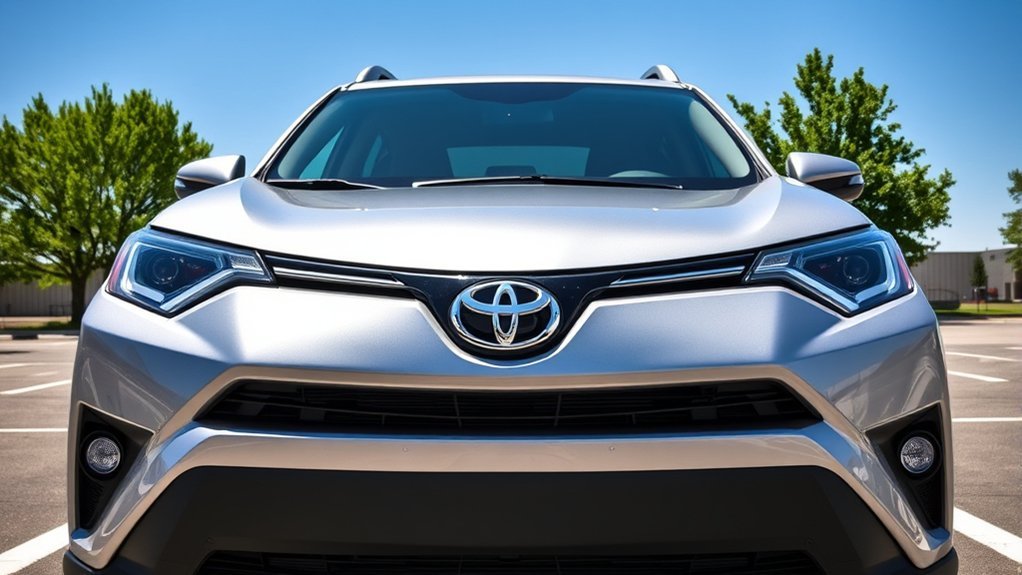
Toyota RAV4 engine choices depend on the model year and market. Most RAV4s have used four-cylinder engines, but some 2006 through 2012 U.S. models offered a V6. For 2026, the U.S. lineup is fully electrified: every RAV4 uses a 2.5-liter four-cylinder gasoline engine as part of either a hybrid or plug-in hybrid system.
Quick Answer
Yes, every 2026 Toyota RAV4 sold in the U.S. has a 2.5-liter four-cylinder gasoline engine, but it works with electric motors. Hybrid models produce 226 or 236 net combined horsepower, while Plug-in Hybrid models produce 324 horsepower. Older RAV4s may have a gas-only four-cylinder or an optional V6.
Key Takeaways
- The 2026 U.S. RAV4 lineup has no gas-only model.
- Every 2026 RAV4 uses a 2.5-liter inline-four engine inside a Hybrid or Plug-in Hybrid system.
- Hybrid output is 226 net combined hp with FWD and 236 hp with AWD.
- The Plug-in Hybrid makes 324 net combined hp and the SE has an EPA-estimated 54-mile electric range.
- Some 2006 through 2012 RAV4 models offered a 3.5-liter V6, so model year matters when shopping used.
What’s in This Article
- Are All Toyota RAV4 Models Four-Cylinder?
- 2026 RAV4 Powertrain and Drivetrain Options
- How the 2026 RAV4 Hybrid System Works
- 2026 RAV4 Hybrid Fuel Economy
- Gas-Only RAV4 vs. 2026 RAV4 Hybrid
- RAV4 Plug-in Hybrid Engine, Range, and Charging
- RAV4 Engine History by Model Year
- How Engine Choice Changes the Driving Experience
- Which RAV4 Powertrain Should You Choose?
- What to Check When Buying a Used RAV4
- Sources
Are All Toyota RAV4 Models Four-Cylinder?
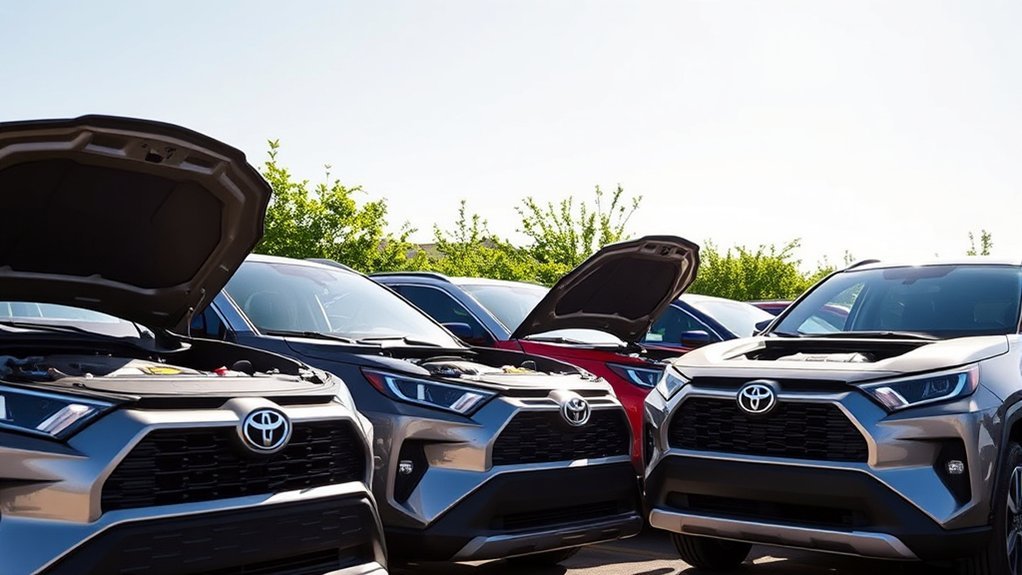
Not every RAV4 ever made has the same engine, but four-cylinder engines have powered most versions. The main exception in the U.S. was the third-generation RAV4, where Toyota offered an optional 3.5-liter V6 from the 2006 through 2012 model years.
For the 2026 model year, the answer is simpler. Toyota moved the U.S. RAV4 lineup to Hybrid Electric Vehicle (HEV) and Plug-in Hybrid Electric Vehicle (PHEV) powertrains. Both systems use a 2.5-liter inline-four gasoline engine with one or more electric motors.
Note: “Four-cylinder engine” does not mean the vehicle’s total output comes from the gasoline engine alone. Toyota’s 226-hp, 236-hp, and 324-hp figures are net combined system ratings that include electric-motor output.
Specifications can differ outside the U.S., so confirm the local Toyota product page or vehicle identification documents when comparing another market.
2026 RAV4 Powertrain and Drivetrain Options
The 2026 RAV4 is available in six Hybrid grades and four Plug-in Hybrid grades. Drivetrain availability changes by trim, so “all RAV4s are hybrid” does not mean every version has the same power, fuel economy, or charging hardware.
| 2026 Grade | Powertrain | Drivetrain | Net Combined Output |
|---|---|---|---|
| LE | Hybrid | FWD or AWD | 226 hp FWD / 236 hp AWD |
| XLE Premium | Hybrid | FWD or AWD | 226 hp FWD / 236 hp AWD |
| Limited | Hybrid | AWD | 236 hp |
| SE | Hybrid or Plug-in Hybrid | Hybrid FWD/AWD; PHEV AWD | 226/236 hp Hybrid; 324 hp PHEV |
| Woodland | Hybrid or Plug-in Hybrid | AWD | 236 hp Hybrid; 324 hp PHEV |
| XSE | Hybrid or Plug-in Hybrid | AWD | 236 hp Hybrid; 324 hp PHEV |
| GR SPORT | Plug-in Hybrid | AWD | 324 hp |
Toyota’s official 2026 RAV4 powertrain guide lists the available HEV, PHEV, FWD, and AWD combinations by grade.
How the 2026 RAV4 Hybrid System Works
The 2026 RAV4 Hybrid uses Toyota’s fifth-generation hybrid system. Its 2.5-liter A25A-FXS inline-four works with two front motor-generators through a planetary-type continuously variable transmission. AWD models add a dedicated rear electric motor to drive the rear wheels when the system calls for extra traction or stability.
This type of hybrid does not need an external charger. The vehicle recovers energy during deceleration and braking, stores it in the traction battery, and uses that energy to assist the gasoline engine.
Hybrid Powertrain Benefits
- No plugging in: You refuel it like a conventional gasoline vehicle.
- Electric assistance at low speed: The motor can provide immediate torque when moving away from a stop.
- Regenerative braking: The system recovers some energy that would otherwise become heat at the brakes.
- Available electronic AWD: AWD versions use a rear motor instead of a conventional mechanical driveshaft connection to the rear axle.
- Higher combined output than the 2025 gas model: The 2026 Hybrid makes 226 or 236 hp, compared with 203 hp for the 2025 gas-only RAV4.
The key 2026 change is not the loss of a four-cylinder engine. It is the loss of a stand-alone gasoline powertrain in the U.S. lineup.
2026 RAV4 Hybrid Fuel Economy
Fuel economy varies by drivetrain, wheel and tire package, and grade. The most efficient FWD Hybrid configurations are rated at up to 47 mpg city, 40 mpg highway, and 43 mpg combined. AWD and outdoor-focused grades trade some efficiency for added traction, equipment, or all-terrain tires.
| 2026 Hybrid Configuration | Official City / Highway / Combined MPG | Best Fit |
|---|---|---|
| FWD Hybrid | Up to 47 / 40 / 43 | Highest listed efficiency |
| LE or SE Hybrid AWD | 45 / 39 / 42 | Efficiency with AWD traction |
| XLE Premium Hybrid AWD | 45 / 38 / 41 | More comfort features with AWD |
| Woodland Hybrid AWD | 41 / 35 / 38 | Outdoor-focused equipment and tires |
| XSE or Limited Hybrid AWD | 43 / 37 / 41 | Sport or premium equipment |
These are official estimates, not guaranteed real-world results. Cold weather, short trips, high speeds, roof cargo, heavy loads, tire pressure, and driving style can all change fuel use. Check the exact window sticker for the vehicle you are buying because ratings can differ by configuration.
Gas-Only RAV4 vs. 2026 RAV4 Hybrid
The 2025 RAV4 was the last U.S. model-year lineup to include a gas-only version. Its 2.5-liter four-cylinder produced 203 hp and used a Direct Shift eight-speed automatic transmission. The 2026 Hybrid keeps a 2.5-liter four-cylinder but adds electric motors and a hybrid transaxle.
| Feature | 2025 Gas-Only RAV4 | 2026 RAV4 Hybrid |
|---|---|---|
| Gasoline engine | 2.5-liter inline-four | 2.5-liter inline-four |
| Electric motors | No | Yes |
| Output | 203 engine hp | 226 hp FWD / 236 hp AWD net combined |
| Transmission | Eight-speed automatic | Planetary-type hybrid transaxle |
| External charging | No | No |
A used gas-only RAV4 may appeal to a buyer who wants a conventional engine-and-transmission layout. A new 2026 buyer does not have that choice in the U.S.; the decision is between Hybrid and Plug-in Hybrid.
RAV4 Plug-in Hybrid Engine, Range, and Charging
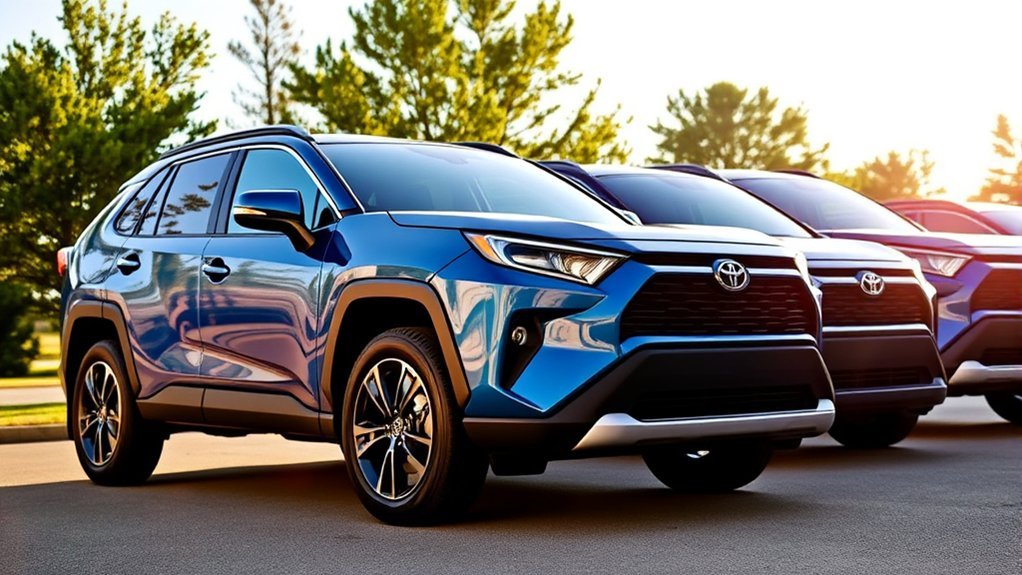
The 2026 RAV4 Plug-in Hybrid combines a 2.5-liter four-cylinder gasoline engine, a larger traction battery, and electric motors. It produces 324 net combined horsepower, and Toyota lists a 5.4-second 0-to-60-mph time.
The SE has an EPA-estimated 54-mile all-electric range. Range and efficiency vary by grade. Toyota’s current grade listings show 101 MPGe for the SE, 94 MPGe for Woodland, 96 MPGe for XSE, and 86 MPGe for GR SPORT.
Charging Differences by PHEV Grade
- SE and GR SPORT: A 7-kW onboard AC charger and J1772 port support Level 1 or Level 2 AC charging.
- Woodland and XSE: An 11-kW onboard AC charger and CCS1 port add DC fast-charging capability.
- Official estimated times: Toyota says compatible DC fast charging can take the battery from 10% to 80% in about 30 minutes under ideal conditions, while Level 2 charging on the 7-kW versions takes about four hours for the same range.
Pro Tip: A Plug-in Hybrid can continue driving after its EV range is used because it operates as a gasoline-electric hybrid. However, regular charging is usually necessary to receive the full electric-driving and operating-cost benefit.
RAV4 Engine History by Model Year
The RAV4 has used several engine families across six generations. The exact engine depends on the country, trim, drivetrain, and production year, but the U.S. timeline gives buyers a practical overview.
- 1996 through 2005: U.S. RAV4 models used four-cylinder gasoline engines.
- 2006 through 2012: Toyota offered four-cylinder engines and an optional 3.5-liter V6. The optional 3.5-liter V6 produced about 268 to 269 hp, depending on model year.
- 2013 through 2015: The U.S. lineup returned to four-cylinder gas power only.
- 2016 through 2020: Four-cylinder gas models continued, and the RAV4 Hybrid joined the U.S. lineup for 2016.
- 2021 through 2025: Buyers could choose gas-only, Hybrid, or RAV4 Prime/Plug-in Hybrid powertrains, depending on year and trim.
- 2026: The U.S. lineup became fully electrified, with Hybrid and Plug-in Hybrid choices only.
This history explains why a simple “Does the RAV4 have a four-cylinder?” question needs a model-year answer. A 2012 V6, a 2025 gas model, and a 2026 Hybrid can have very different performance and service needs.
How Engine Choice Changes the Driving Experience
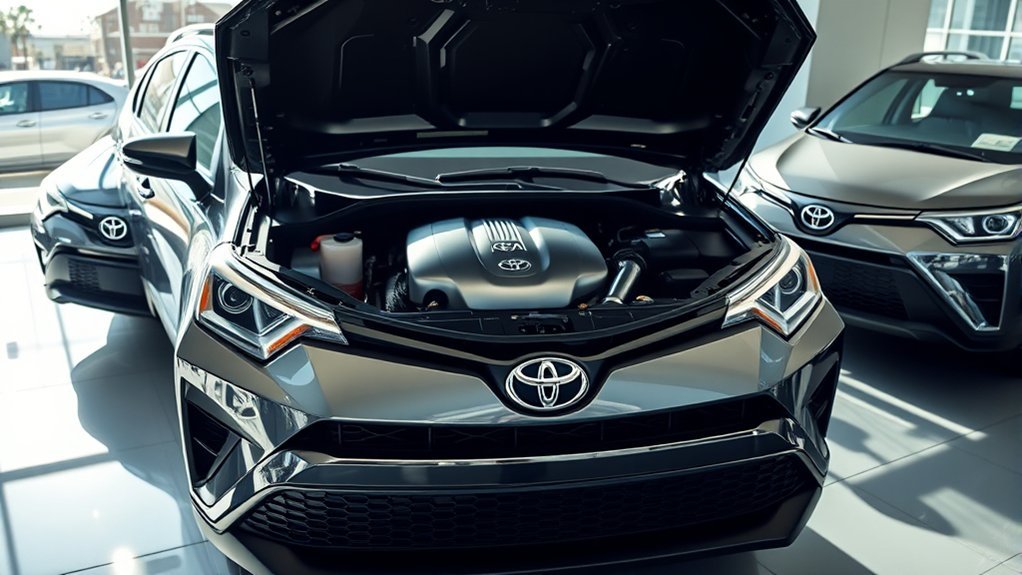
Your RAV4 powertrain changes acceleration, sound, fuel use, and the way power reaches the wheels.
- Gas-only four-cylinder: Uses familiar stepped shifts from a conventional automatic transmission on recent models. It does not provide electric-only movement.
- Hybrid: Blends engine and motor power through a continuously variable hybrid transaxle. It may move quietly at low speed and does not need to be plugged in.
- Plug-in Hybrid: Offers the strongest acceleration and can cover many daily trips on electric power when charged.
- Older V6: Delivers strong conventional gasoline performance but uses more fuel than modern electrified versions.
The Hybrid is usually the easiest transition for a driver coming from a regular gasoline vehicle. The Plug-in Hybrid adds more performance and electric range, but it also adds charging decisions and more grade-specific hardware.
Which RAV4 Powertrain Should You Choose?
Choose based on your daily route, charging access, climate, budget, and need for AWD rather than horsepower alone.
| Your Priority | Best Starting Point | Why |
|---|---|---|
| Highest listed hybrid fuel economy | Hybrid FWD | Up to 43 mpg combined without charging |
| Snow or slippery-road traction | Hybrid AWD | Adds a rear electric drive motor |
| Outdoor-focused equipment | Woodland Hybrid or PHEV | AWD, all-terrain tires, and rugged equipment |
| Electric commuting plus gasoline backup | Plug-in Hybrid | EV range for short trips and hybrid operation afterward |
| Strongest acceleration | Plug-in Hybrid | 324 net combined hp and a listed 5.4-second 0-to-60 time |
| A conventional gas layout | Used 2025-or-earlier gas model | The 2026 U.S. lineup has no gas-only option |
Hybrid Warranty Coverage
Toyota states that its hybrid battery is covered for 10 years or 150,000 miles, whichever comes first. Other hybrid-related components generally have 8-year/100,000-mile coverage, subject to the terms, exclusions, and emissions rules in the applicable warranty guide. Review the official Toyota electrified-vehicle warranty information for the exact vehicle.
What to Check When Buying a Used RAV4
A used RAV4’s badge alone does not tell you its engine or powertrain. Check the model year, trim, VIN, underhood emissions label, original window sticker, and service records before comparing it with another vehicle.
- Confirm the engine and powertrain: Determine whether it is gas-only, Hybrid, Plug-in Hybrid/Prime, or a V6.
- Check recall status by VIN: Use the NHTSA recall lookup and Toyota’s recall tool.
- Review maintenance records: Look for consistent fluid, filter, tire, brake, and cooling-system service.
- Inspect before purchase: Have a qualified technician check for leaks, warning lights, collision repairs, corrosion, abnormal noises, and diagnostic trouble codes.
- For a hybrid or PHEV: Confirm that the charging equipment, battery cooling intake, warning systems, and warranty records are present and in good condition.
Warning: Do not choose or reject an entire RAV4 model year based only on an online “years to avoid” list. Condition, maintenance history, crash repairs, open recalls, mileage, and the exact powertrain can matter more than the year alone.
Fuel Efficiency Considerations
Short daily trips with reliable charging can favor the Plug-in Hybrid. Longer mixed driving without dependable charging often favors the standard Hybrid. AWD Hybrid or Woodland versions may fit outdoor use, but their added equipment and tires can reduce fuel economy compared with the lightest FWD grades.
Compare the exact EPA label, insurance cost, purchase price, charging cost, expected annual mileage, and local electricity and gasoline rates. That gives a more useful ownership picture than comparing horsepower or advertised mpg alone.
Sources
- Toyota USA Newsroom: 2026 RAV4 launch and specifications — powertrains, drivetrains, horsepower, hybrid fuel economy, and charging hardware.
- Toyota: 2026 RAV4 — current U.S. grades and official fuel-economy listings.
- Toyota: 2026 RAV4 Plug-in Hybrid — 324 hp, EPA-estimated electric range, acceleration, and current MPGe listings.
- Toyota USA Newsroom: 2025 RAV4 — 203-hp gas engine and eight-speed automatic transmission.
- Toyota USA Newsroom: 25 years of RAV4 history — early four-cylinder models, the 2006–2012 V6, and the 2016 Hybrid introduction.
- National Highway Traffic Safety Administration recall lookup — VIN-based safety recall checks.