How to Store a Portable Tire Inflator: Battery Care & Maintenance
Key Takeaways
- Optimum Charge: Store your inflator at 40–60% State of Charge (SoC). Never store it fully charged or completely empty.
- Temperature Control: Avoid leaving the unit in hot trunks or uninsulated garages. Extreme heat permanently degrades the battery.
- Maintenance Schedule: Inspect the device every 90 days. Top up the battery if it falls below 20% to prevent “bricking.”
- Protection: Use a sealed, insulated case with silica gel to protect electronics from moisture and thermal shock.
Proper storage is the difference between a tire inflator that saves the day and one that fails when you need it most. By following a few specific protocols—charging to 40–60% SoC, using silica gel for moisture control, and avoiding extreme temperature swings—you can significantly extend the lifespan of your device. Below is a complete guide to inspecting hoses, calibrating gauges, and protecting the lithium-ion cells that power your inflator.
Quick Storage Steps: Ready-to-Go in 3 Minutes
Start by charging the inflator’s battery to about 50–60% SoC. Next, wipe the exterior with a soft cloth to remove road dust and debris; this minimizes stress on the cells and prevents corrosion on the contacts. Place the portable inflator in a cool, dry spot away from direct sunlight and heat sources.
Insert silica gel packets into the case to control moisture and protect the electronics. Label the unit with the date and set a quarterly reminder to check the battery level. If the charge falls below 20%, top it up immediately to avoid deep discharge, which can permanently disable (“brick”) the unit. For immediate readiness, keep the charging cable with the inflator and store the unit upright to reduce mechanical strain.
When transferring the inflator between locations, avoid hot trunks or unventilated garages—choose shaded areas that support stable temperatures. These simple, proven steps let you reclaim freedom from roadside uncertainty and keep your equipment reliable.
Why Trunks and Garages Damage Tire-Inflator Batteries
Storing tire-inflator batteries in trunks and garages exposes them to extreme temperature cycling. This stresses the lithium-ion cells and significantly cuts their lifespan. High heat speeds up electrolyte breakdown and cell swelling, while “cold-soak” (prolonged freezing) can temporarily halve performance and leave units unusable. Add humidity and dust ingress, and you risk corroded contacts and compromised pressure sensors.
Extreme Temperature Cycling
Trunks and uninsulated garages swing through large daily temperature ranges. This subjects lithium-ion packs to damaging thermal stress that cuts performance, sometimes by 20–30% after a single summer. You may see battery health drop as internal resistance rises; cold weather reduces power output, while hot spikes accelerate chemical degradation.
Avoid storing at 100% SoC in extreme environments. Monitor storage temperatures and keep maintenance logs. It is also wise to calibrate sensors after seasonal swings to preserve reliability.
| Condition | Effect on Battery |
|---|---|
| Hot trunk (>36°F above ambient) | Cycle life reduced by 20–30% |
| Cold soak (20°F, 48h) | Power output drops ~60%; high internal resistance |
Heat-Accelerated Degradation
Heat specifically accelerates chemical damage in lithium-ion cells. Vehicle trunks can exceed ambient temperatures by 20°C (36°F), and garages can top 60°C (140°F). This drives SEI (Solid Electrolyte Interphase) growth, higher internal resistance, and electrolyte breakdown.
The result is often swelling, gas generation, and a significant drop in cycle life. To keep your inflator ready, store it at moderate temperatures and maintain a 40–60% state of charge; never leave packs fully charged in hot cars. These steps slow the chemical reactions that eat capacity.
Moisture And Dust Ingress
When stored in trunks or garages, seals and sensors often fail to keep out humidity and dust. This mix promotes corrosion and sensor drift. Moisture ingress can shift sensor output, while dust particles may foul valves, producing erratic pressure readings or false alarms.
Fluctuating temperatures also speed up electrochemical reactions, accelerating internal corrosion. Store the unit in a sealed, ventilated case and elevate it off cold floors to reduce condensation. Use silica gel packets inside the case and replace them periodically. Regularly inspect seals and clean exterior ports to prevent particulate entry.
Set 40–60% State of Charge for Long-Term Storage
If you plan to store your tire inflator long-term, set the battery to about 40–60% State of Charge (SoC). This range minimizes chemical stress and slows calendar aging. It balances battery health with readiness, reducing oxidation and electrolyte breakdown that occur more rapidly at 100% SoC.
Crucially, this buffer prevents deep-discharge bricking (where the cell voltage drops too low to recover) while minimizing voltage stress. Check the SoC every 90 days and adjust as needed to maintain this target range.
Beat the Heat and Cold: Managing Summer and Cold-Soak Risks
Do not leave your inflator in vehicles where temperatures can spike above 140°F (60°C). This accelerates degradation. Conversely, if a battery has been “cold-soaked” (e.g., sitting at 20°F for 48 hours), do not charge it until it warms to room temperature. Charging frozen lithium-ion batteries causes lithium plating, which leads to permanent capacity loss and safety risks.
Preventing Heat-Induced Degradation
High heat is the enemy of battery longevity. To prevent degradation, store your tire inflator out of direct sun and away from closed cars whenever possible. Ambient-controlled storage is best. If you must keep gear in vehicles, use insulating cases or reflective covers, and place the unit low in the vehicle (the floor is cooler than the dashboard) to mitigate heat exposure.
Managing Cold-Soak Effects
Cold-soaked batteries can lose over 60% of their power temporarily. Internal resistance rises, and the electrolyte becomes viscous. Always let devices return to room temperature before charging—most Battery Management Systems (BMS) will block charging below 32°F (0°C) to prevent damage. If you must use a cold unit in an emergency, run short cycles to warm it up internally and avoid deep, continuous power draws.
| Action | Benefit |
|---|---|
| Warm to 68°F before charging | Prevents lithium plating (Safety) |
| Maintain SOC 40–60% | Maximizes longevity |
| Use short draws in cold | Prevents voltage sag |
Creating Insulated Micro-Climates
Shielding your inflator inside an insulated case creates a stable micro-climate. This slows temperature swings and reduces humidity impact.
- Choose a foam box or cooler sized to limit excess air volume.
- Pack silica gel packets to maintain low moisture levels.
- Avoid leaving units in direct sun or unheated trunks.
- Monitor interior temps to verify the insulation is working.
Pre-Storage Checklist: Set SOC, Clean, and Pack
Before stowing your tire inflator, follow this checklist:
- Charge: Set battery to 50–60% SoC.
- Clean: Wipe the exterior to remove dust and salts.
- Pack: Store in a cool, dry location with the valve capped.
- Schedule: Set a reminder to check the charge every 90 days.
When packing, secure loose cables and avoid tight bends in the hose. Label the unit with the storage date and battery level to track self-discharge rates.
Quarterly Maintenance & the Cold-Soak (Fridge) Test
Perform quarterly checks to confirm State of Charge and inspect connectors. You can also run a “Cold-Soak Test” to simulate winter failure before it happens in a real emergency.
- Measure SoC and record readings to track capacity loss.
- The Fridge Test: Store the unit at ~20°F for 48 hours, then run a short load cycle. If output drops drastically (more than expected), the battery may be nearing end-of-life.
- Inspect hoses and seals for stiffness or cracking after cold exposure.
- Important: Allow the unit to reach room temperature before recharging.
Fixes After Storage: Calibrate Gauges and Restore Performance
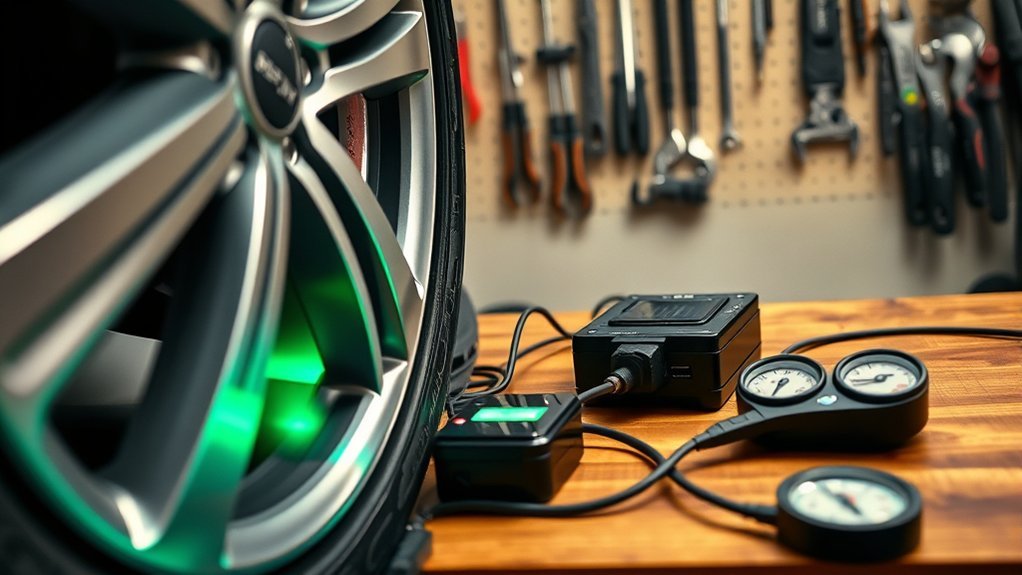
After a long period of idleness, recalibrate the pressure gauge. Temperature swings can cause calibration drift exceeding 2 PSI. Compare the unit’s readings against a trusted reference gauge at multiple pressure points.
Power up the compressor and listen for steady motor operation. Inspect hoses and valves for any debris that might cause leaks. If readings are inconsistent, check for dust in the sensor ports. Clean gently; if accuracy does not return, the sensor may need replacement.
Safety, Transport Rules, and Practical Thermal-Buffer Setups
When transporting a tire inflator with a lithium-ion pack, compliance is critical for safety.
- Follow Regulations: Adhere to IATA Lithium Battery guidance for air travel; declare and pack devices according to rules.
- Prevent Short Circuits: Insulate terminals and avoid storing with loose metal objects.
- Control Temperature: Use thermal buffers (insulated bags) when transporting in vehicles on hot days.
- Audit: Ship or transport only healthy packs; never transport swollen or damaged batteries.
Frequently Asked Questions
Do tire inflators expire?
Yes. The lithium-ion batteries inside have a limited lifespan (typically 3–5 years). Proper maintenance (40–60% SoC storage) extends this, but swelling or significant capacity loss indicates it is time to replace the unit.
Do portable tire inflators drain the car battery?
If the inflator plugs into your car’s 12V socket (cigarette lighter) and the engine is off, yes, it can drain the vehicle battery. Self-powered portable inflators run on their own internal batteries and do not affect your car’s battery unless charging.
How do I charge my portable tire inflator?
Use the manufacturer-supplied charger or a compatible USB-C cable. Keep the battery between 40–60% for storage. Never charge a frozen battery; let it warm up first.
Do battery-powered tire inflators actually work?
Yes, modern battery-powered inflators are highly effective for topping up tires and emergency fills. They offer freedom from cords but require regular charging and temperature protection to remain reliable.
Conclusion
Treat your tire inflator with a few small favors—partial charge, clean contacts, and a protected storage spot—and it will remain reliable for years. Treat heat and cold like thieves: block them with insulation and regular checks. By following these simple maintenance steps, you ensure your inflator is ready to perform whenever the road demands it.