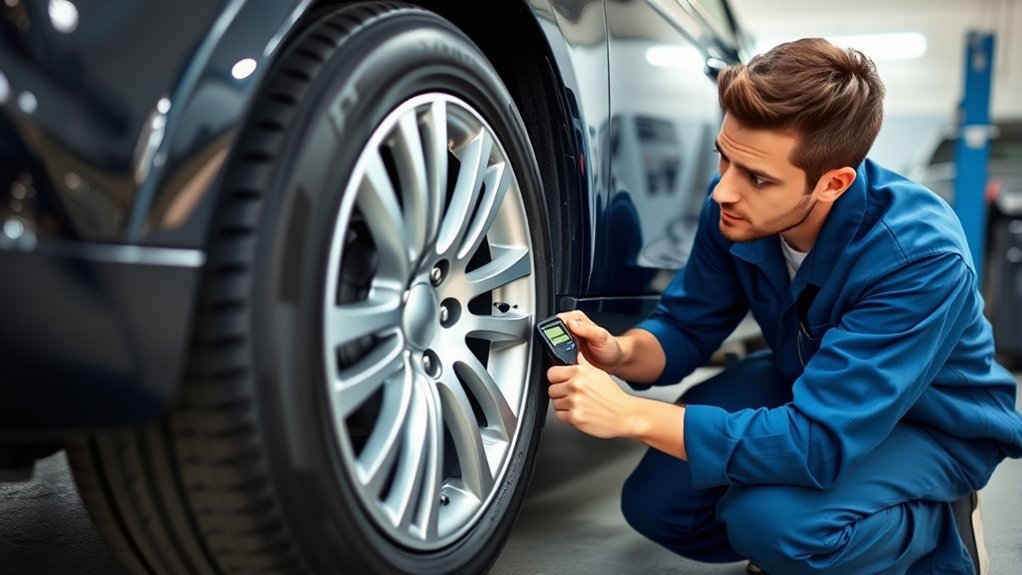
You should check your tire pressure once a month when tires are cold to spot slow leaks, prevent blowouts, and keep fuel economy and handling at their best. Use the vehicle’s recommended PSI from the door jamb or manual, not the sidewall max, and press a reliable gauge firmly on the valve stem. Inspect tread and sidewalls for cuts or bulges, replace valve caps, and note uneven wear. Keep going for step‑by‑step checks, PSI guidance, and common problem fixes.
Quick Answer: How to Check Tire Pressure Now
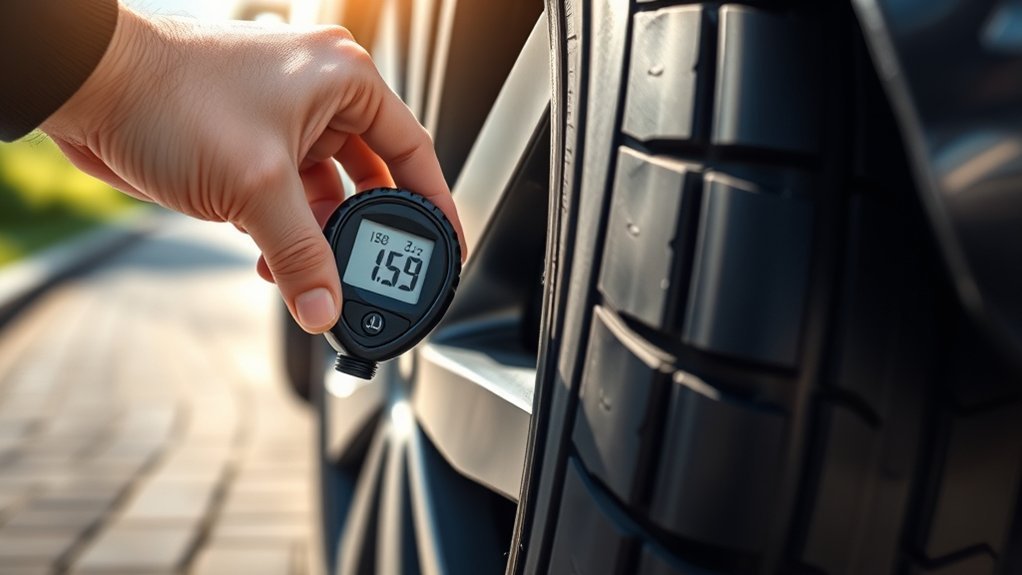
Because tire pressure changes with temperature, check your tires when they’re cold for the most accurate reading: remove the valve cap, press a reliable gauge firmly onto the valve stem so no air escapes, and compare the reading to the PSI on your owner’s manual or the driver’s door jamb. When checking tire pressure, use a good tire pressure gauge and work methodically: inspect each valve stem, get a clear reading, and write down the numbers. If any tire reads below the recommended tire pressure, add air with a compressor; if it’s above, release air slowly until you hit the target. Do this for all four tires and the spare if accessible. Monthly checks catch slow leaks and prevent blowouts, improving fuel efficiency and control so you can travel freely and confidently. Keep a compact gauge and a log in your glove box; routine, precise habits protect your independence on the road.
How to Find the Right PSI for Your Vehicle
Where do you find the correct PSI for your vehicle? Look in your owner’s manual or on the sticker inside the driver’s side door jamb—those give the manufacturer’s recommended PSI for front and rear tires. Don’t use the tire sidewall maximum; that’s not the recommended PSI.
You should check tire pressure when tires are cold to get accurate readings. Properly inflated tires improve stability, braking, and fuel efficiency, and they protect you and others on the road.
- Locate the owner’s manual or door-jamb sticker for the recommended PSI.
- Note any different values for front and rear tires and follow them exactly.
- Use a quality gauge to check tire pressure and adjust to the recommended PSI.
- Reconfirm pressures after seasonal temperature shifts or heavy loads.
Choosing and maintaining the right PSI is an act of self-reliance—you’re keeping control of your safety, performance, and freedom on the road.
When and How to Check Tire Pressure (Step‑by‑Step)
Check your tire pressure at least once a month and before long trips, ideally when the tires are cold for accurate readings. Use a reliable pressure gauge, press it firmly onto the valve stem until you get a steady reading without hissing, and note the PSI. Compare that reading to the vehicle’s recommended PSI (found in the owner’s manual or driver’s door jamb) and add or release air as needed.
When To Check
When the tires have been sitting for at least three hours or you’ve driven less than a mile at low speed, measure the pressure so you get an accurate, “cold” reading. You should perform a tire pressure check at least once a month; Regular checks free you from surprises and keep you safe. Use the vehicle’s recommended PSI found in the owner manual or door jamb sticker and act promptly if values differ.
- Check monthly, more often in temperature swings.
- Check before long trips or heavy loads.
- Check after striking debris or potholes.
- Check when fuel efficiency drops noticeably.
Stay disciplined: consistent, timely checks protect you from uneven wear, improve economy, and preserve your autonomy on the road.
How To Measure
Now that you know when to inspect your tires, here’s exactly how to measure their pressure so readings are accurate and safe. Park on level ground and wait until the tires are cold. Locate the tire valve stem, remove the cap, and press a reliable tire pressure gauge firmly onto the stem so air doesn’t escape. Read the gauge and compare it to the manufacturer’s recommended PSI found in the owner’s manual or driver’s door jamb. If pressure’s low, use an air compressor to add air; if it’s high, press the valve core to release air until you reach accurate tire pressure. Replace the valve cap. Check your tire pressure monthly—small losses add up, affecting safety, performance, and your freedom to travel.
How to Read PSI Numbers : What’s Good and What’s Bad
Check your vehicle’s recommended PSI (found in the owner’s manual or on the driver’s door jamb) and treat that number as the safe target range. If a tire reads about 25% below that recommendation it’s under-inflated and unsafe, while much higher readings indicate over-inflation with its own risks. Keep pressures within the manufacturer’s range to preserve handling, traction, fuel economy, and tire life.
Understanding PSI Ranges
Wondering what those PSI numbers mean and which ones you should aim for? You need to check your tires against the manufacturer’s recommended tire pressure, listed in the owner’s manual or on the driver’s door sticker. PSI is your guide: don’t use the tire sidewall maximum as a target. Aim for the vehicle-specific PSI for front and rear tires to balance safety, fuel economy, and handling.
- Follow the vehicle’s recommended PSI for daily driving.
- Check PSI monthly and before long trips; temperature shifts affect pressure.
- Avoid using the sidewall maximum; it’s not the recommended inflation.
- Use a reliable gauge and adjust to the specified PSI when cold.
Keeping correct PSI frees you to drive safer, more efficiently, and with confidence.
Identifying Unsafe Pressures
A tire’s PSI numbers tell you whether it’s safe to drive: if a tire reads noticeably below the vehicle‑recommended PSI you’re looking at under‑inflation (more tread contact, higher heat buildup, greater blowout risk), while readings above the recommendation indicate over‑inflation (reduced traction, harsher ride, and higher susceptibility to damage from road hazards). Check the sticker or manual for the correct PSI, then use a reliable gauge. If a tire pressure reading is several PSI low, top it up; if it’s 25% or more below, don’t drive—under‑inflated tires can overheat and fail. TPMS warns of big drops, but it won’t catch smaller losses that harm fuel economy and handling. Keep a monthly habit: accurate readings free you from roadside risk.
Common Problems Monthly Checks Catch (And What to Do)
When you inspect your tires monthly, you’ll catch problems that TPMS and a quick visual glance can miss—slow leaks that won’t trigger a warning, underinflation that cuts fuel economy by up to 3.3% and accelerates uneven wear, overinflation that reduces traction and ride comfort, and visible sidewall damage or bulges that signal imminent failure. You’ll take control of tire pressure,uneven wear,monthly checks and protect yourself from avoidable hazards. Check tread depth, look for bulges, and feel for foreign objects.
Monthly tire checks catch slow leaks, under- or overinflation, and sidewall damage—protect fuel economy, traction, and safety.
- Slow leaks — identify and patch or replace the valve or tire before a blowout.
- Underinflation — inflate to spec to restore fuel economy and stop uneven wear.
- Overinflation — release air to improve traction and comfort; inspect for impact damage.
- Sidewall damage/bulges — remove the tire; don’t drive on compromised rubber.
Monthly checks extend tire life, save money, and free you from the risk of sudden failures. Act promptly and stay liberated on the road.
TPMS vs Manual Checks : Tools, Tips, and a Monthly Checklist
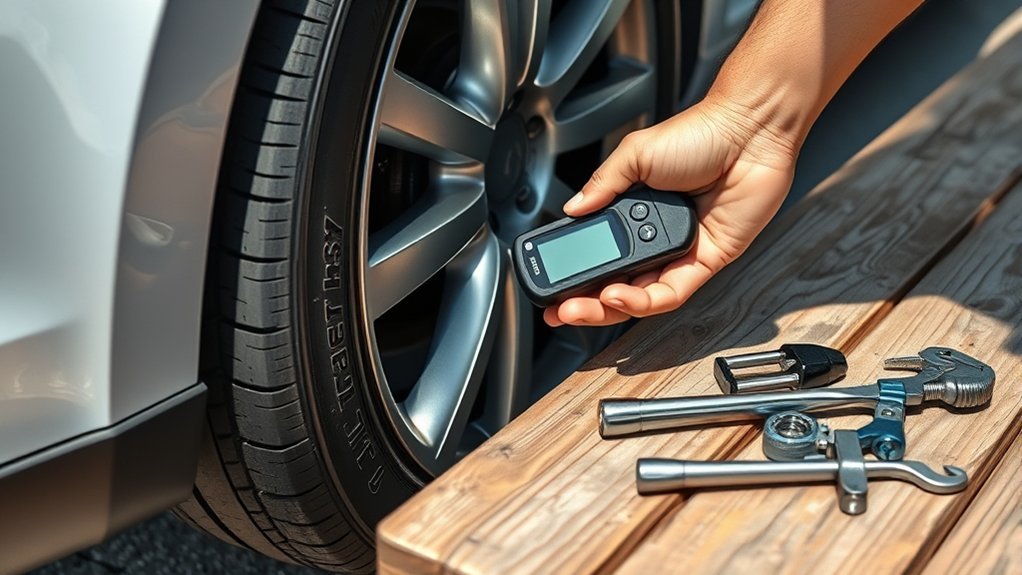
You’ve seen what monthly inspections catch that TPMS can miss, so now let’s compare the two and give you a practical routine. TPMS warns you of big pressure loss (about 25%) but won’t spot sidewall damage, uneven wear, or slow leaks. Manual checks with a reliable tire pressure gauge catch small losses, confirm manufacturer PSI, and guarantee cold-tire accuracy. Use the owner’s manual or doorjamb sticker for correct PSI.
Tools: quality gauge, portable air compressor or pump, chalk for tread marking, flashlight for visual inspection. Tips: check tires cold, record readings, rotate tires per schedule, and follow up on any TPMS alert with a manual check. Monthly checklist: 1) Inspect sidewalls and tread for damage. 2) Measure PSI on all four tires. 3) Adjust to recommended PSI. 4) Recheck TPMS reset/status. 5) Note irregular wear and consult a pro. This routine keeps you safe and independent on the road.
Frequently Asked Questions
Why Is It Important to Check Tire Pressure Regularly?
You should check tire pressure regularly because it preserves safety benefits, improves fuel efficiency, and extends tire longevity; doing so keeps you safer on the road, saves money, and gives you the freedom to drive confidently and independently.
What Is the 3% Tire Rule?
The 3% tire rule means you keep tire pressure within 3% of manufacturer PSI; you’ll prevent safety concerns, improve fuel economy, and follow maintenance tips like monthly checks, correcting pressure after temperature shifts for safer, freer driving.
What Is the 5 PSI Rule?
The 5 PSI rule says your tire pressure can drop up to 5 PSI per 10°F temperature fall; you’ll use this maintenance tip to check pressures monthly, apply safety measures, and protect performance, fuel economy, and freedom.
Should You Check Tire Pressure Every Month?
Yes — you should check tire pressure every month. You’ll master tire maintenance essentials, spot seasonal pressure changes, and follow inflation safety tips so you’re empowered to avoid flats, save fuel, and extend tire life confidently.
Conclusion
Make monthly tire pressure checks part of your routine — like giving your car a quick pulse check — so you catch slow leaks, uneven wear, or a failing TPMS before they become hazards. Use the vehicle’s recommended PSI, a reliable gauge, and check cold tires. Inflate or repair as needed, and record readings. Staying consistent keeps handling predictable, improves fuel economy, and helps prevent accidents, making your drives safer and more efficient.