How to Check and Maintain Tire Pressure (PSI)

Keep your tires inflated to the PSI your vehicle maker recommends (check the door jamb sticker or your owner’s manual). The right pressure helps braking and handling, can improve fuel economy, and lowers heat build-up in the tire. Tires that are too soft can overheat and wear fast. Tires that are too hard can ride rough and get damaged more easily. Check pressure when the tires are cold, adjust in small bursts, and put the valve caps back on.
Key takeaways
- Use the door jamb placard (or owner’s manual) for your PSI target—not the tire sidewall max.
- Check tire pressure cold at least once a month and before long trips.
- Temperature swings can move PSI by 1–2 PSI per 10°F, so recheck when seasons change.
What Tire Pressure (PSI) Your Vehicle Needs and Where to Find It
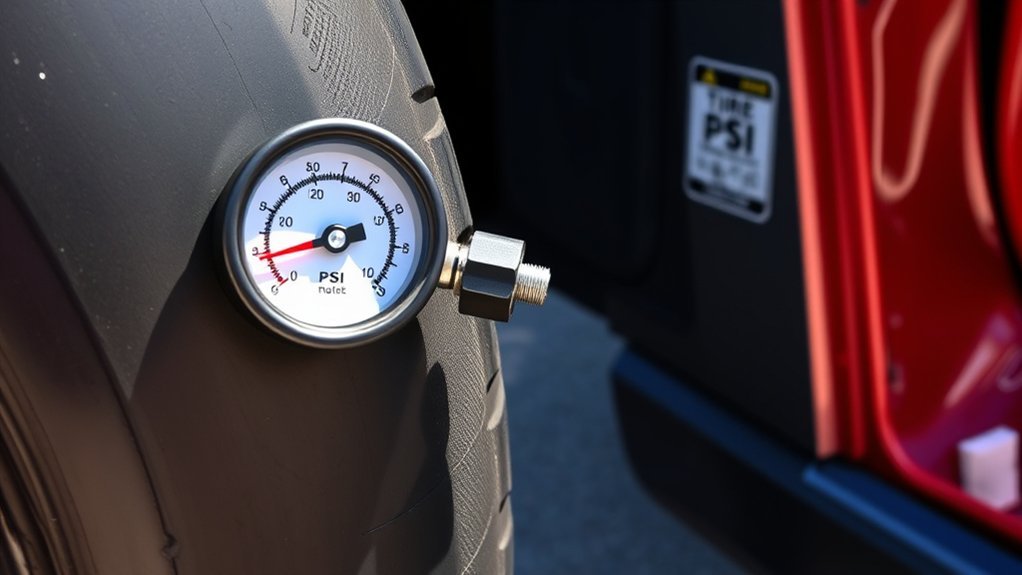
Even if a tire looks fine, use the recommended PSI on the sticker inside the driver’s door jamb (the tire information placard) or in the owner’s manual. This is the vehicle’s cold pressure target, set for your car’s weight and load limits.
Do not use the tire sidewall’s max PSI as your everyday target. That number is the most the tire can hold, not the best pressure for your vehicle.
Tires slowly lose air, and PSI changes with temperature. Check pressure at least once a month and before long trips. Set each tire to the placard PSI while the tires are cold.
How Underinflation and Overinflation Raise Crash and Blowout Risk
Wrong pressure changes how the tire sits on the road and how much it flexes. More flex can mean more heat. The U.S. Tire Manufacturers Association says underinflated tires can build excessive heat and suffer internal damage, while overinflated tires are more likely to be cut or punctured when they hit a pothole or other obstacle.
NHTSA crash research also found that tires that were far below the recommended PSI showed up more often in tire-related crash cases than tires at the correct pressure. Bottom line: stay close to the placard PSI.
| Condition | What changes | Why it matters |
|---|---|---|
| Underinflated | More flex and heat | Internal damage, uneven wear |
| Overinflated | Stiffer tire | Harsher ride, easier impact damage |
| Properly inflated | Designed shape | Best balance of grip, wear, and control |
Quick: How to Check and Set Tire Pressure Safely
Check your tires cold—before driving, or after the car has been parked for at least three hours. Find the recommended PSI on the door jamb placard or in the manual. Then:
- Remove the valve cap and press the gauge onto the valve stem.
- Read and record the PSI for each tire (and the spare, if you have one).
- If PSI is low, add air in short bursts, recheck, and stop at the placard PSI.
- If PSI is high, let a little air out, then recheck.
- Put the valve caps back on.
TPMS can warn you, but it is not a replacement for a gauge. Many systems alert only when a tire is about 25% low.
How Temperature, Altitude, and Cargo Affect PSI and What to Do
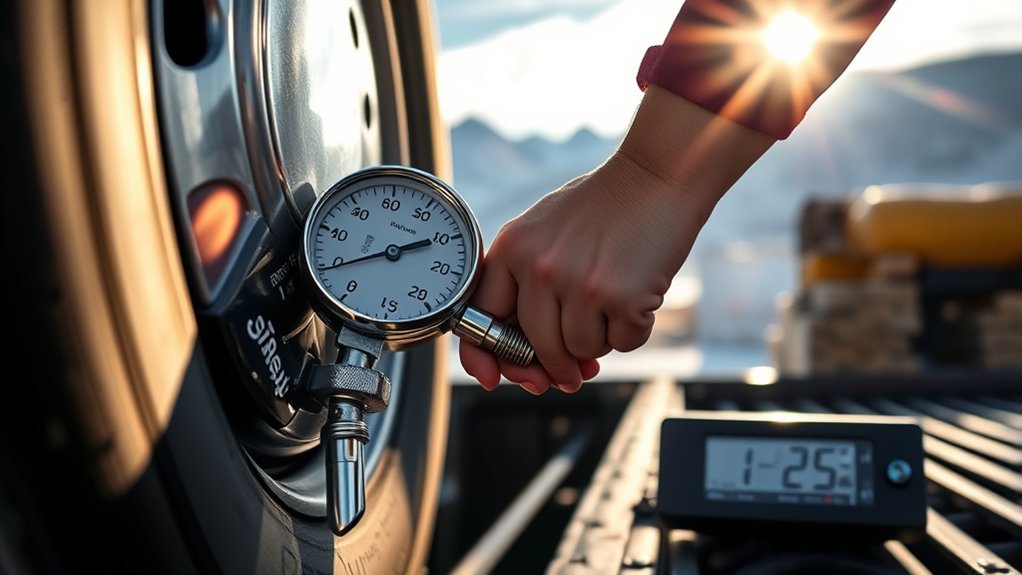
Temperature: PSI usually changes about 1–2 PSI for every 10°F change in outside temperature. When it gets colder, PSI drops. Recheck and top up to the placard PSI.
Altitude: A tire gauge reads pressure compared with the air around you. At higher elevation, it can read a little higher than at sea level. For example, Tire Rack notes a change of about 2–3 PSI around 5,000 feet. For most drivers, temperature matters more than altitude.
Cargo and towing: If your placard or manual lists “loaded” pressures, use those only when the vehicle is loaded. Do not guess, and do not inflate past the tire’s max PSI.
Tire Pressure Maintenance Schedule and Tools to Keep PSI Right
Build a simple routine: check pressure cold at least once a month, before long trips, and after big temperature swings. A handheld gauge is often more reliable than a worn gas-station gauge.
| Task | Action |
|---|---|
| Monthly check | Measure PSI with a reliable gauge (include the spare) |
| Cold check | Park 3+ hours (or check before driving) |
| Seasonal adjust | Recheck after temperature swings; top up to placard PSI |
| Before trips / loads | Confirm PSI before long trips, heavy loads, or towing |
| Valve caps | Replace caps after every check |
Frequently Asked Questions
Should I use the PSI on the tire sidewall?
No. The sidewall number is the tire’s maximum. Use the door jamb placard (or the owner’s manual) for your normal driving PSI.
How often should I check tire pressure?
At least once a month and before long trips. Tires lose air over time, and weather changes can move PSI.
What does “cold tire pressure” mean?
“Cold” means the car has been parked for at least three hours (or driven only a short distance). That’s when your reading best matches the placard PSI.
How much does tire pressure change with temperature?
About 1–2 PSI per 10°F is a common rule of thumb, so a big seasonal change can move your tires several PSI.
Does proper tire pressure really affect fuel economy?
Yes. FuelEconomy.gov estimates that proper inflation can improve gas mileage by 0.6% on average (up to 3%), and that each 1 PSI drop in average tire pressure can lower gas mileage by about 0.2%.
Should I add pressure for heavy loads or towing?
Only if your placard or manual tells you to. Some vehicles list higher “loaded” pressures. Inflate to those values and do not exceed the tire’s max PSI.
Conclusion
Set PSI to the door jamb placard spec, check when tires are cold, and recheck after big temperature swings or before long trips. Consistent checks help protect safety, tire life, and fuel economy.
Further reading: NHTSA: Tire pressure check steps • FuelEconomy.gov: Keeping tires properly inflated