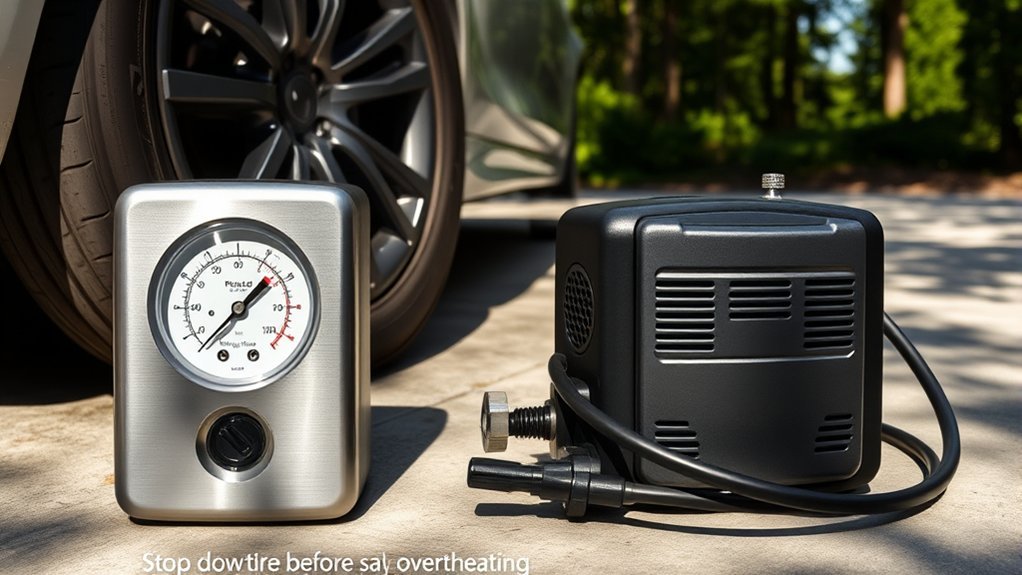
How to Use a 12V Tire Inflator from a Car Cigarette Lighter
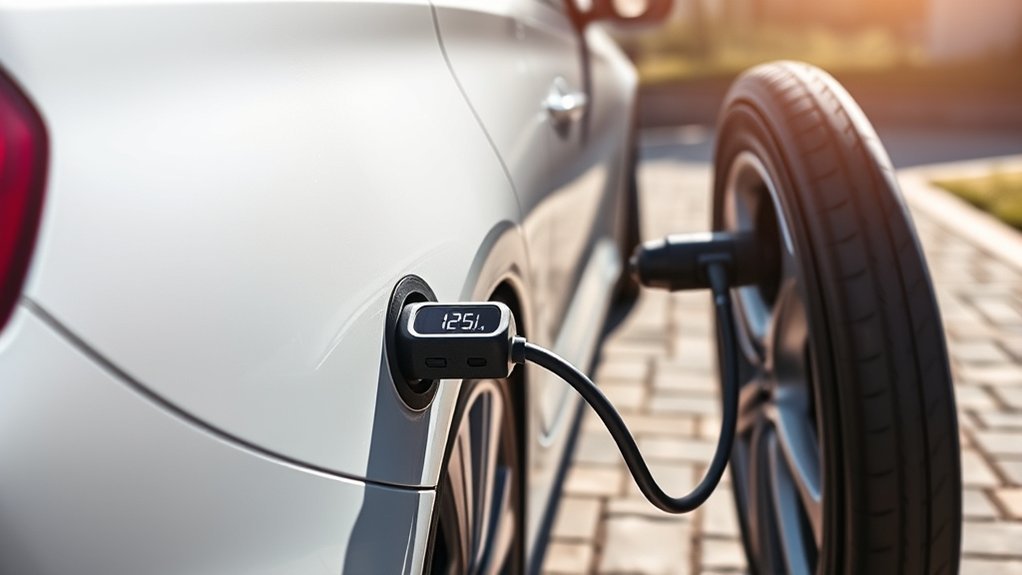
You can use a 12V tire inflator in your car’s cigarette lighter if the unit draws within the socket’s fuse limit (typically ~15A). Park safely, remove the valve cap, start the engine for steady power, plug the inflator in, attach the hose securely, and monitor the gauge to avoid overinflation or overheating. If the unit won’t run check the fuse, socket, and plug fit. Keep going below and you’ll find steps for troubleshooting, alternatives, and maintenance.
Quick Answer: Can You Use a 12V Inflator From the Cigarette Lighter?
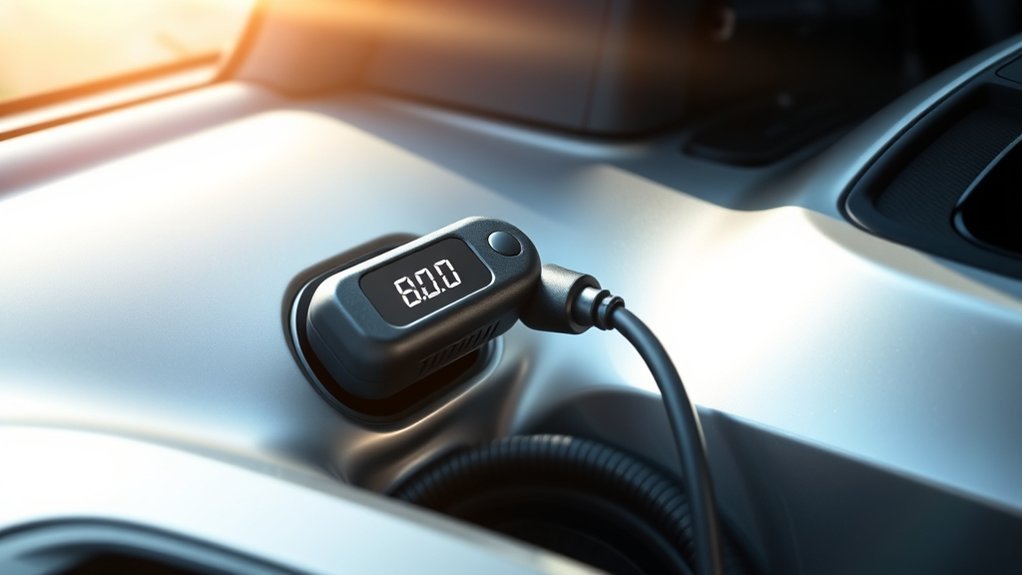
Yes — you can usually run a 12V tire inflator from your car’s cigarette lighter socket, since most outlets supply up to about 180W (12V × 15A), which covers common small inflators. You’ll plug a portable tire inflator into the cigarette lighter or 12V power outlet, confirm the plug fits securely, then power up and monitor tire pressure as you inflate. Don’t exceed the 15A limit — check the inflator’s rated draw on the label so you don’t blow the fuse or risk socket damage. If the inflator won’t run, suspect a blown fuse in the lighter circuit and replace it after locating the fuse box. Watch the inflator for overheating and accept that continuous use on larger tires may exceed its capability. Work in short intervals and recheck tire pressure often. This keeps you self-reliant and prevents small failures from trapping you.
Car Sockets & Fuses for 12V Tire Inflators
When you plug a 12V inflator into your car’s cigarette lighter, check the socket’s fuse and amp rating first. Most outlets are protected at about 10–15A (some vehicles use 10–20A), so an inflator that draws more can trip the circuit or blow the fuse. You want freedom on the road, not a dead accessory. See Automobile auxiliary power outlet for typical circuit ratings and context.
Confirm the cigarette lighter socket’s fuse rating in your owner’s manual or fuse box diagram. If your inflator-powered unit approaches or exceeds that rating, don’t force it — high-draw models can trip the circuit breaker or overheat the socket. If the inflator won’t run, inspect the fuse linked to the socket; a blown fuse will prevent operation and is usually simple to replace.
Avoid adapters that claim extra amps, as they can bypass protection and risk damage. Use an inflator within the socket’s capacity or choose a direct-battery connection with a proper inline fuse for higher power needs. Protect the wiring and maintain your independence on the road.
Prepare Vehicle and Tire Before Plugging In
Before you plug in the inflator, park in a safe, well-lit spot away from traffic and check the tire for cuts, bulges, or other damage that could make inflation unsafe. Find the recommended pressure on the driver’s door pillar so you know the target PSI. Remove the valve cap and confirm the inflator’s adapter fits tightly to prevent leaks.
Inspect Tire Condition
Start by giving the tire a careful visual and tactile inspection. Look for cuts, bulges, embedded objects, or other damage that could make inflation dangerous. Check the valve stem for leaks or debris after removing the cap and setting it aside.
Press along the tread and sidewall with your hands to feel for soft spots or separations. If you find a puncture, large gash, or a bulge, don’t use the inflator pump. Call for repair or replace the tire. Park safely, keep the engine running so the cigarette socket powers the inflator, and keep debris away from the valve. Treat tires as critical — your safety and freedom to move depend on honest inspection before you connect the pump.
Find Recommended Pressure
Although it’s tempting to guess, check the recommended tire pressure on the driver’s door pillar (or in your owner’s manual) so you know the exact PSI to aim for. That placard is the vehicle maker’s recommended pressure for the original tires, so use it rather than the tire sidewall number. If you want an authoritative reference on placard location, see Tire and Loading Information Labels.
Park safely away from traffic and turn off the engine if you are only doing a quick check. Inspect the tire again for cuts or bulges; don’t inflate a damaged tire. Plug the inflator into the cigarette lighter socket, making sure the connection’s firm so the unit gets full power. Use the inflator’s built-in gauge or a separate tire gauge to monitor pressure as you fill. Inflate slowly, pause to recheck with the gauge, and stop once you reach the recommended pressure. Staying precise preserves tire life and keeps you free to travel without worry.
Step-by-Step: Inflate From the Cigarette Lighter
Start by preparing the vehicle and inflator: confirm the recommended tire pressure on the driver’s door pillar and that your inflator is compatible with a 12V/15A cigarette lighter socket. Plug the unit securely into the socket, turn on the ignition if needed, and attach the hose to the tire valve. Run the inflator while watching the gauge and let its automatic shut-off stop inflation, or turn it off when the target pressure is reached; if it won’t run, check the outlet fuse and power capacity.
Prepare Vehicle And Inflator
Before you connect anything, park safely away from traffic and hazards and engage the parking brake so the vehicle won’t move while you work. Confirm the tire pressure spec on the driver’s door pillar and inspect tires for damage. Verify your portable compressor is rated for cigarette powered use and that the socket supports the inflator’s draw (typically max 10–15A). Check that the inflator’s power lead and fuse are intact — some models draw from the car battery if socket limits current. Keep the engine running during use to maintain voltage. Remove valve caps and have a gauge ready to monitor pressure. When everything’s ready, keep tools and phone clear of the wheel area and prepare to attach the air hose securely to inflate my tires.
Connect To Cigarette Lighter
1. Start the engine so the cigarette lighter socket supplies steady power. Locate the socket on the dash or center console and clear any debris. Plug the 12V tire inflators’ power cord firmly into the socket — fully insert to prevent interruption.
| Step | Action | Tip |
|---|---|---|
| 1 | Start engine | Keeps ~15A available |
| 2 | Plug power cord | Fully insert for secure contact |
| 3 | Attach hose | Lock onto valve if available |
Remove the valve cap, press the air hose onto the tire valve, and lock it. Watch the inflator’s digital screen to follow pressure increases. When done, disconnect the power cord to avoid draining the battery. You’ll regain mobility and control quickly by following this compact, liberating routine.
Monitor Pressure And Shutoff
Once the inflator’s hose is locked to the valve and the engine’s running, watch the digital readout and set your target pressure so the unit can shut off automatically when reached. If there’s no auto-shutoff, monitor the gauge closely and stop inflation manually to avoid overpressure.
Use the digital gauge to monitor pressure in real time. Stay focused until the display nears your preset PSI. Respect the tire’s maximum pressure printed on the sidewall and your vehicle’s recommended pressure to stay safe. If your inflator has a shut-off function, trust it but verify with a quick secondary check after it stops. When done, unplug, recheck, and reclaim control of your journey.
Troubleshooting: No Power, Slow Inflation, Blown Fuse
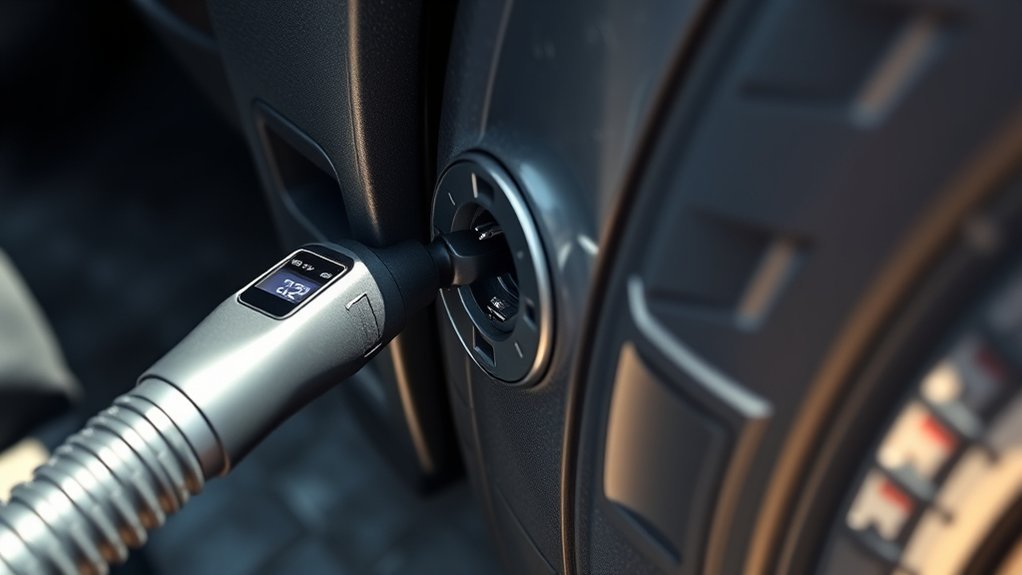
If your 12V inflator won’t power on or inflates slowly, start by checking the vehicle’s cigarette lighter socket and the inflator’s plug and cord for damage. A blown fuse or a poor connection often prevents full power reaching the unit. If you see corrosion, loose contacts, or frayed wiring, don’t force it — repair or replace the cord before continuing.
Test the socket with another device to confirm the power outlet works. If that device fails, inspect the vehicle fuse box for a blown fuse and replace it per the manual. For slow inflation, verify your inflator’s wattage doesn’t exceed the outlet’s typical 10–15A limit; an overpowered unit will deliver weak performance. Consider a lower-wattage (≈120W) inflator if the outlet struggles. Stay safe: avoid repeated attempts that overheat the socket, and monitor the inflator’s temperature. These steps help you regain control quickly and keep you moving toward freedom on the road.
Alternatives When the Lighter Socket Won’t Work (Battery, Clamps)
When the lighter socket fails or can’t supply enough power, you’ve still got practical options to get a tire inflated. You can use a battery-powered tire inflator that runs independently of the vehicle. That frees you from relying on the car and keeps you moving. If your inflator needs a direct connection, attach it to the car battery using alligator clips. Secure, corrosion-free connections give a stable power source and faster inflation than a marginal socket.
Check the inflator’s amperage and wattage requirements (many are ~15A/180W) against the battery’s capacity before you clamp on to avoid tripping or damage. An extension with a 12V outlet can help reach awkward tires without stretching cables across traffic. Always carry a basic tire repair kit and a manual pump as a non-electrical backup. These options give you autonomy: choose the right power source, connect safely, and keep a fallback so a dead socket doesn’t strand you.
Choosing a 12V Inflator and Useful Accessories
Although it’s tempting to grab the cheapest pump, choose a 12V inflator that draws 15 amps or less, has an automatic shut-off, and includes adapters for different valve types. A clear digital gauge and a heavy-duty 24 ft cigarette lighter extension make using the unit from the rear of the vehicle practical and safe. You want a unit that respects the socket’s limits so you won’t trip fuses or risk overheating.
Favor a model with a reliable digital display so you can read pressure precisely and set the target quickly. The automatic shut-off stops over-inflation, freeing you to move on without babysitting the tire. Look for kits that include additional adapters for bike, ATV, and exotic valves so you’re not stranded with the wrong fitting. Finally, buy a robust, flexible extension cord and a solid case for the inflator; portability and durability keep you free to go where you want without gear failures.
Aftercare: Maintenance and Safety Checks After Inflating
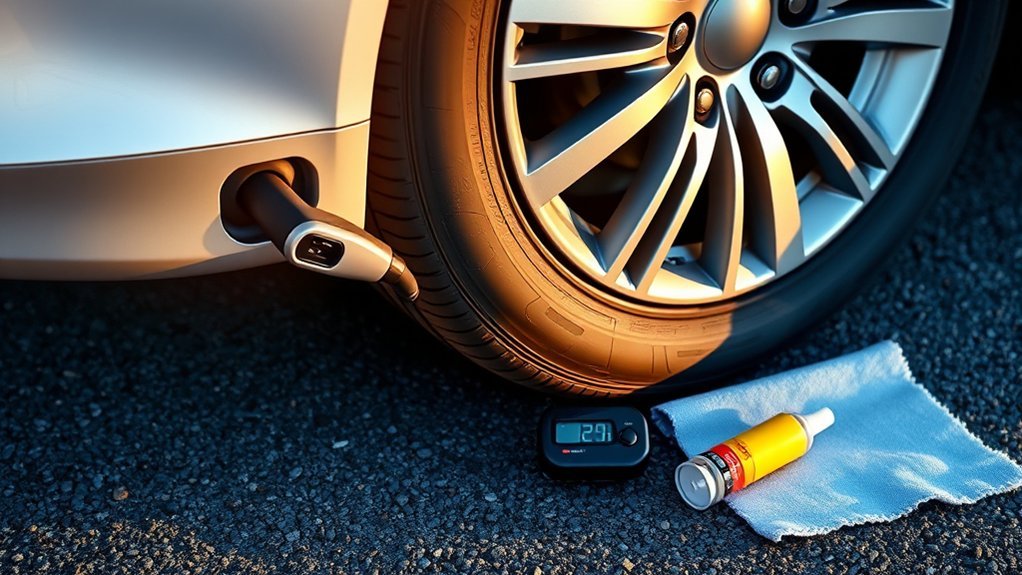
After inflating a tire, double-check the pressure with a reliable gauge and inspect the valve for leaks or damage so you don’t drive on an improperly inflated tire. For proper aftercare, confirm tire pressure against the vehicle placard and re-seat the valve cap.
Check the air compressor’s power cord and cigarette lighter plug for frays, bent pins, or looseness; if you spot wear, repair or replace parts before the next use. Let the inflator cool after extended runs to avoid overheating and internal damage. Wipe the unit clean, remove dust and debris, and keep accessories—hose, nozzle adapters, gauge—organized. Store the air compressor in a dry, cool place away from moisture and extreme temperatures to preserve seals and electronics. Regularly test tires for slow leaks and monitor pressure at intervals; maintaining proper tire pressure improves safety and fuel freedom. Treat this maintenance as liberation: control your gear, control your ride.
Frequently Asked Questions
How to Use Cigarette Lighter Tire Inflator?
You plug it in, run the engine, set PSI, and inflate while monitoring; you’ll enjoy tire inflator benefits, follow safety precautions, perform maintenance tips, and handle troubleshooting issues like fuses or overheating to stay free and self-reliant.
How to Use a 12V Tire Inflator?
Plug the inflator into the socket, start your engine, attach the nozzle, and monitor tire pressure; you’ll free yourself from roadside worry. Follow safety tips, perform inflator maintenance, and keep portable air ready for independence.
Can a 12V Air Compressor Fill a Car Tire?
Like a steady drumbeat, yes — you can use a 12V air compressor to restore tire pressure. You’ll monitor the inflation process, follow safety precautions, and guarantee the air compressor matches your vehicle’s electrical limits.
Does a Car Need to Be Running to Use a Tire Inflator?
You don’t have to run the car, but you shouldn’t. Consider car battery usage, inflator power requirements and engine impact. Start the engine for extended use to avoid draining the battery, and follow safety considerations to prevent fuse trips.
Conclusion
You can safely use a 12V inflator in your car’s cigarette lighter if the socket and fuse match the pump’s draw — it’s a quick, convenient fix that keeps you moving. Before you start, check tire pressure, engine off (or idling if recommended), and the inflator’s fuse rating. Plug in, monitor pressure, and don’t leave it unattended. Treat the inflator like a trusted friend: handle it with respect, and it’ll bail you out when you need it most.