SUV Tire Pressure: How Much PSI Your Tires Need
What’s in This Article
- How to Find the Exact Recommended SUV PSI
- Cold vs. Hot Tire Pressure: When to Measure
- Adjust SUV PSI for Passengers, Loads, and Towing
- Off-Road and 4WD Pressure: When and How Much to Lower
- TPMS Warnings and What to Do About Low PSI
- Quick Steps: Check, Inflate, and Maintain SUV PSI
- Frequently Asked Questions
Your SUV may feel fine even when one tire has too little air. That small pressure drop can hurt steering, braking, fuel use, and tire life before you notice a problem. Use the cold-pressure value on the driver doorjamb placard or owner’s manual as the authority, not a guess or the tire sidewall maximum.
Quick Answer
Many SUVs use about 30 to 35 PSI for normal driving, but your exact number must come from the driver doorjamb placard or owner’s manual. Check pressure when the tires are cold, after the SUV has been parked for at least three hours or driven less than one mile. Use the full-load pressure only when the manufacturer lists one for passengers, cargo, or towing.
Key Takeaways
- Use your SUV’s doorjamb placard or owner’s manual as the source for the correct PSI.
- Check tire pressure when tires are cold for the most accurate reading.
- Expect pressure to change by about 1 PSI for each 10°F change in air temperature.
- Use full-load pressure only when your vehicle maker lists it for heavy loads or towing.
- Reinflate to road pressure after off-road driving before you return to highway speeds.
How to Find the Exact Recommended SUV PSI
Check the driver door sticker first for the factory-recommended cold tire pressures. Your SUV may list different front and rear values, plus a higher full-load value for cargo or towing. If the sticker looks damaged or unclear, use the owner’s manual for your exact trim, tire size, and load setup.
Check the Driver Door Sticker
Open the driver’s door and look on the doorjamb for the tire and loading information placard. Some vehicles place this label on the door edge, fuel door, glove box door, or doorpost. The placard lists the recommended cold tire pressure for the original tire size on your SUV.
Use that value instead of the maximum PSI printed on the tire sidewall. The sidewall shows a tire limit, not the best pressure for your SUV’s weight, ride, and handling. If your SUV uses replacement tires in a different size, ask a tire professional or the vehicle maker for the right pressure.
| Condition | Example PSI |
|---|---|
| Front tires, normal load | 32 |
| Rear tires, full load | 36 |
This table shows only an example. Your own SUV’s placard or manual should decide the final number.
Consult the Owner’s Manual
Your owner’s manual gives more detail than the sticker when your SUV has special conditions. It may list pressure for normal loads, full loads, towing, spare tires, tire chains, or alternate tire sizes. Use those figures when they apply to your trip.
The manual also explains how your tire pressure monitoring system works. The system can warn you about low pressure, but it can’t replace a manual check with a gauge. Set your baseline from the manual, then use the gauge to confirm each tire.
Measure Cold Tire Pressure
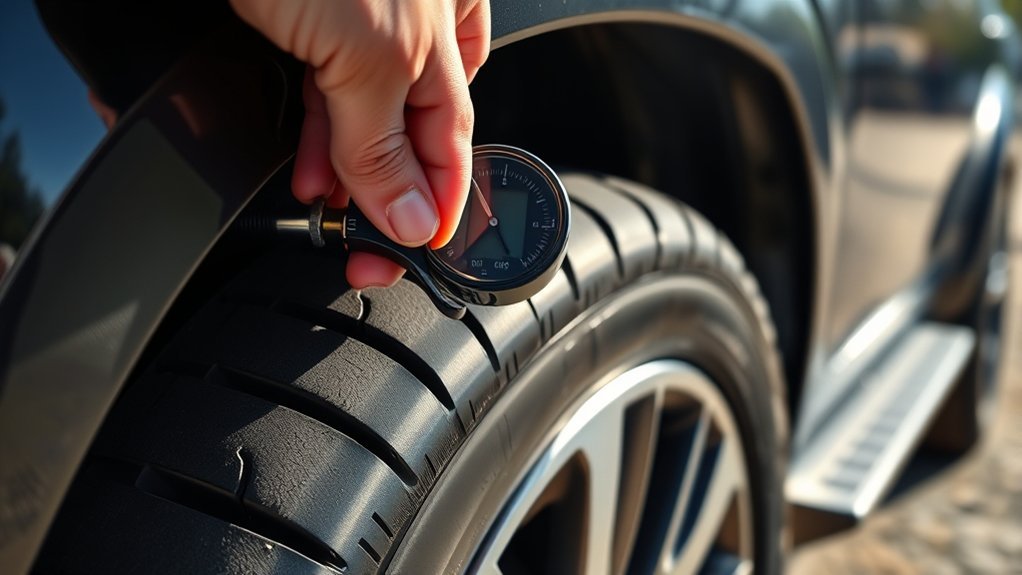
Measure tire pressure when tires are cold. Michelin advises checking at least three hours after the vehicle stops and before driving more than one mile. Use a calibrated gauge, record each tire’s value, and compare the reading with the placard or manual.
- Find the recommended cold PSI on the driver door placard or in the owner’s manual.
- Press the gauge firmly onto the valve stem and read the pressure.
- Add or release air until the tire matches the listed cold pressure.
- Replace the valve cap and repeat the check on all tires, including the spare if your manual says to.
Follow the same order each time so you don’t miss a tire. This routine gives you better control over safety, tire wear, and fuel use.
Cold vs. Hot Tire Pressure: When to Measure
Cold tire pressure gives the reading your vehicle maker used for the placard. Driving heats the tire and air inside it, which raises the reading for a short time. If you adjust a hot tire down to the cold number, you may leave it too low after it cools.
Measure When Tires Are Cold
Check pressure before you drive, early in the day, or after the SUV has sat for several hours. Firestone also advises checking when the tires are cold, meaning the car has driven less than a mile or has been parked for a few hours. Cold checks reduce guesswork and match the vehicle maker’s target.
- Park for several hours or check before your first drive.
- Use the same gauge each time when possible.
- Compare each tire with the recommended value on the placard.
- Check monthly and before long trips, heavy loads, or towing.
This habit helps you find slow leaks before they create a bigger problem.
How Driving Heat Changes PSI
Driving makes tires flex, and that flex creates heat. A warm tire can show several PSI above its cold reading, especially after highway driving, high speeds, or a heavy load. Don’t release air from a hot tire just because the number looks higher than the placard.
Warning: Never bleed a hot tire down to the cold placard value, because it may become underinflated after cooling.
If you must add air while tires are warm, use your owner’s manual for guidance and recheck cold pressure later. The cold reading should guide the final correction.
Temperature and PSI Changes
Tire pressure changes as outside air temperature changes. Tire Rack explains that light-duty tires usually change by about 1 PSI for every 10°F change in air temperature. A 50°F temperature drop can lower pressure by about 5 PSI.
- Check pressure more often during sharp temperature swings.
- Compare each tire with the door placard value.
- Add air when cold pressure drops below the recommended number.
- Recheck after major weather changes, not only after long trips.
Cold mornings can also trigger a tire pressure light that turns off later. The National Highway Traffic Safety Administration says you should still inspect the tires and check pressure when that happens.
Adjust SUV PSI for Passengers, Loads, and Towing
Extra passengers, cargo, roof boxes, and trailers add load to your tires. Use the manufacturer’s recommended full-load pressure when your placard or manual lists one. Don’t create your own towing pressure unless the manual tells you how to adjust it.
Inflate cold tires before the trip starts. Check all four tires, then check the spare if your SUV uses one. When the trip ends and you return to normal loading, use the manual to decide whether you should return to the normal-load pressure.
Pro tip: Check pressure before loading the SUV heavily, because cargo can make valve access harder.
Proper inflation under load supports steering response, braking, tire temperature control, and tread wear. Underinflation with a heavy load can overheat a tire and raise the risk of failure.
Off-Road and 4WD Pressure: When and How Much to Lower
Lower pressure can increase the tire’s contact patch on sand, mud, snow, or rough trails. That larger footprint can improve grip and ride comfort at low speed. It also increases sidewall flex, heat, bead damage risk, and rim impact risk.
Lower SUV tire pressure only for controlled off-road use, then reinflate before normal road or highway driving.
Some off-road drivers use about 15 to 20 PSI for soft surfaces, but that range does not fit every SUV, tire, rim, load, or trail. BFGoodrich warns that load, speed, and pressure work together, and that lower pressure requires lower speed. Follow your tire maker, vehicle maker, and trail conditions before choosing a pressure.
- Lower pressure only when you drive off-road at reduced speed.
- Stay above your tire and wheel limits, especially if you don’t use beadlock wheels.
- Watch sidewalls, steering feel, and tire temperature during the trail run.
- Carry a portable compressor so you can reinflate before paved roads.
Warning: Driving highway speeds on off-road pressure can hurt handling and may lead to tire failure.
Deflate in a safe, flat spot away from moving traffic. Reinflate to the road pressure on your placard or manual before you return to normal speeds.
TPMS Warnings and What to Do About Low PSI
A tire pressure monitoring system (TPMS) light means at least one tire needs attention. The National Highway Traffic Safety Administration says TPMS warns you when pressure drops below an acceptable level, but it does not replace regular tire checks. Use a gauge to confirm the pressure in every tire.
Inspect all tires for nails, cuts, bulges, valve leaks, or uneven wear. Check the spare if your SUV has a full-size spare or if your manual includes spare pressure checks. Inflate each low tire to the placard value, then recheck with the gauge.
If the TPMS light flashes for 60 to 90 seconds and then stays on, the system may have a fault. Check your pressure first, then follow the owner’s manual or contact a service professional. A sensor fault should not stop you from checking tire pressure manually.
Quick Steps: Check, Inflate, and Maintain SUV PSI
Use a simple routine each month and before long trips. Start with cold tires, use a reliable gauge, and compare each tire with the doorjamb placard. This routine works for daily driving, road trips, towing checks, and seasonal pressure changes.
- Find the correct PSI: Use the placard or owner’s manual, not the tire sidewall maximum.
- Check each tire: Remove the valve cap, press the gauge firmly, and read the number.
- Inflate or bleed: Add air if the tire sits below spec, or release air if cold pressure sits above spec.
- Recheck the reading: Confirm the final pressure before replacing the valve cap.
- Repeat on schedule: Check monthly, before long trips, and before towing or carrying heavy cargo.
A steady routine helps you avoid sudden warnings and uneven tire wear. It also helps your SUV feel more stable during braking, turning, and highway driving.
Frequently Asked Questions
Is 40 PSI good tire pressure for SUVs?
Some SUVs may list 40 PSI for a specific load or tire setup, but many do not. Use 40 PSI only when your door placard or owner’s manual lists it for your SUV. Overinflation can hurt ride comfort, traction, and tread wear.
How much PSI should my SUV tires have?
Many SUVs fall near 30 to 35 PSI for normal driving. Your exact number may differ by model, trim, tire size, axle, and load. The driver door placard or owner’s manual gives the correct cold pressure.
What does the 5 PSI tire pressure rule mean?
The 5 PSI idea usually refers to a large temperature swing. Since many light-duty tires change about 1 PSI for each 10°F change, a 50°F drop can lower pressure by about 5 PSI. Use this as a reminder to check pressure, not as a replacement for the placard value.
Is 35 PSI too high for SUV tires?
Thirty-five PSI can be correct for some SUVs and too high or too low for others. Check the placard first, especially if your SUV lists different front and rear pressures. Match the cold tire pressure to the vehicle maker’s number.
Should you check SUV tire pressure every month?
Yes. Michelin and NHTSA both recommend regular tire pressure checks with a gauge, and monthly checks help you catch slow leaks. Check sooner before long trips, heavy loads, towing, or major temperature changes.
Conclusion
Your SUV’s correct tire pressure comes from the doorjamb placard or owner’s manual, not a general PSI rule. Check pressure when tires are cold, keep a quality gauge in the vehicle, and adjust for load only when the manufacturer gives a full-load value. Use lower pressure only for controlled off-road driving, then reinflate before paved-road speeds. A few minutes each month can protect handling, tire life, and your confidence on the road.
References
- Tire Safety Ratings and Awareness, TireWise – National Highway Traffic Safety Administration, accessed 2026.
- Michelin FAQs, When should I check my air pressure? – Michelin USA, accessed 2026.
- How Does Temperature Change Affect Tire Air Pressure? – Tire Rack, accessed 2026.
- How to Check Tire Pressure – Firestone Complete Auto Care, accessed 2026.
- Check Your SUV, 4×4 or Car Tire Pressure – BFGoodrich, accessed 2026.