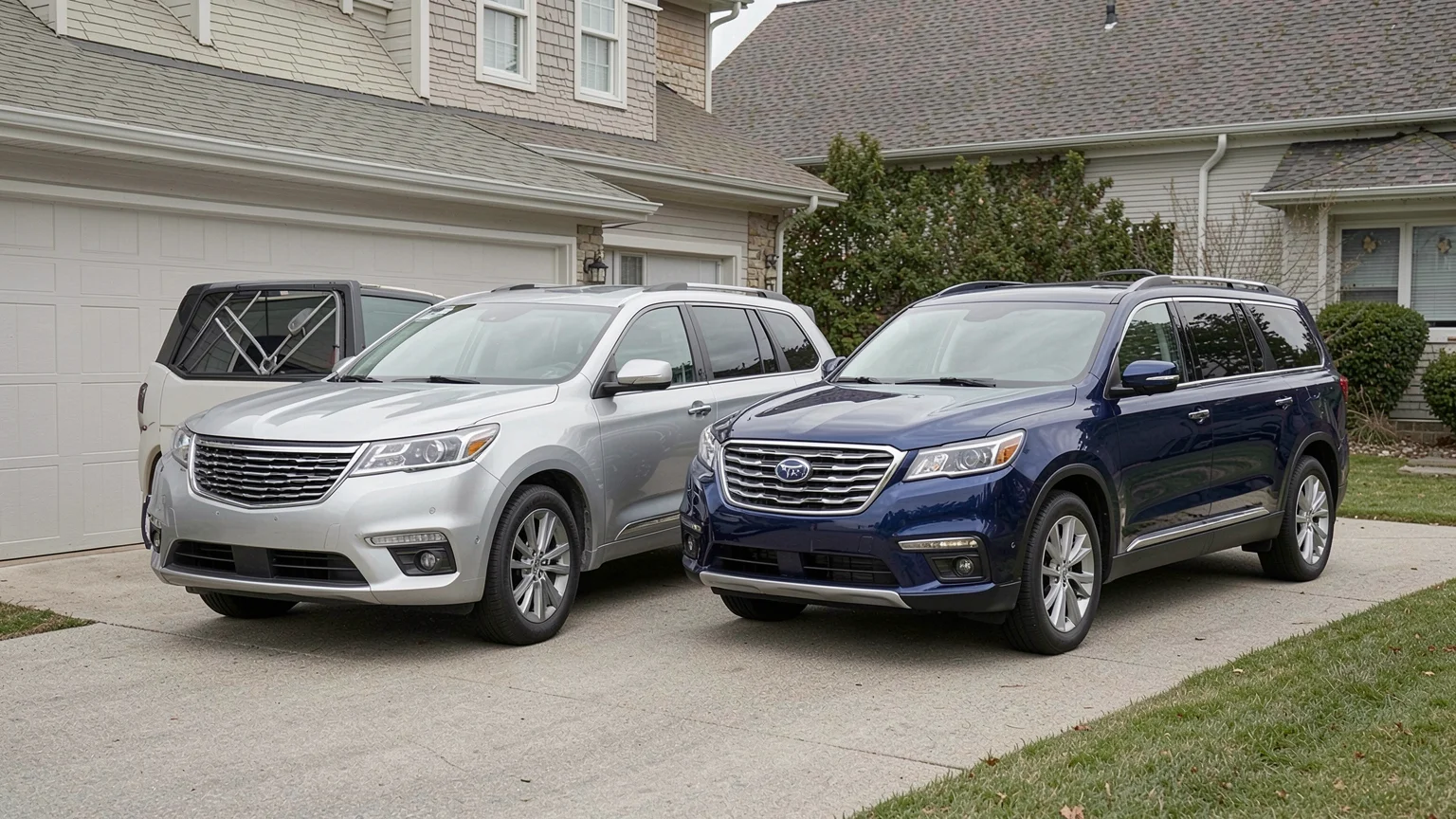
Honda Pilot vs Toyota Highlander comes down to space versus efficiency. The Pilot has the stronger V6 (285 hp) and the roomier third row, while the Highlander rates 24 mpg combined against the Pilot’s 22 and is rated to tow up to 5,000 pounds.
The Pilot also costs less to start, at $42,395 against $46,270 for the Highlander in 2026. This guide compares price, power, fuel economy, interior room, towing, safety and warranty so you can pick the right family SUV.
Key Takeaways
- Price: the Pilot starts about $3,900 below the Highlander.
- Power: the Pilot’s V6 makes 285 hp, and the Highlander’s turbo four makes 265 hp.
- Fuel: the Highlander rates 24 mpg combined, and the Pilot rates 22.
- Space: the Pilot has more third-row legroom, 33 inches against 28.
- Safety and warranty: both earn five NHTSA stars and share the same warranty terms.
In this guide:
- Quick comparison table
- Price
- Engines and fuel economy
- Third row legroom and cargo space
- Towing
- Features and trims
- Safety and warranty
- Which 3-row SUV should you buy?
- FAQ
Honda Pilot vs Toyota Highlander: Quick Comparison
These 2026 numbers come from the Cars.com comparison tool, which lists manufacturer specs for the base setup of each model.
| Feature | Honda Pilot | Toyota Highlander |
|---|---|---|
| Starting price | $42,395 | $46,270 |
| Engine | 3.5L V6 | 2.4L turbo 4-cylinder |
| Horsepower | 285 hp | 265 hp |
| Torque | 262 lb-ft | 310 lb-ft |
| Transmission | 10-speed automatic | 8-speed automatic |
| Combined mpg | 22 mpg | 24 mpg |
| Max towing | 3,500 lb | 5,000 lb |
| Length | 200 in | 195 in |
| NHTSA overall rating | 5 stars | 5 stars |
Price: The Pilot Starts Lower
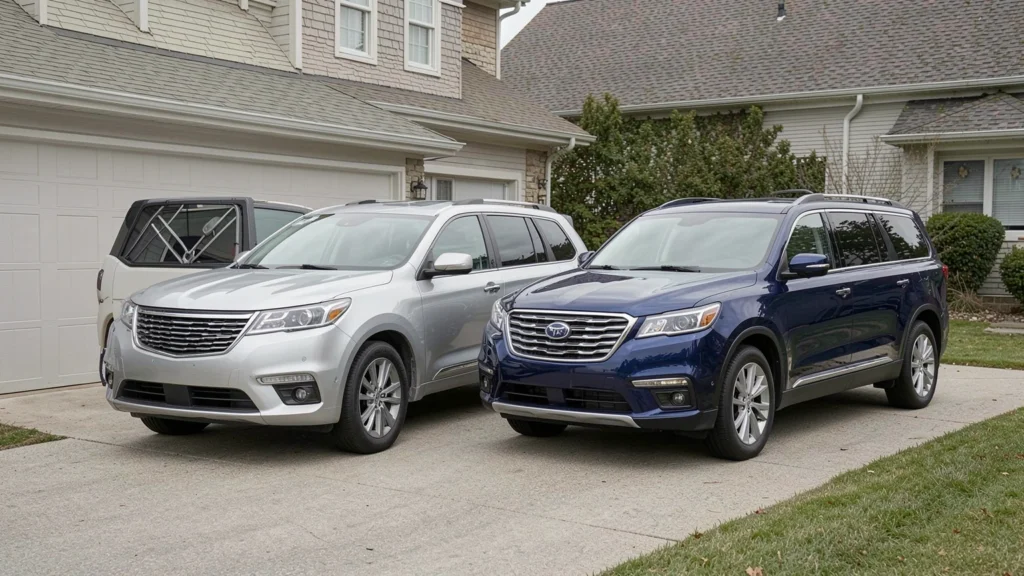
In the Honda Pilot vs Toyota Highlander price contest, Honda wins at the starting line. Cars.com lists the 2026 Pilot Sport at $42,395 and the 2026 Highlander XLE AWD at $46,270. That is a gap of $3,875.
Trims climb quickly from there. The Pilot ranges from Sport through EX-L, TrailSport, Touring, Touring S, Elite and Black Edition. The Highlander runs from XLE through XSE and Limited to Platinum, and every listed Highlander trim comes with all-wheel drive.
Does better mpg make up the price gap?
Not on fuel savings alone. Drive 12,000 miles a year and the Pilot at 22 mpg uses about 545 gallons. The Highlander at 24 mpg uses about 500, a saving of 45 gallons.
At an example price of $3.50 a gallon (not a forecast), that is roughly $158 a year. Closing a $3,875 price gap would take well over 20 years. Choose on space, features and how you drive, not on fuel savings.
Engines, Power and Fuel Economy
In the Honda Pilot vs Toyota Highlander engine matchup, the two SUVs take different routes to similar power. Honda uses a naturally aspirated V6 with a 10-speed automatic. Toyota uses a turbocharged four-cylinder with an 8-speed automatic.
| Spec | Honda Pilot | Toyota Highlander |
|---|---|---|
| Horsepower | 285 hp at 6,100 rpm | 265 hp at 6,000 rpm |
| Torque | 262 lb-ft at 5,000 rpm | 310 lb-ft at 1,700 rpm |
| City / Highway mpg | 19 / 27 | 21 / 28 |
| Combined mpg | 22 | 24 |
| Fuel tank | 19 gal | 18 gal |
The Highlander’s torque peaks at just 1,700 rpm, so it feels strong off the line. The Pilot needs more revs but offers extra peak power. Kelley Blue Book’s 2025 comparison also notes that Toyota sells a 2.5-liter hybrid Highlander with all-wheel drive, while the Pilot listing shows only the V6.
Third Row Legroom and Cargo Space
In the Honda Pilot vs Toyota Highlander size comparison, the Pilot is the larger SUV, at 200 inches long on a 114-inch wheelbase. The Highlander measures 195 inches on a 112-inch wheelbase. That extra length shows up in the back rows.
| Measurement | Honda Pilot | Toyota Highlander |
|---|---|---|
| Front legroom | 41 in | 42 in |
| Second-row legroom | 41 in | 39 in |
| Third-row legroom | 33 in | 28 in |
| Third-row headroom | 39 in | 36 in |
| Cargo behind third row | 19 cu ft | 16 cu ft |
| Cargo behind second row | 49 cu ft | 48 cu ft |
| Cargo, all rear seats folded | 87 cu ft | 84 cu ft |
| Passenger volume | 158 cu ft | 140 cu ft |
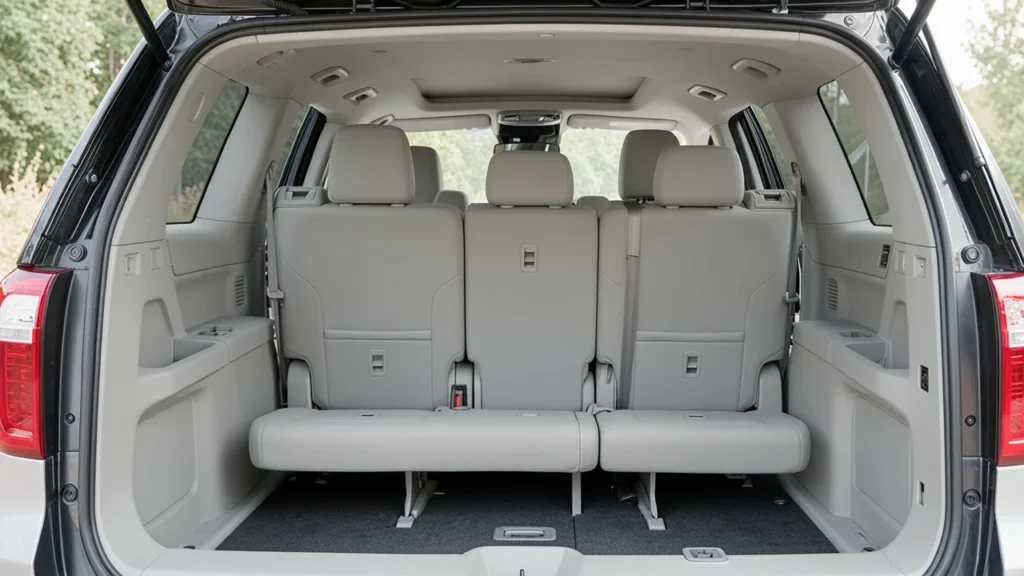
Five extra inches of third-row legroom is the most useful gap in the table. Adults can sit in the back of the Pilot for short trips, while the Highlander’s third row suits children better. Both list seating for up to eight, according to Cars.com and Kelley Blue Book.
Honda’s own comparison sheet lists even larger numbers for the Pilot, but it is marketing material from Honda, so treat it as one view. The independent figures above still point the same way.
Towing Capacity
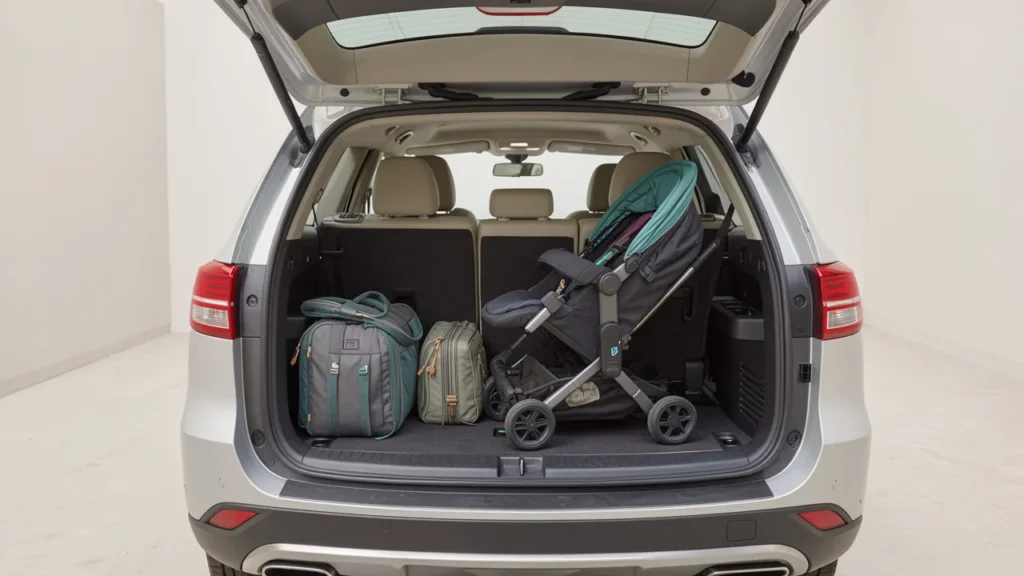
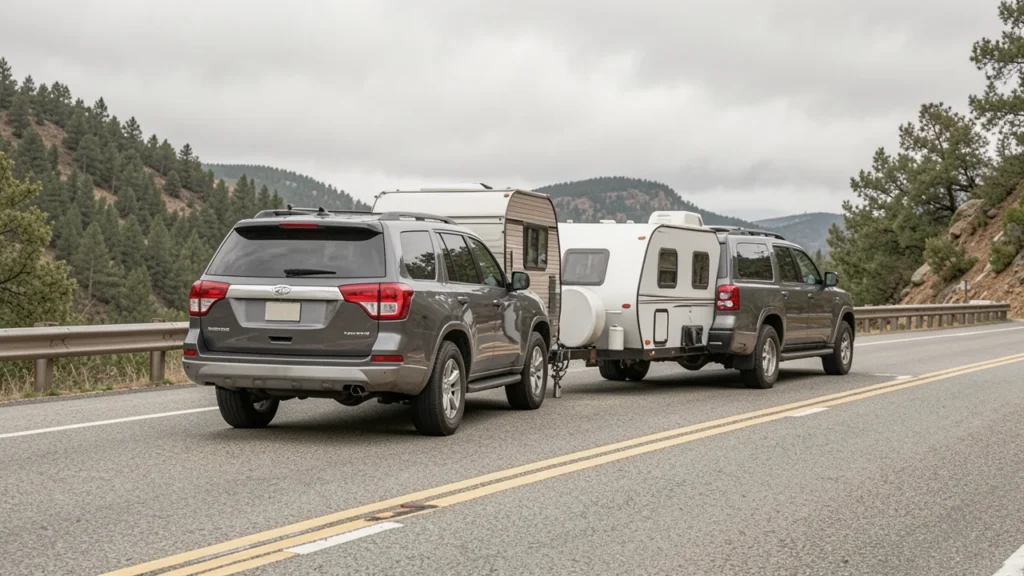
In the Honda Pilot vs Toyota Highlander towing comparison, the Highlander tows more on paper. Cars.com lists 5,000 pounds for the Highlander, with a 500-pound tongue weight. It lists 3,500 pounds for the Pilot, with a 350-pound tongue weight.
Honda can close the gap with the right trim. Kelley Blue Book’s 2025 review says the Pilot TrailSport, with its V6 and standard all-wheel drive, can tow 5,000 pounds. Confirm the 2026 rating for your exact trim before you buy a trailer.
Warning: Never tow more than the rating in your owner’s manual. Passengers, cargo and a trailer hitch all count against the limit.
Features and Trims
Kelley Blue Book’s 2025 Honda Pilot vs Toyota Highlander comparison highlights a few details that carry into daily life. The Pilot has 14 cupholders and a removable second-row center seat on Touring and Elite trims, which makes third-row access easier. Traffic Jam Assist is standard across its lineup.
The Highlander counters with five USB ports and two 12-volt outlets on every trim. Higher trims add a torque-vectoring all-wheel-drive system that shifts power between the wheels. Both SUVs include tri-zone automatic climate control on all trims, according to Honda’s published comparison.
Honda also points out that the Pilot has hill descent control on all trims. It says the Highlander does not offer it on front-wheel-drive trims. Since Honda wrote that sheet, check it against Toyota’s current brochure.
Safety and Warranty
In the Honda Pilot vs Toyota Highlander safety contest, it is a tie. Cars.com lists a five-star NHTSA overall rating for both. Blind spot monitor, rear cross-traffic alert, lane departure warning, stability control and a backup camera are standard on each, per Cars.com’s listing.
| Coverage | Honda Pilot | Toyota Highlander |
|---|---|---|
| Basic warranty | 3 years / 36,000 miles | 3 years / 36,000 miles |
| Powertrain warranty | 5 years / 60,000 miles | 5 years / 60,000 miles |
| NHTSA overall | 5 stars | 5 stars |
Reliability is the other half of the story. Our guide on how long a Toyota Highlander lasts covers mileage and age, and common Highlander problems by generation shows what to check on a used one.
Which 3-Row SUV Should You Buy?
Choose the Pilot if you carry adults in the third row, want a lower starting price or like a smooth V6. Choose the Highlander if you want better mpg, more towing capacity on paper or a hybrid option.
Need more room than either offers? Toyota also sells the larger Grand Highlander, and you can read about the Grand Highlander Hybrid MPG and real-world results.
How to decide in five steps
- Count who sits in the third row, and how often.
- Add up your yearly miles and use the mpg numbers above.
- Check the towing rating for the exact trim you plan to buy.
- Test both third rows with the people who will sit there.
- Compare out-the-door prices at more than one dealer.
If you pick a Highlander, protect the cabin with the best Toyota Highlander seat covers, and see every paint option in our Highlander colors guide.
Frequently Asked Questions
Is the Honda Pilot bigger than the Toyota Highlander?
Yes. The Pilot is 200 inches long on a 114-inch wheelbase, while the Highlander is 195 inches long on a 112-inch wheelbase. The Pilot is also wider and taller, and its third row has more legroom and headroom.
Which is cheaper, the Pilot or the Highlander?
The Pilot. Cars.com lists the 2026 Pilot at $42,395 and the 2026 Highlander at $46,270. That is a difference of $3,875 at the starting trim. Prices rise quickly on higher trims for both, so compare the same trim level.
Which gets better gas mileage?
The Highlander. Cars.com lists 24 mpg combined for the Highlander and 22 mpg combined for the Pilot. The Highlander also offers a hybrid, which Kelley Blue Book listed for 2025. The Pilot listing shows a V6 only.
Which tows more?
On paper, the Highlander tows up to 5,000 pounds and the Pilot 3,500 pounds, per Cars.com. Kelley Blue Book reports that the Pilot TrailSport can tow 5,000 pounds. Always check the rating for your exact trim and drivetrain.
Do both have a usable third row?
Both have one, but the Pilot’s is roomier. It offers 33 inches of third-row legroom against 28 inches in the Highlander. Adults fit more easily in the Pilot, and the Highlander’s third row works better for children and short trips.
Are the Pilot and Highlander safe?
Yes. Cars.com lists a five-star NHTSA overall rating for both. Each comes with blind spot monitoring, rear cross-traffic alert, lane departure warning and a backup camera as standard. Check the IIHS site for the exact model year you want.
Final Thoughts
In the Honda Pilot vs Toyota Highlander matchup, the Pilot wins on price, power and third-row room, while the Highlander wins on fuel economy and towing capacity. Safety and warranty are a tie.
If you carry teens or adults in the back row, start with the Pilot. If you tow often or want to save a little at the pump, start with the Highlander. Drive both with your family in the car before you decide.